ASTM and SEI are the two halves of one system: ASTM writes the safety standard for riding helmets — the performance specification known as ASTM F1163 — and SEI (the Safety Equipment Institute) independently tests and certifies that a specific helmet model actually meets it. A helmet is properly certified when it meets ASTM F1163 and carries SEI certification, shown by the SEI mark and label inside the helmet. “ASTM/SEI certified” is the phrase to look for when you buy.
The two names are often used interchangeably. This guide explains each half, what certification does and does not promise, and how competitions use it.
What Is ASTM F1163, in Plain Terms?
ASTM International is a standards organisation: it publishes technical standards that define how products should perform and how that performance should be tested. F1163 is its standard for equestrian riding helmets — in general terms, it sets out the tests a helmet must pass covering things like impact absorption, the strength of the harness and retention system, and resistance to penetration by sharp objects, along with requirements for things like the field of vision a helmet must allow.
Two things about F1163 are worth understanding. First, ASTM does not make, test, or certify helmets itself: it writes the rulebook. Saying a helmet “meets ASTM” is shorthand for “it was tested against F1163’s requirements” — the meaningful question is who did that testing and stands behind it, which is where SEI comes in. Second, the standard is periodically revised, so newer helmets are certified to newer editions; that is normal and not a reason to distrust a helmet certified to a recent edition.
What the standard represents, whatever the edition, is a minimum level of protective performance verified in a laboratory — the baseline that separates a safety helmet from a decorative hat with straps.
What Does SEI Do, and How Is It Different From ASTM?
SEI — the Safety Equipment Institute — is an independent certification body. Manufacturers submit helmet models to SEI, which arranges testing to confirm the model meets ASTM F1163, and — importantly — continues to check production over time rather than certifying a single sample once and walking away. Models that pass are listed by SEI as certified products, and each helmet sold under that certification carries the SEI mark.
So the division of labour is: ASTM writes the test, SEI verifies that this helmet, as actually manufactured and sold, passes it. That is why the label inside a properly certified helmet references both, and why “ASTM/SEI” appears as a pair in rulebooks.
SEI is not the only certifier in the wider helmet world, and other standards exist — European standards such as PAS 015 and VG1, and the Snell standard, which some riding helmets also carry. North American competition rules are built mainly around ASTM/SEI, while international and European rules accept their own lists. The systems are parallel, not rivals: each is a standard plus an enforcement mechanism.
How Can You Check a Helmet Is Genuinely Certified?
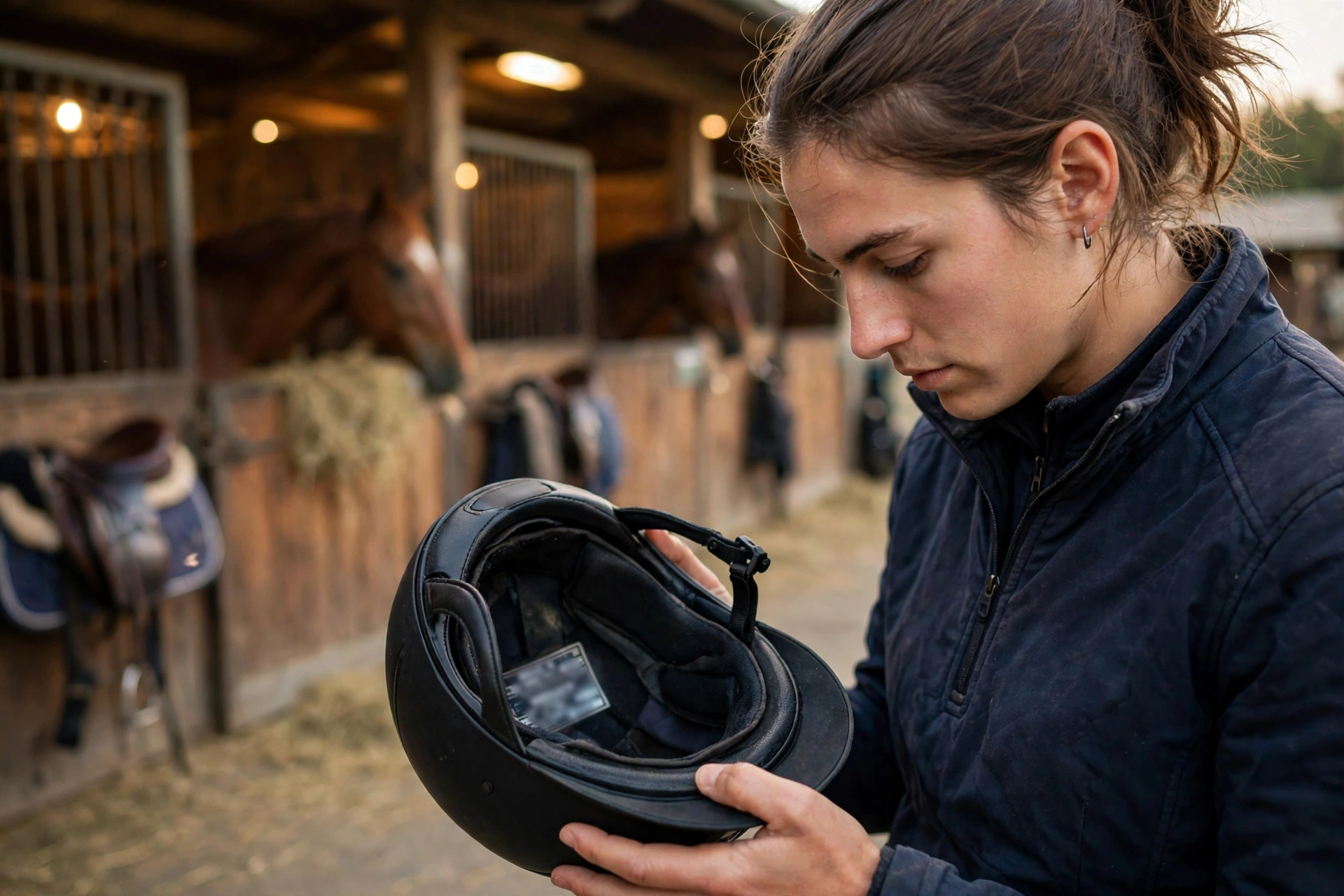
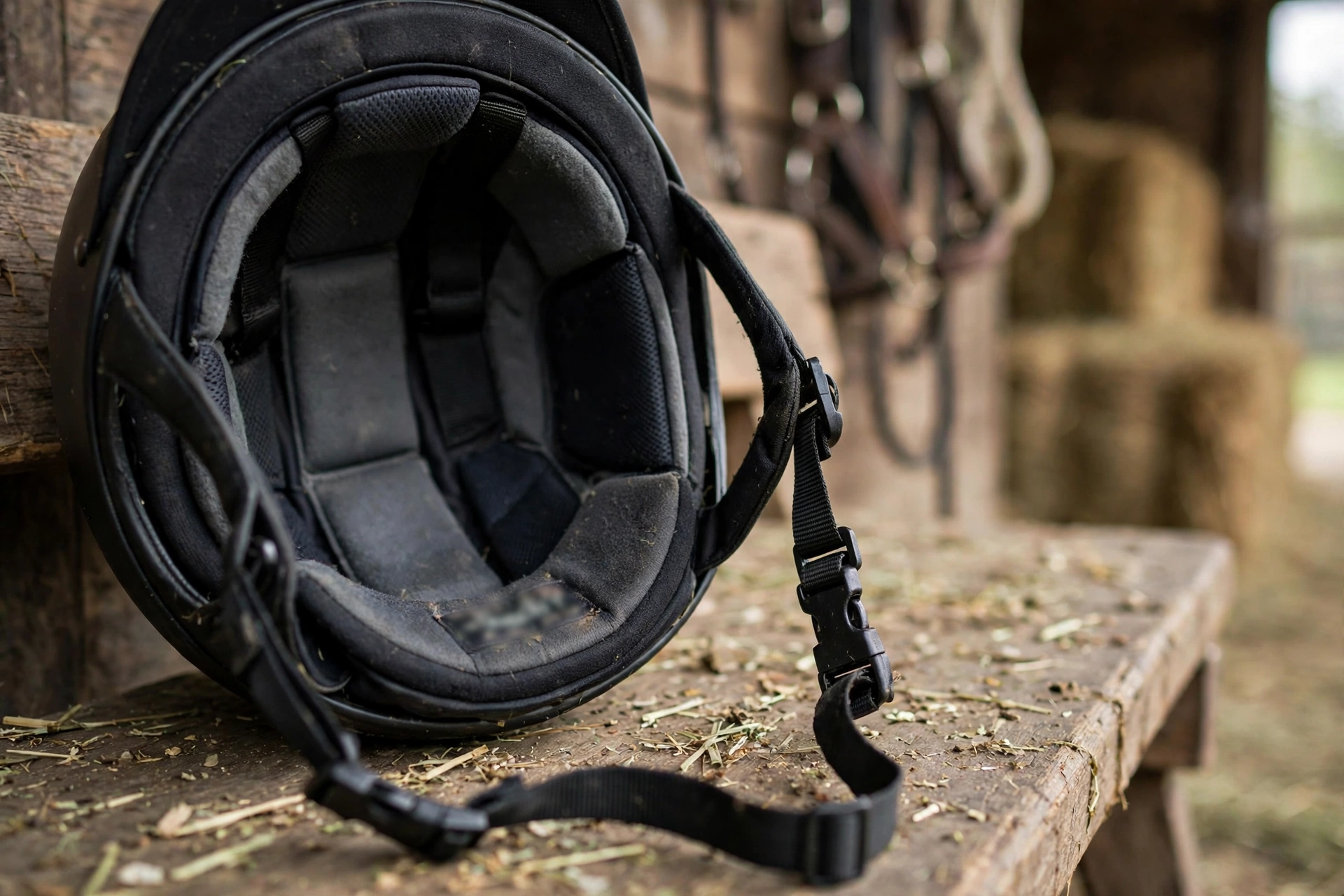
Look inside the helmet. A certified helmet carries a label — usually under the lining or at the back — stating the standard and showing the SEI certification mark, along with the manufacturer, model, and the date the helmet was made. If there is no label, or the label is vague (“meets safety standards” with nothing named), treat the helmet as uncertified whatever the seller says.
Cross-check when it matters: SEI maintains a list of certified models, so the model name inside the helmet should appear on it. Buy from reputable tack shops and established retailers, where certified stock is the norm, and be wary of very cheap, unbranded helmets sold online with no verifiable label — a convincing shell shape is easy to copy, and certification is exactly the part you cannot judge by looking.
Check the label when buying second-hand too — though the better advice is not to buy second-hand at all. Certification describes the helmet as manufactured; it says nothing about the falls, drops, and heat exposure of a used helmet’s unknown life, which is what actually determines whether it still protects.
What Does Certification Not Guarantee?
Certification is a floor, not a promise. It confirms the model passed laboratory tests when new. It does not guarantee the helmet fits your head — a certified helmet worn loose protects far less than it should — nor that it will survive a fall undamaged, nor that it remains protective after years of sweat, heat, and knocks.
It also does not rank helmets. Two certified helmets both cleared the bar; the standard does not publish which cleared it by more. Features beyond the standard exist — some certified helmets add rotational-impact systems like MIPS, designed to manage the twisting forces in a fall that the baseline tests address less directly. That is a legitimate extra to choose, but it sits on top of certification, never instead of it.
The rider’s part of the system is simple: buy certified, fit it properly, fasten the harness every ride, replace the helmet after any fall or significant impact, and retire it as it ages. Certification handles the laboratory; the rest is on you.
Do Competitions Require ASTM/SEI Certified Helmets?
In general terms, in the United States and Canada, yes: national federations and most show and event organisers require helmets certified to ASTM F1163 by SEI (or meeting an accepted equivalent standard) for jumping disciplines, for juniors in essentially everything, and increasingly for dressage at all levels, with the harness fastened. Organisers typically state the requirement in their rules and prize lists, and officials can and do check labels.
International competition runs on the FEI’s own accepted-standards list, which includes ASTM/SEI alongside the main European standards — the practical effect being that a properly certified helmet bought in North America is generally acceptable abroad, and vice versa. Because the accepted lists are updated as standards evolve, the safe habit is to check your governing body’s current rules at the start of each season rather than relying on memory.
For schooling at home, no official checks anything — which makes home the place where standards matter most, since most falls happen there. The certification on the label is what tells you the helmet on your head is safety equipment rather than costume. Buy the real thing, wherever you ride.
Frequently Asked Questions
Q: What does “ASTM/SEI certified” actually mean?
A: It means the helmet model was tested against ASTM’s F1163 standard for equestrian helmets and certified by SEI, the independent body that verifies compliance and monitors production. Both halves matter: ASTM writes the requirements, SEI confirms this manufacturer’s helmet meets them. Look for the SEI mark on the label inside the helmet.
Q: Is ASTM a brand of helmet?
A: No. ASTM International is a standards organisation that publishes performance standards for thousands of products. It does not manufacture or sell helmets. A helmet “to the ASTM standard” is one built and tested to its F1163 specification — and the certification mark from SEI is the proof to look for.
Q: My helmet is certified but old. Does the certification expire?
A: The certification applied to the helmet as manufactured and does not lapse on a date — but the helmet itself ages. Sweat, heat, sunlight, and knocks degrade the foam over the years, and manufacturers generally recommend replacing a riding helmet after roughly five years of use, and immediately after any fall. An old certified helmet is not the same protection it was when the label was printed.

Olivia
Writer at Helmet Today, covering helmet reviews, fit and riding safety.