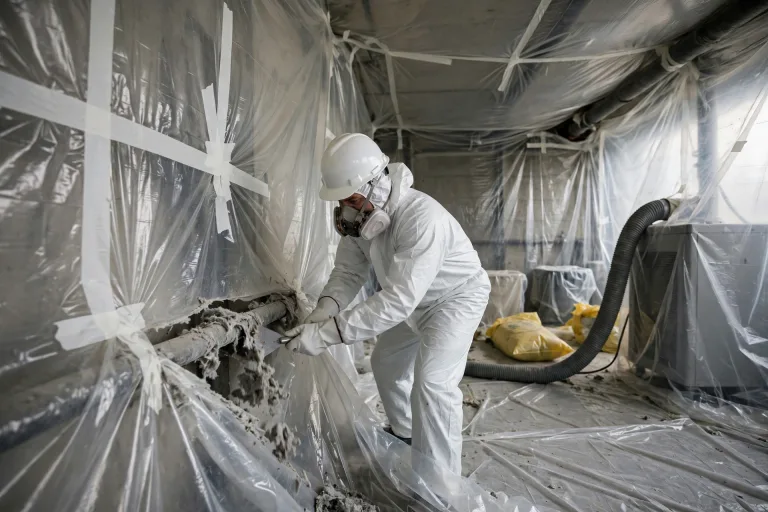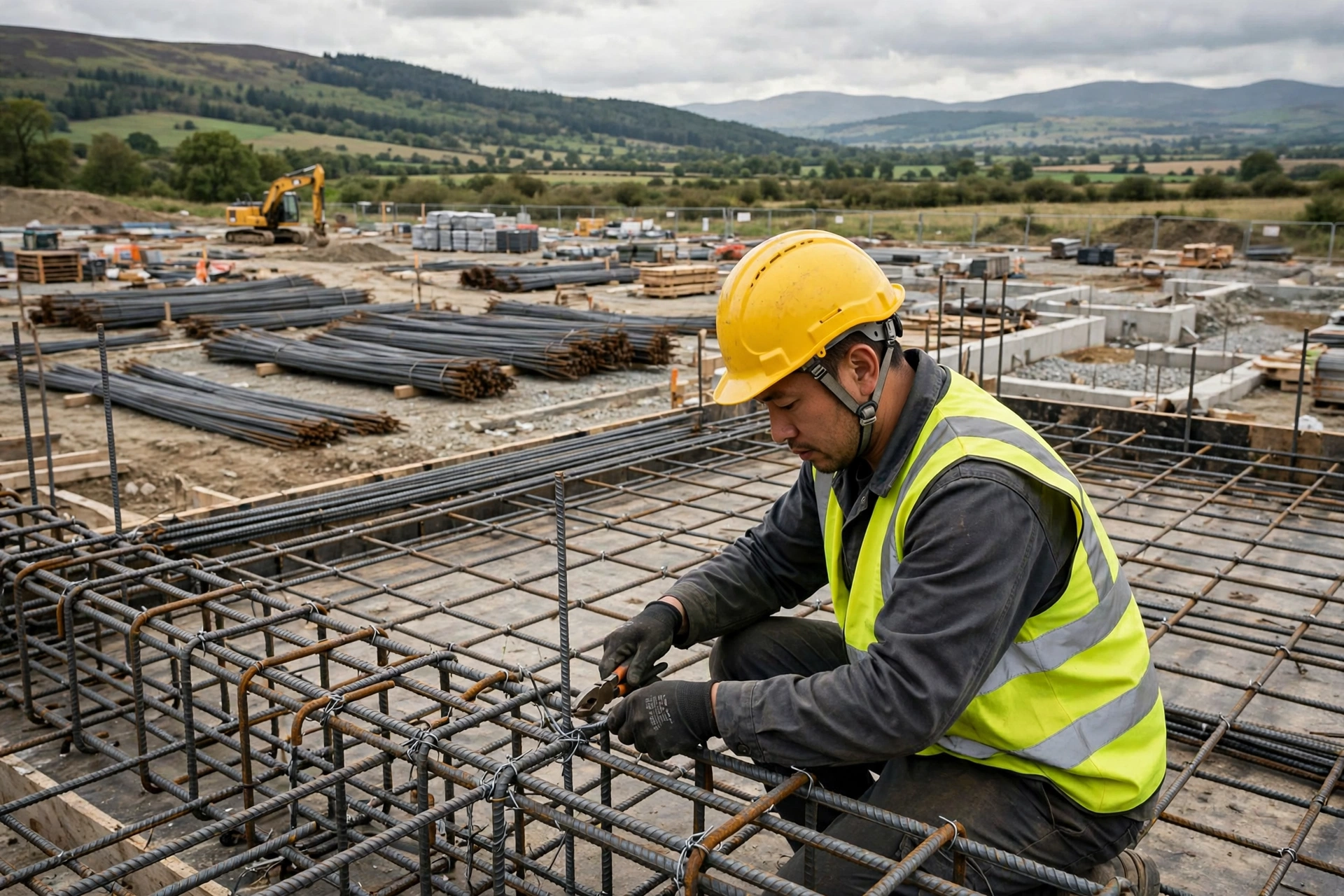
A helmet for steel fixers is a protective safety helmet worn to guard the head while fixing steel reinforcement bars on a building site, and in general terms a standard hard hat is what steel fixers use. Steel fixing means working with heavy steel bars, tying them into cages and grids for concrete, often at height and among cranes, scaffolding, and other trades, so head protection is an essential part of the kit.
Steel fixers, sometimes called steel erectors or rebar workers, prepare and place the steel reinforcement that gives concrete its strength. The work is heavy, physical, and fast-paced, and it takes place on busy sites where other work is going on overhead. A helmet protects the fixer from falling objects, knocks against steel and scaffolding, and bumps in tight spaces, and it is worn alongside the rest of the site safety kit.
What does a steel fixer do?
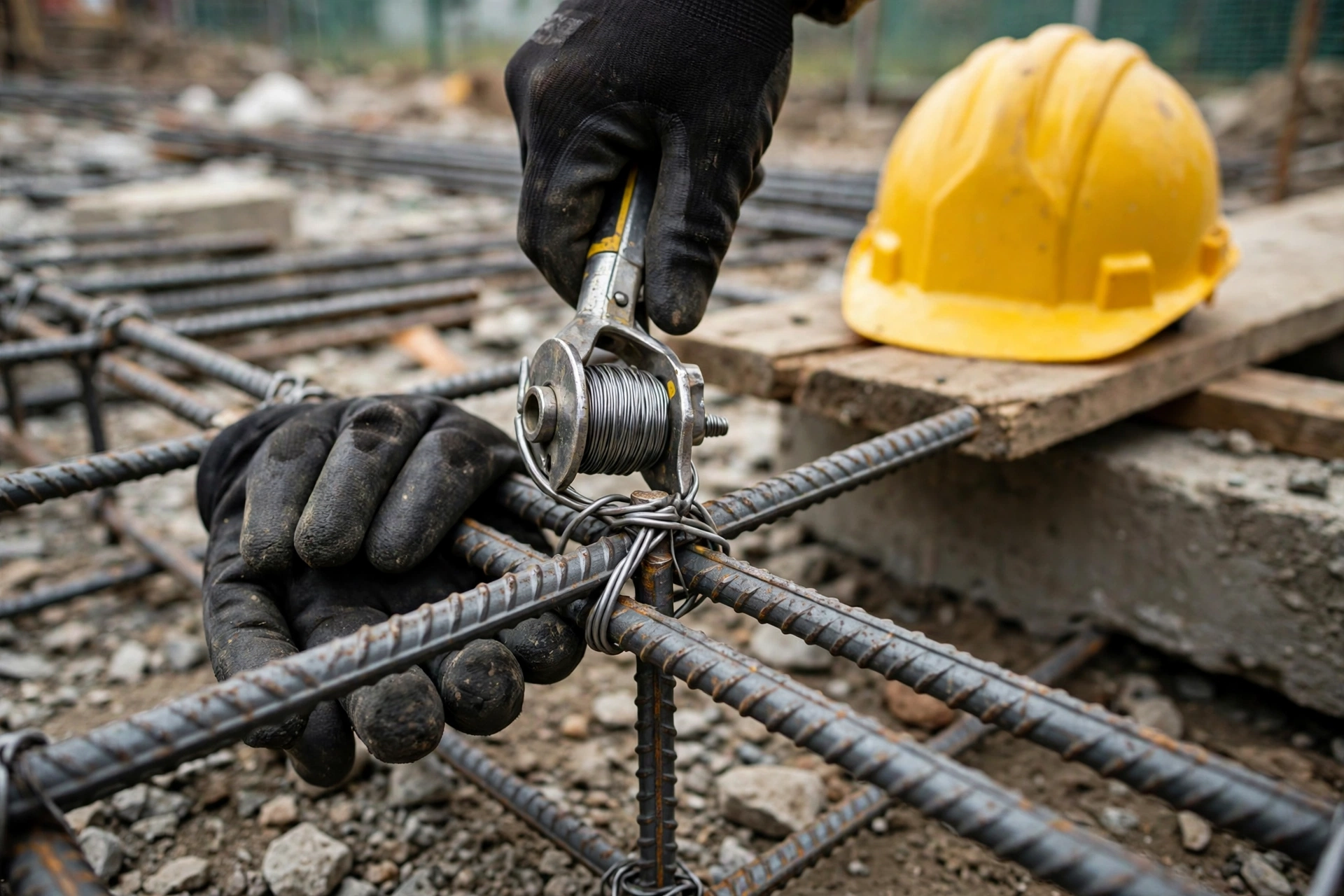
A steel fixer reads drawings and bends, cuts, and ties steel bars, known as reinforcement or rebar, into the shapes needed for concrete structures such as foundations, columns, beams, and walls. The bars are tied together with wire to form cages and grids, which are then set in place before the concrete is poured.
The work is heavy and physical. Steel bars are long, awkward, and sharp at the ends, and the fixer works in teams, lifting and positioning them, tying them with a tool, and checking the spacing against the drawings. The work often takes place on scaffolding, on decks, or in deep excavations, and it is done in all weathers, which adds to the risk.
What kind of helmet do steel fixers wear?
In general terms, steel fixers wear a standard safety helmet, the same kind of hard hat used across the building industry, with a hard outer shell and a secure chin strap. A light, well-ventilated helmet suits the work, because steel fixing is hot, physical work and the fixer will get warm quickly.
Some fixers wear a helmet with a short peak to keep rain and sun out of the eyes, and some use a helmet with a mount for a head torch for work in dark areas such as basements or deep excavations. The helmet should fit well, fasten securely, and be in good condition, with no cracks or damage to the shell or the harness inside. On most sites, wearing a helmet is a condition of being allowed to work at all.
Why do steel fixers need a helmet?
A helmet protects a steel fixer from falling objects, which are one of the biggest risks on a building site. Tools, offcuts of steel, and fixings can fall from scaffolding or from a level above, and a hard hat takes the force of that kind of knock. The helmet also protects against the steel itself, because bars are long, springy, and sharp, and they can whip back or swing into the head when they are being handled.
The helmet also protects against knocks from scaffolding, formwork, and the edges of concrete structures, which are hard and at head height in the tight spaces where fixers work. In general terms, the helmet is one part of site safety, alongside steel-toe boots, gloves, high-visibility clothing, and the site rules that everyone is expected to follow.
What features matter in a helmet for steel fixers?
Ventilation matters, because steel fixing is hard physical work and the fixer will sweat. Look for a helmet with vents that let air flow through, and a lining that can be removed and washed. A comfortable harness inside the helmet also helps it sit well, which matters when you are bending, lifting, and tying bars all day.
A chin strap matters too, especially when working at height or bending over, because it keeps the helmet in place. Some helmets include a system designed to reduce rotational forces in a fall, such as MIPS, and it is worth asking about when you choose. A light helmet is easier to wear for a full working day, and a helmet that feels comfortable is one you will keep wearing.
How should a steel fixer’s helmet fit?
A steel fixer’s helmet should sit level on the head, low enough to cover the forehead, and snug all round without pressing painfully on the temples. It should not tip forward over the eyes or slide back when you nod, and it should stay in place when you shake your head gently from side to side.
The chin strap should be snug enough that you can fit only a finger or two between the strap and your chin, and the fit system at the back should be adjusted so the helmet stays put when you bend and lift. Try the helmet on with any glasses or ear protection you wear, and make sure nothing pushes it out of position. If you wear a warm hat under the helmet in winter, check the fit with that on too.
How do you look after a steel fixer’s helmet?
After a day on site, the helmet will be dusty and dirty, so give it a proper clean before you put it away. Wipe the shell with a damp cloth, and wash the lining following the maker’s instructions. Let the helmet dry naturally, away from direct heat, and do not leave it in a hot van or next to a radiator, as heat can damage the materials inside.
Check the helmet regularly for cracks, dents, or loose parts, and check the chin strap and buckle for wear. In general terms, a helmet that has taken a hard knock, such as a falling tool or a bad fall, should be replaced, even if it looks fine on the outside, because the inner lining may have been compressed. The same applies to a helmet that has been dropped hard onto concrete. When in doubt, replace it.
Do steel fixers need to wear a helmet?
Yes, in general terms a helmet is essential for steel fixers. It protects them from falling objects, swinging steel bars, and knocks against scaffolding and formwork on a busy building site.
What kind of helmet is best for steel fixing?
A light, well-ventilated safety helmet is the usual choice, with a secure chin strap. A short peak and a head torch mount can be useful, depending on where the work takes place.
When should a steel fixer’s helmet be replaced?
Replace it after a hard knock from a falling object or a bad fall, if the shell or lining is damaged, or if the strap and buckle are worn. A helmet that has protected you in an incident has done its job and should not be relied on again.

Olivia
Writer at Helmet Today, covering helmet reviews, fit and riding safety.