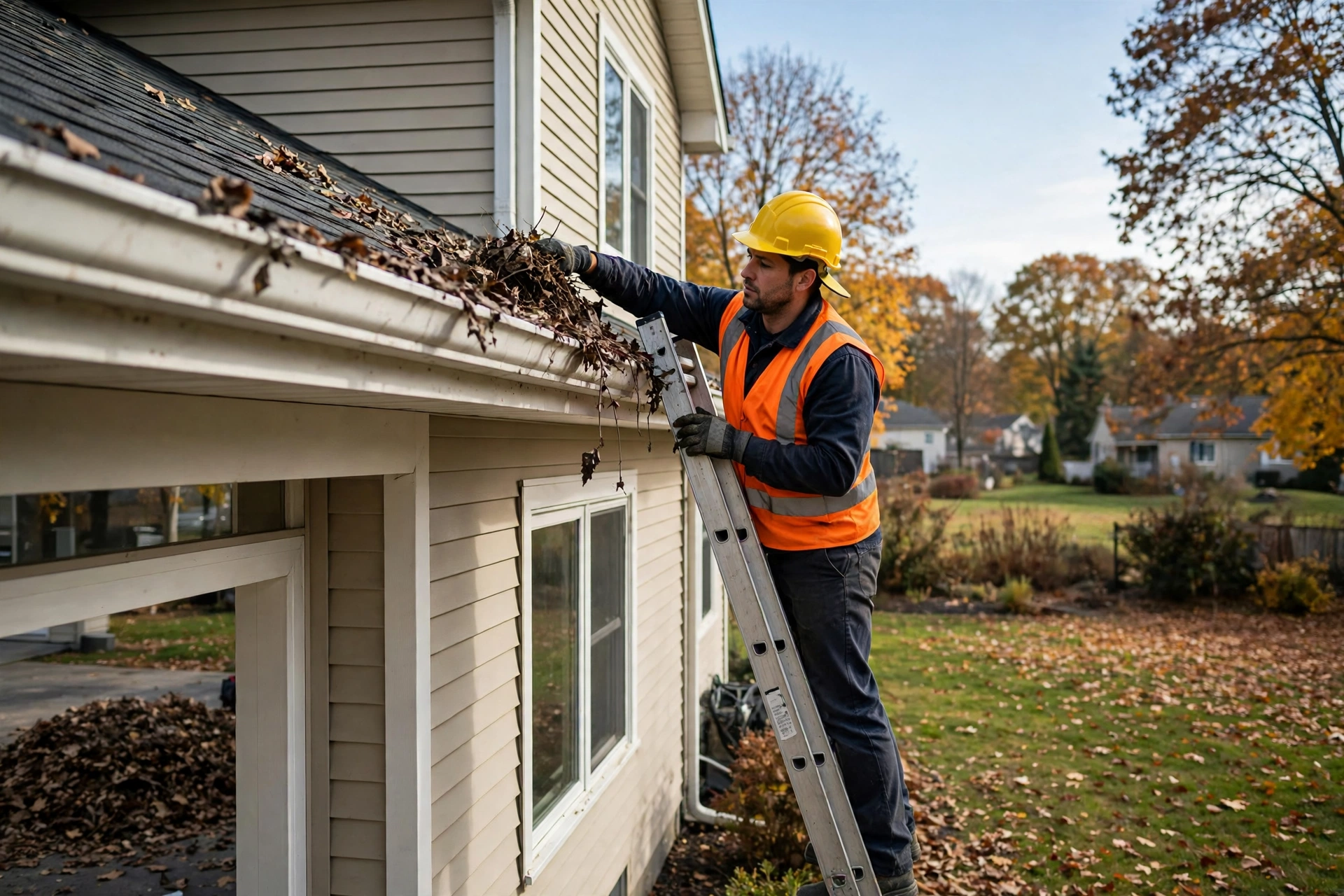
A helmet for gutter cleaners is a protective safety helmet worn to guard the head while clearing leaves and debris from gutters, and in general terms a standard hard hat is what cleaners use when they are working up a ladder or on a roof. Gutter cleaning means working at height, often on a ladder leaning against the house, with tools and wet debris in your hands, so a knock to the head is a real risk.
Gutters fill up with leaves, moss, and dirt, and when they are blocked the water overflows and can damage the walls and roof. Clearing them is a routine job, but it is done several metres above the ground, and the cleaner is often reaching sideways or overhead, which makes balance harder. A helmet is a simple, sensible part of the kit, and it also keeps falling debris out of the hair and off the face.
What does gutter cleaning involve?
Gutter cleaning involves removing the build-up of leaves, twigs, moss, and silt from the gutters that run along the edge of a roof, and checking that the downpipes are clear so rainwater can drain away. The cleaner usually works from a ladder, scooping out debris by hand or with a small trowel, and flushing the gutter through with water.
Some jobs are done from the ground using long poles with a scoop or a camera on the end, but many still need a ladder, especially on taller houses. The work is dirty and wet, and it is often done in autumn, when the leaves have fallen and the weather is cold and damp. It is physical work that needs care, patience, and a steady head for heights.
What kind of helmet do gutter cleaners wear?
In general terms, gutter cleaners wear a standard safety helmet, the same kind of hard hat used on building sites, when they are working up a ladder or on a roof. A light, well-ventilated helmet suits the work, because cleaning gutters is physical and the cleaner will get warm, even in cool weather.
Some cleaners wear a climbing-style helmet for roof work, because it sits close to the head and stays in place when they are moving around. Others wear a bump cap for lower work, where the main risk is a bump against the guttering or the fascia board. Whatever style is used, the helmet should fit well, fasten securely, and be in good condition, with no cracks or damage.
Why do gutter cleaners need a helmet?
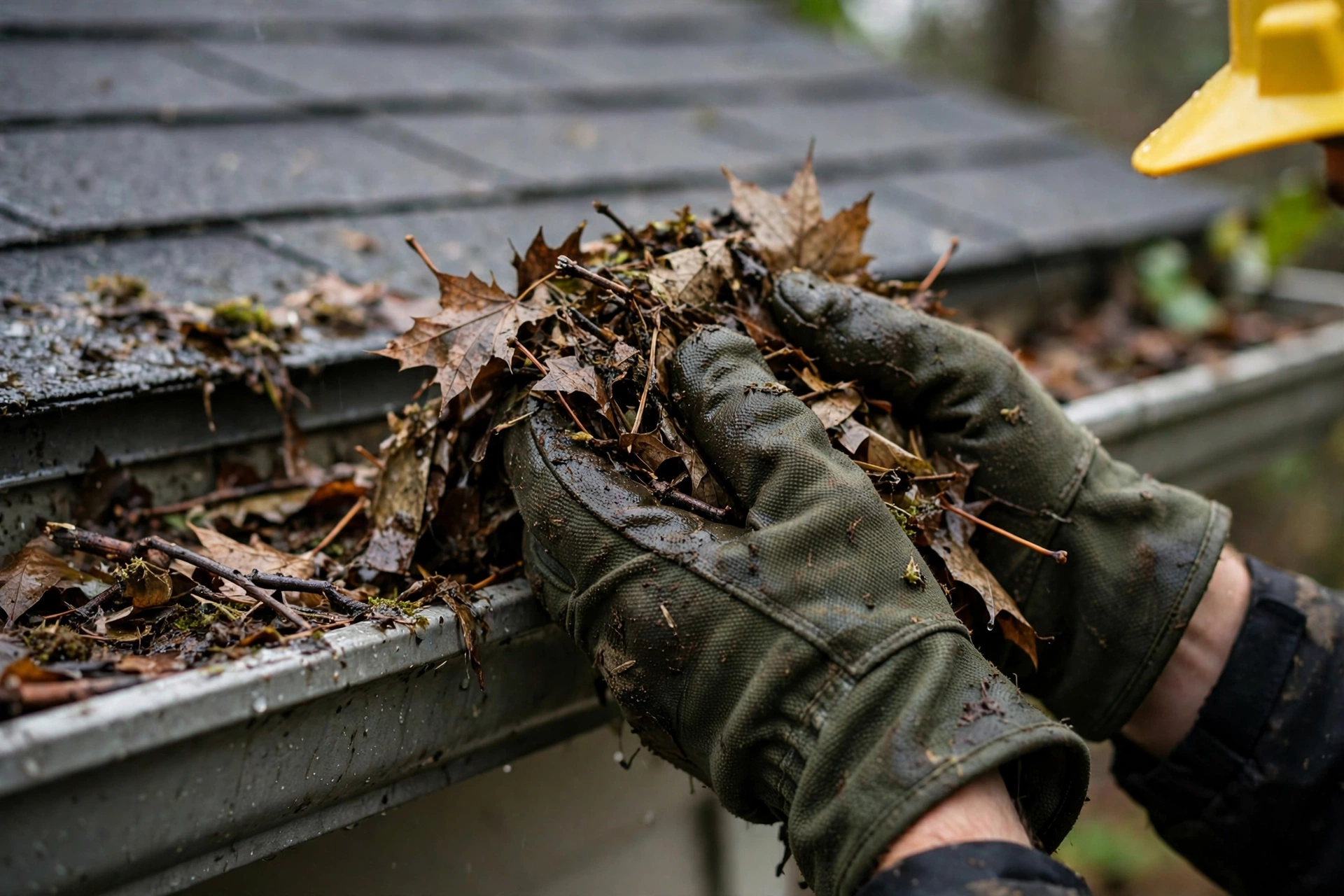
A helmet protects a gutter cleaner from a knock if they slip on the ladder and bump their head, and from debris falling from the gutter or the roof above them. Wet leaves, clumps of moss, and small stones can drop out of a gutter without warning, and a helmet takes the edge off that kind of knock.
The helmet also protects against the guttering itself, which is hard metal or plastic at head height when the cleaner is leaning in close to scoop out debris. A bump against a bracket or a downpipe joint can cause a nasty cut, and a helmet helps prevent that. In general terms, the helmet is one part of working safely at height, alongside a ladder that is set up properly and a sensible, unhurried pace.
What features matter in a helmet for gutter cleaners?
Ventilation matters, because gutter cleaning is physical work and the cleaner will get warm. Look for a helmet with vents that let air flow through, and a lining that can be removed and washed. A comfortable lining also helps the helmet sit well on the head, which matters when you are reaching and bending all day.
A chin strap matters too, because it keeps the helmet in place when you bend down or look up at the gutter. Some helmets include a system designed to reduce rotational forces in a fall, such as MIPS, and it is worth asking about when you choose. A light helmet is easier to wear for a full working day, and a helmet that feels comfortable is one you will keep wearing.
How should a gutter cleaner’s helmet fit?
A gutter cleaner’s helmet should sit level on the head, low enough to cover the forehead, and snug all round without pressing painfully on the temples. It should not tip forward over the eyes or slide back when you nod, and it should stay in place when you shake your head gently from side to side.
The chin strap should be snug enough that you can fit only a finger or two between the strap and your chin, and the fit system at the back should be adjusted so the helmet stays put when you climb a ladder. Try the helmet on with any gloves or glasses you wear, and make sure nothing pushes it out of position. If you wear a warm hat under the helmet in winter, check the fit with that on too.
How do you look after a gutter cleaner’s helmet?
After a day of gutter cleaning, the helmet will be dirty with leaves, moss, and rainwater, so give it a proper clean before you put it away. Wipe the shell with a damp cloth, and wash the lining following the maker’s instructions. Let the helmet dry naturally, away from direct heat, and do not leave it in a hot van or next to a radiator, as heat can damage the materials inside.
Check the helmet regularly for cracks, dents, or loose parts, and check the chin strap and buckle for wear. In general terms, a helmet that has taken a hard knock in a fall should be replaced, even if it looks fine on the outside, because the inner lining may have been compressed. The same applies to a helmet that has been dropped hard onto a hard surface. When in doubt, replace it.
Do gutter cleaners need to wear a helmet?
In general terms, yes, a helmet is sensible for gutter cleaning, especially when working up a ladder or on a roof. It protects the head from knocks, falling debris, and bumps against the guttering.
What kind of helmet is best for gutter cleaning?
A light, well-ventilated safety helmet is the usual choice, with a secure chin strap. Some cleaners use a climbing-style helmet for roof work and a lighter bump cap for lower work.
When should a gutter cleaner’s helmet be replaced?
Replace it after a hard fall or a heavy knock, if the shell or lining is damaged, or if the strap and buckle are worn. A helmet that has protected you in a fall has done its job and should not be relied on again.

Olivia
Writer at Helmet Today, covering helmet reviews, fit and riding safety.