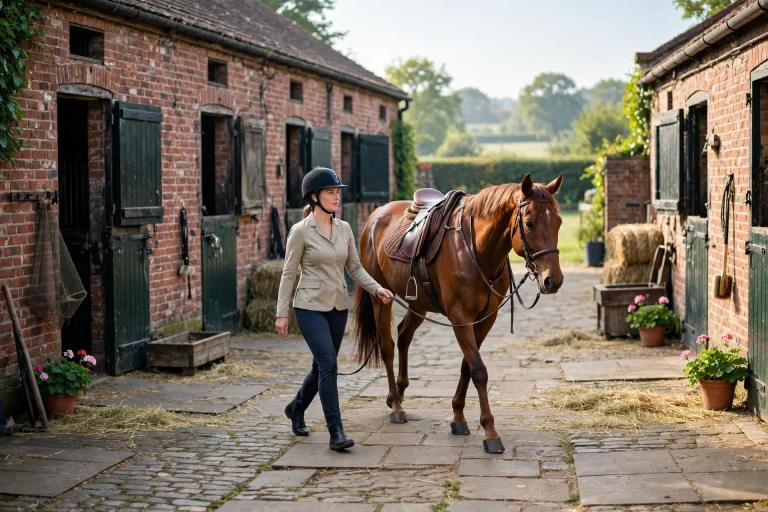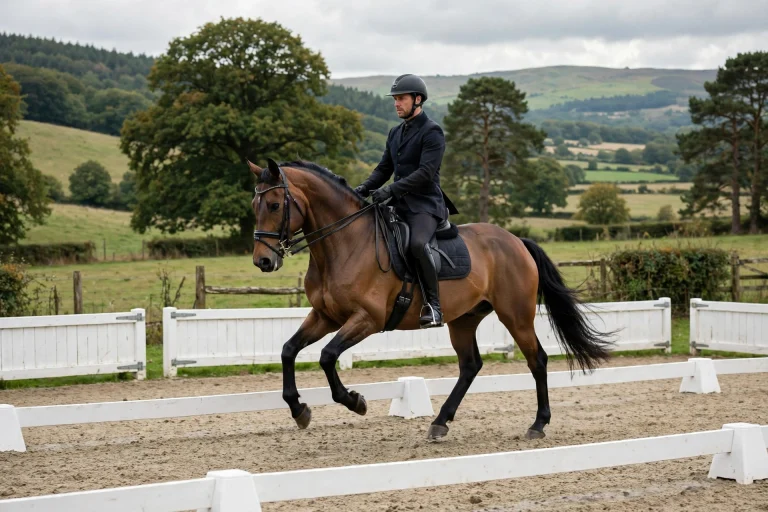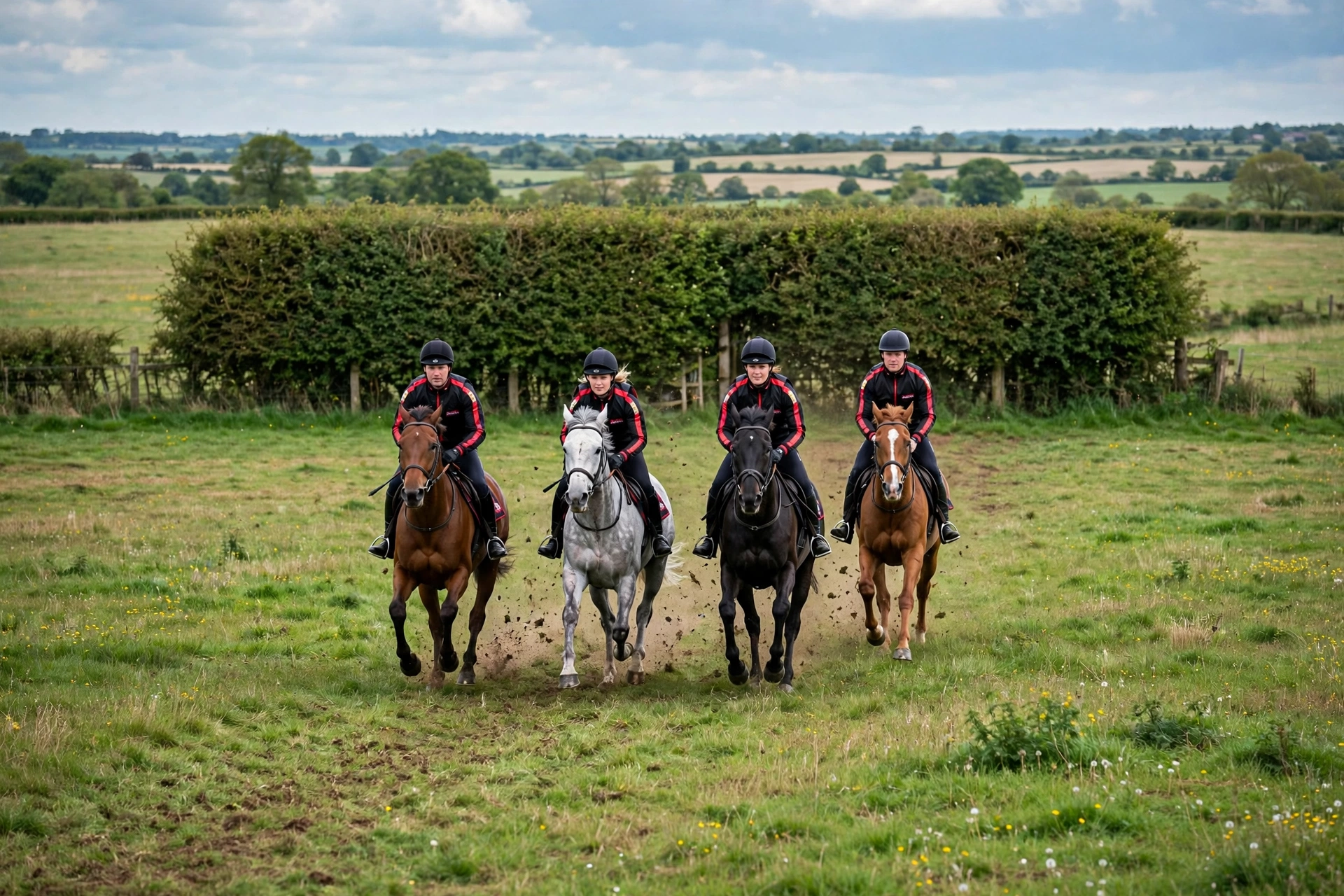
A helmet for riding in a team chase is a standard horse riding helmet, worn to protect the rider’s head during a fast, cross-country team event where riders gallop together over fences and open ground. A team chase is a team riding competition, usually with teams of three or four riders, who ride a set course together over natural fences, hedges, and ditches. The pace is quick, the fences come thick and fast, and riders stay close together, so a well-fitting riding helmet is an essential part of the kit.
In general terms, the helmet used for a team chase is the same kind of riding helmet worn for cross-country riding and hunting. It is a hard-shell helmet with a secure chin strap, made to protect the head in a fall from a horse moving at speed. There is no special team chase helmet as such. What matters is that the helmet fits well, is in good condition, and is worn correctly every time you ride the course.
What is a team chase?
A team chase is an equestrian team event in which a group of riders rides a cross-country course together, jumping a series of fences along the way. The course is usually set over farmland or parkland, with natural fences such as hedges, timber rails, and ditches, and the team rides at a strong, steady gallop. Teams are normally made up of three or four riders, and the team result depends on all of them finishing the course together.
The event is popular with hunting and riding club riders because it is social, fast, and fun, but it is also a real test of horse and rider, which is why a good helmet matters.
What kind of helmet do riders wear in a team chase?
Riders in a team chase wear a standard riding helmet, often a skull cap style with a smooth, low-profile shell and a strong chin strap. Many riders choose a skull cap because it sits close to the head, stays stable at a gallop, and fits neatly under a silk or hat cover in team colours. A peaked riding hat is also used by some riders, but the key point is the same: a proper riding helmet, not a cycling helmet or any other kind of hat.
In general terms, the helmet should meet a recognised riding safety standard and be in good condition, with no cracks, dents, or damage to the shell or lining. The chin strap should fasten securely and hold the helmet in place, and the harness should be adjusted so the helmet does not rock forward or back. If you are unsure whether your helmet is suitable, ask a tack shop or your riding instructor to check it before the event.

How should a team chase helmet fit?
A team chase helmet should fit snugly all round, without pressing painfully on the forehead or temples. It should sit level on the head, low enough at the front to protect the forehead, and it should not tip forward over the eyes or slide back when you nod your head. The fit is best checked in the shop, wearing your hair the way you will wear it on the day, and with any hat silk you plan to use.
The chin strap should be snug enough that you can fit only a finger or two between the strap and your chin, and the harness at the back should be adjusted so the helmet stays put when you shake your head gently. A helmet that is too loose can shift in a fall and protect less well, while one that is too tight will give you a headache long before you reach the finish. Try the helmet on, walk around in it, and sit in the saddle before you decide it is the right one.
What features matter for a team chase helmet?
Ventilation matters in a team chase, because you will be riding hard and working up a sweat. Look for a helmet with vents that let air flow through, and a lining that can be removed and washed after a muddy day. A comfortable lining also helps the helmet sit well on your head, which matters when you are riding for a long stretch at speed.
Some riding helmets also include a system designed to reduce rotational forces in a fall, such as MIPS, and it is worth asking about when you choose a helmet. Weight and stability matter too. A light helmet is easier to wear for the length of a course, and a low-profile shape is less likely to catch the wind or shift as you gallop. Some riders prefer a helmet with a slightly longer peak or a silk cover in team colours, and some like a dial or adjustable harness at the back for a finer fit. None of these extras replaces the basics: a sound shell, a secure strap, and a fit that stays put.
How do you look after a team chase helmet?
After a team chase, your helmet will usually be muddy and damp, so give it a proper clean before you put it away. Brush off dried mud, wipe the shell with a damp cloth, and let the lining dry naturally, away from direct heat. Do not leave it in a hot car or next to a radiator, as heat can damage the materials inside the helmet over time.
Check the helmet after every ride for cracks, dents, or loose parts, and check the chin strap and harness for wear. In general terms, a riding helmet that has taken a hard knock in a fall should be replaced, even if it looks fine on the outside, because the inner lining may have been compressed. The same applies to a helmet that is old or has been dropped hard onto a hard surface. When in doubt, replace it.
Can beginners take part in a team chase?
Beginners can take part in a team chase, but it is not a first outing for a new rider. The pace is fast, the fences are solid, and you need to be confident riding at a gallop in company. Most riders build up to it with riding club activities and practice over similar fences first.
If you are thinking of entering your first team chase, talk to your instructor and ride with experienced team members who know the course and the pace. Make sure your horse is fit enough for the distance and comfortable jumping in company, and check that your helmet and other gear are in good order. A team chase is meant to be enjoyed, and good preparation, including the right helmet, is what lets you enjoy it safely.
Do you need a special helmet for a team chase?
No, in general terms a standard, well-fitting riding helmet is what riders use for a team chase. A skull cap style is popular, but any proper riding helmet in good condition, with a secure chin strap, is suitable.
Should the helmet fit under a hat silk?
Yes, many riders wear a silk cover in team colours over their helmet. Try the helmet on with the silk in place, so you know the fit and the strap still sit correctly.
When should a team chase helmet be replaced?
Replace it after a hard fall or a heavy knock, if the shell or lining is damaged, or if the strap and harness are worn. In general terms, a helmet that has protected you in a fall has done its job and should not be relied on again.

Olivia
Writer at Helmet Today, covering helmet reviews, fit and riding safety.