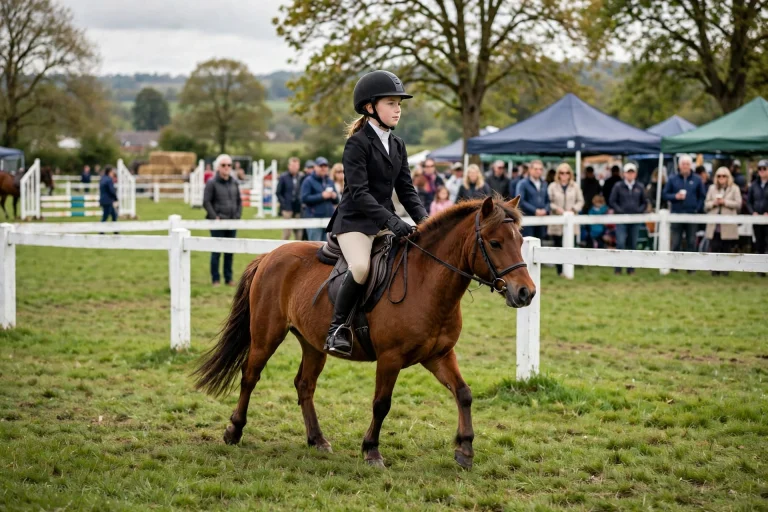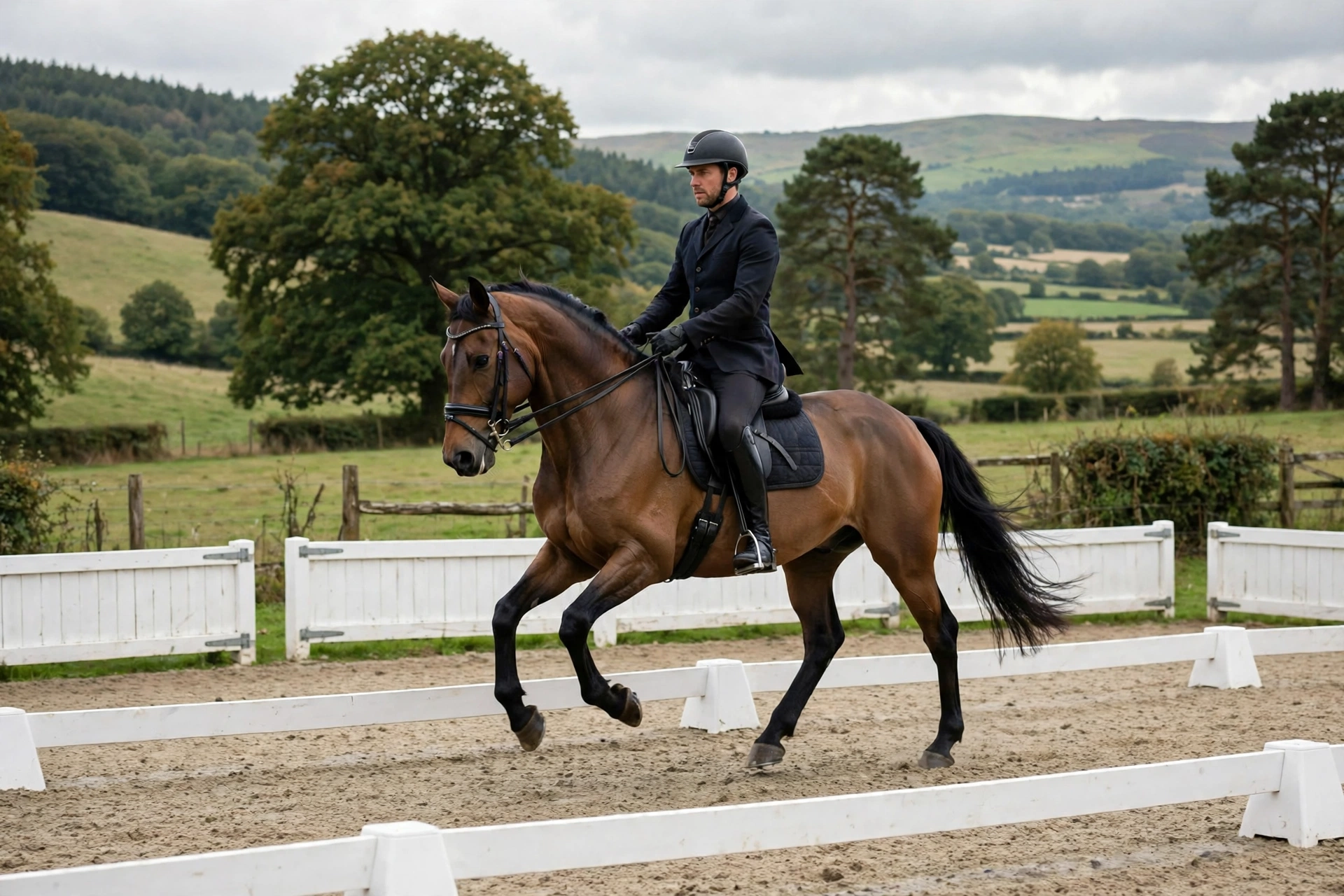
A helmet for riding in a dressage test is a riding helmet that protects the rider’s head from falls while performing dressage movements in the arena. Dressage is the art of riding a horse through a set sequence of movements, from circles and transitions to collected gaits and lateral work, judged on harmony, precision, and the horse’s way of going. A fall can happen at any gait, so a well-fitting riding helmet is essential every time you ride a test.
Dressage may look calm from the outside, but it asks a lot of both horse and rider. The horse works in a collected frame, the rider gives quiet aids, and the pair moves through the test in a set order, often in front of a judge and an audience. Concentration is high, the arena can be busy, and a spook or a stumble can unseat even an experienced rider in a moment.
What is a dressage test?
A dressage test is a set sequence of movements ridden in a marked arena, usually 20 by 60 metres or 20 by 40 metres for lower levels. The rider follows a pattern of circles, straight lines, transitions between gaits, and changes of direction, with each movement marked by a judge. Tests are graded by level, from introductory tests with walk, trot, and simple shapes to advanced tests with flying changes, half-passes, and collected work.
The rider learns the test in advance and rides it from memory, aiming for smooth, accurate movements and a relaxed, willing horse. The judge marks each movement and gives collective marks for the rider’s position, the horse’s paces, and the overall harmony of the pair. A good test looks effortless, but it takes years of training to ride well.
What type of helmet should I wear for a dressage test?
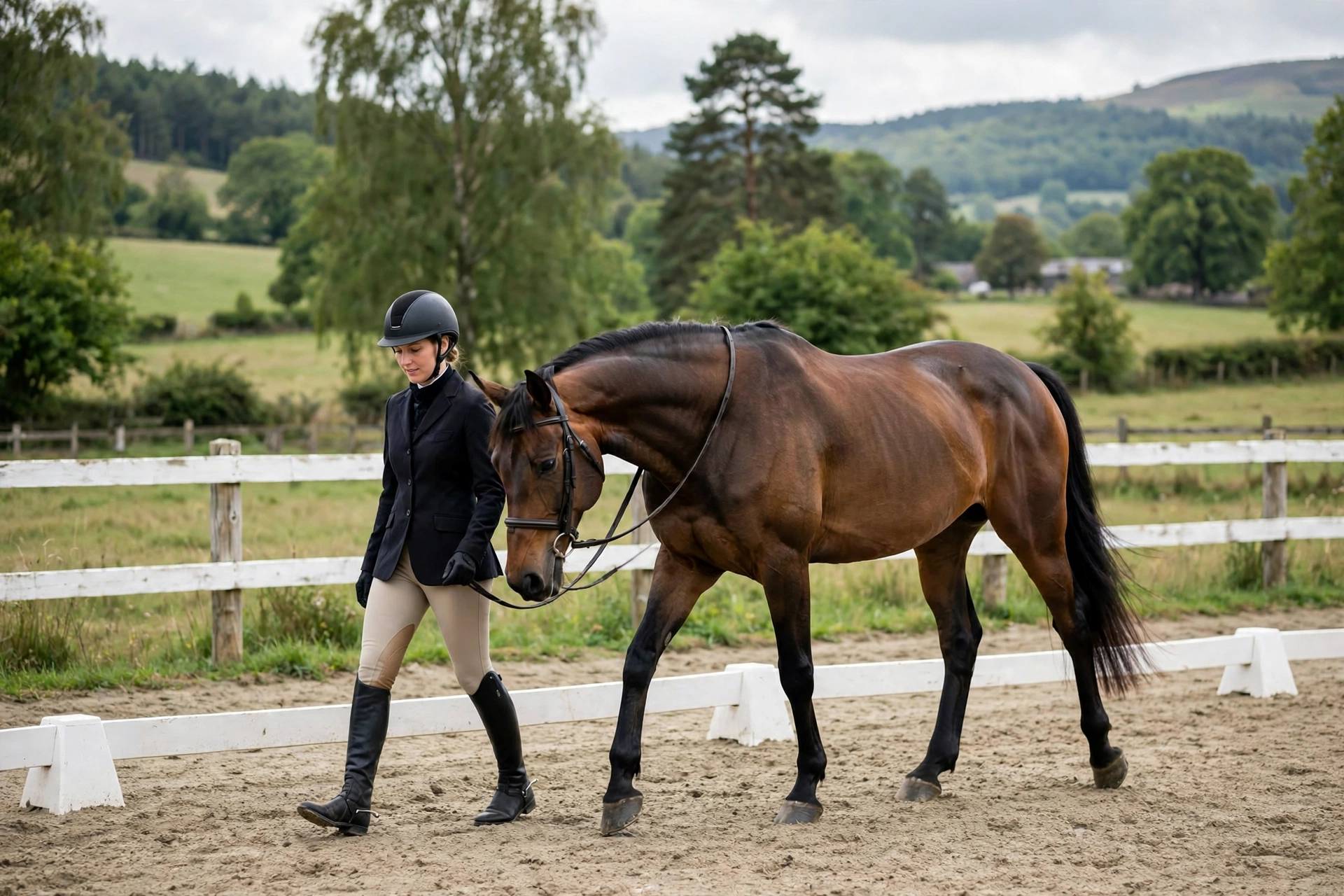
A riding helmet that meets a recognised safety standard is the right choice for a dressage test. Look for the standard marking and the date of manufacture inside the shell, and choose a helmet made for horse riding rather than for another sport. Traditional dressage riders often wear a helmet with a low profile and a plain, smart finish, while many riders now choose a modern ventilated helmet with a neat, dark cover.
Whatever style you choose, the helmet should be comfortable enough to wear for the whole test, including the warm-up, without distracting you. A helmet with good ventilation helps on warm days, and a chin strap that stays snug without pinching keeps the helmet in place. Avoid helmets with large peaks or bright colours for a dressage test, because a neat, classic look suits the discipline.
How should the helmet fit for dressage riding?
The helmet should sit level on your head, low on your forehead, with the front edge about two finger widths above your eyebrows. It should feel snug all the way around, without pressure points, and it should not rock forward or back when you nod or shake your head. Most riding helmets come in sizes, and many have a dial or pads at the back to fine-tune the fit.
Try the helmet on with your hair as you wear it for riding, because a thick plait or a hairnet changes the fit. The chin strap should be snug enough that you can fit one finger between the strap and your chin, and the helmet should stay put when the strap is fastened. If the helmet slides over your eyes when you look down, it is too loose or the wrong shape for your head.
What head risks are there in dressage?
The main head risk in dressage is a fall from the horse. Falls are less common in dressage than in jumping, because the work is done at walk, trot, and canter on a flat arena, but they still happen. A horse can spook at a noise, trip on uneven ground, or lose its footing in a turn, and a rider can come off in a moment, often landing on the head or shoulder.
Riders can also be kicked or struck while mounting, leading a horse, or working around the stable before the test. A horse that pulls back suddenly or swings its head can catch the rider across the face. In general terms, a helmet does not prevent a fall, but it spreads the force of an impact and greatly reduces the risk of a serious head injury when a fall happens.
How do I look after a dressage riding helmet?
Keep the helmet clean and dry between rides. Wipe the shell with a damp cloth, and let the liner air out after a sweaty session rather than leaving the helmet in a hot car or a damp tack room. Do not use solvents or harsh cleaners, because they can weaken the shell, and do not store the helmet where it can be knocked off a shelf or sat on.
Replace the helmet after a fall or a hard impact, even if there is no visible damage, because the shell and liner may have weakened in ways you cannot see. Replace it after about five years in general terms, because sweat, sunlight, and everyday use wear down the materials. Some helmets include a slip layer such as MIPS to reduce rotational forces in an angled impact, which is a useful extra for any riding helmet, including one worn for dressage.
What should I check before riding my dressage test?
Before you ride your test, check that the helmet fits well, the chin strap is fastened, and the shell is free of cracks and dents. Warm up your horse calmly, ride a few circles and transitions, and check the arena markers so you know where each movement starts. Make sure your horse is settled and listening before you enter at the marker and salute the judge.
It also helps to walk the test on foot beforehand, so the pattern is clear in your mind and you are not guessing where to turn. Keep your breathing steady, ride each movement one at a time, and remember that a calm, accurate test scores better than a rushed one. A helmet that fits well and stays out of your mind lets you focus on the riding.
Do I have to wear a helmet for a dressage test?
In general terms, helmets are required for riding at most shows and riding schools, and many venues require one for anyone mounted on the grounds. Check the rules for your own event before the day, and wear a helmet whenever you are in the saddle, whether you are warming up or riding the test itself.
Can I wear a top hat for a dressage test?
Top hats were once traditional at the highest levels of dressage, but most riders now wear a protective riding helmet instead. A top hat offers no head protection, so a helmet is the safer choice, and it is the standard at most levels and venues today.
Does a dressage helmet need to be a special colour?
There is no special colour required in general terms, but a neat, dark helmet suits the formal look of dressage and goes well with a dark jacket. Choose a helmet that fits well and meets a recognised standard first, and let the colour come second.

Olivia
Writer at Helmet Today, covering helmet reviews, fit and riding safety.