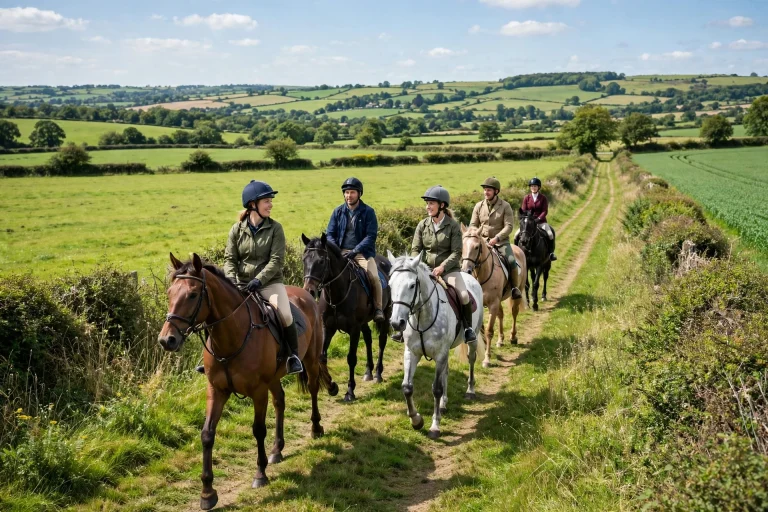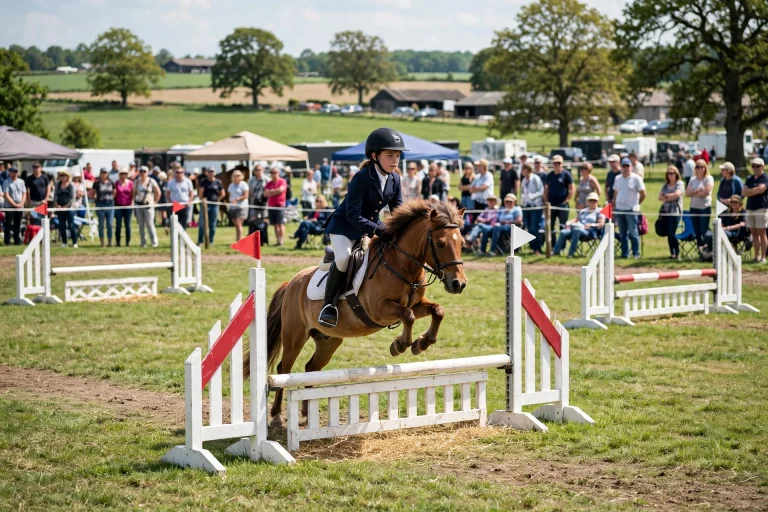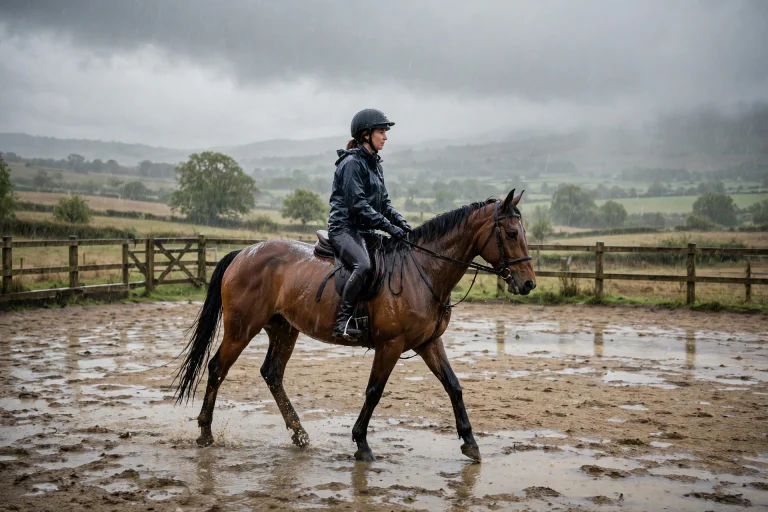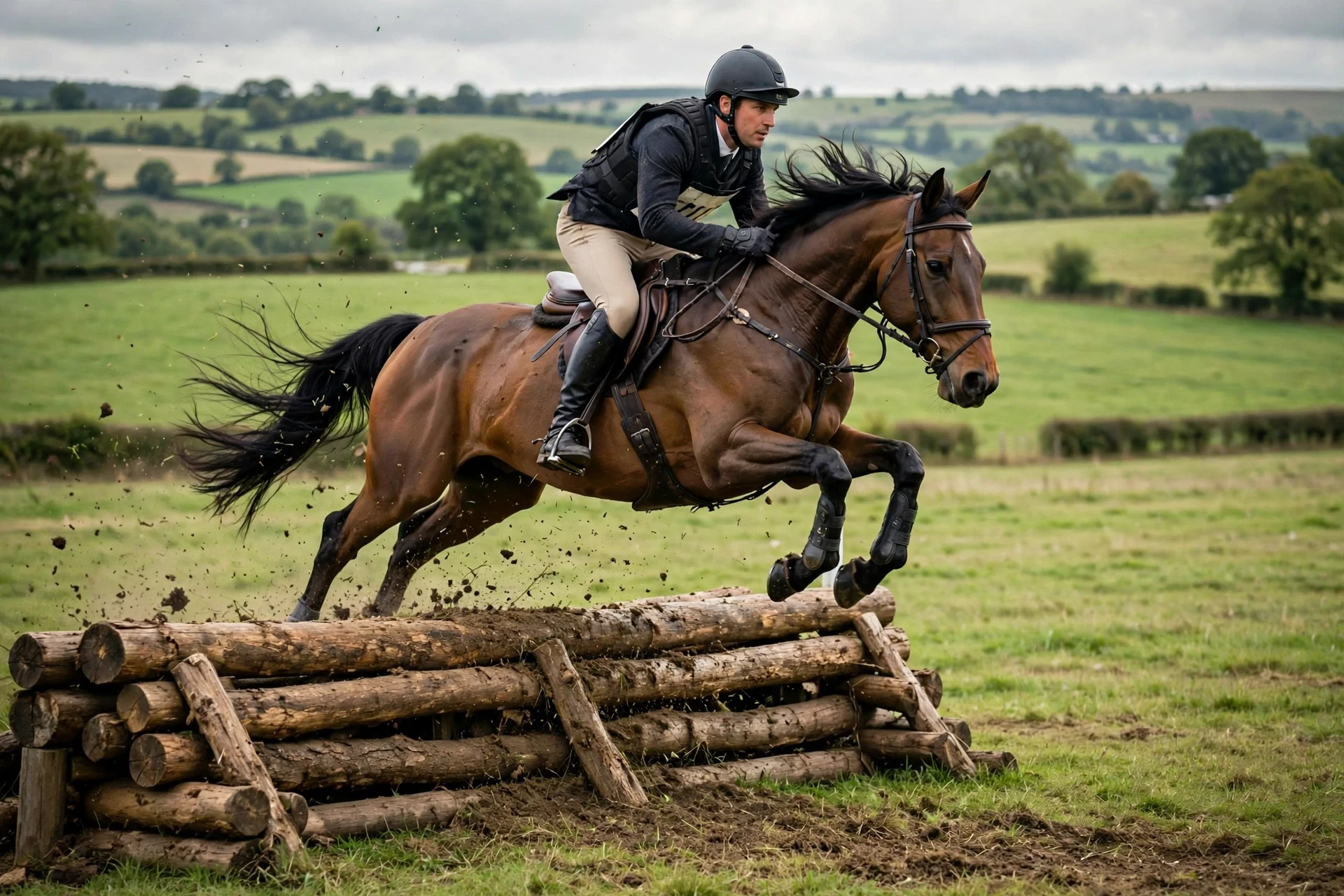
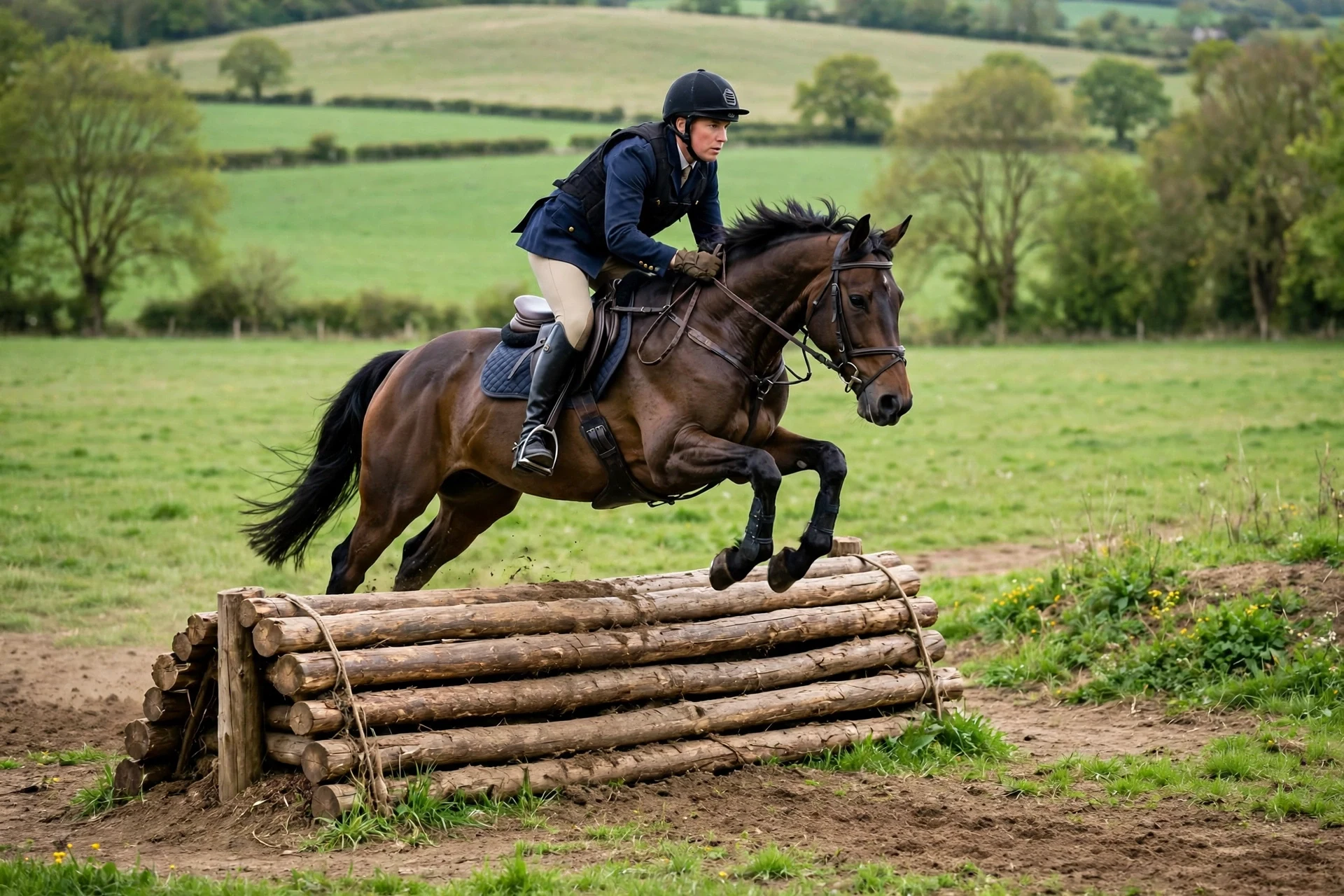
A helmet for riding in a hunter trial is a riding hat worn for a hunter trial, a cross-country competition in which horse and rider jump a course of natural fences against the clock. It protects the rider’s head in a fall, which is a real risk when jumping solid fences at speed over uneven ground. Hunter trials are competitive and fast, and the fences are solid, so a fall can be harder than a fall on the flat. A helmet is therefore essential kit for a hunter trial, and in general terms it is required by the rules of the event, not just a matter of personal choice.
What Is a Hunter Trial?
A hunter trial is a cross-country jumping competition, usually run over a course of natural fences such as logs, hedges, ditches, banks, and gates. Riders jump the course one at a time against the clock, and they are scored on time and on jumping faults, such as refusals or knockdowns. Classes range from small, inviting courses for newcomers to bigger, more technical courses for experienced riders and horses.
Hunter trials take their name from the old practice of testing hunters, the horses used for foxhunting, over country fences. Today they are a popular entry point into cross-country riding, and they are run by riding clubs, pony clubs, and equestrian centres. Because the fences are solid and the ground is natural, a hunter trial is more demanding than show jumping in an arena, and the rider needs to be prepared for the terrain as well as the jumps.
How Is a Hunter Trial Helmet Different From Other Riding Hats?
In most cases, a helmet for a hunter trial is the same as a standard riding hat, and there is no special design made only for hunter trials. Riders usually wear the hat they use for cross-country schooling or eventing, provided it fits well and meets the safety standard required by the event’s rules. Some events set out which standards are accepted, so it is worth checking the schedule or the rulebook before the day.
Many riders choose a skull cap for a hunter trial, because it is light, close-fitting, and easy to wear under a silk in the rider’s colours. A skull cap has no fixed peak, which some riders prefer when jumping, since a peak can catch or dip in a fall. A lightweight, well-ventilated hat is also a good choice, because cross-country riding is physical work. If you want to understand one of the safety technologies used in modern helmets, reading about what MIPS is for helmets is a good place to start, as some riding hats now include that system.
Why Do Riders Need a Helmet in a Hunter Trial?
Riders need a helmet in a hunter trial because jumping solid fences at speed carries a real risk of a fall, and a fall at a fence can be a hard one. A horse may refuse, run out, or catch a leg on a fence, and the rider can be thrown forwards onto the fence or the ground. The ground on a cross-country course can be hard, rutted, or uneven, and a fall onto a log, a ditch edge, or a fence post can cause a serious head injury.
A helmet gives the head a hard shell and a shock-absorbing liner between it and the ground or the fence, which can turn a serious injury into a much lighter knock. It also protects against low branches on wooded sections of the course. In general terms, a helmet does not prevent falls, and it cannot protect against every kind of impact, but it is the single most important piece of safety kit a rider can wear in a hunter trial.
What Should a Hunter Trial Helmet Fit Like?
A riding helmet for a hunter trial should fit snugly all round the head, without pressure points and without wobbling when the rider shakes their head. It should sit level, covering the forehead without slipping down over the eyes, and the back should sit low enough to protect the back of the head. If the helmet can be rocked forwards or backwards easily, it is probably too loose, and it may shift or come off in a fall.
The chin strap should be fastened snugly before mounting, since a loose strap can let the helmet come off at the worst moment, and a fall at a fence is the worst moment of all. It is worth trying the helmet on with the rider’s usual hair style and with a silk cover, since these can change the fit. In general terms, comfort matters too: a helmet that pinches or presses will distract the rider over a course, and a comfortable helmet lets the rider focus on the fences ahead.
When Should a Hunter Trial Helmet Be Replaced?
A riding helmet should be replaced after a fall in which the head hits the ground or a fence, even if the hat looks fine from the outside. The liner inside a helmet can compress or crack in a heavy knock, and that damage may not be visible under the shell. A helmet that has already absorbed a hard blow may not protect as well the next time, so it is generally sensible to retire it after a serious impact and use a new one.
Age and wear matter as well. A helmet that has been dropped onto a hard yard surface, left in a hot car, or used for several seasons may no longer fit or protect as it once did. Checking the helmet before each event is a good habit: look for cracks, loose straps, worn padding, or a shell that feels brittle. If anything seems wrong, or if the helmet no longer fits snugly, it is time to replace it rather than risk using it over a cross-country course.
What Other Kit Goes With a Hunter Trial Helmet?
A riding helmet for a hunter trial is usually worn with a body protector, riding boots, gloves, and a cross-country top in the rider’s colours. A body protector is often required by the rules for cross-country riding, and it guards the torso in a fall, especially a fall at a solid fence. Boots with a small heel stop the foot from slipping through the stirrup, and gloves help the rider keep a good grip on the reins at speed.
Many riders also wear a medical armband, which carries their details in case they need help after a fall, and a stopwatch so they can judge their pace against the optimum time. The helmet works as part of this whole set: it protects the head, while the other kit protects the body and helps the rider stay in control over the course. No single item does the whole job on its own, and a hunter trial is safest when the rider is dressed for the fences they are jumping.
Do I need a helmet for a hunter trial?
Yes, in general terms a helmet is essential for a hunter trial. Most events require riders to wear one, and the rules usually set out which safety standards are accepted, so check the schedule before the day.
Can I wear a jockey skull cap for a hunter trial?
Yes, a skull cap is a common choice for hunter trials, provided it meets the event’s accepted safety standard. Many riders wear a skull cap with a silk cover in their colours, and it is light and close-fitting for jumping.
Do I need a body protector for a hunter trial?
In general terms, yes. Most hunter trials require a body protector for cross-country jumping, and it works alongside the helmet to protect the rider in a fall at a fence.

Olivia
Writer at Helmet Today, covering helmet reviews, fit and riding safety.