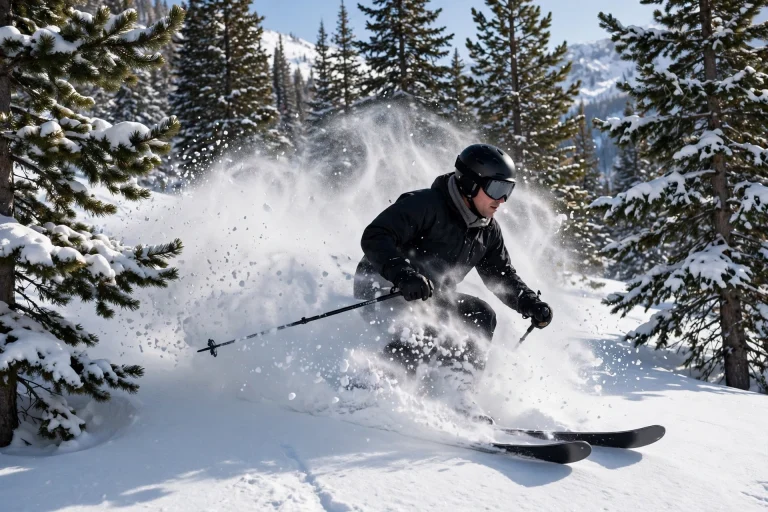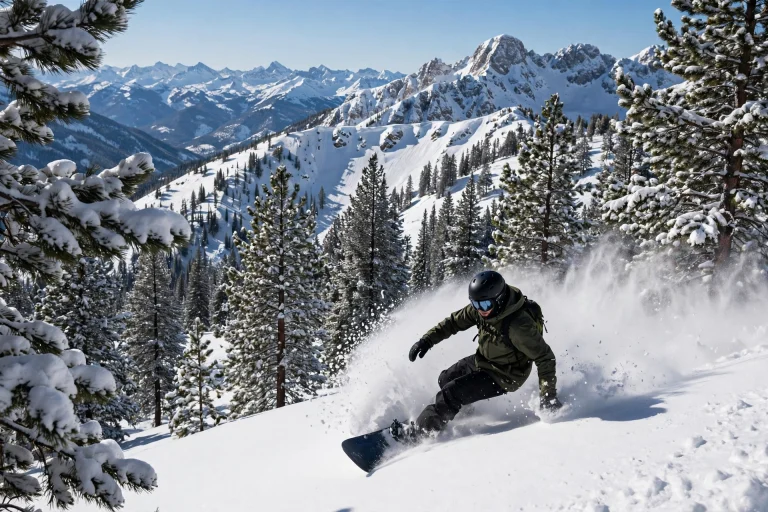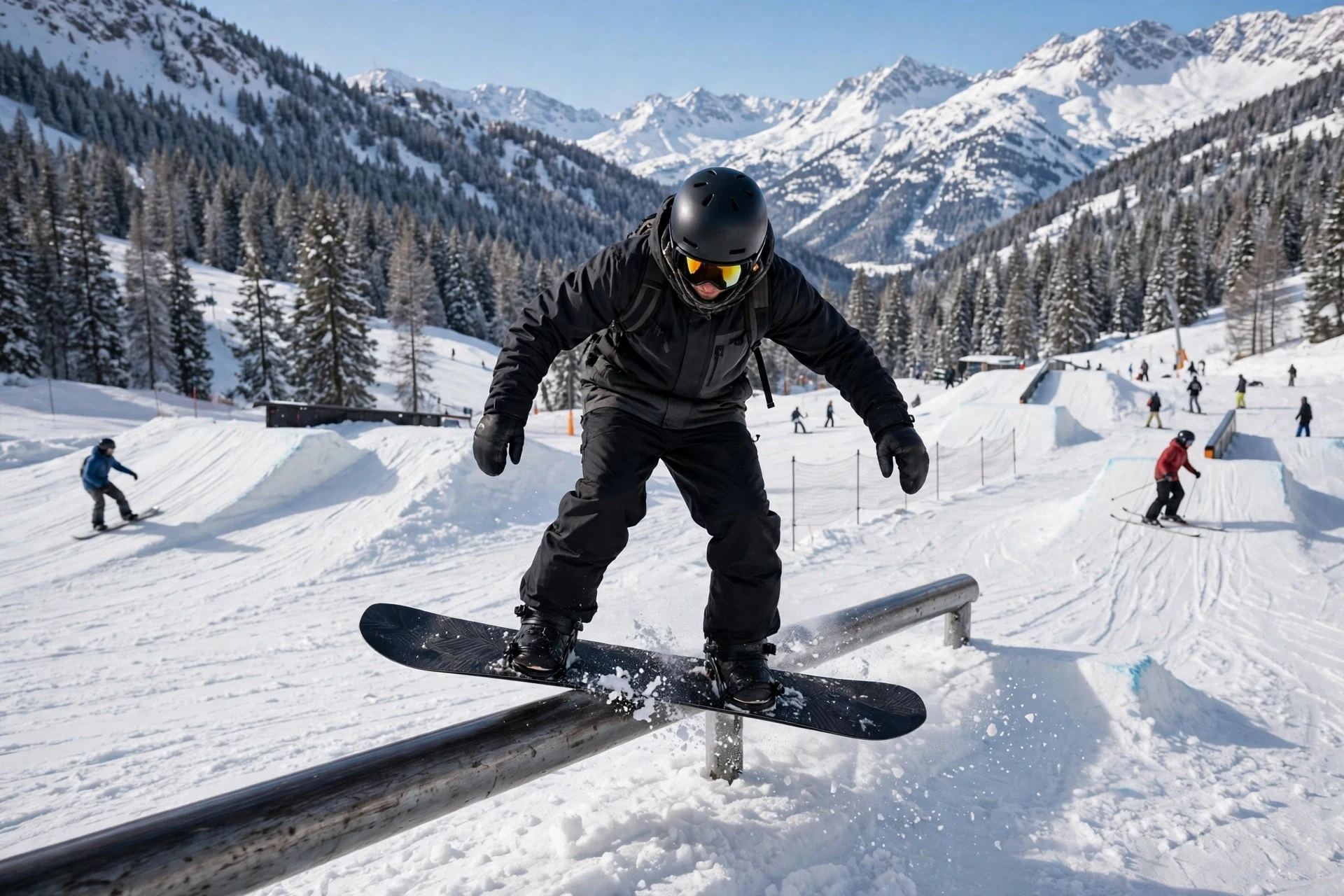
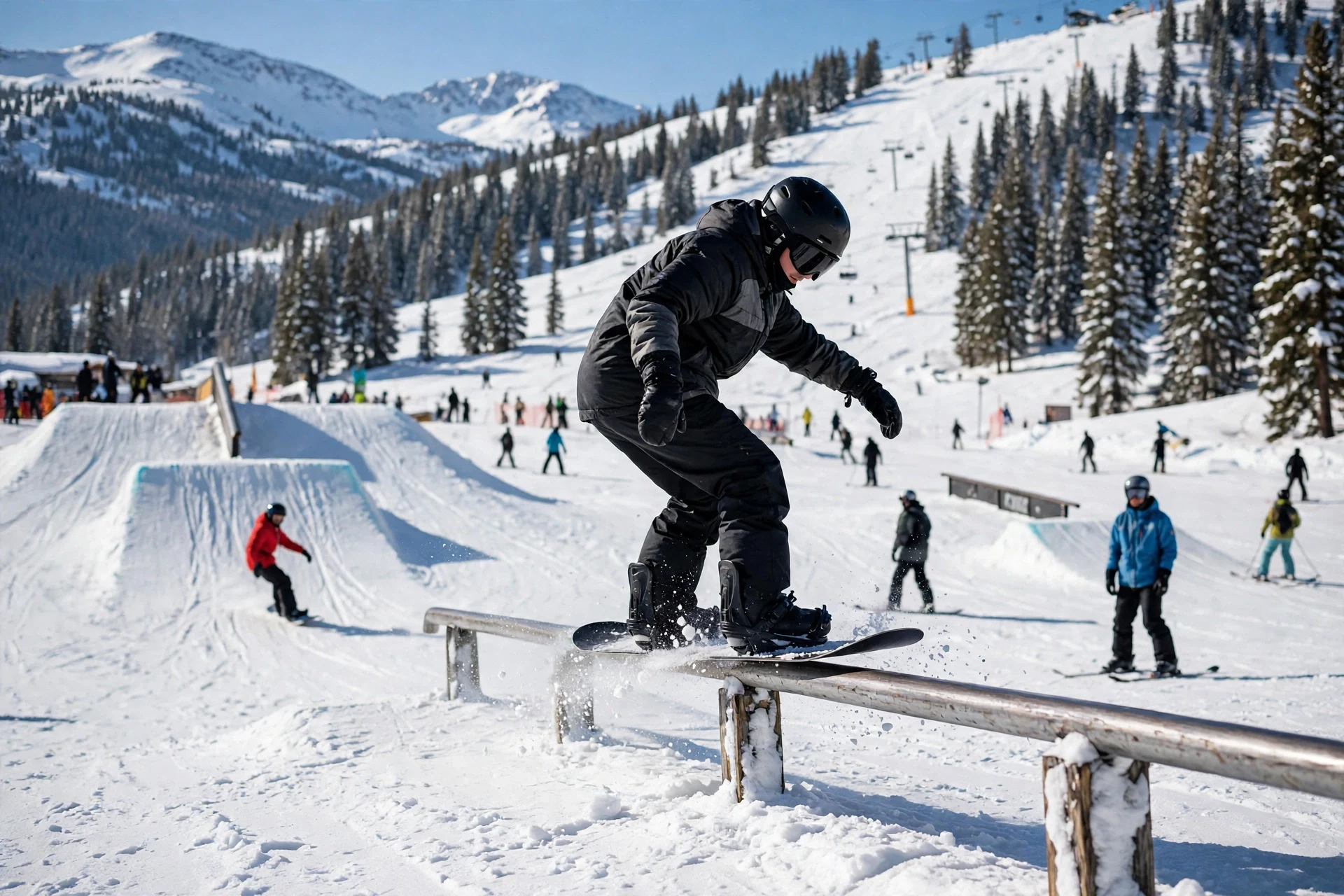
A snowboard helmet for park riding is a snow helmet worn in the terrain park, where riders hit jumps, rails, boxes, and the halfpipe. It protects the head from hard landings, falls onto rails and metal features, and impacts on firm, icy snow. Park riding is one of the most creative parts of snowboarding, but it is also one of the hardest on the body, because tricks are tried again and again and falls are part of learning. A good park helmet is built for repeated knocks, and it is one of the first things a park rider should own.
What Is Park Riding in Snowboarding?
Park riding means riding the terrain park, a marked area of a ski resort that is built for freestyle snowboarding. A terrain park usually has jumps of different sizes, rails and boxes to slide on, a halfpipe, and smaller features such as rollers and berms. Riders move through the park in a line, hitting one feature after another, and they practise tricks such as spins, grabs, and slides.
Unlike riding open slopes, park riding is about repeating the same feature many times to learn a trick, which means falling often. A rider learning a new spin or a rail slide may fall on most attempts, and the snow in a park is often firm and groomed, so landings can be hard. In general terms, the bigger the feature and the faster the approach, the harder the fall can be, which is why park riders treat head protection as basic kit.
How Is a Park Snowboard Helmet Different From Other Snow Helmets?
A snowboard helmet for park riding is a snow helmet, and it shares the hard shell and impact-absorbing liner found in other snow helmets, but it is often chosen for a low profile and a fit that works well with goggles. Park riders spend a lot of time in the air and on metal features, so a helmet that sits close to the head and does not snag is useful. Many park helmets have vents that can be opened or closed, so the rider can let heat out on a warm spring day or keep it in on a cold morning.
The fit with goggles matters a lot in the park, because a gap between the helmet and the goggles lets in cold air and snow, and a helmet that pushes the goggles down can fog them up. If you want to understand one of the safety technologies used in modern helmets, reading about what MIPS is for helmets is a good place to start, since some park helmets use that system.
Why Do Park Riders Need a Helmet?
Park riders need a helmet because the features in a terrain park are hard. A rail or a box is made of metal or hard plastic, and a fall onto one can strike the head with real force. Jumps send riders into the air, and a landing that goes wrong can bring the head down onto firm, groomed snow or an icy landing area. The halfpipe has hard, curved walls, and a rider who catches an edge on the lip can fall a long way onto a solid surface.
The helmet also helps in collisions with other riders, which can happen when the park is busy and several riders are moving through the same line of features. In general terms, a helmet does not make park riding safe in every situation, and it cannot protect against every kind of impact, but it does reduce the force that reaches the head in the kinds of knocks that are common in the park. For that reason, many resorts ask riders to wear a helmet in the terrain park, and most experienced park riders would not ride without one.
What Should a Park Snowboard Helmet Fit Like?
A snowboard helmet for park riding should fit snugly all round the head, without pressure points and without wobbling when the rider shakes the head. The helmet should sit level, covering the forehead without slipping down over the eyes, and the back should sit low enough to protect the back of the head. If the helmet can be rocked forwards or backwards easily, it is probably too loose, and it may shift in a fall at the worst moment.
The chin strap should be fastened snugly before dropping into the park, and the goggles should sit flush against the helmet with no gap. It is worth testing the fit with any beanie or balaclava that will be worn underneath, because layers can change how the helmet sits. Trying the helmet on with the goggles that will actually be used is also sensible, since different goggle shapes meet the helmet differently. In general terms, comfort matters too: a helmet that pinches or presses will distract a rider who is trying to land a trick, and a comfortable helmet is more likely to be worn every time.
What Other Kit Goes With a Park Snowboard Helmet?
A park snowboard helmet is usually worn with goggles, gloves, and impact protection such as padded shorts or a back protector. Goggles protect the eyes from snow, wind, and glare, and they work with the helmet to keep the face warm. Padded shorts cushion falls onto the hips and tailbone, which are common when learning spins and rail tricks, while a back protector guards the spine on hard landings.
Warm, waterproof clothing keeps the rider comfortable through repeated falls and long sessions in the snow. The helmet works as part of this whole set: it protects the head, while the other kit protects the body and keeps the rider warm enough to keep practising. No single item does the whole job on its own.
When Should You Replace a Park Snowboard Helmet?
A snowboard helmet for park riding should be replaced after a hard impact, even if it looks fine from the outside. The liner inside a helmet can compress or crack in a heavy knock, and that damage may not be visible under the shell. A helmet that has already absorbed a hard blow may not protect as well the next time, so it is generally sensible to retire it after a serious impact and use a new one.
Age and wear matter as well. Repeated cold, sun, and knocks can wear down the straps, the liner, and the shell over time, and a helmet that has been used hard for several seasons may no longer fit or protect as it once did. Checking the helmet before each session is a good habit: look for cracks, loose straps, worn padding, or a shell that feels brittle. If anything seems wrong, or if the helmet no longer fits snugly, it is time to replace it rather than risk using it in the park.
Do I need a helmet for park riding?
Yes, in general terms a helmet is essential for park riding. Jumps, rails, and icy landings make head impacts likely, and a helmet reduces the force of knocks that are hard to avoid while learning tricks.
Can I use any snow helmet in the park?
In general terms, yes, any well-fitting snow helmet gives head protection in the park. A park-focused helmet is often lower profile and pairs well with goggles, but the fit and condition matter more than the label.
Do park helmets work with all goggles?
Most do, but the fit varies. Goggles should sit flush against the helmet with no gap, so it is worth trying the helmet and goggles together before buying either one.

Olivia
Writer at Helmet Today, covering helmet reviews, fit and riding safety.