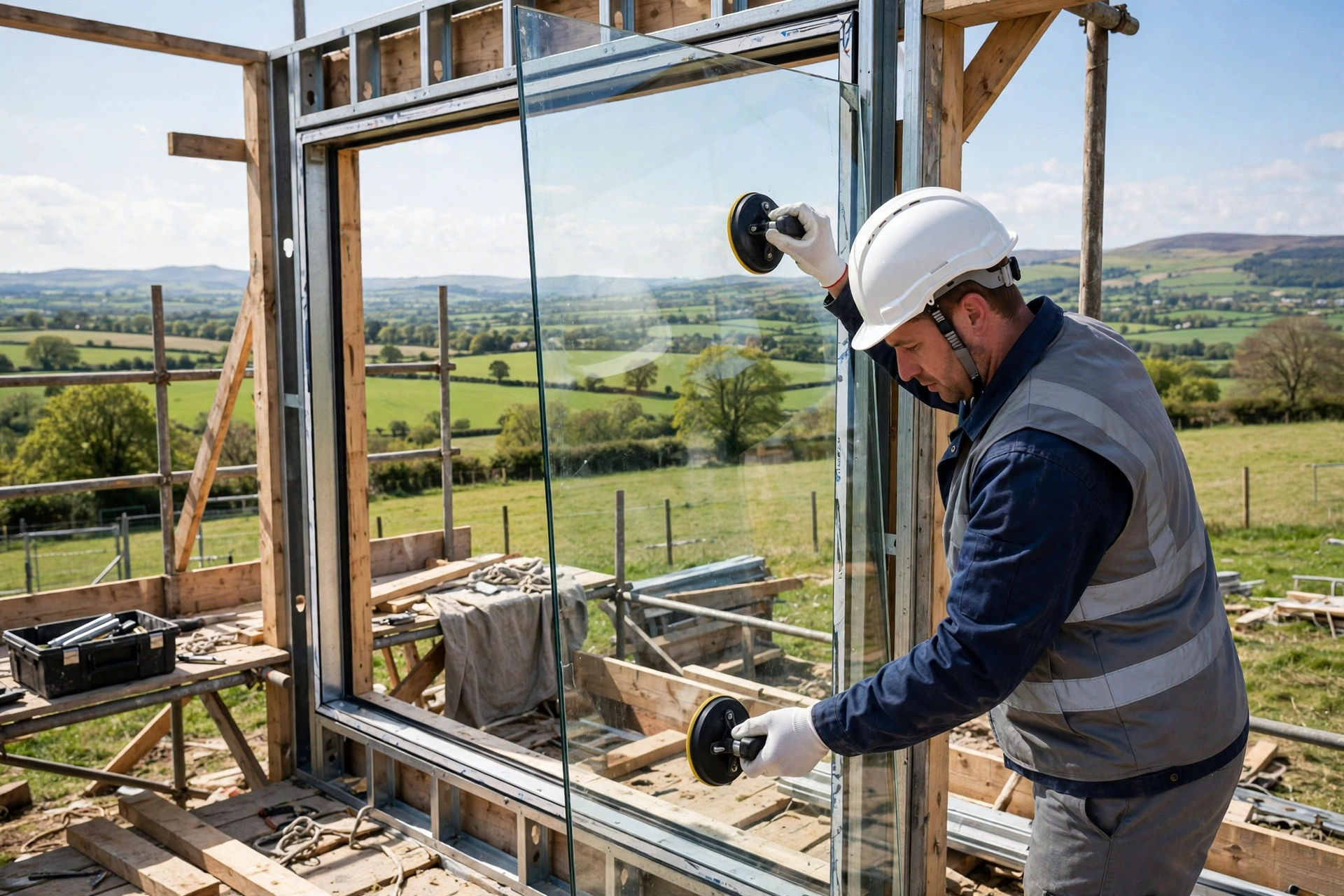
A glazier helmet is a hard hat that protects a glazier’s head from falling glass, frames, and bumps while fitting windows and glazing on site. Glaziers cut, handle, and install glass in windows, doors, shopfronts, and curtain walls, often working at height on building sites. Glass is heavy, sharp, and fragile, so a hard hat is a sensible part of the glazier’s everyday kit.
Glazing work ranges from replacing a single broken pane in a house to fitting huge sheets of glass into a new office block. Glaziers work with suction lifters, cranes, and scaffolding, and they often work alongside other trades on a live site. A hard hat protects the head from the knocks and falling objects that come with that environment.
What does a glazier do all day?
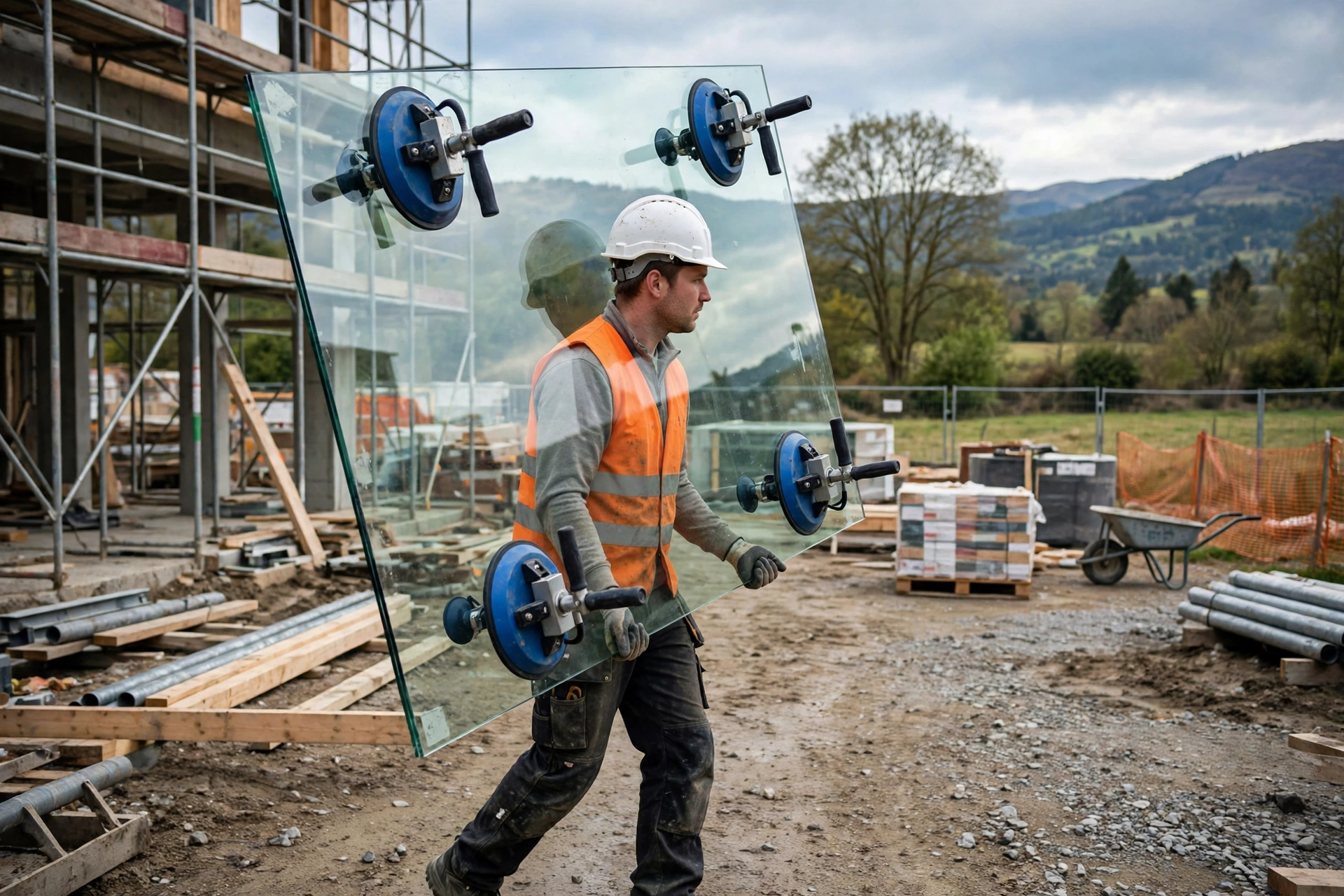
A glazier’s day often starts by measuring openings and checking that the glass delivered matches the job. Then the fitting begins: carrying sheets of glass with suction lifters, setting them into frames, fixing them with beads or sealant, and checking that they sit level and true. Large panes may need a crane or a vacuum lifter, and the whole crew works together to guide the glass into place.
As well as new installations, glaziers replace broken panes, repair shopfronts, and fit mirrors, splashbacks, and glass balustrades. The work calls for care and teamwork, because a sheet of glass can be heavy and awkward, and a single slip can crack a pane or cause a deep cut. Good protective kit, including a hard hat, helps the glazier stay safe through the day.
What head hazards do glaziers face?
The most obvious head hazard is falling glass. When a pane is being lifted into a frame, especially at height, a slip or a failed suction cup can drop a heavy sheet, and broken glass falling from above can cause deep cuts. Glaziers also work under scaffolding and on sites where other trades are working overhead, so tools and offcuts can fall from above.
Frames and fittings add another risk: aluminium and steel frames are heavy and awkward, and a frame swinging on a hoist can strike the head. Glaziers also work around low lintels, open stairwells, and the edges of balconies, so bumps and falls are a real danger. In general terms, a hard hat spreads the force of a blow and helps turn a serious injury into a minor knock.
What type of helmet should a glazier wear?
A standard industrial hard hat that meets a recognised safety standard is the right choice for glazing work. Look for the standard marking and the date of manufacture inside the shell, and choose a size that fits well. A cap-style hard hat with a short peak is popular with glaziers, because it does not get in the way when you look up at a frame or lean into a window opening.
Some glaziers prefer a hard hat with a brim all the way around, which keeps rain and dust out of the face and neck. A white or bright-coloured shell is easy to spot on site. Whatever style you choose, make sure it is a genuine hard hat and not a bump cap, which guards against minor bumps only and does not protect against falling glass or frames.
How should the helmet fit for glazing work?
The helmet should sit level on your head, low on your forehead, with the front edge about two finger widths above your eyebrows. It should feel snug but not tight, and it should stay in place when you bend over to set a pane or look up at a frame. Most hard hats have an adjustment dial or a sliding strap at the back, so set the fit before you start work.
Check that the suspension inside the helmet is clean and dry before you put it on, because building sites leave it dusty and damp. Do not wear a thick beanie underneath, because it changes the fit and reduces the gap between the shell and your head that absorbs impacts. A thin liner made for use under a helmet is a better choice in cold weather, and it can be washed regularly.
What other protection goes with the helmet?
A hard hat is only one part of a glazier’s kit. Eye protection is important, because cutting and handling glass can send small shards flying, and safety glasses that fit well with the hard hat are the best choice. Cut-resistant gloves protect the hands from sharp glass edges, and they are essential whenever a pane is being carried or fitted.
Sturdy safety boots protect the feet from dropped glass and frames, and knee pads help when working low on a window. High-visibility clothing may also be required on larger sites. Together, this kit lets the glazier handle heavy, sharp glass safely through a long day on site.
How do I look after a glazier helmet?
Glazing work is dusty, so wipe the shell and the suspension clean at the end of each day. Use a damp cloth and mild soap, and let the helmet dry in the shade. Do not use solvents or harsh cleaners, because they can weaken the plastic shell. Check the shell for cracks, dents, or deep scratches, and check that the suspension straps are not frayed or stretched.
Replace the helmet after a hard impact, even if there is no visible damage, because the shell may have weakened in ways you cannot see. Replace it after about five years in general terms, because sunlight and everyday use wear down the materials. Some helmets include a slip layer such as MIPS to reduce rotational forces in an angled impact, which is a useful extra for any hard hat, including one worn for glazing.
Do glaziers have to wear a helmet?
In general terms, a helmet is required on a live construction site where there is a risk of falling objects or overhead work, and the site manager sets the rules for the site. It is wise to wear one whenever glass is being lifted overhead or other trades are working above you.
Can a glazier wear a bump cap instead of a hard hat?
A bump cap protects against minor bumps, but it is not a hard hat and does not protect against falling glass or frames. It is not a substitute for a hard hat on a building site where glass is being lifted or other trades are working overhead.
Does a glazier helmet protect against broken glass?
A hard hat protects the head from falling glass and debris, but it does not protect the face, neck, or hands. Pair it with safety glasses and cut-resistant gloves, and never stand underneath a pane while it is being lifted into place.

Olivia
Writer at Helmet Today, covering helmet reviews, fit and riding safety.