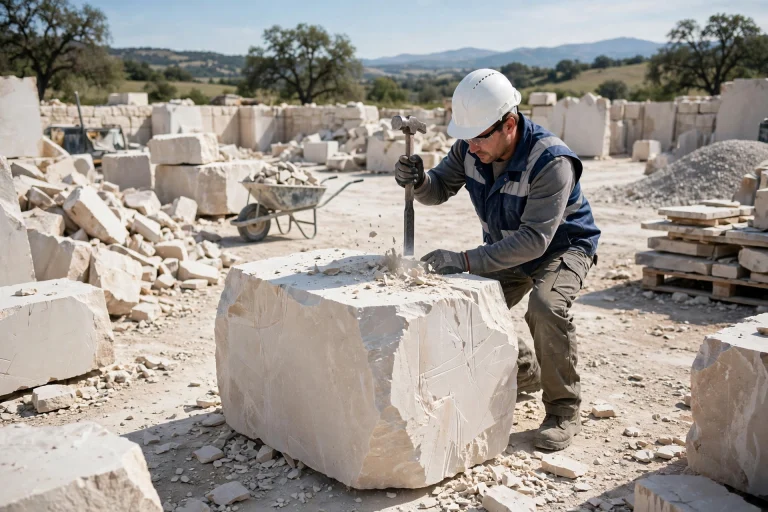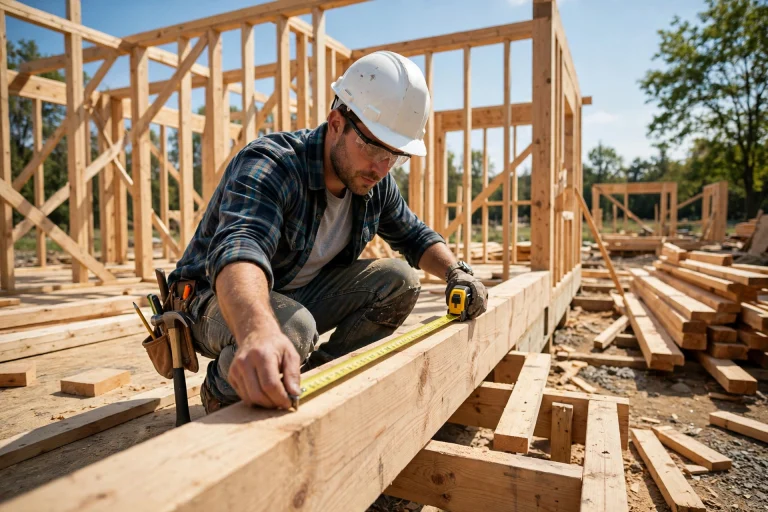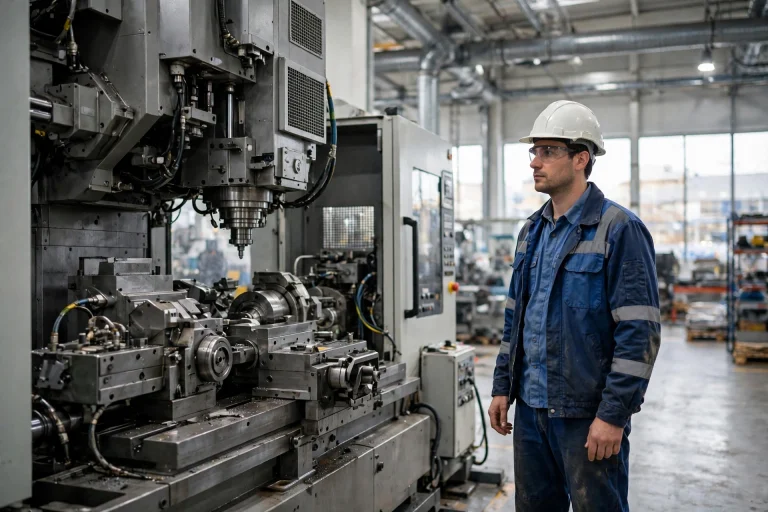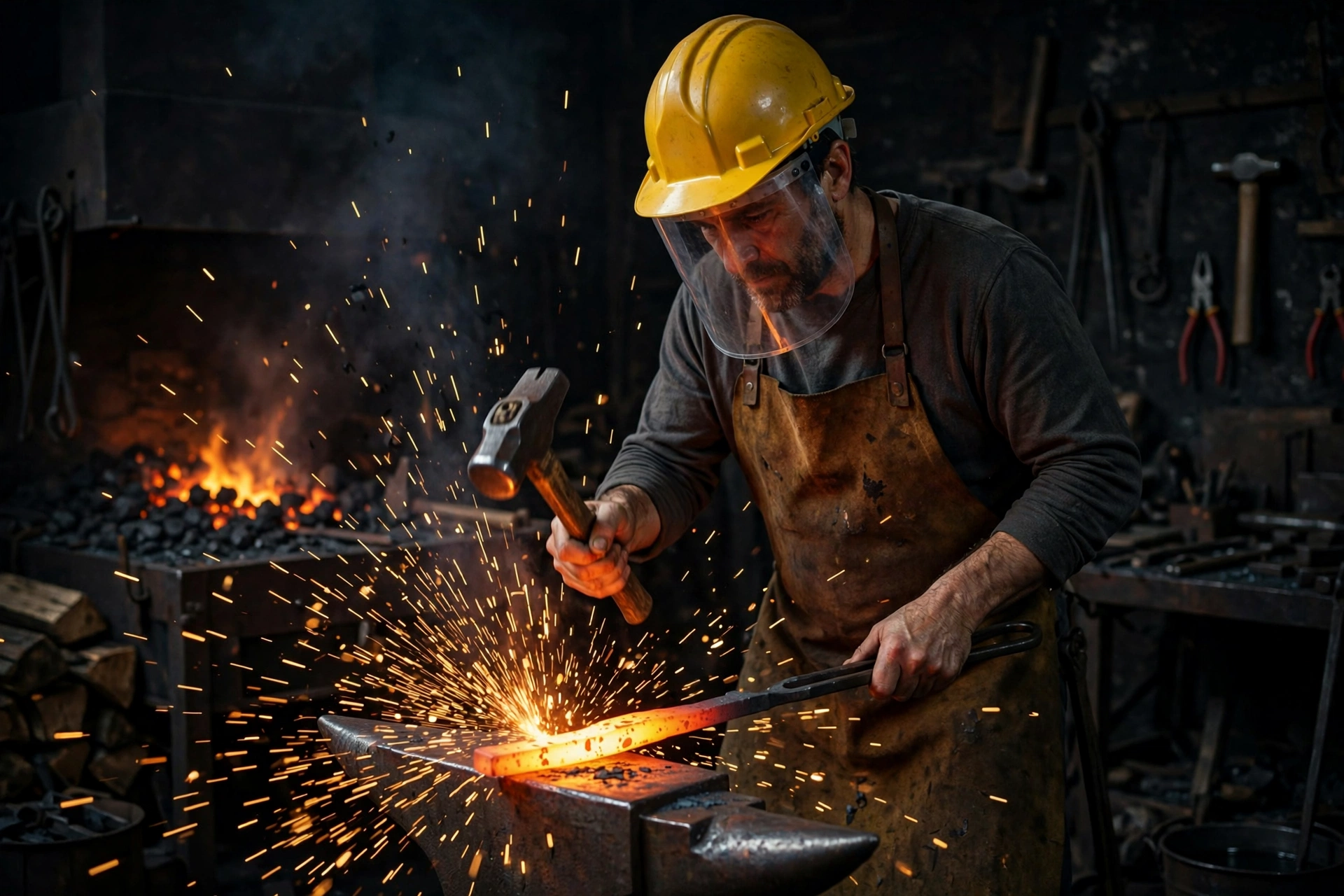
A blacksmith helmet is a hard hat or a face shield that protects a blacksmith’s head and face from sparks, heat, and falling metal while forging in the workshop. Blacksmiths heat metal in a forge until it glows, then shape it with hammers, anvils, and presses. The work throws off sparks, scale, and hot offcuts, so head and face protection is a normal part of the craft.
Blacksmithing is one of the oldest trades, but the hazards have not changed much. A forge runs very hot, hammers strike metal thousands of times a day, and pieces of hot scale fly off the workpiece with every blow. A helmet or a face shield, worn with the rest of the smith’s protective kit, keeps the head safe while the smith focuses on the work.
What does a blacksmith do all day?
A blacksmith’s day starts with lighting or checking the forge and getting the fire to the right heat. Then the work begins: heating a bar of steel until it glows orange, carrying it to the anvil with tongs, and hammering it into shape. The smith reheats the piece many times, bending, cutting, and punching it until it takes the shape of a tool, a hinge, a gate, or a piece of art.
As well as forging, blacksmiths weld, grind, and finish their work, fitting pieces together and adding details. Modern smiths may use power hammers and hydraulic presses alongside hand tools, and many take on repairs, railings, and decorative ironwork. The work is hot, noisy, and physical, and it calls for skill, patience, and steady protective habits.
What head hazards do blacksmiths face?
The most obvious head hazard is hot scale and sparks. When a hammer strikes hot metal, flakes of oxide scale fly off at speed, and they can burn the skin or damage the eyes. Sparks from grinding and welding are even hotter and faster, and they can land on the head, neck, or shoulders if they are not covered.
Blacksmiths also work around heavy metal stock stored on racks, swinging forge doors, and low beams in older workshops, so bumps and falling objects are a real risk. A dropped hammer or a piece of steel slipping from tongs can fall from bench height onto the head. In general terms, a hard hat spreads the force of a blow, while a face shield guards against sparks and scale that a hard hat alone cannot stop.
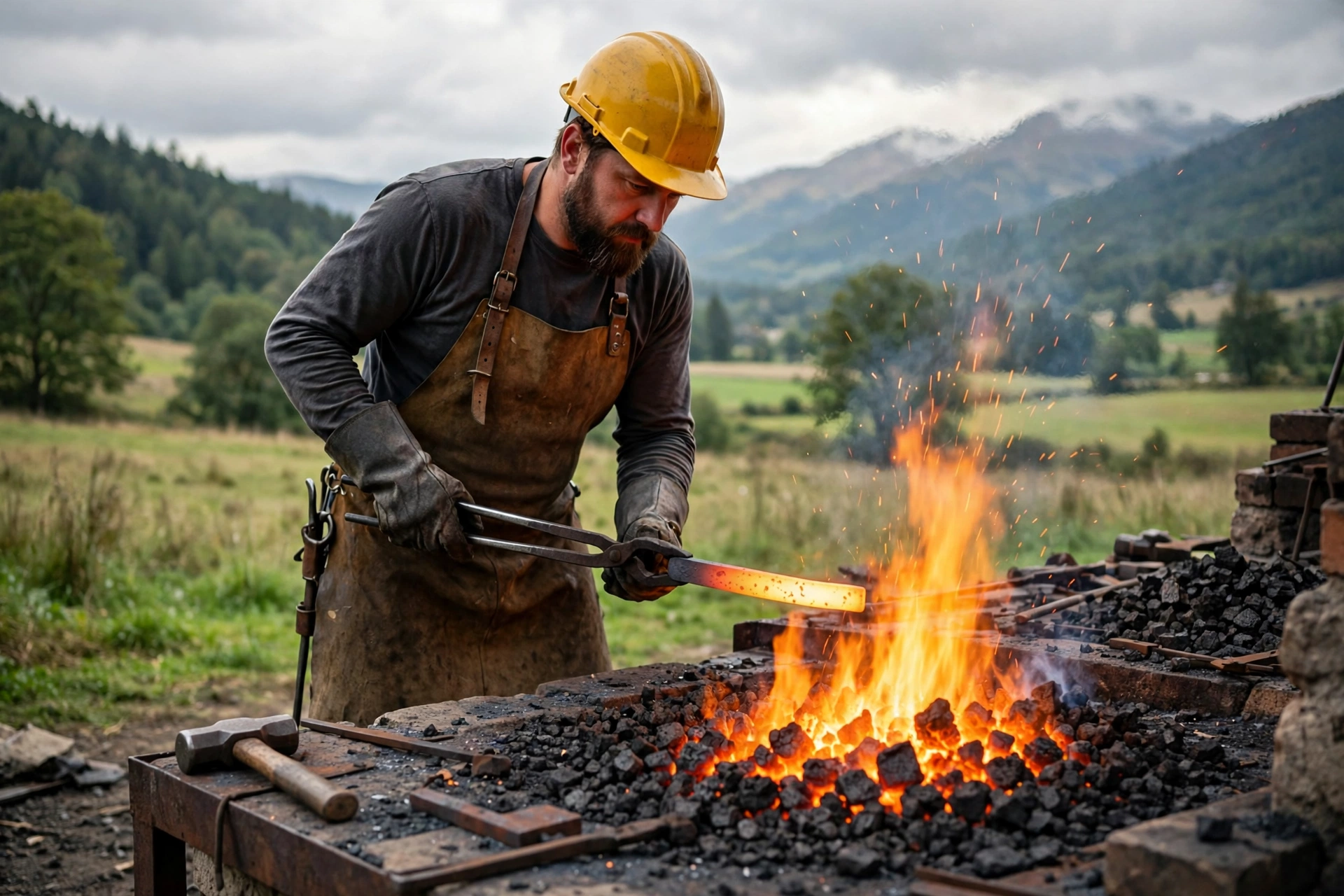
What type of helmet should a blacksmith wear?
The right choice depends on the work being done. For general workshop work, a standard industrial hard hat that meets a recognised safety standard protects against falling metal and bumps. For forging and grinding, a face shield worn with the hard hat, or a combined helmet and visor, gives extra protection against sparks, scale, and hot debris.
Look for a face shield with a clear, heat-resistant visor that covers the whole face and fits well with the hard hat. A dark welding visor is needed for welding work, but it is not a substitute for a clear shield when forging, because the smith needs to see the colour of the hot metal. Whatever combination you choose, make sure it fits well and does not slip when you bend over the anvil.
How should the helmet fit for blacksmithing work?
The helmet should sit level on your head, low on your forehead, with the front edge about two finger widths above your eyebrows. It should feel snug but not tight, and it should stay in place when you swing a hammer or bend over the anvil. Most hard hats have an adjustment dial or a sliding strap at the back, so set the fit before you light the forge.
Check that the suspension inside the helmet is clean and dry before you put it on, because a forge workshop leaves it dusty and damp with sweat. Do not wear a thick beanie underneath, because it changes the fit and reduces the gap between the shell and your head that absorbs impacts. A thin, fire-resistant liner made for use under a helmet is a better choice, and it can be washed regularly.
What other protection goes with the helmet?
A helmet is only one part of a blacksmith’s kit. Eye protection is essential, because scale and sparks fly with every hammer blow, and safety glasses worn under a face shield give a second layer of defence. A leather apron protects the body from hot scale and sparks, and heavy gloves protect the hands when handling hot metal, although they are usually taken off for fine hammer work.
Ear protection helps in a noisy forge, especially when using a power hammer or a grinder, and sturdy leather boots protect the feet from dropped steel and hot offcuts. Long sleeves in natural fibres are better than synthetics near a forge, because synthetics can melt. Together, this kit lets the smith work safely around heat and heavy metal all day.
How do I look after a blacksmith helmet?
A forge workshop is dusty and hot, so wipe the shell and the suspension clean at the end of each day. Use a damp cloth and mild soap, and let the helmet dry in the shade. Do not use solvents or harsh cleaners, because they can weaken the plastic shell. Check the shell for cracks, dents, or deep scratches, and check that the suspension straps are not frayed, stretched, or scorched.
Replace the helmet after a hard impact, even if there is no visible damage, because the shell may have weakened in ways you cannot see. Replace it after about five years in general terms, because heat and everyday use wear down the materials. Some helmets include a slip layer such as MIPS to reduce rotational forces in an angled impact, which is a useful extra for any hard hat, including one worn for blacksmithing.
Do blacksmiths have to wear a helmet?
In general terms, a helmet is worn where the workshop rules or the employer requires head protection, and many smiths wear a hard hat and face shield as standard kit. Even in a small private forge, it is wise to wear head protection when forging, grinding, or working under racks of metal.
Can a blacksmith wear a bump cap instead of a hard hat?
A bump cap protects against minor bumps, but it is not a hard hat and does not protect against falling metal. It is not a substitute for a hard hat where there is a risk of heavy stock falling from a rack or a tool dropping from above.
Does a blacksmith helmet protect against heat?
A hard hat and face shield protect against sparks, scale, and hot debris, but they do not make the wearer heatproof. Keep a safe distance from the forge when you are not working the metal, and pair the helmet with a leather apron and proper clothing for heat protection.

Olivia
Writer at Helmet Today, covering helmet reviews, fit and riding safety.