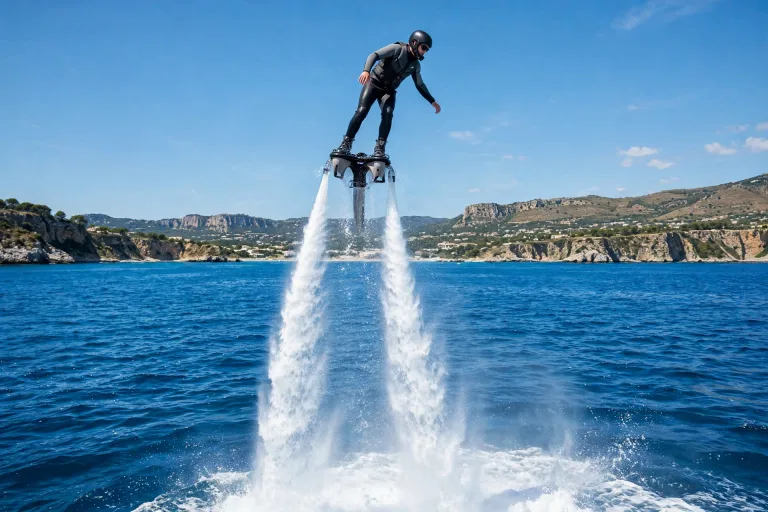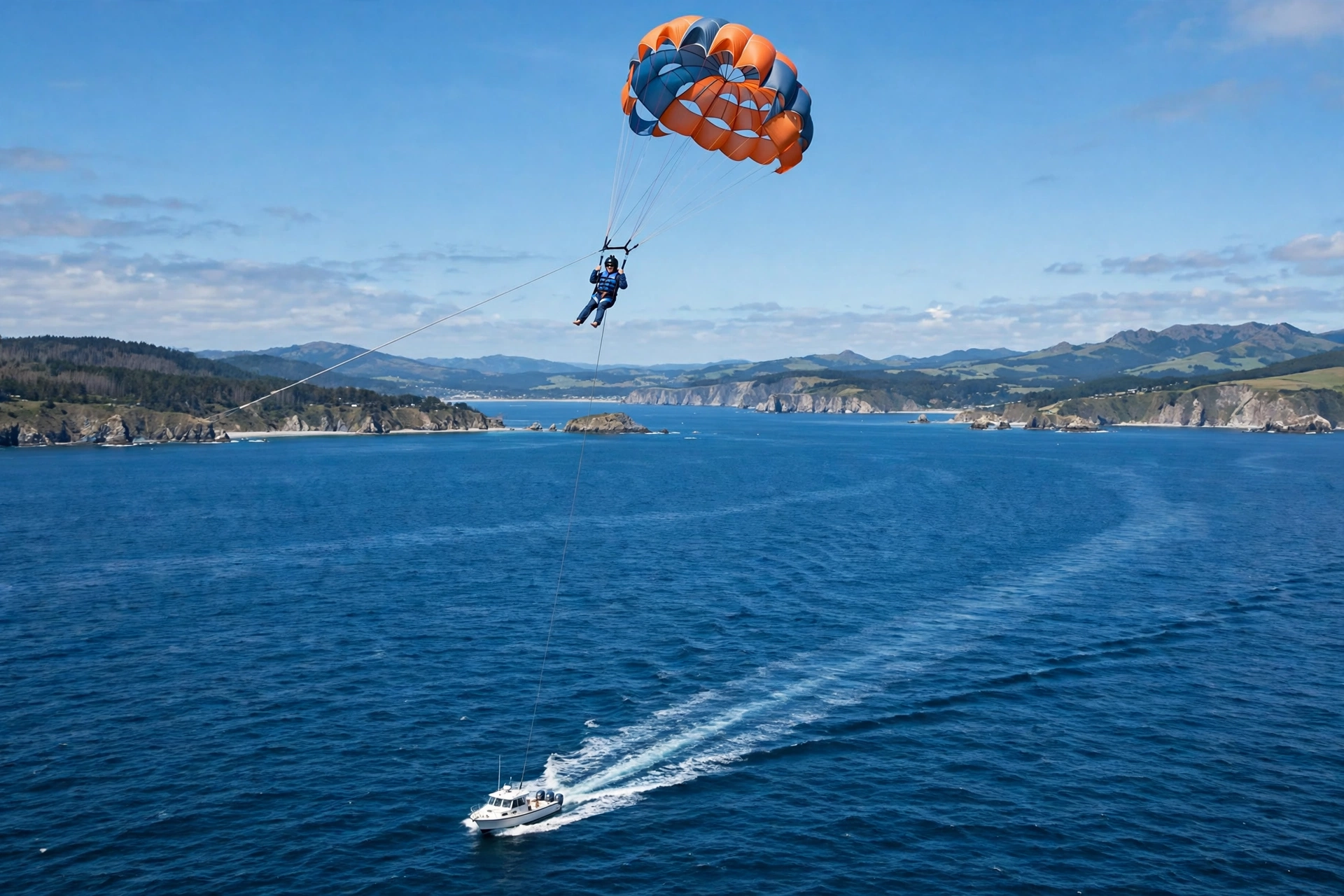
A helmet for parasailing is a light water-sports helmet worn to protect the head from knocks during take-off, landing, and any unexpected dip towards the water or the boat. In general terms, parasailing lifts a person into the air behind a boat using a parachute-like canopy, and the flight itself is gentle. The risk comes at the start and the end of the ride, when the flyer is close to the boat, the deck, and the water, and a helmet gives the head a layer of protection at those moments.
Many people picture parasailing as a calm ride high above the sea, and for most of the flight that is exactly what it is. But the take-off involves being pulled up from a moving boat, and the landing involves being winched back down onto a small deck. A gust of wind, a wave, or a mistimed step can turn either moment into a knock on the head. A helmet is a simple way to cover that risk.
Do you need a helmet for parasailing?
Whether you need a helmet for parasailing depends on the operator and the location, and in general terms many operators provide one as part of the safety kit. Some operators require every flyer to wear a helmet, while others offer one as an option. If a helmet is offered, it is worth wearing, because it costs nothing in comfort and it covers the riskiest parts of the ride.
Children and first-time flyers are the most likely to be given a helmet, because they are less sure on their feet during take-off and landing. In general terms, a flyer who is nervous, who is flying in windy conditions, or who is taking off from a beach rather than a boat deck has more reason to wear one. If the operator does not offer a helmet and you would feel safer with one, ask before you book, so you can choose an operator that provides one.
What type of helmet is best for parasailing?
The best helmet for parasailing is a light water-sports helmet, of the type used for kayaking, surfing, or wakeboarding. These helmets are made to be worn around water, with a shell that resists knocks and a liner that does not soak up water and turn heavy. In general terms, a water-sports helmet is a better choice than a cycling helmet or a climbing helmet, because it is designed to drain, to dry quickly, and to stay comfortable when wet.
The helmet should fit snugly and have a chin strap that can be fastened firmly, because a helmet that slips off in the wind or in the water is no use at all. Look for a helmet with ear coverage or ear flaps if you are worried about the rush of water, and check that it does not block your hearing, since you need to hear the operator’s instructions. A bright colour is a bonus, because it makes the flyer easier to spot from the boat.
How does a parasailing helmet protect you?
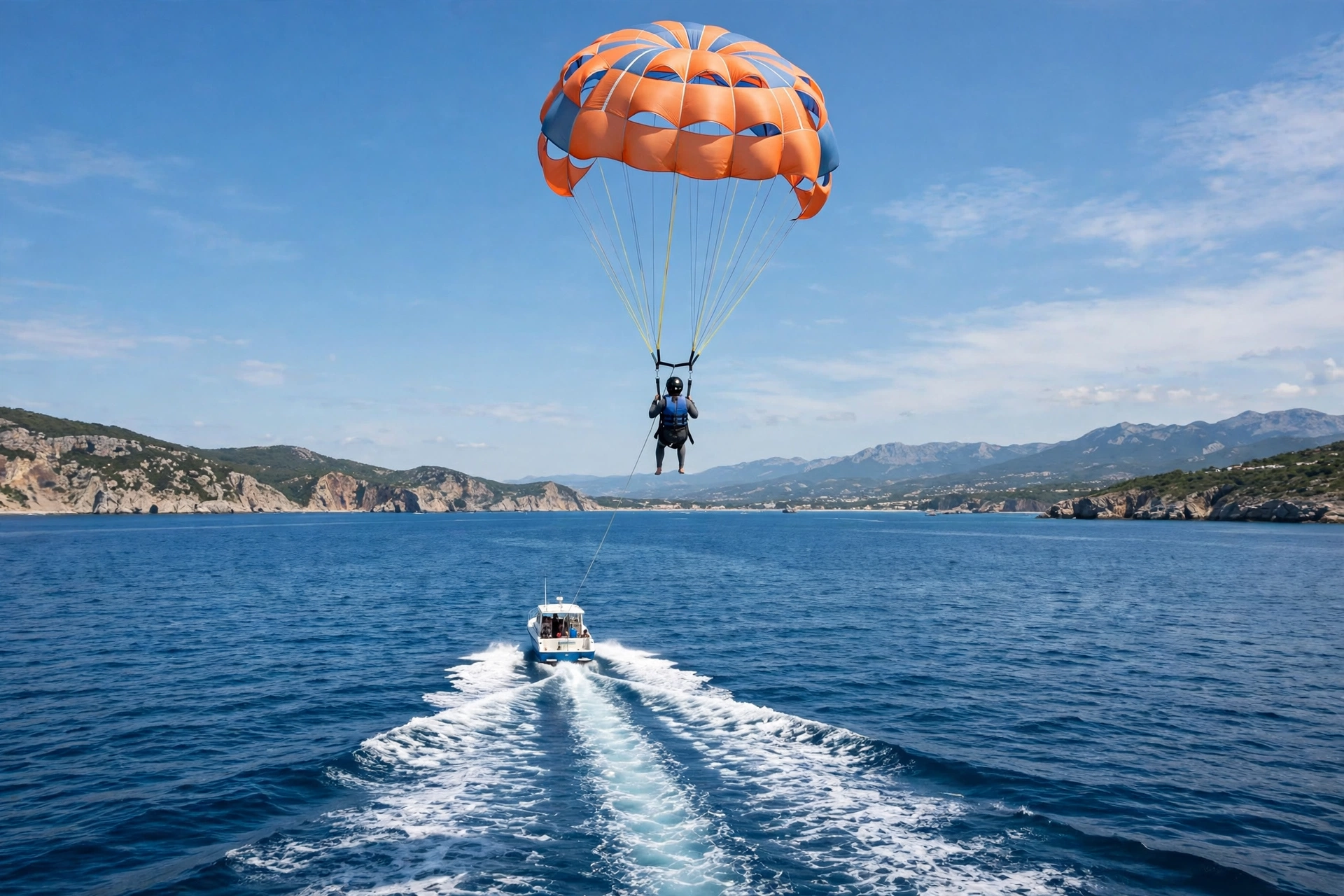
A parasailing helmet protects you by putting a hard shell and a cushioning liner between your head and anything it might strike, such as the boat deck, a winch, or a hard landing on the water. In general terms, the shell spreads the force of a knock, and the liner absorbs some of that energy, so the head feels less of the impact. The helmet is most useful during take-off and landing, when the flyer is moving fast and close to hard surfaces.
The helmet also gives some protection if the flyer is dipped towards the water, which some operators offer as part of the ride. A controlled dip is gentle, but a mistimed one can mean a sharp slap against the surface of the sea. Some helmets include a system designed to reduce rotational forces in a fall, such as MIPS, although that feature is more common in helmets made for land sports than in simple water-sports helmets. Whatever the design, the helmet’s job is the same: to take the edge off a knock that would otherwise reach the head directly.
What should you check before a parasailing flight?
Before a parasailing flight, check that your helmet fits, that the chin strap fastens properly, and that the helmet does not slip when you shake your head. The helmet should sit level, covering the forehead, and the strap should be snug under the chin without pressing uncomfortably. In general terms, a helmet that wobbles is too loose, and a helmet that pinches is too tight, and either one should be swapped for a better size before you fly.
Also listen to the operator’s safety briefing, and ask about the take-off and landing if anything is unclear. Check that the harness is fitted correctly, that you know the signals the operator will use, and that you know what to do if you are dipped towards the water. A helmet is only one part of the safety kit, and it works best when the rest of the preparation is done properly too.
Can children wear a helmet for parasailing?
Yes, children can wear a helmet for parasailing, and in general terms they should, because they are smaller, lighter, and less steady on their feet during take-off and landing. Most operators that fly children will provide a helmet in a child’s size, and the helmet should be fitted by the operator rather than guessed at. A child’s helmet must fit snugly, with the strap fastened, and the child should be shown how to hold the harness before the flight begins.
Age and weight limits for parasailing vary by operator and by location, so check those before you book a flight for a child. Some operators set a minimum age, and some fly children only in calm conditions or in tandem with an adult. A helmet is a sensible part of the kit for a young flyer, but it does not change the operator’s limits, and a child who is below the limit should not fly.
Is parasailing safe without a helmet?
Parasailing is generally a calm activity, and many people fly without a helmet. In general terms, a helmet adds protection for take-off, landing, and unexpected knocks, so wearing one is a sensible choice, especially for first-time flyers and children.
Will a helmet ruin the parasailing experience?
No, a light water-sports helmet is comfortable to wear and does not block the view or the feeling of flying. Most flyers forget they are wearing one within a few minutes of take-off.
Can I bring my own helmet for parasailing?
In general terms, yes, if it is a water-sports helmet that fits well and has a working chin strap. Tell the operator before the flight so they can check it, and be ready to use their helmet instead if yours does not suit the setup.

Olivia
Writer at Helmet Today, covering helmet reviews, fit and riding safety.