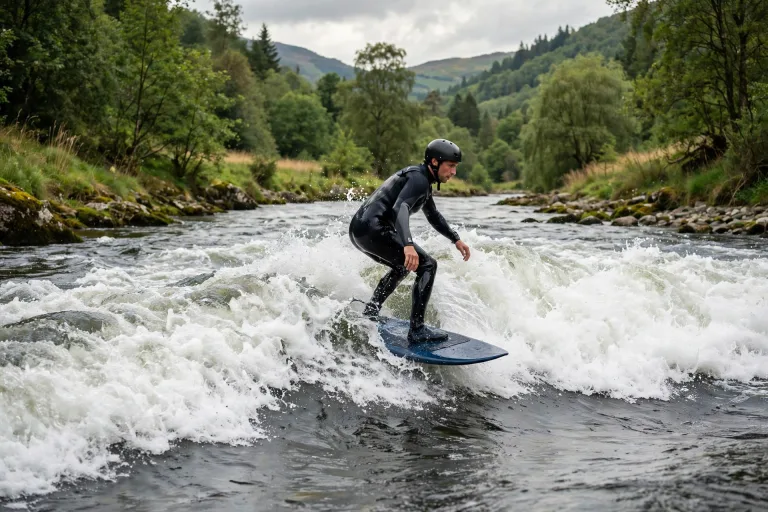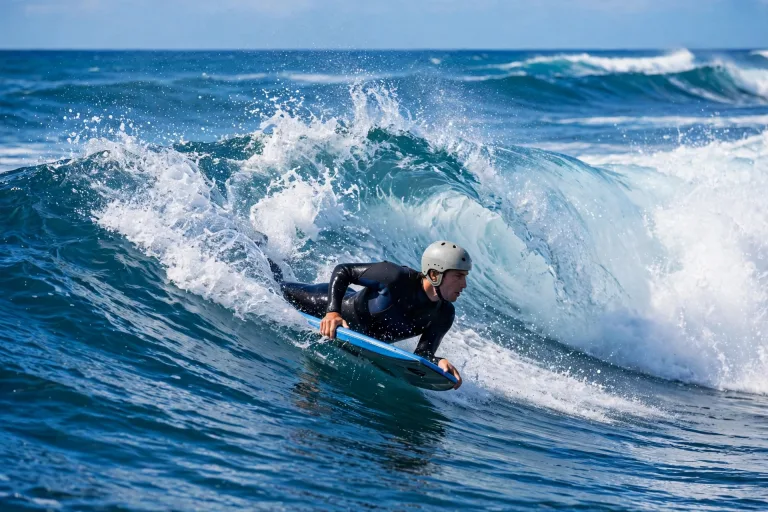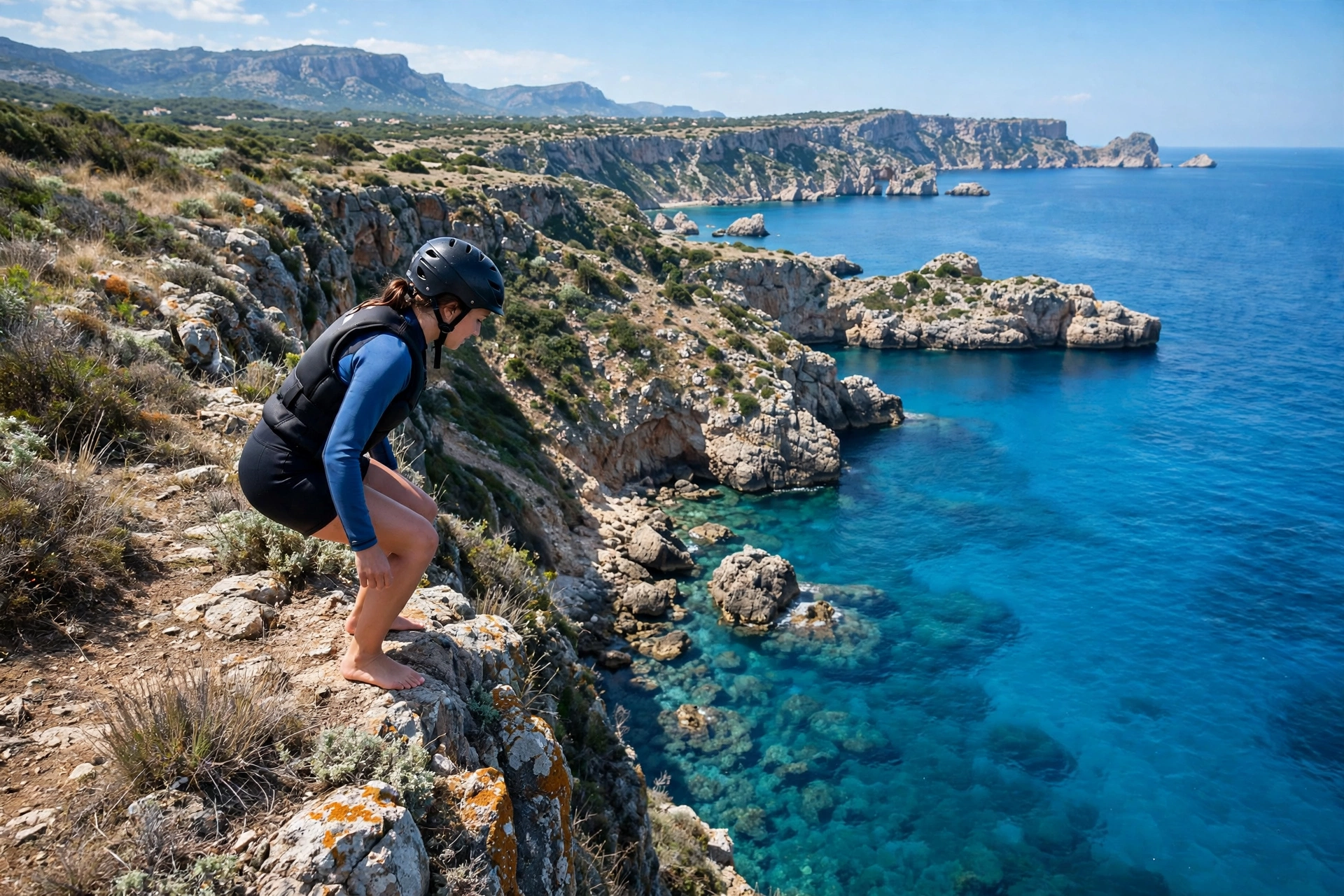
A helmet for cliff jumping is a water sports helmet worn to protect your head from rocks and the force of the water when you jump from a height into the sea or a lake. In general terms, it is a light, close-fitting helmet with a hard outer shell and soft padding inside, made to stay on your head during a fall and to absorb some of the shock if you hit the water badly or strike a rock. It is not the same as a cycling helmet or a construction hard hat, and it is built for the particular risks of jumping from cliffs into water.
Cliff jumping looks simple, but the water below hides most of the danger. A jump from even a modest height can send you into the water at speed, and if you land flat or sideways, the impact can feel like hitting a solid surface. Rocks near the base of a cliff, shallow water, and hidden ledges add to the risk. A helmet cannot remove these dangers, but it can reduce the harm if your head strikes something hard, which is why many experienced jumpers wear one.
What kind of helmet do you need for cliff jumping?
For cliff jumping, a water sports helmet is the usual choice. These helmets are made for kayaking, whitewater rafting, and similar activities, so they are built to work when wet and to drain water away rather than filling up and dragging your head down. They usually have a hard plastic shell, a foam liner, and a chin strap that keeps the helmet in place during a hard landing. Some models also cover the ears, which can help against the sharp slap of water on entry.
A cycling helmet is not a good substitute. It is made for a single hard knock on a road surface, and it is full of vents that let water in. A climbing helmet is closer in shape, but it is made mainly to protect against falling objects, not against the flat impact of water. A ski helmet may be warm and heavy, and it is not made to be soaked. When you shop for a cliff jumping helmet, look for one sold for water sports, and check that it fits well with wet hair.
How should a cliff jumping helmet fit?
A cliff jumping helmet should sit level on your head, low on your forehead, and snug all the way around, without pressing hard in one spot. When you shake your head gently from side to side, the helmet should move with your head rather than sliding about on its own. If it wobbles, it is too big or the straps are too loose, and it may come off or shift over your eyes when you hit the water.
The chin strap matters just as much as the fit. Fasten it snugly under your chin so that only a finger or two fits between the strap and your skin. A loose strap lets the helmet lift off your head on impact, and a strap that is too tight will be uncomfortable and distracting. Try the helmet on with wet hair if you can, because hair changes shape when it is wet, and a helmet that fits dry hair may feel different in the water.
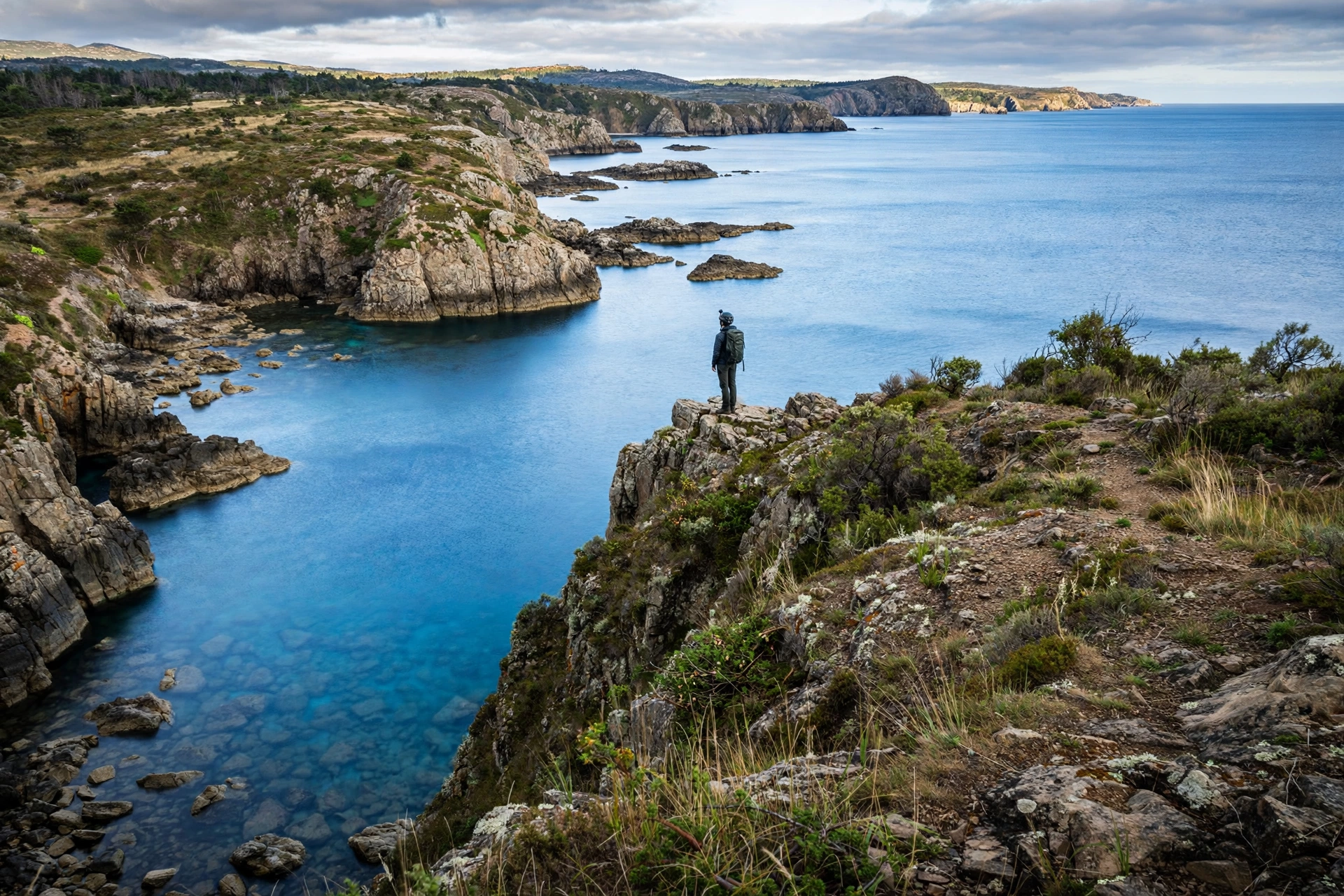
What are the risks of cliff jumping without a helmet?
Without a helmet, your head is unprotected against the two main dangers of cliff jumping: the rocks and the water itself. Cliffs are rarely smooth. The rock face may jut out below the jumping point, and the landing zone may hide rocks just under the surface. A jumper who drifts slightly in the air can strike the rock face or land on a submerged ledge, and a head injury in that situation can be very serious.
Even without rocks, the water can hurt. Hitting the surface feet first is the safest way in, but if you lose your balance in the air and land on your side or your back, the impact is spread across your body, and your head can whip back or sideways. A helmet spreads that force and gives your skull a layer of protection. It does not make a bad landing safe, but it can turn a serious head knock into a lighter one, which is worth a lot when you are far from help.
How do you check the water before a cliff jump?
Checking the water is the most important step before any cliff jump, helmet or no helmet. The water should be deep enough for the height you are jumping from, and the landing zone should be free of rocks, branches, and other hazards. In general terms, the higher the jump, the deeper the water needs to be, and you should never guess at depth. Ask locals, look for signs, or watch other jumpers land first if you are unsure.
Water depth can change with the tide, the season, and recent rain, so a spot that was safe last summer may not be safe today. Swim the landing zone first if you can, and check for underwater rocks with your feet or a long stick. Never jump at night, and never jump into water you cannot see into. A helmet protects your head, but it cannot help you if the water is too shallow or full of rocks, so the check comes first every time.
When should you replace a cliff jumping helmet?
A cliff jumping helmet should be replaced after a hard impact, even if it looks fine from the outside. The foam liner inside is made to crush slightly and absorb energy, and once it has done that job, it may not protect you as well a second time. Salt water, sun, and repeated soaking can also wear down the materials over time, so a helmet that has seen many seasons may be weaker than it looks.
As a general guide, check your helmet before every season. Look for cracks in the shell, loose or missing padding, frayed straps, and a buckle that no longer clicks shut firmly. If the shell feels soft or flexible where it used to be rigid, or if the liner has gone flat and hard, it is time for a new one. Some helmets also use a slip layer that lets the shell move slightly in an angled impact, an idea similar to MIPS in other sports helmets. If that layer is damaged, replace the helmet.
Do you always need a helmet for cliff jumping?
In general terms, a helmet is a sensible choice for any cliff jump, especially from higher cliffs or at new spots where you do not know the water. For very low jumps into deep, clear water, some jumpers go without one, but a helmet adds protection for little effort.
Can I use a kayak helmet for cliff jumping?
Yes, a kayak or whitewater helmet is one of the best choices for cliff jumping. It is made to work in water, drain quickly, and stay on during hard impacts, which is exactly what you need when you jump from a cliff.
Will a helmet keep me safe if I land badly?
No, a helmet cannot make a bad landing safe. It reduces the risk of a head injury, but it does not protect the rest of your body, and it cannot help if the water is too shallow. Always check the depth and landing zone first, and jump feet first.

Olivia
Writer at Helmet Today, covering helmet reviews, fit and riding safety.