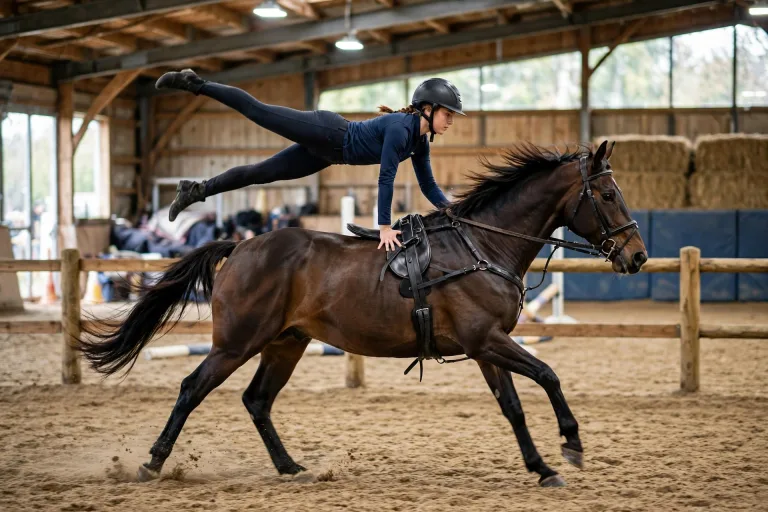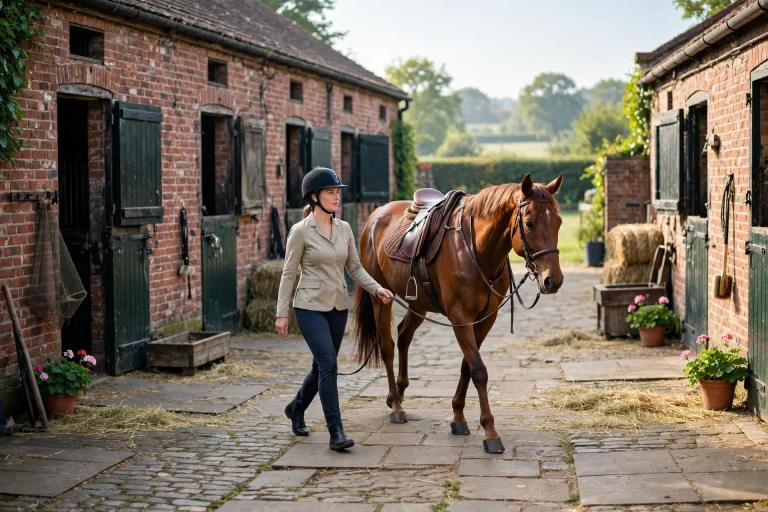
A helmet for endurance riding is a light, well-ventilated riding helmet that protects the rider’s head over long trail rides that can last for hours. In general terms, it is much like a standard riding helmet, but it is chosen for comfort over distance: it is light on the head, lets air flow through on hot days, and stays steady during hours of trotting and cantering across open country. Endurance riding is a long-distance sport, so a helmet that feels fine for an hour may become a burden by hour four.
Endurance rides cover long distances over varied ground, from forest tracks to open hills, and they can take a whole day. The rider spends most of the time in the saddle, often in warm weather, and a fall can happen far from help. A good endurance helmet has to protect the head in a fall, stay comfortable for hours, and not overheat the rider. Getting the balance right is what makes a helmet suited to endurance rather than just to the arena.
What makes an endurance riding helmet different?
The main difference is comfort over time. An endurance helmet is usually light, with large vents that let air move across the head, and a shape that sits well without pressing on one spot. Many riders choose a helmet with a wide peak or a detachable sun visor, because endurance rides often take place in bright sun for hours at a time. A helmet that is comfortable for a short lesson may feel heavy and hot after three hours on the trail.
Fit matters even more on a long ride. A helmet that is slightly tight will cause a headache by the second hour, and a helmet that is slightly loose will bounce and rub as you ride. Endurance riders often try several models before settling on one, and they may use a thinner or thicker liner to fine-tune the fit. A snug, even fit all the way around the head is the goal, with no pressure points at the forehead or temples.
How should an endurance riding helmet fit?
An endurance riding helmet should sit level on your head, low on your forehead, with the front edge about two finger widths above your eyebrows. It should feel snug but not tight, and it should not slide forward over your eyes or tip back when you bend over. When you shake your head gently, the helmet should move with your head rather than sliding about on its own. A good test is to wear it around the house for half an hour before a ride.
The chin strap should be fastened snugly under your chin, leaving just enough room to fit a finger between the strap and your skin. A loose strap lets the helmet shift during a fall, and a strap that is too tight will chafe after hours in the saddle. Many endurance helmets have a harness with several adjustment points, so take the time to set them all before your first long ride, and check them again once you are on the trail.

What safety standard should an endurance helmet meet?
In general terms, an endurance riding helmet should meet a recognised safety standard for equestrian helmets. The standard depends on where you ride, but common ones include the European EN 1384 or VG1, the American ASTM F1163, and the British PAS 015. Endurance events often list which standards are accepted, so check the rules for your ride before you buy. A helmet that meets one of these standards has been tested for impact protection in a fall from a horse.
Do not use a cycling helmet, a climbing helmet, or a construction hard hat for endurance riding. Each of these is made for a different kind of impact, and none of them is tested for a fall from a horse onto hard ground. A proper riding helmet has a shape and a liner made for that kind of fall, and it is the only type that event organisers will accept. Check the label inside the shell for the standard and the date of manufacture before you ride.
How do you stay cool in an endurance helmet?
Staying cool is one of the hardest parts of endurance riding, because you are working hard in the sun for hours. A well-ventilated helmet helps a lot. Look for a helmet with large vents at the front and back that let air flow through as you move. Some helmets have a mesh lining that wicks sweat away from your head, and some have a removable liner that you can wash after a ride. A light-coloured helmet can also feel cooler in bright sun than a dark one.
Simple habits help too. Soak a light cloth or a cooling band in water and wear it under your helmet, and pour water over your head at vet checks if the rules allow it. Take your helmet off during rest stops so your head can cool down, and drink plenty of water yourself. A helmet that is soaked with sweat will feel heavier and less comfortable, so a spare liner or a second helmet can be a good idea on a long ride day.
When should you replace an endurance riding helmet?
An endurance riding helmet should be replaced after a fall in which your head hits the ground, even if the helmet looks fine. The foam liner inside is made to crush slightly and absorb energy, and once it has done that, it may not protect you as well a second time. Sun, sweat, and repeated use also wear down the materials, so a helmet that has seen many seasons may be weaker than it looks.
As a general guide, many makers suggest replacing a riding helmet after around five years of regular use, and sooner if it has taken a hard knock or shows signs of damage. Check the shell for cracks, the liner for flat or hard spots, and the straps for fraying before every season. Some modern helmets also use a slip layer that lets the shell move slightly in an angled impact, an idea similar to MIPS in other sports helmets. If that layer is damaged, replace the helmet.
Do I need a special helmet for endurance riding?
Not always. Any well-fitting riding helmet that meets a recognised equestrian standard will protect you. An endurance helmet is simply one chosen for light weight, good ventilation, and all-day comfort, which matters more on a long ride than in a short lesson.
Can I wear a cycling helmet for endurance riding?
No, a cycling helmet is not a substitute for a riding helmet. It is made for a different kind of fall and is not tested for falling from a horse. Endurance events will not accept a cycling helmet, and it will not protect you in the same way.
How do I keep my endurance helmet in good condition?
Store it indoors in a cool, dry place, away from direct sun and heat. Clean the liner as the maker suggests, and let it dry fully before you store it. Check the shell, straps, and buckle before every ride, and replace the helmet after a fall or when it shows signs of wear.

Olivia
Writer at Helmet Today, covering helmet reviews, fit and riding safety.