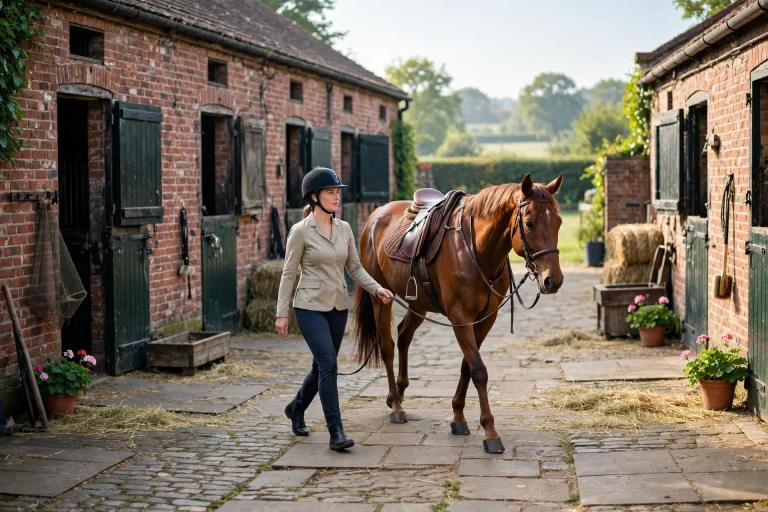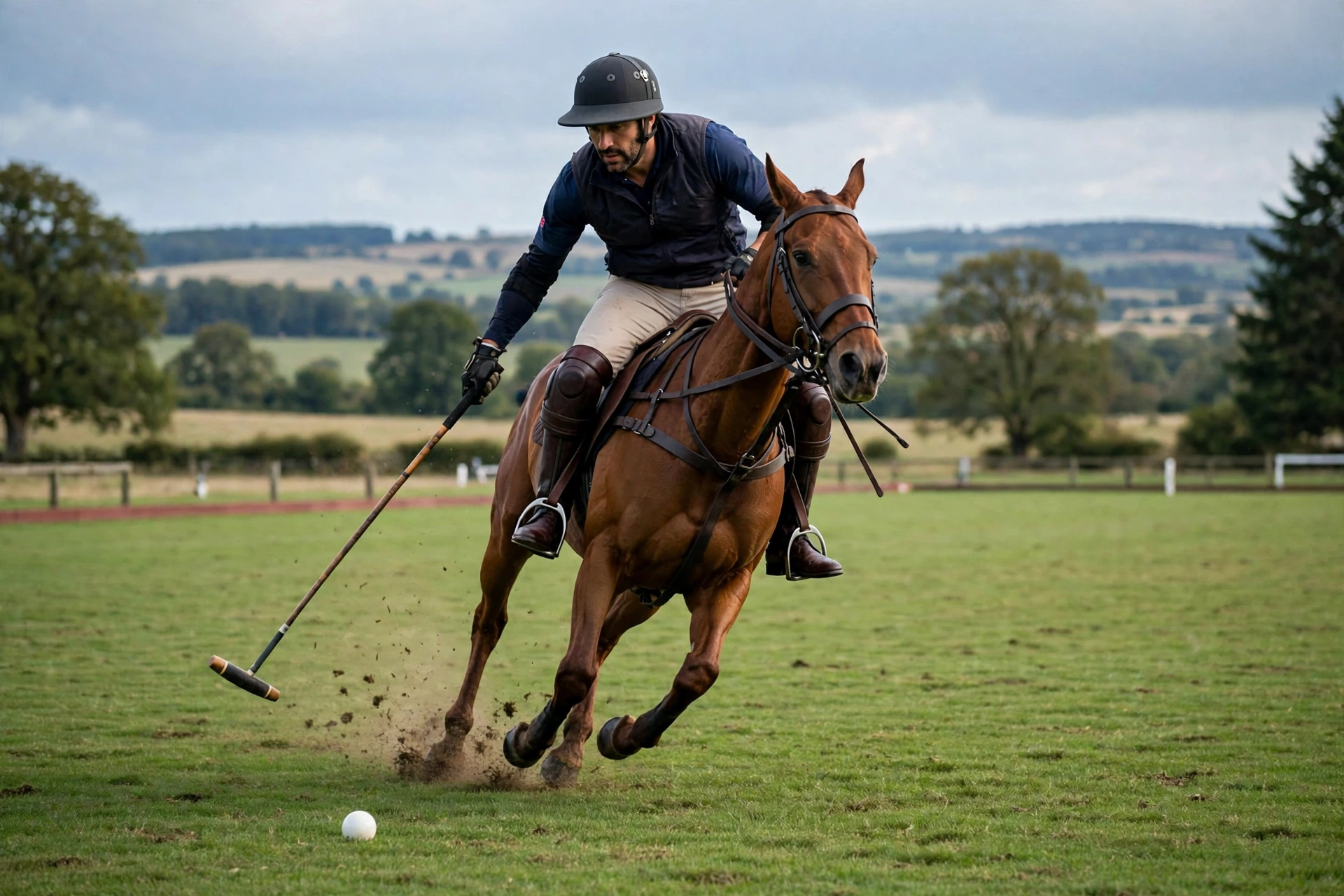
A helmet for polo players is a light equestrian helmet worn to protect the head from falls, kicks and mallet strikes while playing polo on horseback. Polo is a fast team game played on horseback, with riders galloping across a large field, swinging long mallets and chasing a small ball, and a fall at speed can happen suddenly, so head protection is a sensible part of the kit.
Polo is one of the fastest equestrian sports. Riders change direction sharply, ride close together, and lean out of the saddle to reach the ball, all while the horse is moving at a gallop. A helmet will not stop a fall from happening, but it can reduce the force of a knock to the head if you come off. In general terms, that is the main reason polo players wear one, whether they are playing a full match, practising, or simply stick-and-balling on a quiet afternoon.
What is polo?
Polo is a team sport played on horseback, with two teams of four riders who use long-handled mallets to hit a small ball through the other team’s goal. The game is played on a large grass field, much bigger than a football pitch, and it is divided into periods called chukkas, each lasting a few minutes. Between chukkas, players usually change horses, because the game is so demanding on the animals.
Polo has a long history and is played in many countries, from Argentina and the United States to Britain and India. It is a contact sport in the sense that riders can ride off opponents, pushing them away from the ball, and horses can bump into each other at speed. That closeness, combined with the speed of the game, is why a helmet is part of the standard polo kit.
What kind of helmet do polo players wear?
In general terms, most polo players wear a light equestrian helmet made for riding, often a polo helmet with a hard outer shell and a soft lining, sometimes with a small peak or brim at the front. Some are similar to the helmets worn for show jumping or eventing, while others are made specially for polo, with extra coverage at the back and sides of the head.
The helmet should be made for horse riding rather than for another sport, because riding helmets are designed for the kinds of falls that happen from horseback. It should fit well, fasten securely under the chin, and be in good condition, with no cracks or damage to the shell or the lining inside. A helmet that has taken a hard knock in a fall should be replaced, even if it looks fine on the outside.
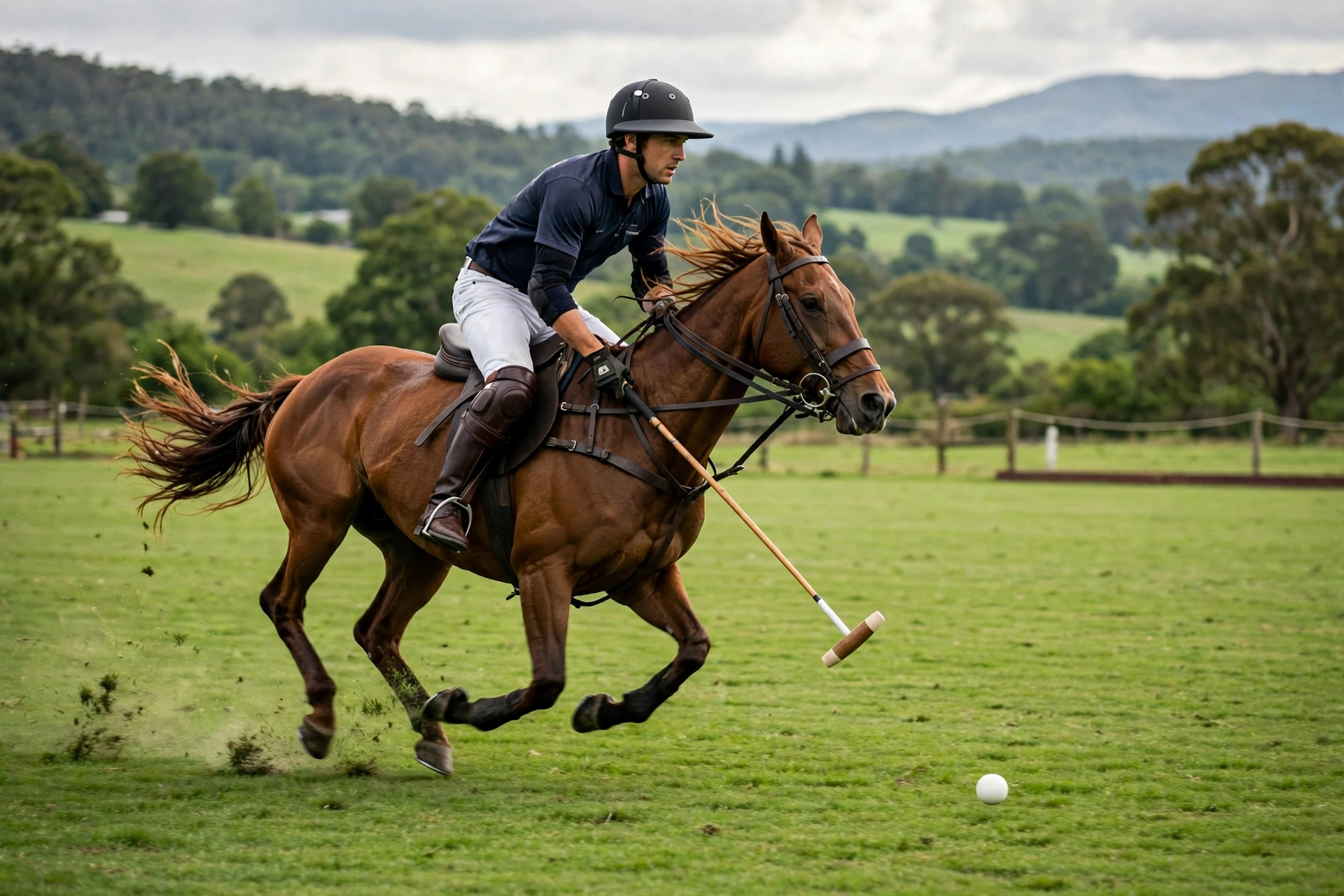
How should a helmet for polo fit?
A helmet for polo should sit level on your head, low enough at the front to cover your forehead, and snug all round without pressing painfully on your temples. It should not tip forward over your eyes or slide back when you nod, and it should stay in place when you shake your head gently from side to side.
The chin strap, or harness, should be snug enough that you can fit only a finger or two between the strap and your chin. Try the helmet on with your hair as you will wear it for polo, and check the fit while you are in the saddle if you can, because your head moves as you ride and lean for the ball. A helmet that fits well will feel secure at a gallop and will not shift when you swing the mallet.
What features matter in a helmet for polo players?
Ventilation matters, because polo is played outdoors, often in warm weather, and a match is hard physical work. Look for a helmet with vents that let air flow through, and a lining that can be removed and washed. A comfortable lining also helps the helmet sit well, which matters when you are riding for a full chukka.
Coverage matters too. Because polo falls can send you sideways or backwards, and because a mallet or a ball can strike the head, a helmet that covers the back and sides of the head gives extra protection. Some helmets include a system designed to reduce rotational forces in a fall, such as MIPS, and it is worth asking about when you choose. Weight matters as well: a light helmet is easier to wear for a long match, and a helmet that feels comfortable is one you will actually keep wearing.
Do polo players have to wear a helmet?
Whether a helmet is required depends on where you play and the rules of the club or association you play under. In general terms, most polo clubs and associations require players to wear a helmet for matches and practice, and many set a standard the helmet must meet. Rules can differ from one country to another, so it is worth checking the rules that apply to your own club before you play.
Even where the rules are less strict, most players wear a helmet anyway. The game is fast, the horses are large, and a fall can happen to even the most experienced rider. If you are learning polo, ask your instructor or club what they recommend, and follow the rules of the club you play with.
How do you look after a polo helmet?
After a game, wipe the shell clean and let the helmet dry naturally, away from direct heat. Do not leave it in a hot car or next to a radiator, as heat can damage the materials inside over time. If the lining is removable, take it out and wash it following the maker’s instructions, and let it dry fully before you put it back.
Check the helmet regularly for cracks, dents, or loose parts, and check the chin strap and buckle for wear. Keep it in a helmet bag or a safe place when you are not using it, so it does not get knocked about in the tack room or the car. In general terms, a helmet that has taken a hard knock in a fall should be replaced, even if it looks fine on the outside, because the inner lining may have been compressed. When in doubt, replace it.
What is a helmet for polo players?
A helmet for polo players is a light equestrian helmet that protects the head from falls, kicks and mallet strikes while playing polo on horseback.
Can you wear a normal riding helmet for polo?
Yes, many polo players wear a standard riding helmet, and it is a good choice. Some players prefer a helmet made specially for polo, with extra coverage at the back and sides.
When should a polo helmet be replaced?
Replace it after a hard fall or a heavy knock, if the shell or lining is damaged, or if the strap and buckle are worn. A helmet that has protected you in a fall has done its job and should not be relied on again.

Olivia
Writer at Helmet Today, covering helmet reviews, fit and riding safety.