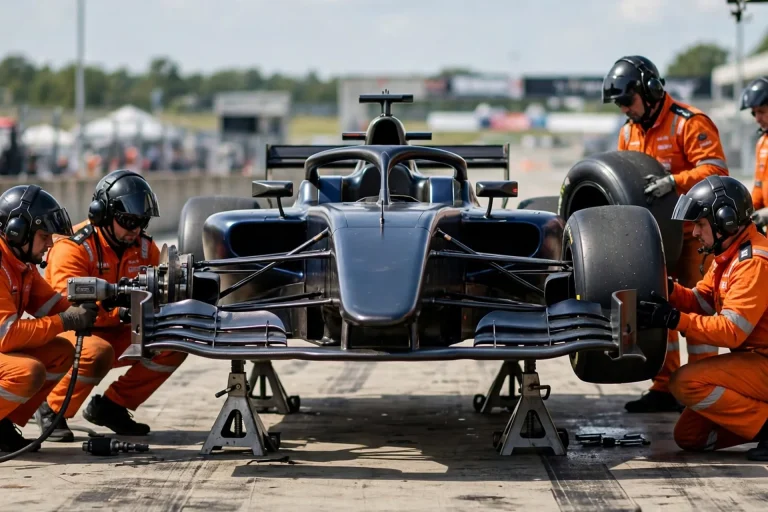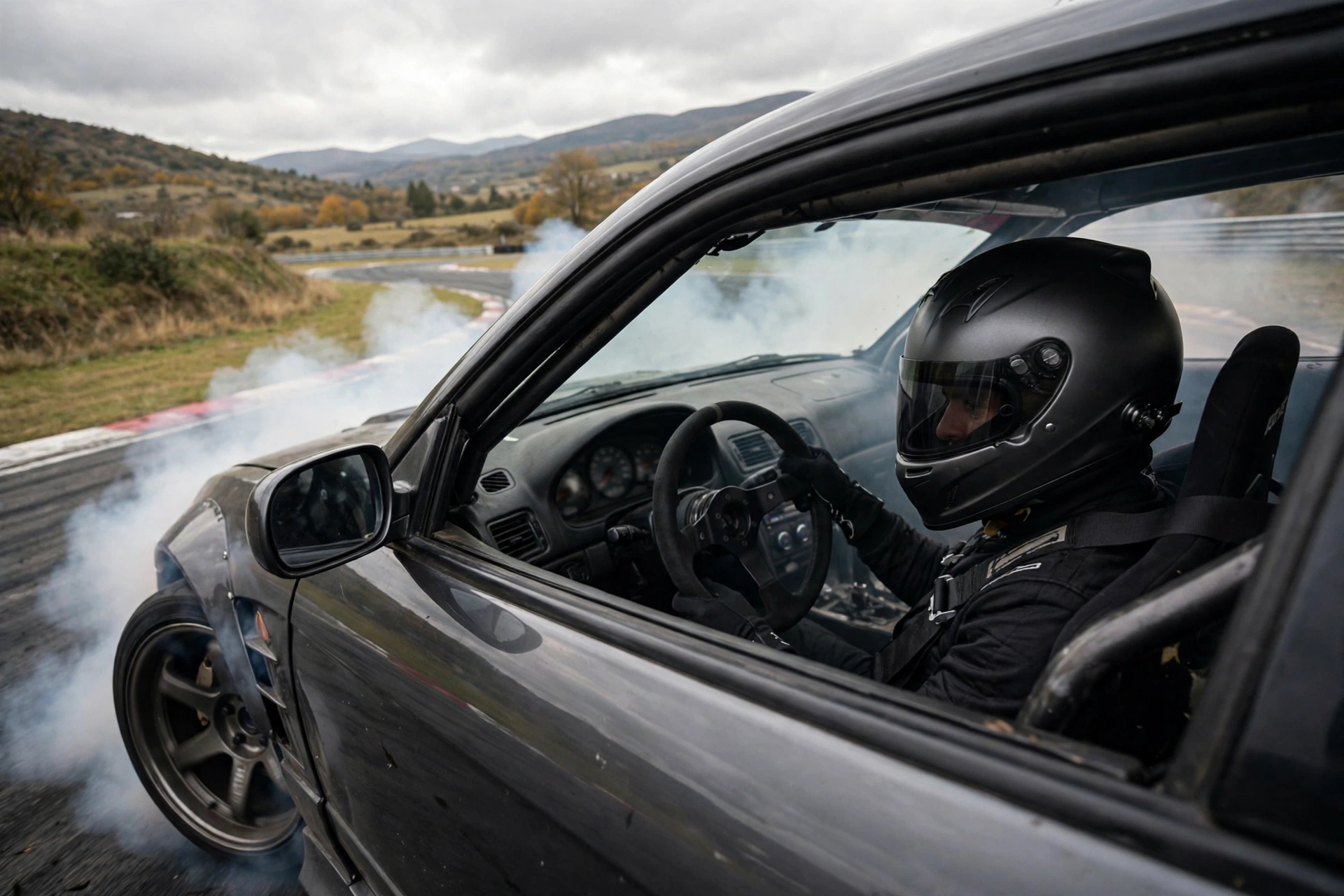
A helmet for drift drivers is a fire-resistant motorsport helmet worn to protect the head from impacts and fire while drifting a car sideways through corners at speed. Drifting is a motorsport where the driver deliberately slides the car, with the rear wheels spinning and the car angled across the track, and the speeds, the smoke and the closeness to walls and other cars make head protection an essential part of the kit.
Drifting looks smooth from the outside, but inside the car it is hard work. The driver steers, brakes and works the throttle constantly to hold the slide, often inches from a wall or another car. A helmet will not stop a crash from happening, but it can reduce the force of a knock to the head if the car hits something, and a fire-resistant helmet adds protection if there is a fire. In general terms, that is why drift drivers wear one, whether they are competing, practising, or taking part in a track day.
What is drifting?
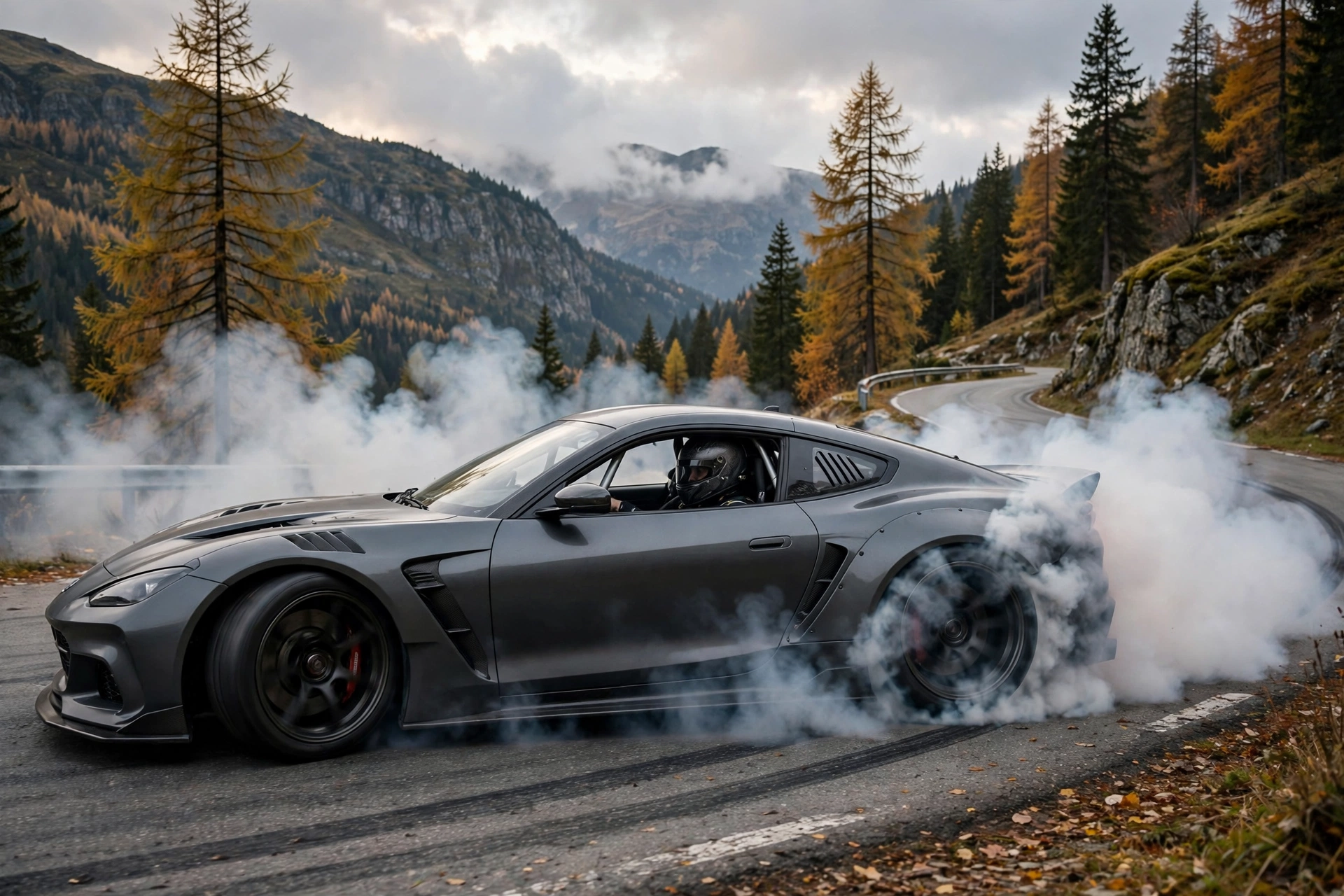
Drifting is a motorsport in which the driver makes the car slide sideways through corners, keeping the rear wheels spinning while steering into the slide. In competition, drivers are judged on the angle of the slide, the line they take, their speed, and their style, rather than simply on who finishes first. Judges watch each run closely, and drivers often run in pairs, chasing each other through the same corners.
Drift cars are usually rear-wheel-drive cars with powerful engines, modified suspension and steering, and tyres that are made to slide. Events take place on circuits, in car parks, or on specially built tracks, often with concrete walls close to the racing line. The cars produce a great deal of tyre smoke, and the noise and heat inside the car are considerable.
What kind of helmet do drift drivers wear?
In general terms, most drift drivers wear a full-face motorsport helmet, made to a standard set by the organisers of the event they are taking part in. A full-face helmet covers the whole head, including the chin and jaw, and it is worn with a visor that protects the eyes from smoke, dust and debris. Open-face helmets are rarely allowed in drifting, because they leave the face exposed.
The helmet should be made for motorsport rather than for another activity, because motorsport helmets are built to cope with the heat, the forces and the fire risk of a car crash. Many drift drivers also wear a head and neck support device, which works with the helmet to limit how far the head can move in a crash. The helmet should fit well, fasten securely under the chin, and be in good condition, with no cracks or damage to the shell or the lining inside.
How should a helmet for drift driving fit?
A helmet for drift driving should sit level on your head, low enough at the front to cover your forehead, and snug all round without pressing painfully on your temples. It should not tip forward over your eyes or slide back when you nod, and it should stay in place when you shake your head gently from side to side.
The chin strap should be snug enough that you can fit only a finger or two between the strap and your chin. Try the helmet on with any head and neck support device you plan to use, and with the balaclava you will wear underneath, and make sure nothing pushes the helmet out of position. Sit in the car if you can before you buy, and check that the helmet does not catch on the seat, the roll cage, or the steering wheel when you turn your head.
What features matter in a helmet for drift drivers?
Fire resistance matters a great deal in a drift helmet, because a crash can lead to a fire and the driver may need time to get out of the car. Look for a helmet with a fire-resistant lining and a shell made for motorsport, and check that it meets the standard your event requires. Some helmets include a system designed to reduce rotational forces in a crash, such as MIPS, and it is worth asking about when you choose, although the main things to check are the motorsport standard, the fit, and the fire resistance.
Ventilation matters too, because the inside of a drift car gets very hot, and the driver is working hard. Look for a helmet with vents that let air flow through, and a lining that can be removed and washed. The visor should be clear, scratch-free and easy to open and close with gloves on, because tyre smoke can cut visibility quickly. Weight matters as well: a light helmet is easier on your neck over a long session, and a helmet that feels comfortable is one you will actually keep wearing.
Do drift drivers have to wear a helmet?
Whether a helmet is required depends on the event, the track, and the rules of the organisation running it. In general terms, almost all organised drifting events require drivers to wear a full-face motorsport helmet that meets a named standard, and many also require a fire-resistant race suit, gloves and a head and neck support device. Rules can differ from one country to another, and from one series to another, so it is worth checking the rules of your own event before you enter.
Even at an informal practice day, a helmet is expected. The cars are close to walls and each other, the speeds are high, and a crash can happen to even the most experienced driver. If you are new to drifting, ask the organisers what standard your helmet must meet, and do not take part without one that passes their checks.
How do you look after a drift helmet?
After a session, wipe the shell and visor clean and let the helmet dry naturally, away from direct heat. Do not leave it in a hot car or next to a radiator, as heat can damage the materials inside over time. If the lining is removable, take it out and wash it following the maker’s instructions, and let it dry fully before you put it back.
Check the helmet regularly for cracks, dents, or loose parts, and check the chin strap and buckle for wear. Keep the visor clean and replace it if it is scratched, because a scratched visor can blur your view in smoke. In general terms, a helmet that has taken a hard knock in a crash should be replaced, even if it looks fine on the outside, because the inner lining may have been compressed. When in doubt, replace it.
What is a helmet for drift drivers?
A helmet for drift drivers is a fire-resistant, full-face motorsport helmet that protects the head from impacts and fire while drifting a car sideways through corners at speed.
Can you wear a motorcycle helmet for drifting?
In general terms, a motorcycle helmet can offer head protection, but it is usually not fire-resistant and may not meet the motorsport standard your event requires, so a proper motorsport helmet is the safer choice.
When should a drift helmet be replaced?
Replace it after a hard crash or a heavy knock, if the shell or lining is damaged, or if the strap and buckle are worn. A helmet that has protected you in a crash has done its job and should not be relied on again.

Olivia
Writer at Helmet Today, covering helmet reviews, fit and riding safety.