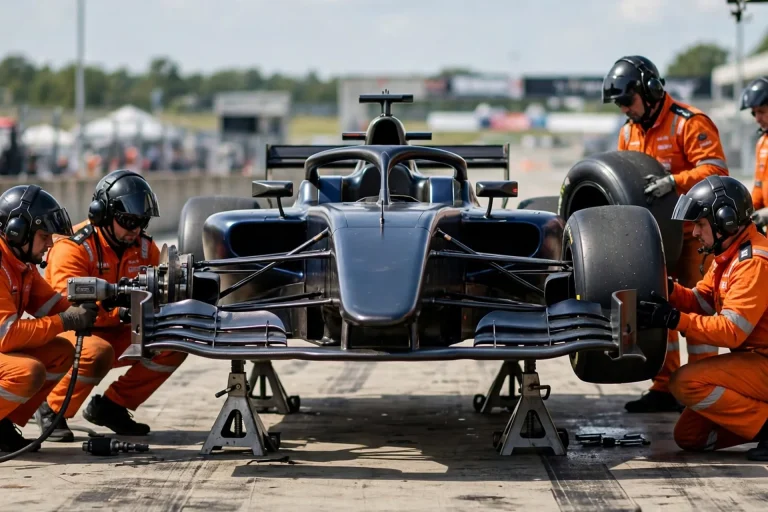
A helmet for motorsport marshals is a protective helmet worn by track marshals, shielding them from debris, noise, and impacts while they work at the side of a racing circuit. Marshals are the volunteers and officials who keep racing safe, standing at posts around the track to wave flags, clear debris, and help drivers after an incident. Their helmet is part of their working kit, just like their overalls and gloves.
Motorsport marshals work close to fast-moving cars and bikes, often with only a barrier between them and the track. Stones, rubber, and small parts can be thrown up by passing vehicles, and a car can leave the track in a crash. A marshal’s helmet protects against these risks, and it also makes the marshal easy to see. Most marshals wear a bright colour, such as orange or white, so drivers and other officials can spot them quickly.
Why do motorsport marshals wear helmets?
Marshals wear helmets because their post is close to the action. Even on a well-run circuit, debris can fly off the track. A loose stone, a piece of bodywork, or a chunk of tyre rubber can travel a long way, and a helmet spreads the force of an impact and protects the head. The helmet also guards against bumps when a marshal is working in a small post or moving around barriers.
The helmet also helps with noise. Racing engines are loud, especially when cars pass at full speed, and a marshal may be at their post for hours. A helmet with ear protection, or ear defenders worn under it, cuts the noise and helps prevent hearing damage. Some marshals wear earplugs as well, so they can still hear the radio and the cars while the worst of the noise is reduced.
What kind of helmet do marshals wear?
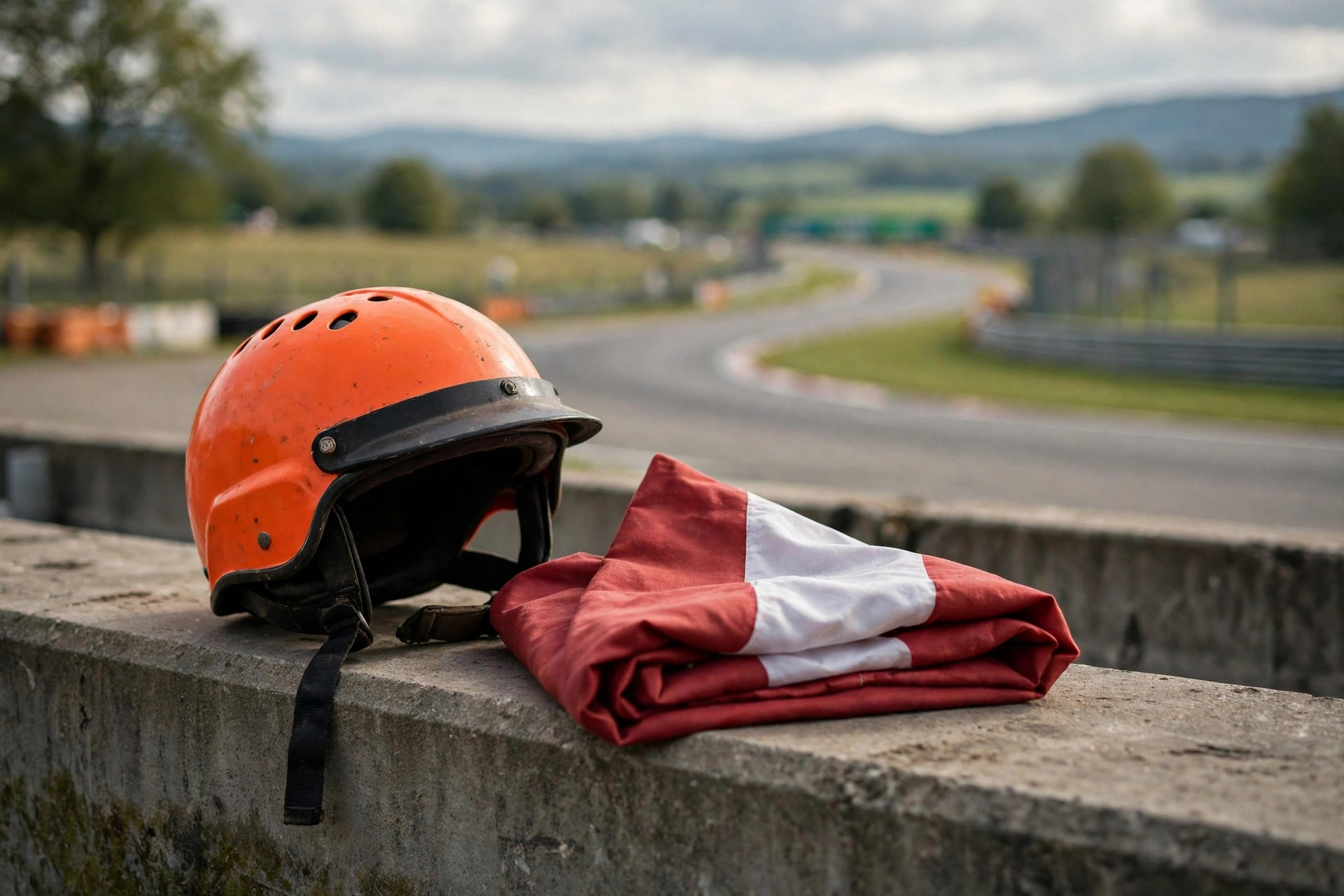
In general terms, marshals wear a hard hat or a motorsport helmet, depending on the type of event and the rules of the organising club. At many circuits, marshals wear a hard hat similar to a construction helmet, in a bright colour with the club or circuit logo. At other events, marshals wear a full motorsport helmet, especially if they work at a post where cars pass very close or where the risk of debris is higher.
The helmet should be light and comfortable, because a marshal may wear it for a whole day. It should have good ventilation, so the marshal does not overheat in the sun, and it should fit well enough to stay in place in wind and rain. A chin strap keeps it secure, and a peak or a visor can help against sun and rain.
How should a marshal’s helmet fit?
A marshal’s helmet should sit level on the head, with the front edge just above the eyebrows. It should feel snug but not tight, and it should not slide forward or tip back when the marshal bends over or turns quickly. Most hard hats have an adjustment dial at the back, so the fit can be set in a few seconds. A helmet that fits well is one the marshal can forget about and wear all day.
The chin strap should be fastened when the marshal is on post, especially in windy conditions or when cars are passing close by. A loose helmet can be blown off or knocked off, which leaves the marshal unprotected at the worst moment. If the helmet has a visor or a peak, it should be adjusted so it does not block the view of the track.
What other kit do motorsport marshals wear?
A helmet is only one part of a marshal’s kit. Marshals wear overalls, usually in bright orange, so they are easy to see against the background of the circuit. The overalls are made from fire-resistant material in many cases, which gives extra protection if a marshal has to work near a car that is on fire. Sturdy boots protect the feet, and gloves protect the hands when handling debris or pushing a car.
Marshals also carry a radio or wear a headset, so they can hear instructions from race control and report what they see at their post. Some marshals carry a flag, a fire extinguisher, or a broom for clearing debris. The exact kit depends on the post and the type of event, and the chief marshal will explain what is needed at the start of the day.
How do marshals look after their helmets?
A marshal’s helmet should be checked before every event. The shell is looked over for cracks or dents, the strap is tested, and the adjustment dial is checked. If the helmet has taken a knock, it should be replaced, even if the damage looks small. A helmet that has protected the wearer once may not protect them a second time.
Helmets should be stored in a dry place away from direct sunlight, ideally in a bag. Sunlight and heat can weaken the plastic over time, so a helmet left on a car dashboard in summer will not last as long as one stored properly. The inside of the helmet should be kept clean, and the lining should be washed or replaced when it becomes worn.
Some helmets use a system that lets the shell move slightly in an angled impact, an idea similar to MIPS in other sports helmets. Marshal helmets are usually simpler than racing helmets, but the principle is the same: a helmet that fits well, is in good condition, and is worn every time gives the best protection.
How can I become a motorsport marshal?
Becoming a marshal is a good way to get close to motorsport. Most circuits and motor clubs welcome new volunteers, and no experience is needed to start. New marshals are paired with an experienced marshal at a post, and they learn the flags, the signals, and the safety rules on the job. Training courses are available, and many marshals work their way up to more senior roles over time.
You will need your own overalls and helmet in most cases, although some clubs lend kit to beginners. Ask the club what you need before your first event, and buy a helmet that fits well and meets a recognised standard. A bright colour is best, so you are easy to see on the circuit.
Marshalling is a commitment, because race days are long and the weather is not always kind. But it is also rewarding, and many marshals say it is the best seat in motorsport. You are close to the action, you are part of the team that keeps racing safe, and you meet people who share your interest in the sport.
Do all motorsport marshals have to wear a helmet?
In general terms, yes, most circuits and clubs require marshals on post to wear a helmet whenever cars or bikes are on track. The exact rule depends on the event, so check with the chief marshal, but a helmet should be worn as a matter of routine.
Can I use a construction hard hat for marshalling?
In general terms, a hard hat can be suitable for marshalling if it meets a recognised safety standard and the club allows it. Some clubs prefer a motorsport helmet, so check the rules for the event before you buy.
How often should a marshal’s helmet be replaced?
A marshal’s helmet should be replaced after any impact, and in general terms after a few years of use, because the materials age and the lining wears. Always follow the maker’s guidance and replace a helmet sooner if it is cracked, loose, or uncomfortable.

Olivia
Writer at Helmet Today, covering helmet reviews, fit and riding safety.