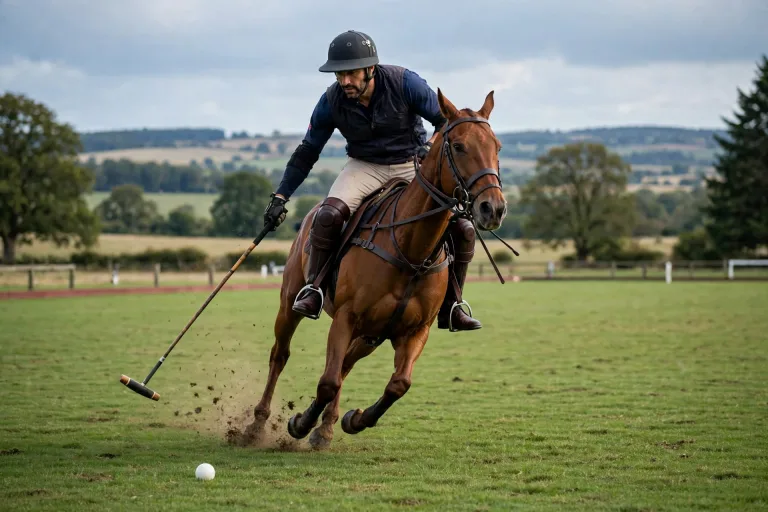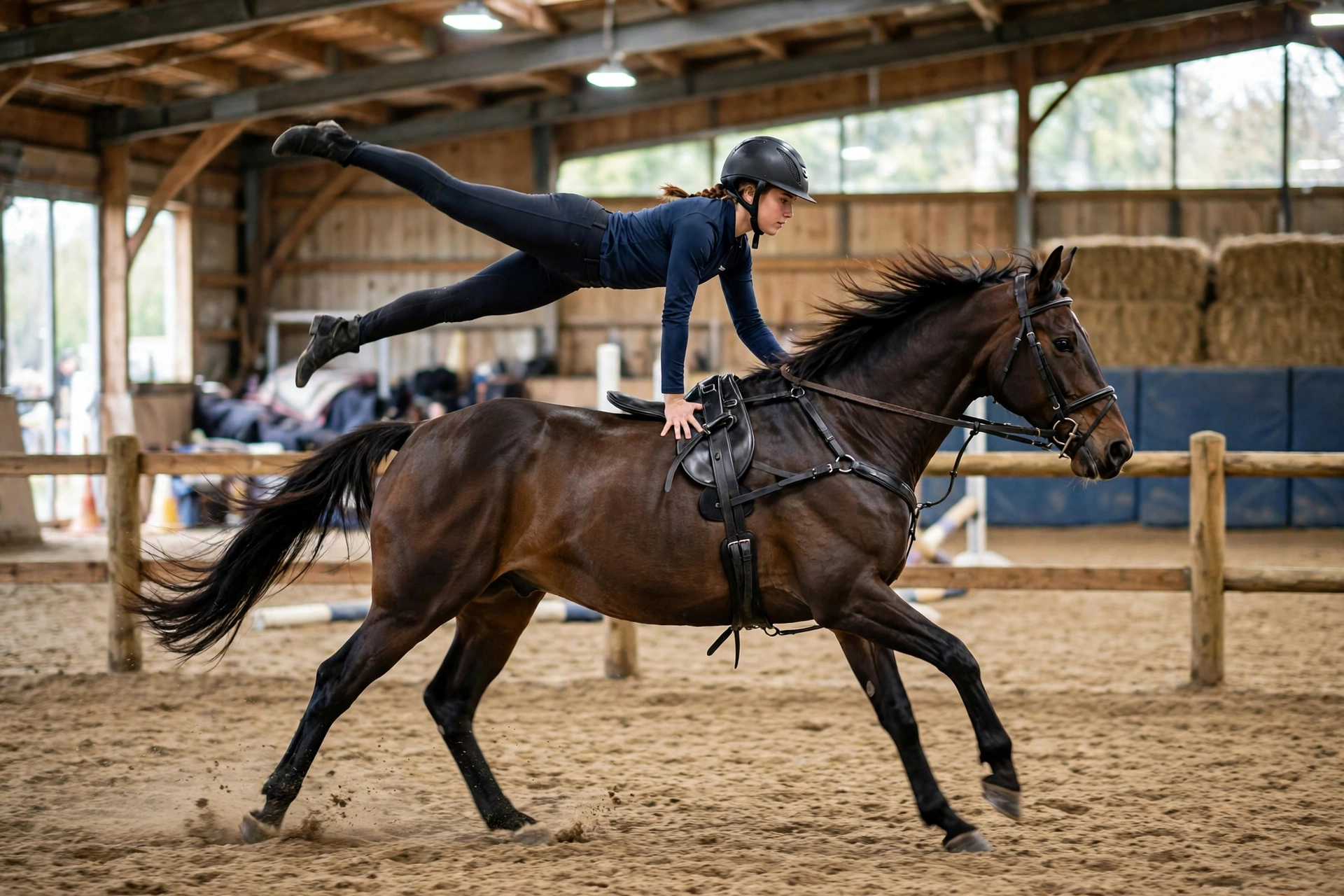
A helmet for vaulting is a protective helmet worn to guard the head while doing gymnastics on a moving horse, and in general terms a light equestrian helmet is what most vaulters use. Vaulting is a sport in which gymnasts perform acrobatic moves on the back of a horse that moves in a circle, and a fall can mean landing hard on the ground of the arena.
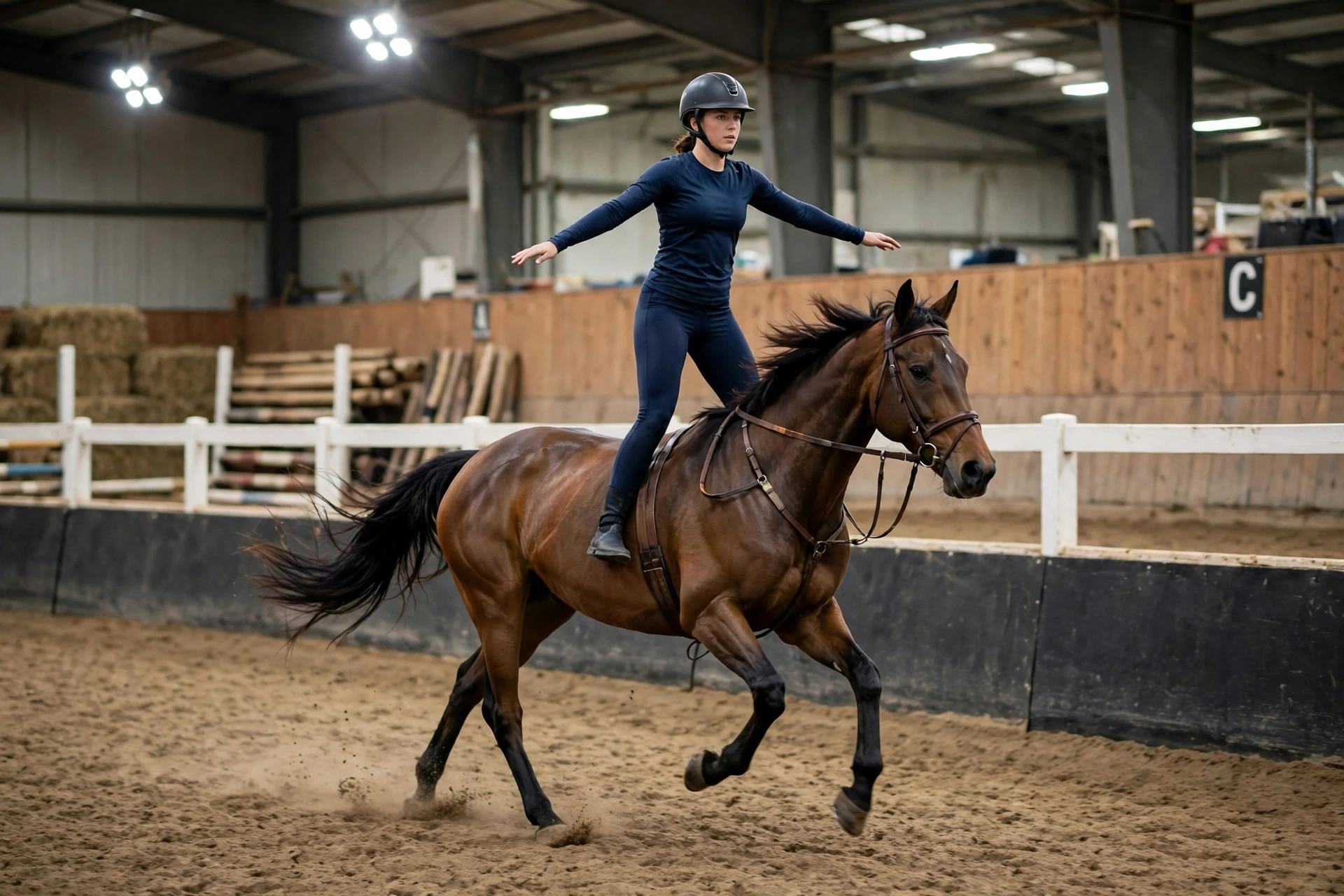
In vaulting, the horse is controlled by a lunger who stands in the centre of a circle and holds a long line, while the vaulter kneels, stands, and moves on the horse’s back as it canters around. The vaulter performs swings, handstands, and jumps, often at height and without holding on. A helmet will not stop a fall from happening, but it can reduce the force of a knock to the head if a vaulter comes off. In general terms, that is the main reason vaulters wear one.
What is vaulting?
Vaulting is an equestrian sport that combines gymnastics and dance on the back of a moving horse. The horse wears a special pad and a surcingle with handles, and it moves in a circle at a walk, trot, or canter while the vaulter performs a routine. Vaulters compete on their own, in pairs, or in teams, and they are judged on their balance, strength, and the style of their moves.
Vaulting is often used as a way to teach riding, because it builds balance and confidence, and it is popular with children and young riders. It is also a serious competitive sport in its own right, with national and international championships. Because the vaulter is standing or kneeling on a moving horse, sometimes with no hands on the handles, balance is everything, and falls do happen.
What kind of helmet do vaulters wear?
In general terms, vaulters wear a light equestrian riding helmet, similar to the helmet worn for show jumping or dressage. It should be light, well ventilated, and snug, so that it stays in place during quick movements and does not shift when the vaulter swings or turns. A helmet that moves about is a distraction, and in vaulting a distraction can lead to a fall.
Some vaulters choose a helmet with a smooth, low profile, which is less likely to catch on anything during a move. The helmet should fit well, fasten securely under the chin, and be in good condition, with no cracks or damage to the shell or the lining inside. In some competitions, helmets are required, while in others they are optional, so it is worth checking the rules of the event you plan to enter.
Why is a helmet important for vaulting?
A helmet matters in vaulting because the vaulter is performing gymnastics at height on a moving animal. A cantering horse moves with a bouncing rhythm, and the vaulter may be standing on the horse’s back, a good distance above the ground. If the horse changes pace or direction suddenly, or the vaulter loses their balance, the fall can be from a height and onto a hard arena surface.
There is also the risk of landing awkwardly or being caught by the horse’s movement as you come off. A helmet will not prevent a fall, but it can reduce the force of a knock to the head, and for children and beginners, who are still learning balance and body control, that protection is especially valuable. Many riding schools now ask vaulters of all ages to wear a helmet as a matter of routine.
How should a helmet for vaulting fit?
A helmet for vaulting should sit level on your head, low enough at the front to cover your forehead, and snug all round without pressing painfully on your temples. It should not tip forward over your eyes or slide back when you nod, and it should stay in place when you shake your head gently from side to side.
The chin strap should be snug enough that you can fit only a finger or two between the strap and your chin. Try the helmet on and move as you would on the horse: bend, turn, and look up and down, and check that the helmet stays put. If you wear your hair in a low ponytail or a plait, try the helmet on with your hair done the way you will wear it for vaulting, because a change in hairstyle can change the fit.
What features matter in a vaulting helmet?
Ventilation matters, because vaulting is physical work and you will get warm. Look for a helmet with vents that let air flow through, and a lining that can be removed and washed. A comfortable lining also helps the helmet sit well, which matters when you are moving quickly on the horse.
Weight matters too: a light helmet is easier to wear for a long training session, and a helmet that feels comfortable is one you will actually keep wearing. Some helmets include a system designed to reduce rotational forces in a fall, such as MIPS, and it is worth asking about when you choose. A smooth outer shell is a plus, since it is less likely to snag during a move.
How do you look after a vaulting helmet?
After a session, wipe the shell clean and let the helmet dry naturally, away from direct heat. Do not leave it in a hot car or next to a radiator, as heat can damage the materials inside over time. If the lining is removable, take it out and wash it following the maker’s instructions, and let it dry fully before you put it back.
Check the helmet regularly for cracks, dents, or loose parts, and check the chin strap and buckle for wear. In general terms, a helmet that has taken a hard knock in a fall should be replaced, even if it looks fine on the outside, because the inner lining may have been compressed. The same applies to a helmet that has been dropped hard onto a hard surface. When in doubt, replace it.
Do vaulters need a helmet?
In general terms, yes, a helmet is sensible for vaulting. You are doing gymnastics at height on a moving horse, so a well-fitting equestrian helmet is a simple way to protect your head.
Can you wear a normal riding helmet for vaulting?
Yes, a standard equestrian riding helmet is a good choice for vaulting. Choose a light, well-ventilated one that fits snugly and stays in place during quick movements.
When should a vaulting helmet be replaced?
Replace it after a hard fall or a heavy knock, if the shell or lining is damaged, or if the strap and buckle are worn. A helmet that has protected you in a fall has done its job and should not be relied on again.

Olivia
Writer at Helmet Today, covering helmet reviews, fit and riding safety.