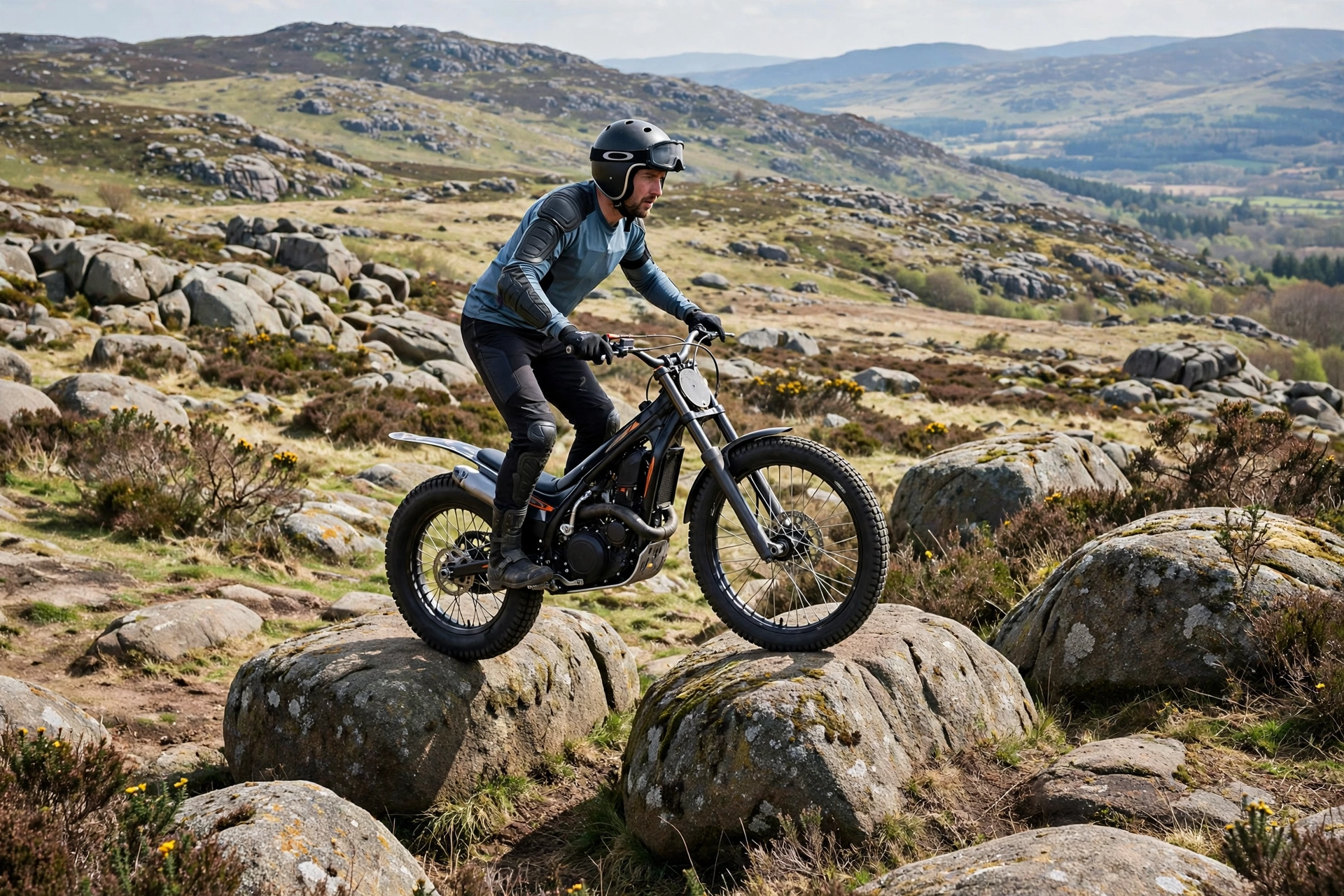
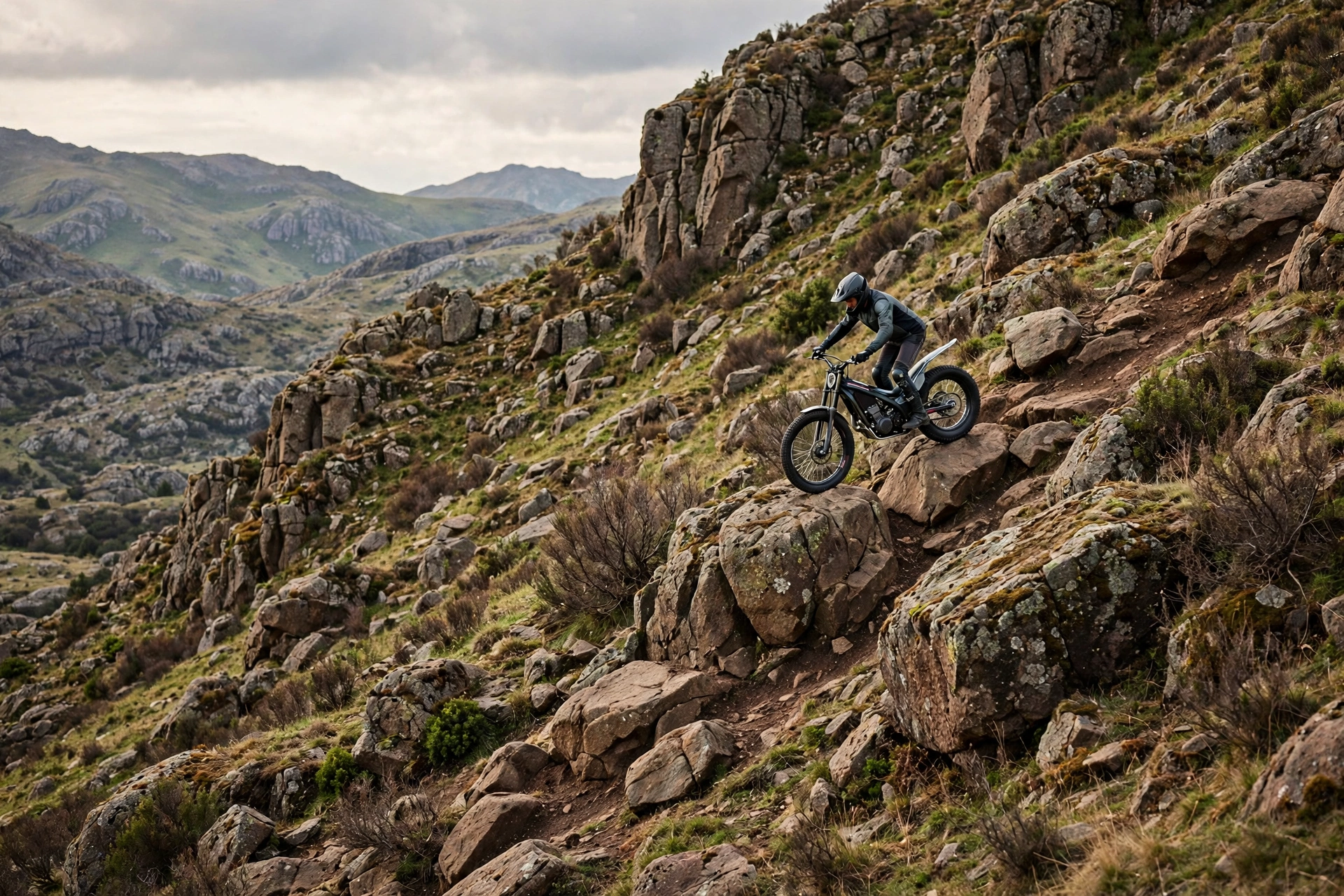
A helmet for trials riders is a light, open-face helmet that protects the rider’s head from knocks and falls during slow, technical motorcycle trials. In general terms, it is built for a sport where the rider balances, hops, and climbs over rocks, logs, and steep banks at low speed, rather than racing at high speed. The helmet has to be light enough to wear for hours, open enough to let the rider see the ground clearly, and strong enough to protect against a fall onto rock.
Trials riding is very different from road riding or motocross. There is almost no high-speed crashing, but there are many small falls. A rider may tip over sideways onto rocks, slip off a log, or drop the bike while balancing on a steep slope. The helmet is there for those moments: a knock against a rock, a branch, or the ground itself. Because the speeds are low, trials helmets are lighter and more open than full-face road helmets, and that suits the sport.
What kind of helmet do trials riders wear?
Most trials riders wear an open-face helmet, sometimes called a three-quarter helmet. It covers the top, back, and sides of the head, but it leaves the face open so the rider can see the ground, judge distances, and breathe easily during hard physical effort. Many trials helmets have a small peak that shades the eyes from sun and keeps branches out of the face. The shell is usually made from fibreglass or a composite material that is light but strong.
Some riders choose a full-face trials helmet instead, especially younger riders or those riding harder sections. A full-face helmet adds protection for the chin and jaw, which is useful if a fall sends the rider face first onto rock. The trade-off is weight and heat, and a full-face helmet can limit the rider’s view of the ground just in front of the front wheel. Most club-level trials riders stick with an open-face helmet and accept the trade-off.
How should a trials helmet fit?
A trials helmet should sit level on your head, low on your forehead, and snug all the way around, without pressing hard in one spot. When you shake your head gently from side to side, the helmet should move with your head rather than sliding about on its own. Trials riding involves a lot of looking down and turning your head, so a helmet that slips forward over your eyes or tips back when you look up is a problem.
The chin strap should be fastened snugly under your chin, leaving just enough room to fit a finger between the strap and your skin. A trials helmet takes a lot of small knocks and drops, and the strap is what keeps it in place when you fall. Try the helmet on with any goggles or glasses you wear, because trials riders often wear eye protection, and the helmet should sit well with them. Walk around in it for a few minutes before you buy it.
What safety standard should a trials helmet meet?
In general terms, a trials helmet should meet a recognised safety standard for motorcycle helmets. The standard depends on where you ride, but common ones include the European ECE 22.06 and the American DOT standard. Many trials events will check that your helmet meets an accepted standard, so look for the label inside the shell before you buy. A helmet with no label or no standard marking should not be used for riding.
It is worth checking the rules for your event or club, because some accept only certain standards. A trials helmet that meets ECE 22.06 has been tested for impact protection at motorcycle speeds, which is more than enough for trials. A cycling helmet or a climbing helmet is not a substitute, because neither is made or tested for motorcycle use. The label inside the shell will also show the date of manufacture, which is useful for knowing how old the helmet is.
Why is a trials helmet so light?
A trials helmet is light because the sport demands it. Trials riders spend hours on the bike, often standing up, moving their head constantly, and riding in warm weather. A heavy helmet would tire the neck and make it harder to look around, which matters when you need to see exactly where your front wheel is going. A light helmet lets the rider stay alert and balanced for the whole event.
The light weight comes from the design, not from cutting corners on safety. Trials helmets use a thin but strong shell and a compact liner, and they skip the heavy visor and padding of a road helmet. The open face also saves weight and lets air flow through, which keeps the rider cooler. Some modern helmets also use a slip layer that lets the shell move slightly in an angled impact, an idea similar to MIPS in other helmets, without adding much weight.
When should you replace a trials helmet?
A trials helmet should be replaced after a hard impact, even if it looks fine from the outside. The foam liner inside is made to crush slightly and absorb energy, and once it has done that, it may not protect you as well a second time. Trials helmets take many small knocks, and it can be hard to tell which ones matter, so if you have had a fall where your head hit rock or the ground firmly, treat the helmet with suspicion.
Age and use wear a helmet down too. Sun, sweat, and repeated drops can weaken the shell and flatten the liner over time. As a general guide, many makers suggest replacing a helmet after around five years of regular use, and sooner if it shows cracks, loose padding, or a buckle that no longer clicks shut firmly. Check the shell and straps before every event, and do not keep using a helmet that feels loose or damaged.
Can I use a motocross helmet for trials riding?
Yes, a motocross helmet will protect you, but it is heavier and has a bigger peak and more padding than a trials helmet. Most trials riders prefer a lighter open-face helmet, because trials is slow and technical, and a heavy helmet makes it harder to see the ground and stay balanced.
Do trials riders need goggles with an open-face helmet?
In general terms, eye protection is a good idea. Trials riding throws up dust, mud, and branches, and an open-face helmet leaves your eyes exposed. Many riders wear goggles or safety glasses, and they also help keep wind and insects out of your eyes on the way to the event.
Is a trials helmet road legal?
A trials helmet that meets a recognised motorcycle standard, such as ECE 22.06, is road legal in the countries that accept that standard. Check the label inside the shell and the rules where you ride, because a helmet made only for off-road use may not carry the right marking for the road.

Olivia
Writer at Helmet Today, covering helmet reviews, fit and riding safety.