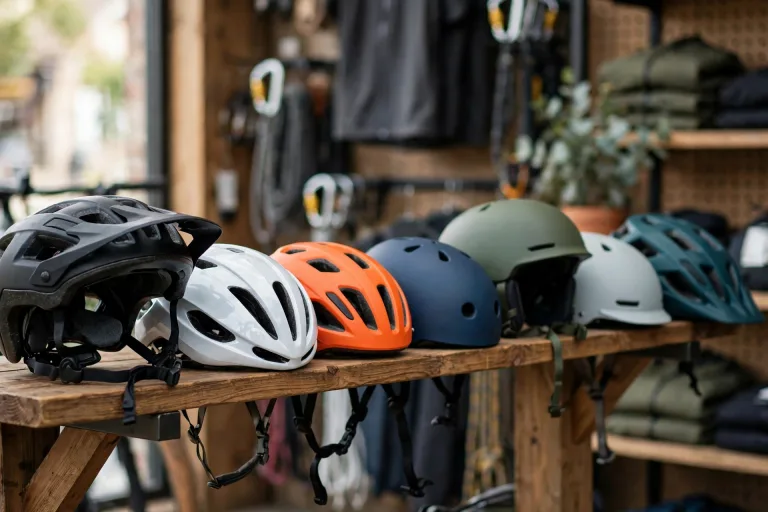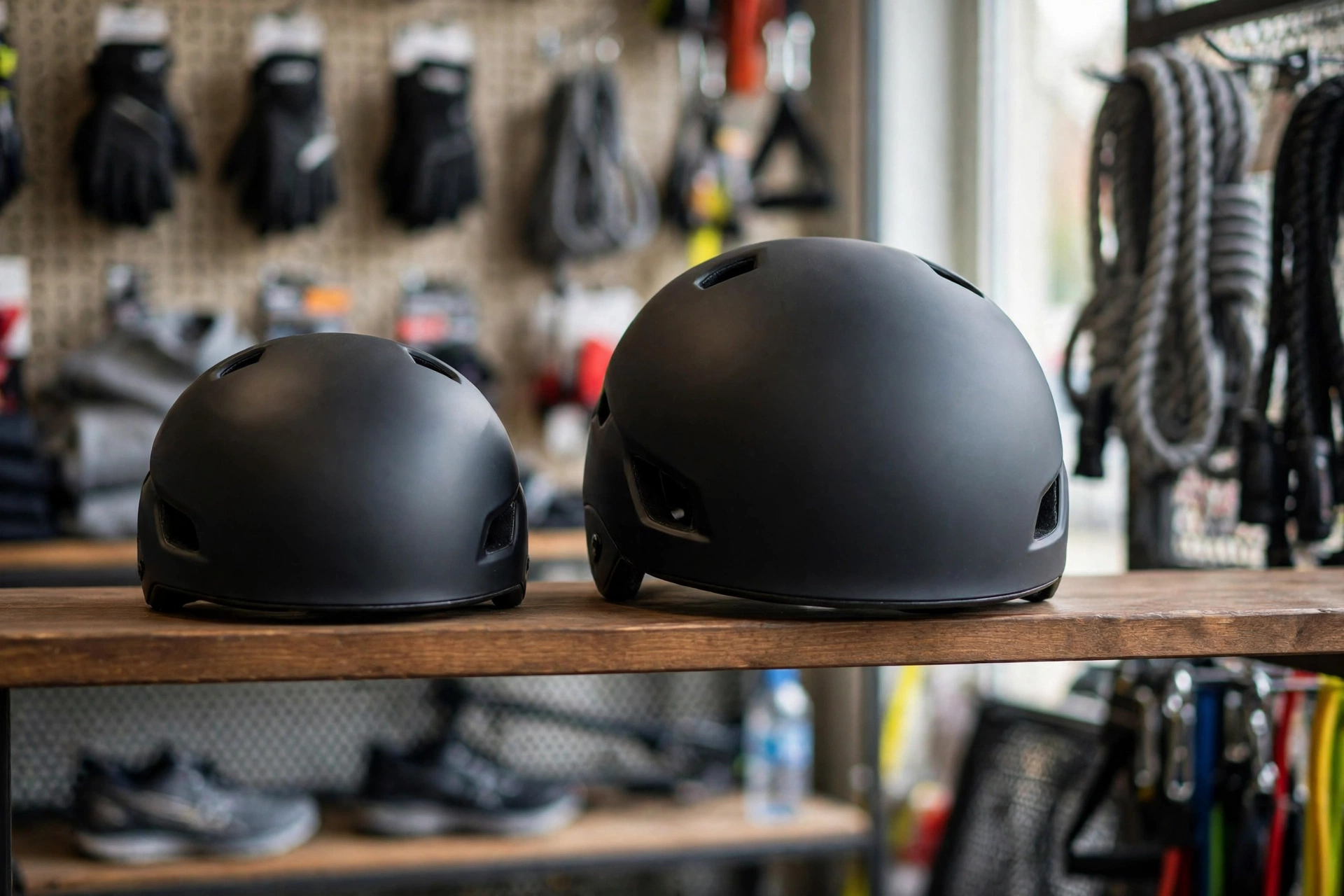
In general terms, helmet sizes do not differ between men and women, because most helmets are sold by head size rather than by gender. A helmet labelled small, medium, or large fits the same range of head measurements whoever wears it, and what matters most is the size and shape of your own head, not whether the helmet is marketed to men or women.
That said, you will see helmets described as women’s helmets in shops and online, and some of them do fit differently. The difference is usually in the shape, the padding, or the styling rather than in the size chart itself. Understanding how helmet sizing actually works will help you pick a helmet that fits well, whether it is labelled for men, for women, or for no one in particular.
Are helmets made in men’s and women’s sizes?
In general terms, no, helmets are not made in separate men’s and women’s sizes. Most helmets are sold in sizes based on head circumference, such as small, medium, and large, or in centimetres, and those sizes apply to everyone. A medium helmet is a medium helmet, whether the person wearing it is a man or a woman, and the size chart on the box is the same for both.
Some makers do sell helmets described as women’s models, but the difference is usually in the fit shape, the colours, or the styling rather than a different set of sizes. A women’s model may be shaped slightly narrower, may have padding arranged for a ponytail, or may come in different colours. These are real differences for some riders, but they are differences of shape and style, not a separate sizing system.
How are helmet sizes measured?
Helmet sizes are measured by head circumference, which is the distance around your head just above your eyebrows and ears. Makers measure a range of head sizes and group them into sizes, so a small might fit heads of one range, a medium the next range, and a large the next. The exact ranges differ from maker to maker, so a medium from one brand may fit slightly differently from a medium from another.
Because head sizes vary widely, most helmets also have an adjustable fit system, such as a dial at the back or adjustable padding, that lets you fine-tune the fit within a size. In general terms, the size on the label is a starting point, and the adjustable system and the shape of the helmet are what turn a roughly right size into a comfortable fit. Always check the maker’s own size chart rather than assuming your size is the same across brands.
Why might a helmet fit differently on different heads?
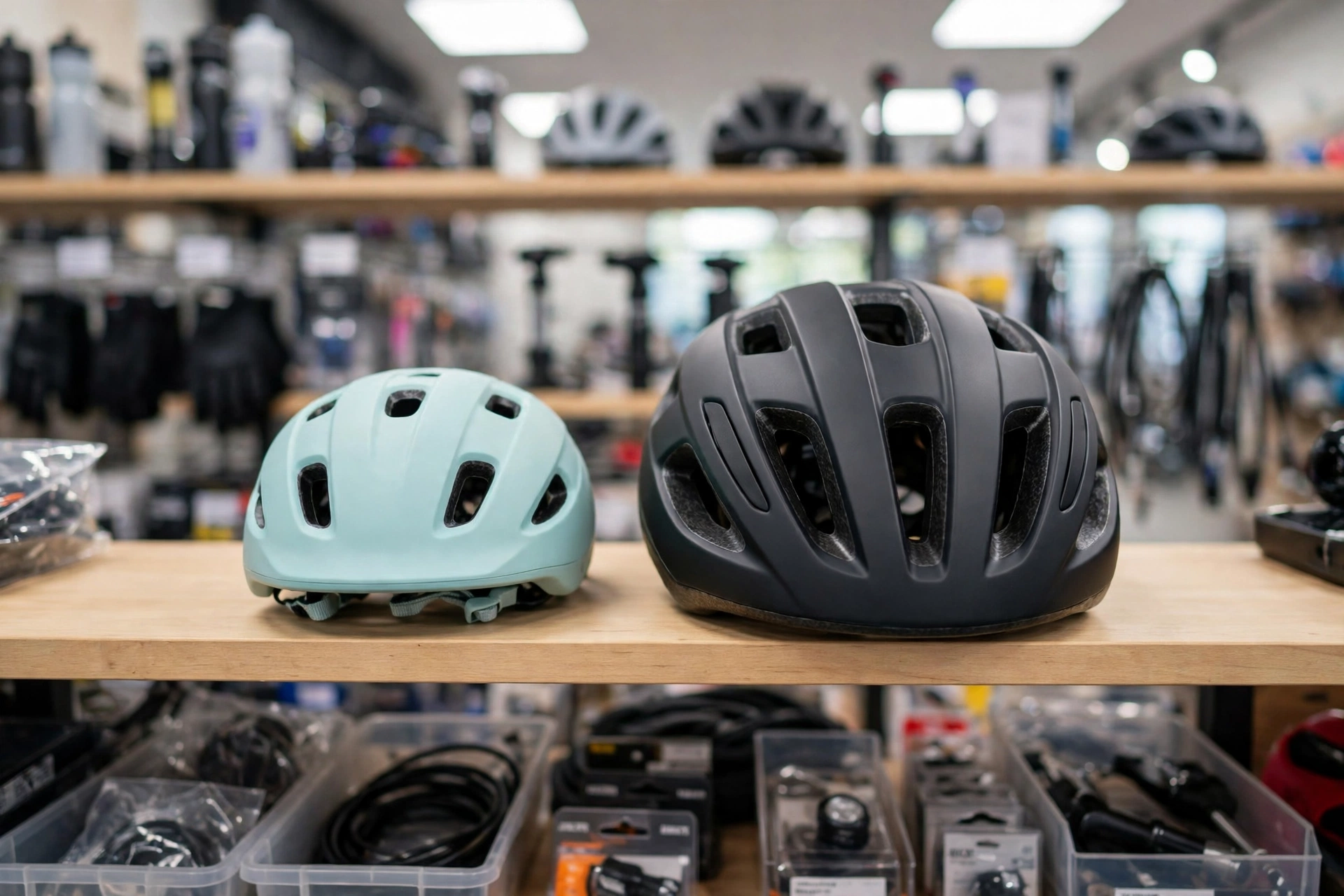
A helmet can fit differently on different heads because heads differ in shape as well as in size. Some heads are rounder, some are longer from front to back, and some are wider at the sides. Two people with the same head circumference can find that the same helmet fits one of them well and presses uncomfortably on the other, simply because their head shapes are different.
Hair makes a difference too. Thick hair, a ponytail, or a bun can change how a helmet sits, and some helmets are designed with extra room at the back for a ponytail. The padding and the liner also play a part, and some helmets include a slip-plane liner such as MIPS, which sits between the shell and the head and can affect how the helmet feels. In general terms, these differences are about the individual, not about gender, and the only way to know if a helmet fits is to try it on.
What should you do if standard sizes do not fit?
If standard sizes do not fit, start by trying a different brand, because the shape of the shell varies from maker to maker and a brand that suits a rounder head may not suit a longer one. Try the size above and the size below as well, and use the adjustable fit system to fine-tune the fit. Sometimes the right size is there but the padding needs adjusting, or a thinner or thicker set of pads will make the difference.
If you are between sizes, the usual advice is to try the smaller size first, as long as it does not press painfully, because padding settles a little with wear. Some shops can swap pads or order a different size for you to try. In general terms, do not settle for a helmet that is loose or that presses in one spot, because a helmet that does not fit well will not stay in place as it should, and it will be uncomfortable enough that you may stop wearing it.
How do you measure your head for a helmet?
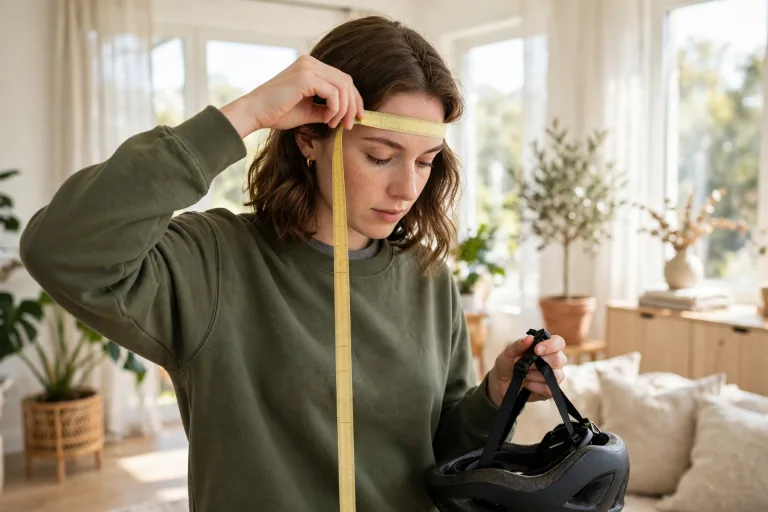
To measure your head for a helmet, wrap a soft tape measure around your head just above your eyebrows and ears, keeping it level all the way round. The tape should sit snugly without squeezing, and you should take the measurement two or three times to make sure you get the same number. If you do not have a soft tape, use a piece of string and then measure the string against a ruler.
Once you have your measurement in centimetres, compare it with the maker’s size chart to find your size. Remember that the chart is only a guide, and you should still try the helmet on before you buy it if you can. Put it on, fasten the chin strap, and shake your head gently: the helmet should stay in place without sliding, and it should feel snug all round without pressing painfully anywhere.
Can women wear men’s helmets?
Yes. Most helmets are sold by head size rather than by gender, so a woman can wear a helmet labelled for men as long as it fits her head well, and the same applies the other way round.
Do women’s helmets exist?
Some makers sell helmets described as women’s models, but the difference is usually in shape, padding, or styling, such as room for a ponytail, rather than a separate sizing system. The size chart is generally the same.
What size helmet should I buy?
Measure around your head just above your eyebrows and ears, compare the number with the maker’s size chart, and then try the helmet on. The right size is the one that sits level, feels snug all round, and stays in place when you shake your head.

Olivia
Writer at Helmet Today, covering helmet reviews, fit and riding safety.