A US helmet size is a size label for a helmet sold in the United States, based on the measurement around your head, and in general terms it is given in inches or in centimetres, or as a letter size such as small, medium, or large. If you know your head measurement, you can match it to the maker’s size chart and pick a helmet that is likely to fit, instead of guessing from the label alone.
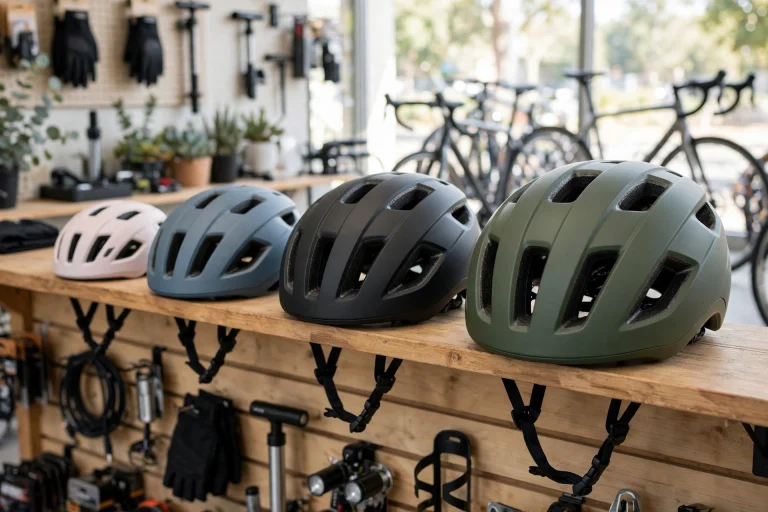
Helmet sizes are not the same from one maker to another, so a medium from one brand can feel different from a medium from another brand. That is why the measurement matters more than the label. A helmet that is the right size sits level on your head, feels snug all round, and stays in place when you move, while a helmet that is too big or too small will not protect you as well.
How do you measure your head for a US helmet size?
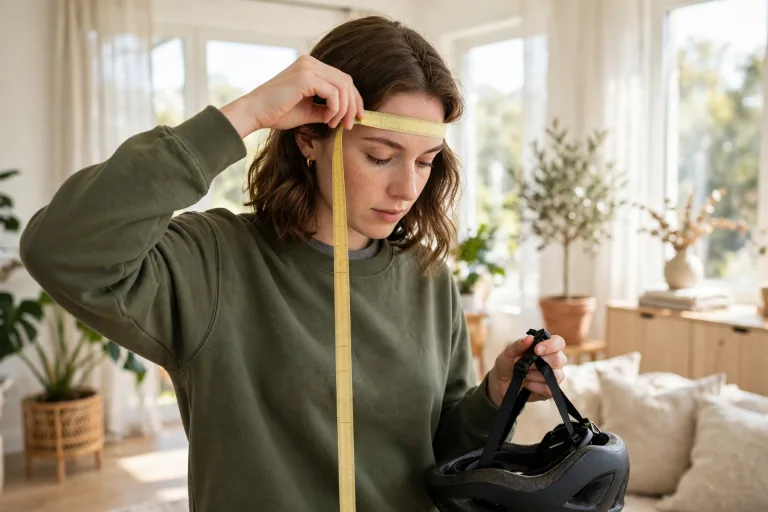
To measure your head, take a soft tape measure and wrap it around your head just above your eyebrows and ears, at the widest point, which is usually about an inch above the eyebrows. Keep the tape level all the way round, and make sure it is snug but not tight. Read the number where the tape meets itself, and write it down.
It helps to measure twice, or to ask someone else to measure for you, because it is hard to keep the tape level when you are doing it yourself. If your hair is thick or tied up, measure with it as you would wear it under a helmet. Note it in both inches and centimetres if you can, as some charts use one and some the other.
What do US helmet sizes mean in inches and centimetres?
In general terms, US helmet sizes follow a simple pattern: a smaller head measurement takes a smaller size, and a larger measurement takes a larger size. Many charts list sizes in inches, from around twenty inches for a small adult head up to around twenty-four inches for a large one, with centimetres alongside. Letter sizes such as extra small, small, medium, large, and extra large are then matched to those ranges.
The exact ranges differ by maker and by helmet type, so always check the chart for the helmet you are buying. A cycle helmet chart may use different ranges from a motorcycle helmet chart, and a child’s chart will be different again. If your measurement falls between two sizes, try both if you can.

Are US helmet sizes the same as UK or European sizes?
In general terms, the measurement itself is the same, because an inch is an inch and a centimetre is a centimetre wherever you are. What can differ is the label. A helmet sold in the United States may use inches and letter sizes, while a helmet sold in Europe may use centimetres and a number size, such as fifty-six or fifty-eight. The head measurement behind the label is the same idea in both cases.
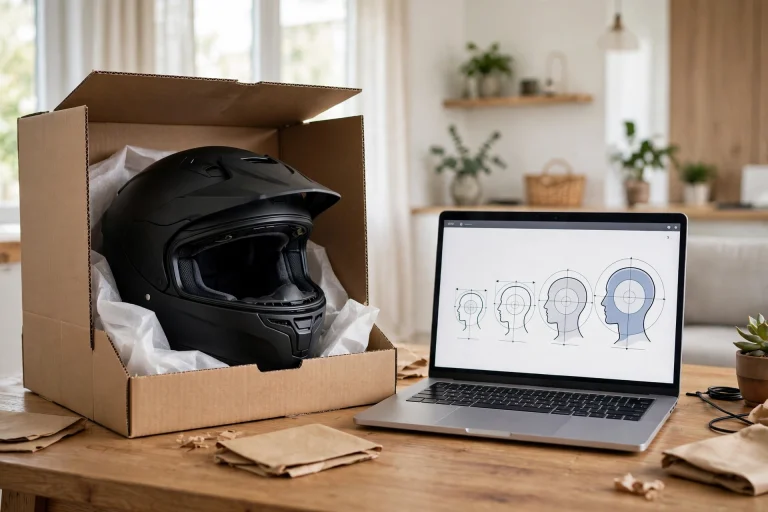
That means you can use your head measurement to buy a helmet anywhere, as long as you check the chart for that helmet. Do not assume a medium in one country matches a medium in another. Match the centimetre or inch figure to the chart, and try the helmet on if you can.
What is the difference between a US helmet size and a hat size?
A US helmet size and a US hat size are both based on the measurement around the head, but they are not quite the same thing. Hat sizes are often given as a number, such as seven or seven and a quarter, which comes from dividing the head measurement in inches by pi. Helmet sizes, by contrast, are usually given as a range in inches or centimetres, or as a letter size, and they are matched to the helmet’s shell and padding.
Knowing your hat size can give you a rough idea of your helmet size, but it is not a substitute for measuring your head and checking the helmet chart. A hat sits on top of the head, while a helmet must fit snugly all round and stay in place in a fall. If you only know your hat size, measure your head properly before you buy a helmet, because a helmet that is chosen by hat size alone may not fit well.
How should a helmet fit once you have the right US size?
A helmet in the right US size should sit level on your head, low enough at the front to cover your forehead, and snug all round without pressing painfully on your temples. It should not tip forward over your eyes or slide back when you nod, and it should stay in place when you shake your head gently from side to side. If it moves easily, it is probably too big, even if the label says it is your size.
The chin strap should be snug enough that you can fit only a finger or two between the strap and your chin. Some helmets have an adjustable fit system at the back, or pads of different thicknesses that you can swap. Some helmets include a system designed to reduce rotational forces in a fall, such as MIPS, and it is worth asking about when you choose. Try the helmet on for a few minutes before you decide, because a helmet that feels fine at first can start to press after a while.
What if your head measurement falls between two US helmet sizes?
If your measurement falls between two sizes, the best step is to try both sizes on, because the shape of your head matters as much as the number. One size may feel snug in the right places, while the other may feel loose or may press on your forehead. A helmet that is slightly snug is usually a better choice than one that is slightly loose, because padding settles a little with wear, but a helmet that hurts after a few minutes is the wrong size.
If you cannot try both sizes on, check whether the helmet has adjustable padding or a fit system that can take up the difference. A helmet with a dial at the back or with pads you can swap is more forgiving than a fixed shell. It is also worth checking the maker’s advice, because some makers say to size up and some say to size down when you are between sizes. In general terms, comfort and a secure fit matter more than the label, so choose the size that stays in place and feels comfortable.
What is a US helmet size based on?
It is based on the measurement around your head, taken just above your eyebrows and ears, and matched to the maker’s size chart in inches, centimetres, or a letter size such as small, medium, or large.
Are US helmet sizes the same for every brand?
No, sizes can differ from one brand to another, so a medium from one maker may feel different from a medium from another. Always measure your head and check the chart for the helmet you are buying.
What should I do if I am between two US helmet sizes?
Try both sizes on if you can, and choose the one that sits level, feels snug without hurting, and stays in place when you shake your head. A helmet with an adjustable fit system can help if you are between sizes.

Olivia
Writer at Helmet Today, covering helmet reviews, fit and riding safety.