Helmet sizes S, M, L and XL are labels for head circumference ranges, so a size is really a measurement in centimetres around your head. A small is usually about 51 to 55 centimetres, a medium about 55 to 59, a large about 59 to 63, and an extra-large about 63 and up, but the exact ranges change from brand to brand. That is why two helmets marked “medium” can fit quite differently, and why measuring your head matters more than guessing your usual clothing size.
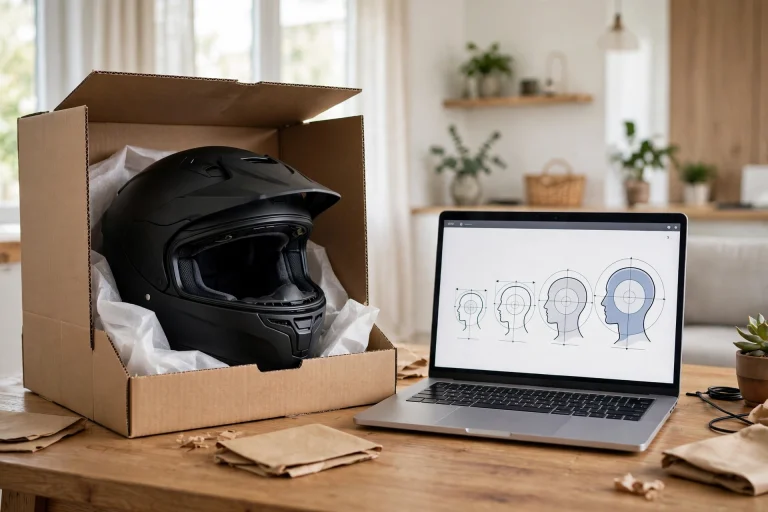
The best way to find your size is to measure your head with a soft tape measure. Wrap it around the widest part of your head, just above your eyebrows and ears, and keep it level all the way around. Take the measurement twice, write down the larger number, and compare it with the size chart for the helmet you want to buy. If you fall between two sizes, try both on if you can, because the shape of the shell matters as much as the number.
How do I measure my head for a helmet?
Stand in front of a mirror and hold a soft fabric tape measure level around your head, about a finger width above your eyebrows. The tape should sit just above your ears and pass over the widest point at the back of your head. Pull it snug, but not so tight that it presses into your skin, and read the number where the tape meets itself.
If you do not have a fabric tape, use a piece of string and then measure the string against a ruler. Ask someone to help if you can, because it is hard to keep the tape level while you read it yourself. Measure twice and use the larger result. In general terms, a measurement in centimetres is the most useful number, because most helmet size charts list centimetres first.
What if I am between two helmet sizes?
Falling between sizes is very common, and it is not a problem. Start by trying the smaller size, because most helmets have padding and an adjustment dial that can fine-tune the fit. If the smaller size feels tight at the temples or leaves a red mark after a few minutes, try the larger size and tighten the dial instead.
Shell shape matters here too. Some brands make round shells and others make longer, oval shells, so a size large in one brand may feel roomy while the same size in another brand feels tight. The right size is the one that sits level, stays put when you shake your head gently, and feels comfortable after ten minutes of wear, not just in the first few seconds.

Do S, M, L and XL mean the same for every helmet?
No, they do not. Each brand sets its own ranges, and the same letter can cover a different set of centimetres. One brand’s medium might be 54 to 58 centimetres while another’s is 56 to 60. Children’s sizes, adult sizes, and sizes for different sports also use different ranges, so a medium cycling helmet and a medium ski helmet may not fit the same head.
Always check the size chart printed on the box or on the maker’s website before you buy. Look for the centimetre range rather than the letter alone, and check whether the chart is for your head size or for hat size, because some charts mix the two. If you are buying online and cannot try the helmet on, a shop with a good returns policy makes the whole process much easier.
How should a helmet fit once I have the right size?
A well-fitting helmet sits level on your head, low on your forehead, with the front edge about two finger widths above your eyebrows. It should feel snug all the way around, without pressing hard in one spot. When you shake your head gently from side to side, the helmet should move with your head rather than sliding around on its own.
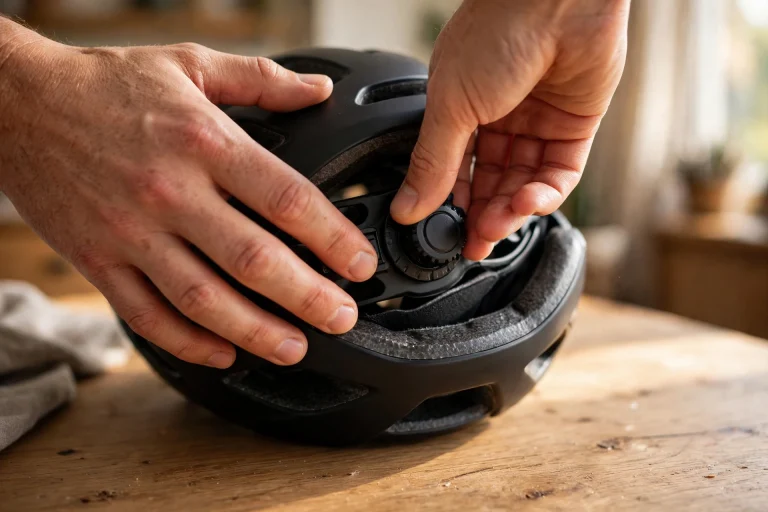
Use the adjustment dial at the back to fine-tune the fit, and fasten the chin strap so it is snug under your chin. The straps should form a neat V under each ear. If the helmet tips forward over your eyes or rocks back when you bend over, it is the wrong size or the wrong shape, even if the label says it should fit. Comfort after ten minutes of wear is the real test.
Does helmet size change with the type of helmet?
Yes, it often does. A motorcycle helmet, a cycle helmet, and a ski helmet are built on different shell shapes, so the same head may take a medium in one and a large in another. Motorcycle helmets in particular tend to fit more snugly, because they are designed to stay in place at speed, while a cycle helmet is lighter and often has more adjustment in the fit system.
Some helmets also come in a single shell size with different thicknesses of padding to cover the size range, while others use two or three shell sizes. A helmet that uses a larger shell with thick padding can feel heavier than one with a smaller shell, even if both are labelled the same size. Try the helmet on with the gear you will actually wear, such as glasses or a thin cap, before you decide.
How do I know if my helmet is too small or too big?
A helmet that is too small will press hard on your forehead or temples and may give you a headache after a short time. It will sit high on your head, leaving your forehead exposed, and you may feel pressure points within a few minutes. If you can see the skin of your forehead turning red where the helmet touches it, the helmet is too tight.
A helmet that is too big will slide around when you move your head, tip forward over your eyes, or feel loose even with the dial tightened fully. It may also sit so low that it covers your eyebrows. Some helmets offer extra padding inserts or a thicker comfort liner, and systems such as MIPS add a thin slip layer inside, but no liner can fix a shell that is the wrong size. Replace a helmet that does not fit rather than trying to make it work.
Is my helmet size the same as my hat size?
Not exactly. Hat sizes and helmet sizes both relate to head circumference, but they use different scales and different fits. A hat size gives you a rough guide, but you should still measure your head in centimetres and check the helmet maker’s own size chart.
Should a new helmet feel tight at first?
A new helmet should feel snug, but not painful. The padding settles slightly with use, so a helmet that feels a little firm on the first wear is normal. If it hurts, leaves marks, or gives you a headache within minutes, it is too small or the wrong shape.
Do children use the same S, M, L and XL sizes?
Children’s helmets often use their own size ranges, such as extra-small or youth sizes, because a child’s head is smaller and shaped differently. Always measure a child’s head and check the child-specific chart rather than guessing from an adult size.

Olivia
Writer at Helmet Today, covering helmet reviews, fit and riding safety.