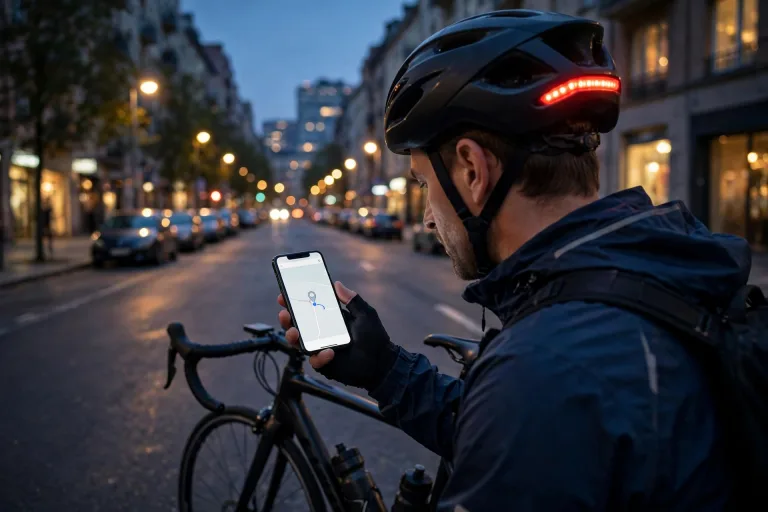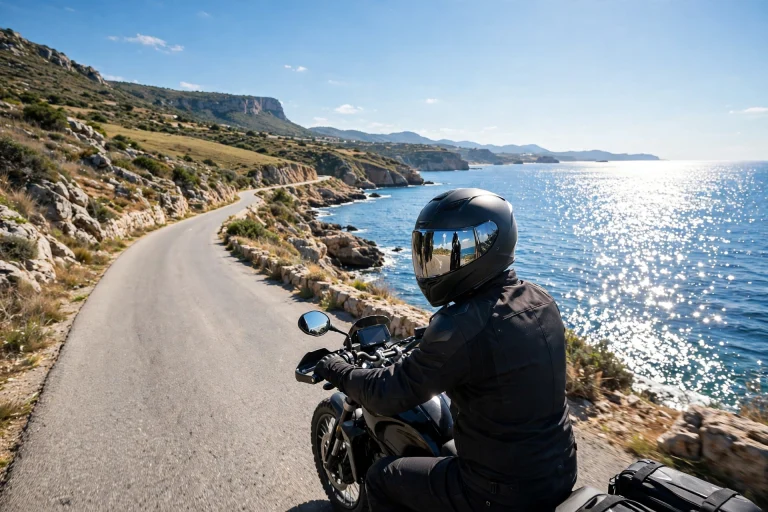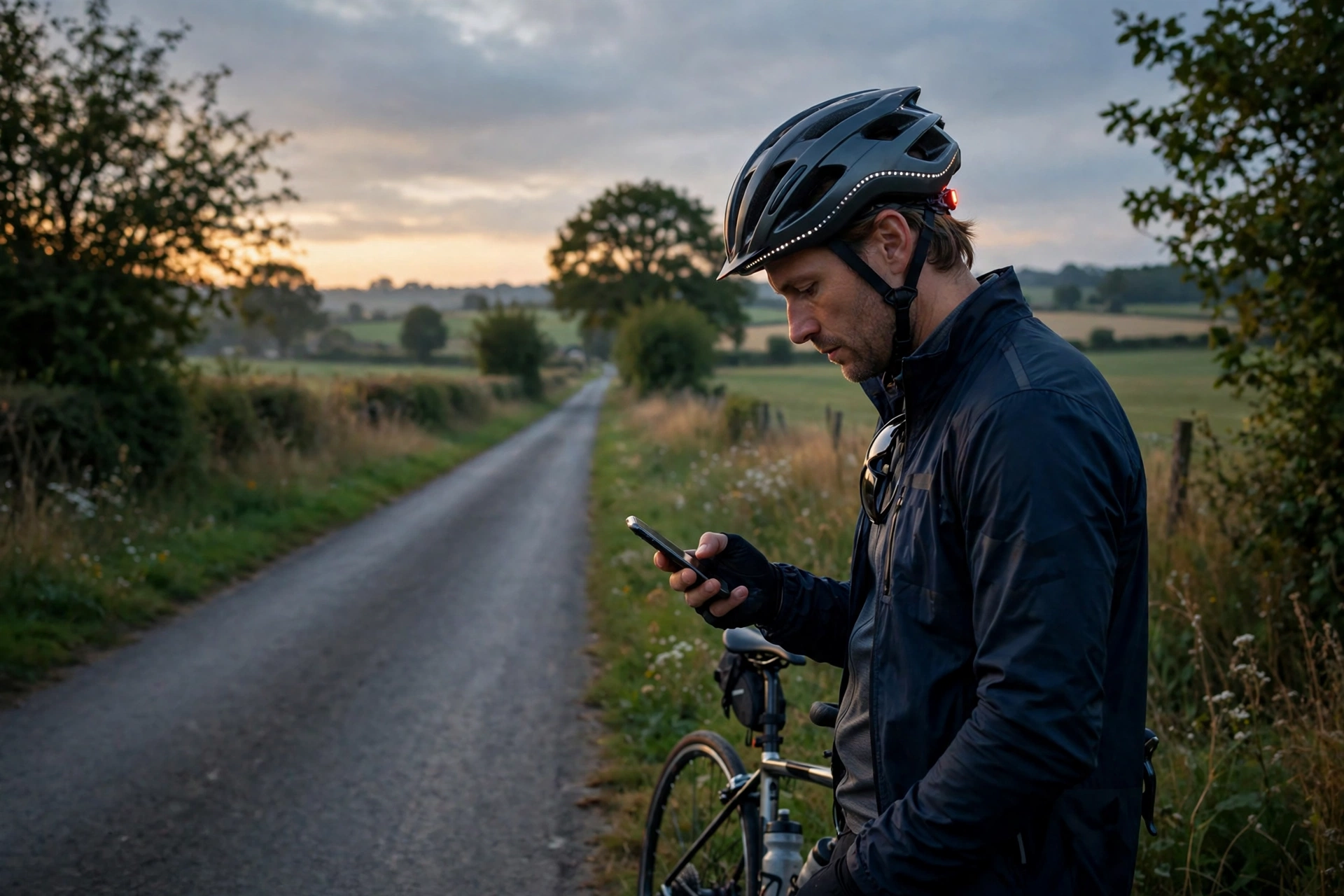
A helmet with an SOS alert is a smart helmet that can detect a hard fall or crash and automatically send an alert for help, and in general terms it is designed for riders who often ride alone. The idea is simple: if you come off your bike and cannot call for help yourself, the helmet raises the alarm for you by contacting a person you chose in advance.
Most SOS alerts work through a small sensor in the helmet, paired with an app on your phone. When the sensor feels a sudden impact, it starts a short countdown. If you are fine, you cancel the alert; if you do not respond, the app sends a message with your location to your emergency contact.
What is a helmet SOS alert?
A helmet SOS alert is a safety feature found in some smart helmets. It uses a motion sensor, sometimes called a crash sensor, to watch for the kind of sudden stop or heavy impact that suggests a rider has fallen. When it detects one, it can send a message to a chosen contact, often with a map link showing where the fall happened.
The feature is aimed at cyclists, mountain bikers, and commuters who ride on their own, on quiet roads, or on trails where other people may not pass by for a while. If you ride alone at dawn or on a remote trail, an SOS alert can be the difference between waiting a long time for help and getting it quickly.
An SOS alert is not a replacement for calling the emergency services, and it does not guarantee help will arrive. It is a way of letting someone you trust know something has happened, so they can check on you or call for help on your behalf.
How does a helmet SOS alert work?
In general terms, an SOS alert works in three steps: detection, a countdown, and a message. First, the sensor in the helmet, or in a small unit clipped to it, watches your movement as you ride. It looks for a sudden shock or a hard impact, the kind of jolt that comes with a fall rather than a bump in the road.
Second, when it senses such an impact, it starts a countdown, often around half a minute. During that time the helmet or the app warns you with a beep or a vibration and shows a button to cancel the alert. This matters, because a helmet dropped on the ground could otherwise trigger a false alarm.
Third, if you do not cancel the alert before the countdown ends, the app sends a message to your emergency contact. That message usually includes your location on a map, so the person can find you or pass the location on to the emergency services. Some systems also send a second message if you move again, to show that you are up and about.

What happens after an SOS alert is sent?
Once an SOS alert is sent, your emergency contact receives a message, usually by text, with your location. They might call you, come to you, or call the emergency services and pass on your location. That is why it helps to choose someone who is usually near their phone and knows what to do if they get such a message.
It is worth talking through the plan with your contact before you rely on the feature. Agree on what they should do if they get an alert, and make sure they know your usual routes. Some riders also set up more than one contact, so that if one person misses the message, another may see it. Check whether the system you use allows that, as some allow only one contact.
Keep in mind that the message needs a mobile signal to go out, so it may be delayed where there is no coverage. An SOS alert is most useful where there is at least some signal, and it is not a substitute for telling someone your route before you set off.
Do you need a phone nearby for an SOS alert to work?
In general terms, yes. Most helmet SOS alerts rely on your phone to send the message, because the helmet itself usually has no mobile connection of its own. The sensor in the helmet talks to the app on your phone over a short-range wireless link, and the phone sends the alert using its own mobile signal.
That means your phone needs to be with you, switched on, and paired with the helmet when you ride. If the phone is left at home, or its battery runs out, the alert cannot be sent. Some riders carry the phone in a jersey pocket or a bag on the bike, which is fine as long as it stays within range of the helmet. Check the maker’s guidance for how far apart the two can be, as the link can drop if the phone is too far away.
A few systems have a built-in mobile connection, so they can send an alert without a phone. These are less common and usually cost more, but they suit riders who prefer to ride without a phone. In general terms, most riders use the phone-based version, which works well as long as the phone is charged and nearby.
What should you look for in a helmet with an SOS alert?
First, the helmet still has to be a good helmet. Fit comes first: it should sit level on your head, cover your forehead, and stay in place when you shake your head gently. Ventilation matters too, especially on longer rides, and the weight should feel comfortable. An SOS feature does not make up for a helmet that fits badly.
Second, look at how the alert is set up. Check how easy it is to add your emergency contact, how long the countdown is, and whether you can cancel it easily after a minor knock. A system that is fiddly to set up is one you may never finish setting up, and an SOS helmet that is not set up is just a normal helmet.
Third, think about the battery. The sensor needs power, and some helmets use a small battery that needs charging or replacing. Check how long it lasts and what happens when it runs flat. If the sensor is dead, the alert will not work, so make charging it part of your routine.
Finally, consider the extras. Some SOS helmets also include built-in lights or turn signals, and some include a system designed to reduce rotational forces in a fall, such as MIPS. These are useful, but they are extras. The core question is simple: does the helmet fit well, and is the SOS feature one you will actually set up and keep working?
What is a helmet SOS alert?
It is a smart-helmet feature that can detect a hard fall and send an alert with your location to a person you chose in advance, so they can check on you or call for help.
Does a helmet SOS alert call the emergency services directly?
In general terms, no. Most systems message a chosen contact, who can then call the emergency services. Check what yours does before you rely on it.
Can a helmet SOS alert go off by accident?
Yes, a hard knock can set it off, which is why most systems include a countdown that lets you cancel the alert. Keep the sensor charged and the app paired, and test the cancel step at home so you know how it works.

Olivia
Writer at Helmet Today, covering helmet reviews, fit and riding safety.