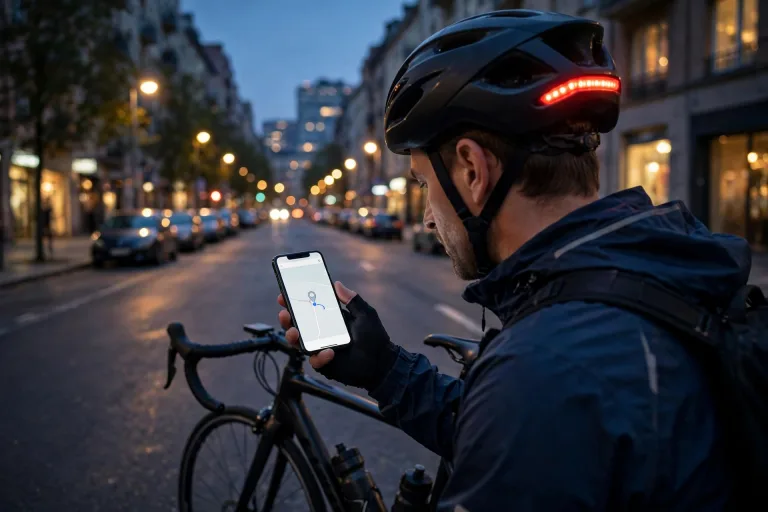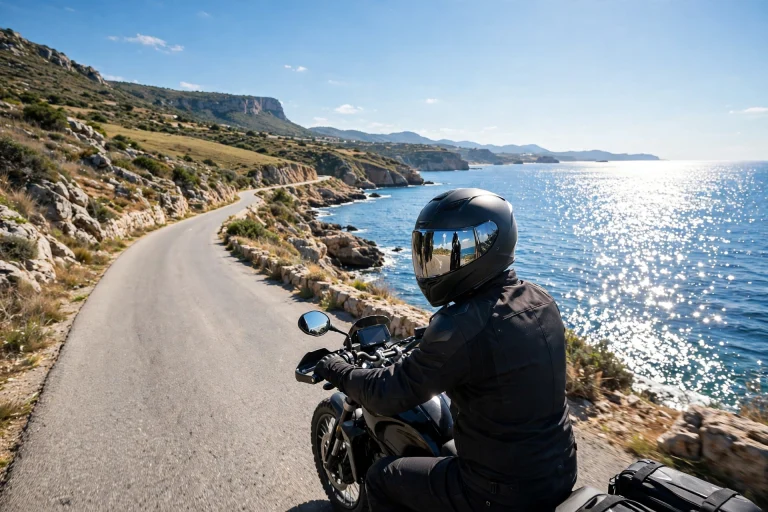
A helmet with fall detection is a smart helmet with built-in sensors that can sense a hard fall or crash and then alert a chosen contact or an emergency service, and in general terms it is designed to get you help when you cannot call for it yourself. If you ride alone, or you ride in places where nobody would see you fall, that automatic alert is the main reason people buy one.
Fall detection helmets are most often cycling or motorcycle helmets, and they look much like ordinary helmets from the outside, with a small sensor unit, a battery, and a connection to your phone hidden inside. The sensors watch how the helmet moves, and when they detect a sudden, violent movement followed by stillness, they treat it as a possible crash and start the alert process.
How does fall detection in a helmet work?
Fall detection in a helmet works through motion sensors inside the helmet, usually an accelerometer and a gyroscope, which measure how fast the helmet is moving and how it is turning. The sensors are always watching, and they compare what they feel against patterns that look like a crash: a sudden sharp impact, a tumble, and then a period of no movement.
When the sensors detect that pattern, the helmet sends a signal to an app on your phone, and the app then sends an alert to your chosen contacts, usually with your location. In general terms, many systems give you a short countdown first, often around half a minute, so you can cancel the alert if you are fine and simply dropped the helmet, and the alert only goes out if you do not cancel it.
What happens after a fall is detected?
After a fall is detected, the system usually waits for the countdown to finish and then sends a message to the contacts you chose when you set it up, telling them that you may have had a crash and sharing your location. Some systems also let the contact see a map of where you are, and some can call an emergency service directly, depending on the product and the country you are in.
The alert depends on your phone having signal and battery, because the helmet itself usually talks to the phone rather than to the mobile network directly. In general terms, that means the system works best where there is mobile coverage, and it may not work in a remote valley or a tunnel. It is also worth keeping your emergency contacts up to date, because an alert sent to an old number will not reach anyone.

Who is a fall detection helmet for?
A fall detection helmet is for anyone who rides alone, rides in remote places, or wants an extra safety net, and it is especially popular with solo cyclists, commuters who ride early or late, and older riders. It is also used by people who ride off-road, where a fall might happen far from a path and nobody would pass by for a long time.
It is not a replacement for riding carefully, and it does not stop a fall from happening, but it can shorten the time before someone knows you need help. In general terms, that time matters after a serious crash, because a rider who is unconscious or badly hurt cannot call for help on their own, and a quick alert can make a real difference to how fast help arrives.
Do fall detection helmets give false alarms?
Fall detection helmets can give false alarms, because a hard bump, a dropped helmet, or a sudden stop can look like a crash to the sensors. Most systems reduce this with the countdown: if you are fine, you tap the app or the helmet button to cancel the alert before it goes out, and nothing is sent.
Some systems also learn over time, or let you adjust how sensitive the detection is, so a helmet that alarms too often on rough roads can be turned down a little. Some helmets include a system designed to reduce rotational forces in a fall, such as MIPS, which is a separate safety feature from fall detection. In general terms, a false alarm now and then is a small price for a system that could call for help when you really need it, but you should test the countdown so you know how to cancel it.
What should you check before buying a fall detection helmet?
Before you buy, check how the system sends its alert, whether it needs a phone nearby, whether it works in your country, and what happens if there is no mobile signal. Check the battery life too, because a sensor that has run flat will not detect anything, and find out how the helmet charges and how long a charge lasts.
Check that the helmet itself fits well and meets a recognised safety standard, because fall detection is an extra feature, not a replacement for a good helmet. The helmet should sit level, fasten securely, and feel comfortable for the length of your ride. In general terms, choose the helmet first and the fall detection second: a smart helmet that does not fit properly is not a good buy, however clever its sensors are.
How do you set up and look after a fall detection helmet?
To set up a fall detection helmet, fit the sensor or turn it on, connect it to the app on your phone, and add your emergency contacts with their current numbers. Test the alert with a friend before your first real ride, so you know what the countdown looks like and how to cancel it, and make sure the contact knows what to do if they ever receive the message.
Keep the helmet charged, keep the app updated, and look after the helmet itself in the usual way: wipe it clean, let it dry naturally away from heat, and wash the lining following the maker’s instructions. In general terms, a helmet that has taken a hard knock in a fall should be replaced, even if it looks fine on the outside, because the inner lining may have been compressed.
What is a helmet with fall detection?
A helmet with fall detection is a smart helmet with sensors that can sense a hard fall and automatically alert a chosen contact or an emergency service, usually with your location.
Does fall detection work without a phone?
In general terms, most systems need a phone nearby with signal and battery, because the helmet sends its alert through the app on your phone rather than directly to the mobile network.
Can a fall detection helmet give a false alarm?
Yes, a hard bump or a dropped helmet can trigger it, but most systems give you a short countdown to cancel the alert before it is sent, so a false alarm does not usually reach your contacts.

Olivia
Writer at Helmet Today, covering helmet reviews, fit and riding safety.