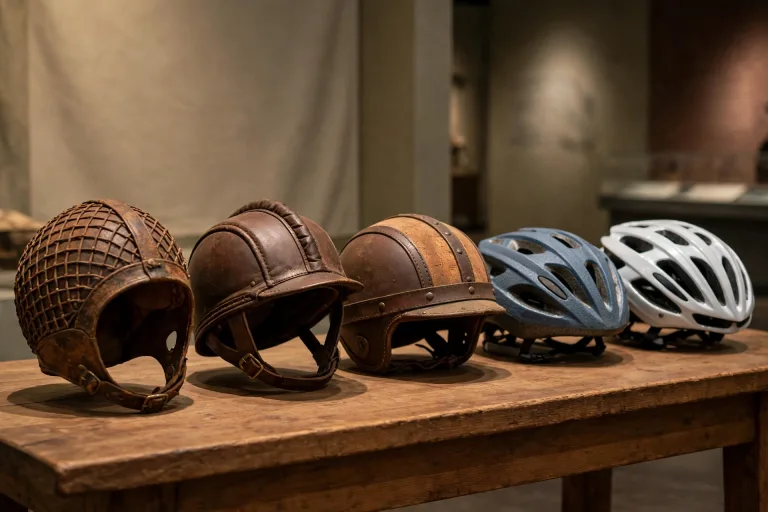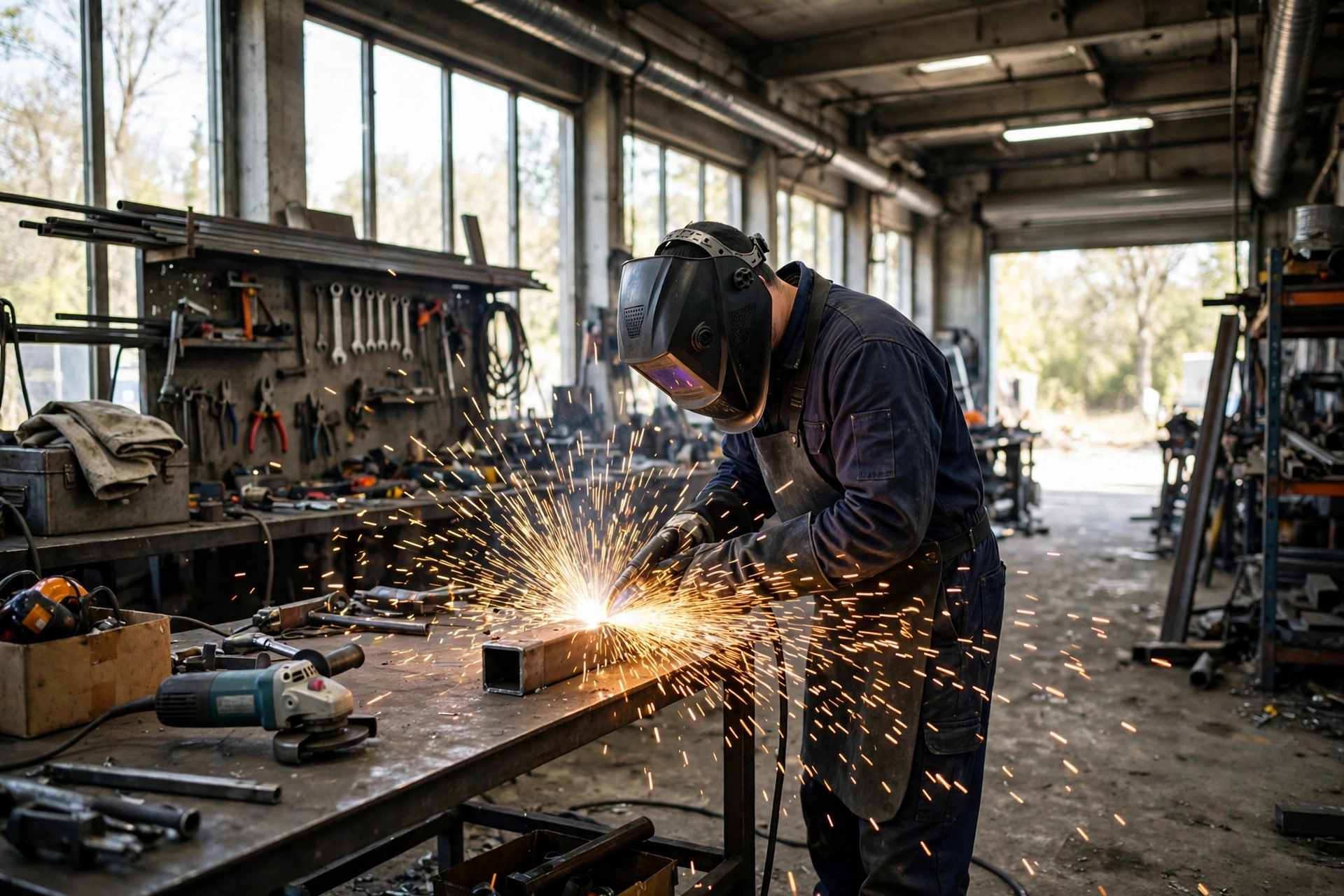
The history of the welding helmet is the story of how welders went from holding a simple shield in one hand to wearing a modern helmet that darkens by itself, and in general terms it spans more than a century, from early hand-held shields to the auto-darkening helmets used today. Welding gives off a very bright light and a shower of sparks, and from the start welders needed something to protect their eyes and their face while they worked.
Early welders often worked with little protection, or with simple goggles and a cloth over the face, and eye injuries were common. As welding grew into a major trade, first in shipyards and then in factories and on building sites, the need for proper face protection became clear. The welding helmet grew up with the trade itself, changing as welding methods, materials, and safety rules changed.
What did welders use before the welding helmet?
Before the welding helmet, welders used hand-held shields, dark goggles, and sometimes just a cloth or a piece of tinted glass held in front of the face. A hand-held shield was a flat piece of metal or fibre with a small dark window in it, held up by a handle. It protected the eyes from the bright arc, but it left one hand busy holding the shield, and it left much of the face and neck exposed to sparks and heat.
Some early welders wore goggles with dark lenses, which protected the eyes but not the face. Others worked with no protection at all, and paid for it with sore eyes and burned skin. The bright light from welding, often called arc eye when it hurts the eyes, was a well-known problem, and welders learned quickly that they needed better protection if they were to work all day, every day.
When was the first welding helmet invented?
In general terms, the first welding helmets appeared in the early years of the twentieth century, as electric arc welding spread through shipyards and heavy industry. Early helmets were simple shells made from fibre or pressed material, with a fixed dark lens set into the front. The welder wore the helmet on the head, which left both hands free for the first time, and that was a major step forward.
These early helmets were heavy and hot to wear, and the lens was fixed, so the welder had to lift the helmet to see the work, then lower it again before striking the arc. That nodding motion became part of the welder’s skill, and it is still remembered today. The helmets were a great improvement on a hand-held shield, even if they were far from comfortable by modern standards.
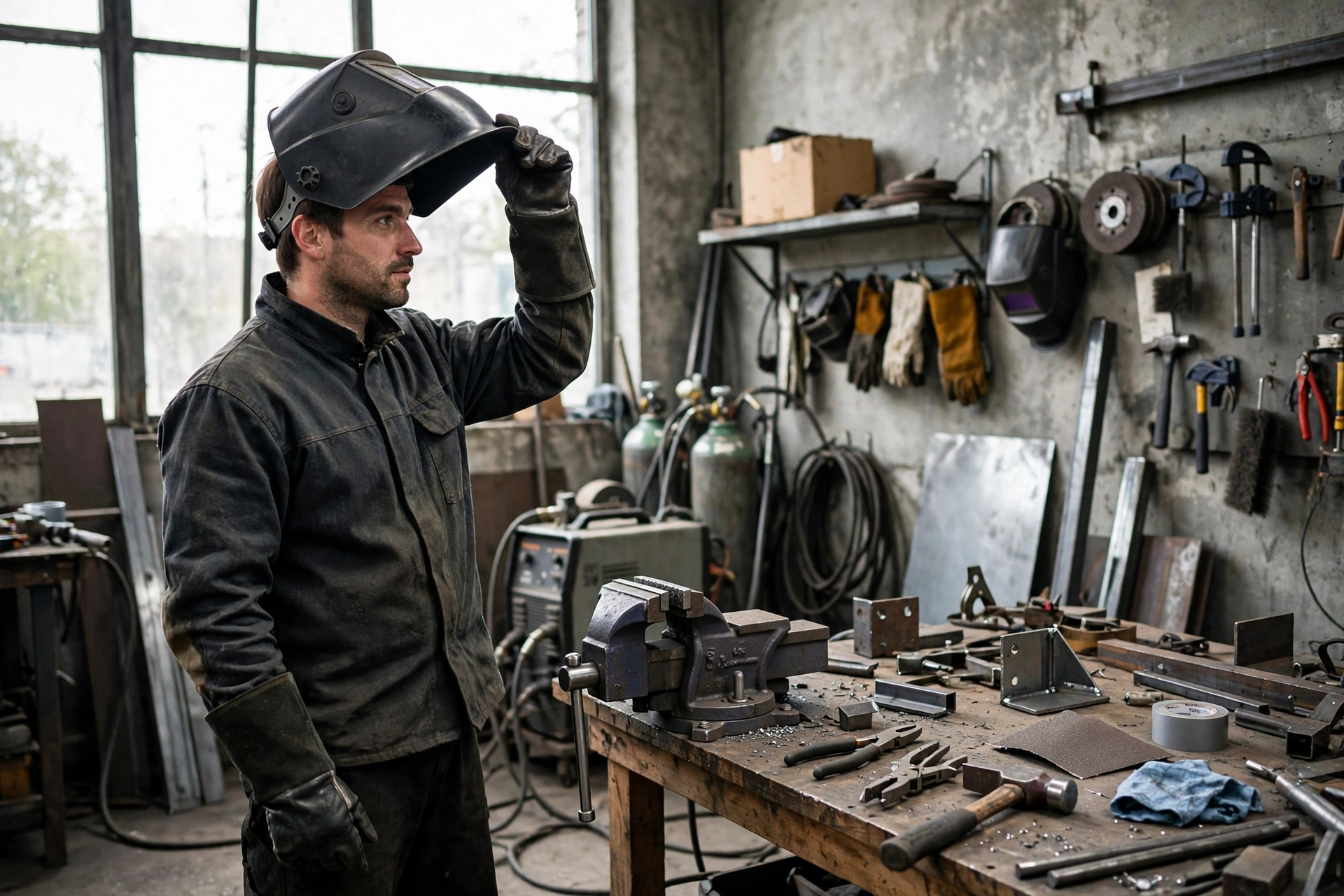
How did the welding helmet change in the mid-twentieth century?
During the middle of the twentieth century, welding helmets became lighter, better shaped, and more widely used. New materials made the shells lighter and tougher, and the fit improved, with headbands that could be adjusted to suit the wearer. Welding itself was growing fast, with work on ships, bridges, pipelines, and cars, and more welders than ever needed a helmet they could wear all day.
The fixed lens remained the standard for many years, and welders became skilled at flipping the helmet up and down with a nod of the head. Some helmets had a lift-up front, so the welder could see the work without taking the helmet off. Ventilation and comfort improved slowly, and helmets began to come in different sizes and shapes, but the basic idea stayed the same: a shell, a headband, and a dark lens.
What changed with the auto-darkening welding helmet?
The biggest change in the history of the welding helmet came with the auto-darkening lens, which appeared in the later part of the twentieth century and became common in the years that followed. An auto-darkening lens stays light when the welder is setting up the work, so the welder can see clearly, and then darkens in a fraction of a second when the arc is struck. That means the welder no longer has to nod the helmet up and down.
This change made welding easier, faster, and safer, because the welder could keep the helmet down and keep both hands on the work. It also reduced neck strain, because the constant nodding was no longer needed. Early auto-darkening helmets were costly, and some welders were slow to trust them, but as the price fell and the lenses became more reliable, they became the standard choice for many welders, in workshops and on site.
What are modern welding helmets like?
Modern welding helmets are light, comfortable, and full of features that early welders would not have recognised. The shell is shaped to protect the face, neck, and ears from sparks, and the headband adjusts to fit the wearer. The auto-darkening lens can often be set to different shade levels, to suit different types of welding, and some lenses adjust themselves to the brightness of the arc.
Many modern helmets also have better ventilation, a wider view through the lens, and a finish that resists heat and sparks. Some have a grinding mode, so the welder can use the helmet as a face shield while grinding, and some can be fitted with a respirator for work in dusty air. Helmet makers have also borrowed ideas from other types of helmet, including systems designed to reduce rotational forces in a fall, such as MIPS, and it is worth asking what protection a helmet offers when you choose. In general terms, the modern helmet is a far cry from the heavy shell of a century ago.
Why does the history of the welding helmet matter today?
The history of the welding helmet matters because it shows how safety gear improves when workers, makers, and safety rules work together. Each step, from the hand-held shield to the fixed-lens helmet to the auto-darkening helmet, solved a real problem that welders faced every day. The helmet did not change for fashion; it changed because welders needed to see better, work faster, and stay safe.
It also matters because the lessons still apply. A helmet that fits well, that is comfortable to wear all day, and that lets the welder see the work clearly is one the welder will actually wear. A helmet that is heavy, hot, or hard to see through will be left on the bench, however good it looks on paper. The best modern helmets carry forward the same idea that drove the first helmets: protect the eyes and the face, and let the welder get on with the job.
When was the welding helmet invented?
In general terms, the first welding helmets appeared in the early twentieth century, as electric arc welding spread through shipyards and heavy industry. Early helmets had a fixed dark lens and a simple shell.
What is an auto-darkening welding helmet?
It is a helmet with a lens that stays light while you set up the work and darkens in a fraction of a second when the arc is struck, so you do not have to lift the helmet to see.
Why did welders stop using hand-held shields?
A hand-held shield left one hand busy and left much of the face exposed. A helmet worn on the head leaves both hands free and protects the face, neck, and ears from sparks.

Olivia
Writer at Helmet Today, covering helmet reviews, fit and riding safety.