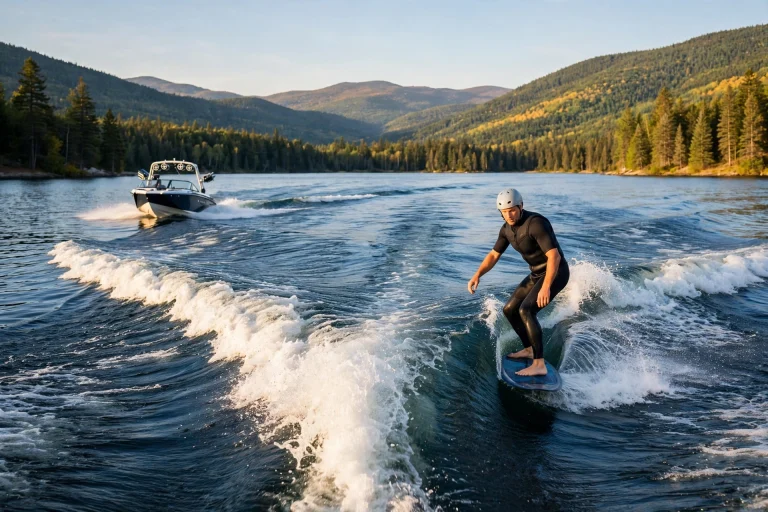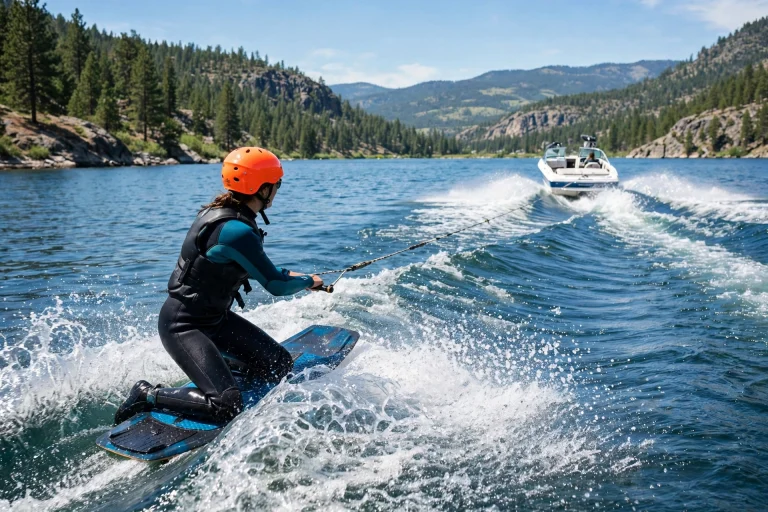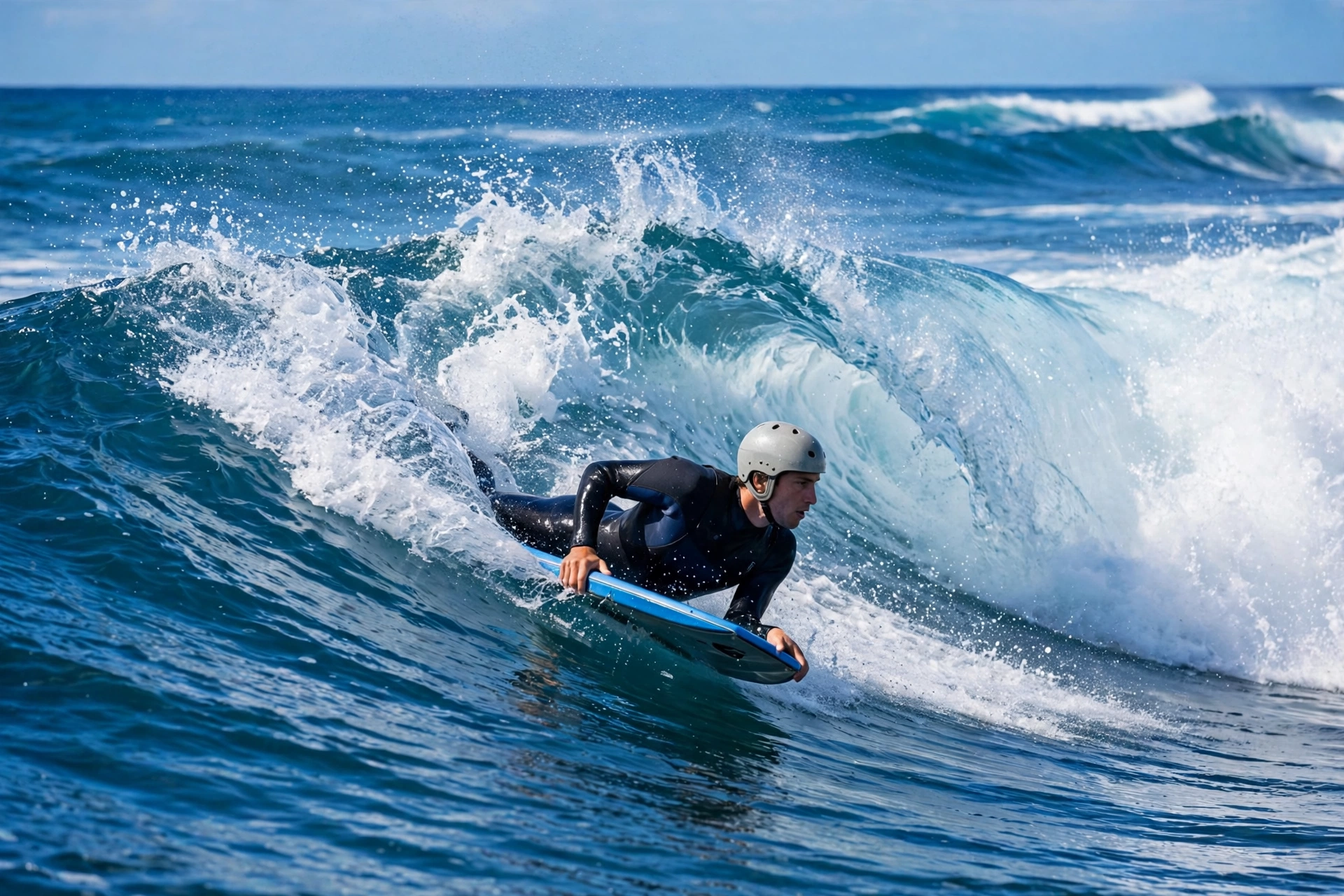
A helmet for bodyboarding is a light water helmet worn to protect the head in the surf, and in general terms a well-fitting, low-profile water helmet that drains well and stays put in waves is what most bodyboarders look for. Bodyboarding takes place close to the shore, where the board, the sea floor, and other riders can all pose a risk of a knock to the head.
Bodyboarding means riding waves lying down on a short, soft board, steering with the hands and the body rather than standing up. It looks simple, but the surf zone is a busy place: waves break hard, the water is shallow near the shore, and the board can be thrown back at the rider by a wave. A helmet will not stop a fall or a wipeout from happening, but it can reduce the force of a knock to the head if the board, the sea floor, or another rider makes contact. In general terms, that is the main reason bodyboarders wear one, whether they are riding small beach waves or bigger reef breaks.
What is bodyboarding?
Bodyboarding is a wave-riding sport in which the rider lies prone on a short board, usually made of foam, and uses swim fins on the feet to catch and steer along a wave. The rider holds the front of the board and uses body weight to turn, while the fins give power to paddle out and to catch the wave. Unlike surfing, there is no standing up, which makes the sport easier to start, but the rider is still moving fast in powerful water.
What kind of helmet do bodyboarders wear?
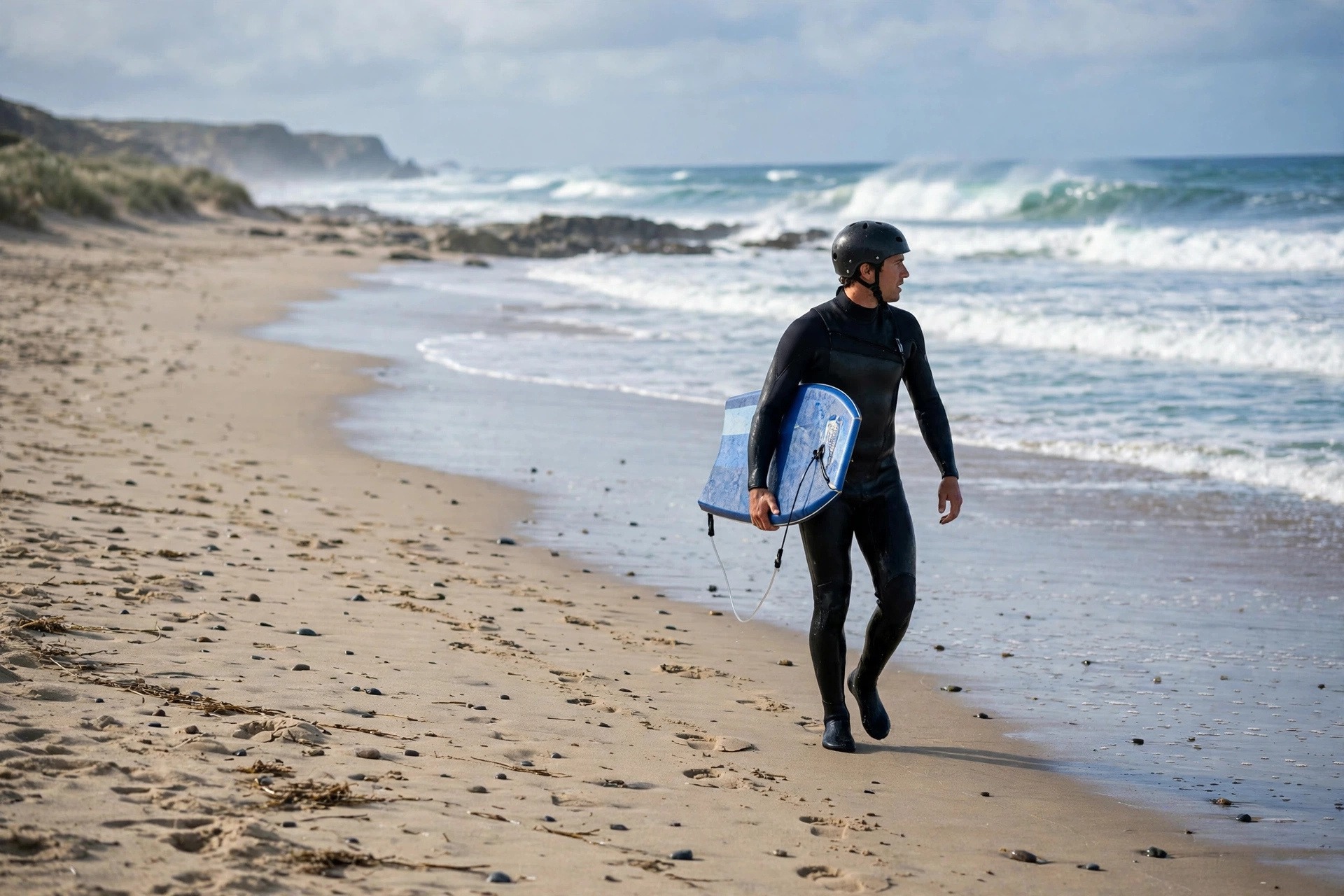
In general terms, bodyboarders wear a light water sports helmet, often made with a hard outer shell and a water-friendly lining that does not soak up water or become heavy when wet. These helmets are made for use in the sea, so they are designed to drain quickly, to resist the effects of salt water, and to stay in place when a wave washes over the rider. A helmet made for land sports is not always a good choice in the water, because it may soak up water, become heavy, or slip once it is wet.
How should a helmet for bodyboarding fit?
A helmet for bodyboarding should sit level on the head, low enough at the front to cover the forehead, and snug all round without pressing painfully on the temples or the top of the head. It should not tip forward over the eyes or slide back when you nod, and it should stay in place when you shake your head gently from side to side. A helmet that moves around in the surf is a distraction, and it may not be in the right place when a knock happens.
The chin strap should be fastened securely, with only a finger or two fitting between the strap and your chin, and it should be checked while wet, because a fit that feels fine on the beach can feel different once the helmet and the hair are soaked. Try the helmet on with any ear plugs or swim cap that will be worn in the water, and check that nothing pushes the helmet out of position. If the helmet has an adjustable fit system, use it to fine-tune the fit, and test it by ducking under a wave or shaking the head, because a helmet that stays put in the surf is the one that will protect you when it matters.
What features matter in a helmet for bodyboarding?
Drainage matters, because a helmet that holds water becomes heavy and uncomfortable, and it can pull at the head in a wave. Look for a helmet with drainage holes and a lining that dries quickly, so that the helmet stays light even after repeated duck-dives. A low profile also matters: a helmet that sits close to the head creates less drag in the water and is less likely to be caught by a wave.
Coverage matters too. A helmet that covers the top, sides, and back of the head gives more complete protection than one that only covers the crown, and ear guards can add protection against knocks and against the discomfort of cold water in the ears. Some helmets include a system designed to reduce rotational forces in a fall or a knock, such as MIPS, and it is worth asking about when choosing a helmet. Weight matters as well: a light helmet is easier to wear for a long session, and a helmet that feels comfortable is one a rider will actually keep wearing. Finally, check that the materials are made to cope with salt water, so that the shell, lining, and buckle do not wear out quickly after time in the sea.
Do all bodyboarders need a helmet?
In general terms, whether a bodyboarder needs a helmet depends on the conditions, the spot, and the rider’s own judgement. Many riders wear a helmet at reef breaks, where the sea floor is hard and shallow, or in bigger surf, where the board can be thrown back with force. At a gentle sandy beach with small waves, some riders choose not to wear one, and the choice is often left to the individual rather than set by a rule.
How do you look after a bodyboarding helmet?
After a session, rinse the helmet in fresh water to wash out salt and sand, then let it dry naturally, away from direct heat and sunlight. Do not leave it in a hot car or next to a heater, as heat can damage the materials inside over time. If the lining is removable, take it out and wash it following the maker’s instructions, and let it dry fully before putting it back. Sand caught in the vents or the buckle should be rinsed out, because it can wear the fittings over time.
What is a helmet for bodyboarding?
A helmet for bodyboarding is a light water helmet worn to protect the head from the board, the sea floor, and other riders while riding waves in the surf.
Can you wear a normal sports helmet for bodyboarding?
In general terms, a helmet made for land sports is not the best choice in the water. A water helmet drains quickly, stays light when wet, and resists salt water, while a land helmet may soak up water and slip.
When should a bodyboarding helmet be replaced?
Replace it after a hard knock in the surf, if the shell or lining is damaged, or if the strap and buckle are worn. A helmet that has protected you in a heavy blow has done its job and should not be relied on again.

Olivia
Writer at Helmet Today, covering helmet reviews, fit and riding safety.