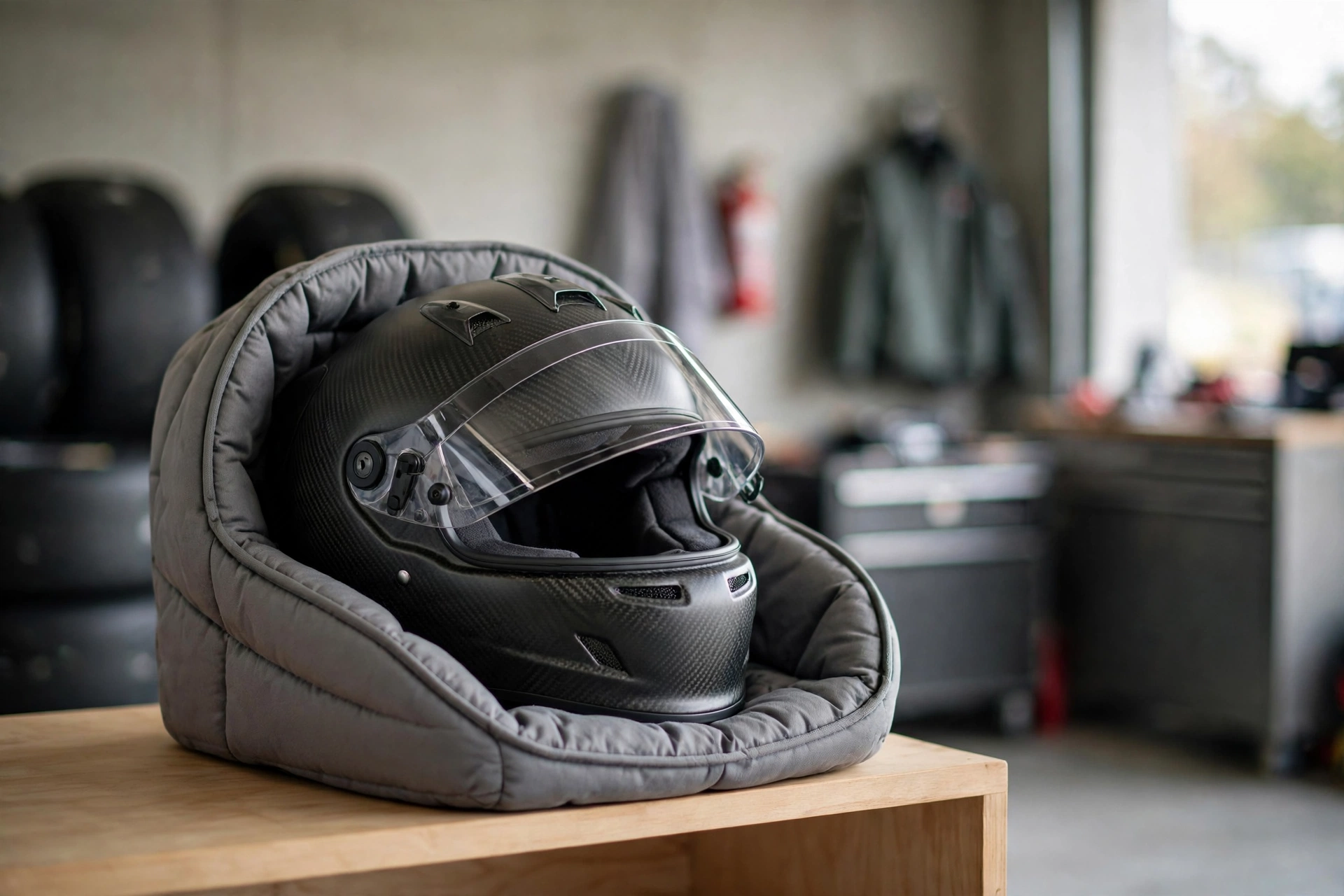
In general terms, the best way to store a motorsport helmet between races is in a cool, dry place out of direct sunlight, inside a soft helmet bag, with the visor closed and nothing pressing on the shell or liner. A helmet that is stored well keeps its fit, its padding, and its protective liner in good condition for far longer than one left on a garage floor or hanging from a hook.
Motorsport helmets are built to take a lot of punishment on track, but they are surprisingly sensitive to storage. Heat, damp, sunlight, and pressure can all degrade the materials quietly, without any visible crash damage. The good news is that good storage costs almost nothing: a bag, a shelf, and a few simple habits are usually all it takes.
Where Should You Store a Motorsport Helmet Between Races?
The ideal spot is indoors, at a stable room temperature, away from windows and radiators. A shelf in a spare room, a cupboard, or a dedicated gear bag kept inside the house all work well. What matters most is avoiding extremes: a loft that bakes in summer, a damp garage, or a car boot left in the sun are all poor choices for long-term storage.
Heat is the main enemy. High temperatures can soften adhesives, age the foam liner, and warp interior padding over time. Cold on its own is less of a problem, but repeated freezing and thawing in an unheated outbuilding is still best avoided. If you must store a helmet in a garage, keep it off the concrete floor, away from the walls, and inside a bag that protects it from dust and damp.
Sunlight is the other quiet threat. Ultraviolet light degrades shell materials and fades graphics, and a helmet left on a sunny windowsill or dashboard will age faster than one kept in the dark. Store your helmet out of direct sun even if it is inside a bag, since thin bags offer little protection against heat build-up.
Should You Keep a Motorsport Helmet in a Bag?
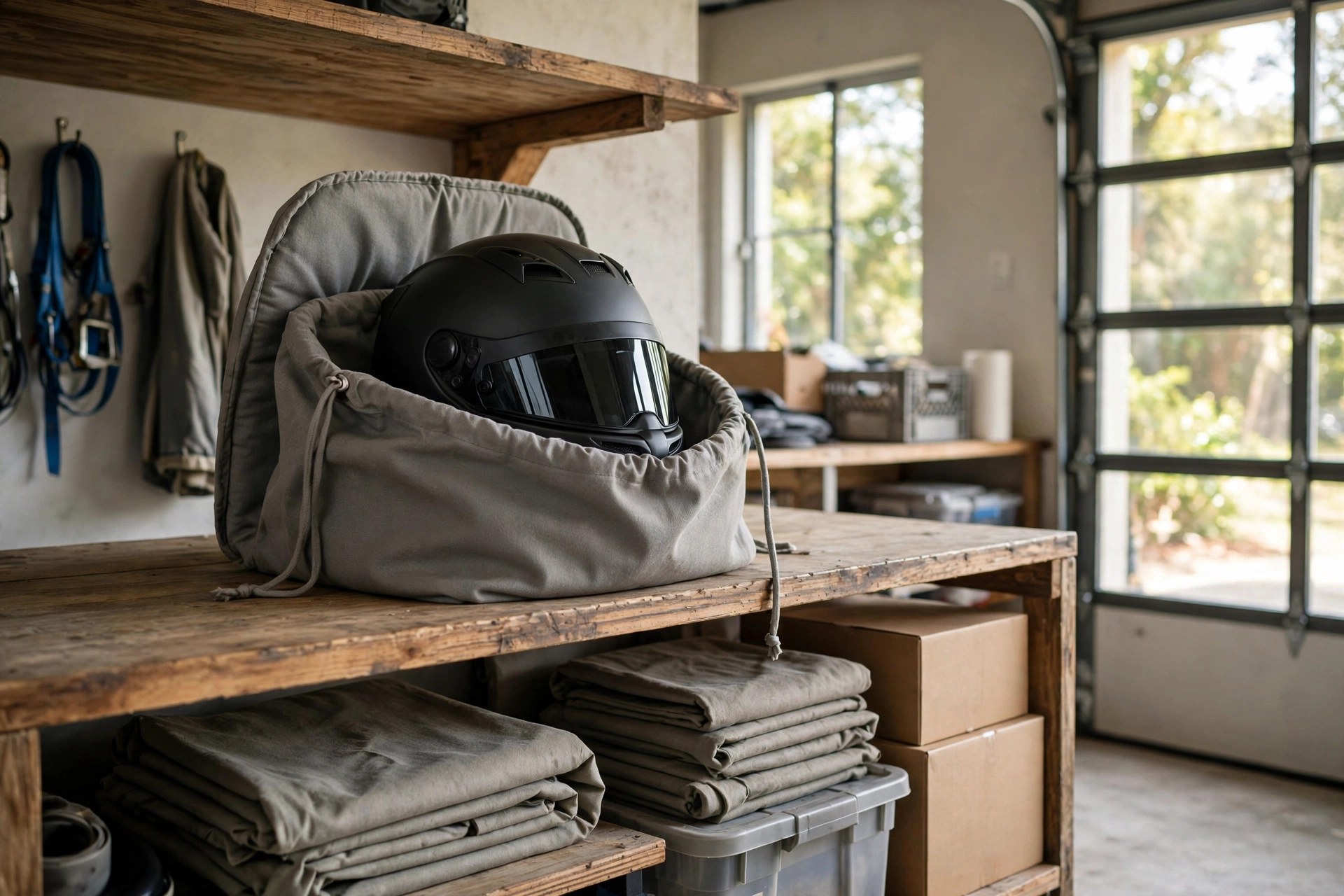
Yes — a soft, breathable helmet bag is the simplest way to protect a helmet between races. It keeps dust off the visor and vents, stops the shell from being scratched by other kit, and gives the helmet a shape to sit in rather than rolling around loose. Most helmets come with a bag, and if yours did not, a padded drawstring bag made for helmets is an easy replacement.
Avoid airtight plastic bags and sealed boxes for long storage, because trapped moisture can encourage mould and smells in the lining. A fabric bag that breathes is better, especially if the helmet was not fully dry when it went in. If the helmet is damp after a race, let it air-dry fully before bagging it — never pack a wet helmet away and forget about it.
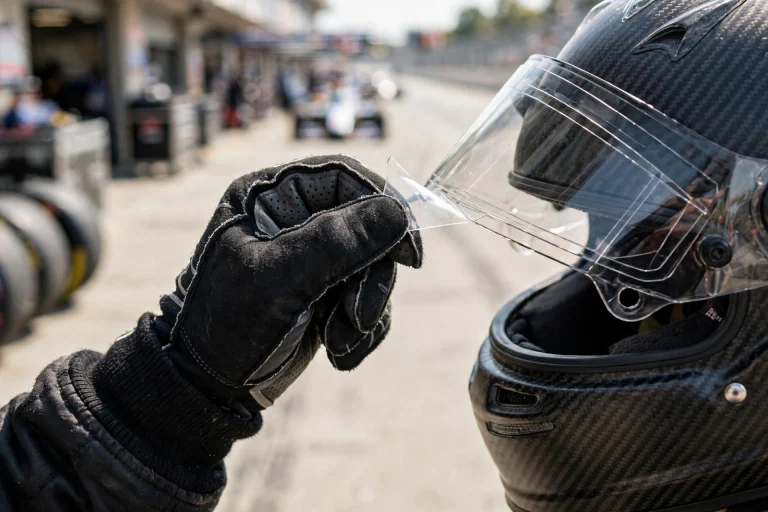
Inside the bag, keep the visor closed to protect the inner surface from dust, and remove any loose items such as tear-offs or ear plugs so they do not press into the lining. If your helmet has a removable lining, make sure it is fully dry and seated properly before storage, since a bunched lining can set into creases that are uncomfortable next time you wear it.
How Should You Clean a Helmet Before Storing It?
Cleaning before storage is worth the few minutes it takes, because sweat, dust, and track grime left in a helmet will work into the lining and become harder to remove later. Start with the outside: wipe the shell and visor with a soft, damp cloth, using mild soap if needed, and dry it with a clean towel. Avoid harsh solvents, polishes, and abrasive cloths, which can damage shell coatings and visor finishes.
For the inside, remove the lining if it is designed to come out, and wash it according to the manufacturer’s instructions — usually a gentle hand wash and air drying. If the lining is fixed, wipe it with a damp cloth and let the helmet air out thoroughly. Never use a hair dryer or radiator to force-dry a lining, since concentrated heat can shrink padding and distort its shape.
Pay attention to the vents and visor mechanism as well. Blow or brush loose dust out of the vents, and check that the visor opens and closes smoothly. A quick check of the chin strap, buckle, and padding at storage time means you will spot wear early, rather than discovering a problem on race morning.
What Damages a Motorsport Helmet in Storage?
Pressure is a common and avoidable cause of damage. Never hang a helmet from its chin strap on a hook, since the weight of the helmet pulls on the strap and distorts the lining over time. Never stack heavy kit on top of a helmet, and never use a helmet as a seat or a shelf for tools. Store it upright, on its base or in its bag, with nothing resting on it.
Chemicals are another risk. Keep helmets away from fuel, solvents, cleaning sprays, and exhaust fumes, all of which can attack shell materials and foam. A helmet stored next to fuel cans or above a workbench where solvents are used will age faster than one kept in a clean room. If your garage doubles as a workshop, a sealed cupboard or an indoor shelf is a better home for the helmet.
How Do You Check a Stored Helmet Before the Next Race?
Before race day, take the helmet out a day or two early and give it a proper check. Look over the shell for cracks, dents, or deep scratches, check the visor for scratches and a secure fit, and feel the lining for compressed or loose areas. Try the helmet on and confirm the fit is still snug, with the chin strap holding it firmly and the cheek pads touching evenly.
Check the date as well. Helmets have a working life, and age counts even when a helmet has not crashed — materials degrade slowly over time. If your helmet is approaching the end of its recommended life, or if it has taken a heavy knock since its last outing, consider replacing it rather than racing in it again. A stored helmet that looks perfect can still be past its best, so age matters as much as appearance.
Finally, remember that storage protects the helmet, but only correct fit makes its protection work — including systems that address angled impacts, as explained in this guide to what MIPS means for helmets. A well-stored helmet that fits properly is the combination that keeps you comfortable and protected when the next race comes around.
Frequently Asked Questions
Q: Can I store a motorsport helmet in my car between races?
A: In general terms, no — a car interior gets very hot in sun and very cold overnight, and that temperature swing ages the liner and shell. Store the helmet indoors instead.
Q: Should the visor be open or closed in storage?
A: Closed is best. A closed visor keeps dust out of the helmet and protects the inner visor surface from scratches while the helmet sits on the shelf.
Q: Does a helmet age in storage even if it is never used?
A: Yes, slowly. Foam, adhesives, and padding degrade over time even without crashes or wear, which is why helmets have a recommended working life and should be checked by age as well as condition.

Olivia
Writer at Helmet Today, covering helmet reviews, fit and riding safety.