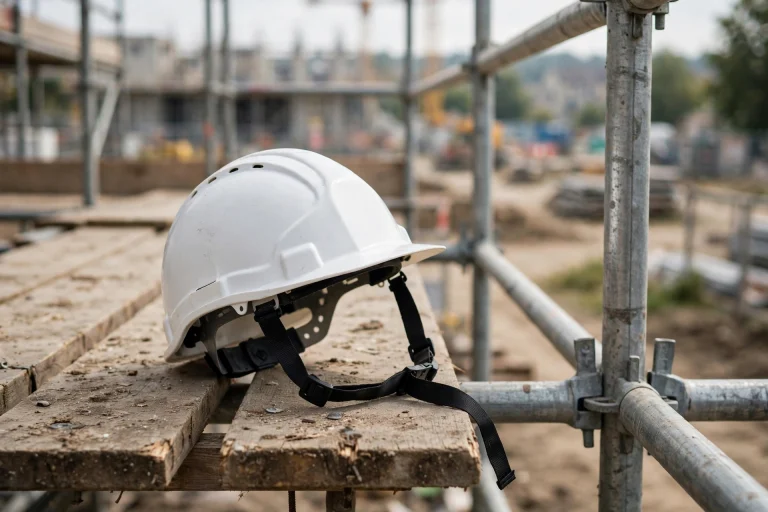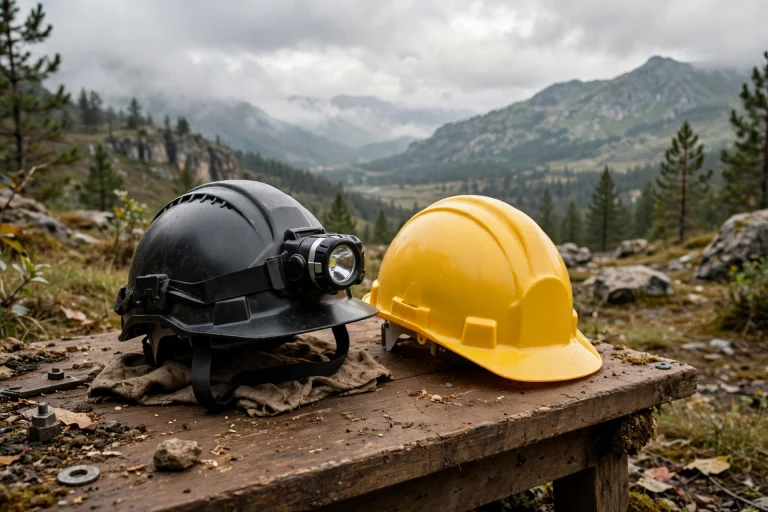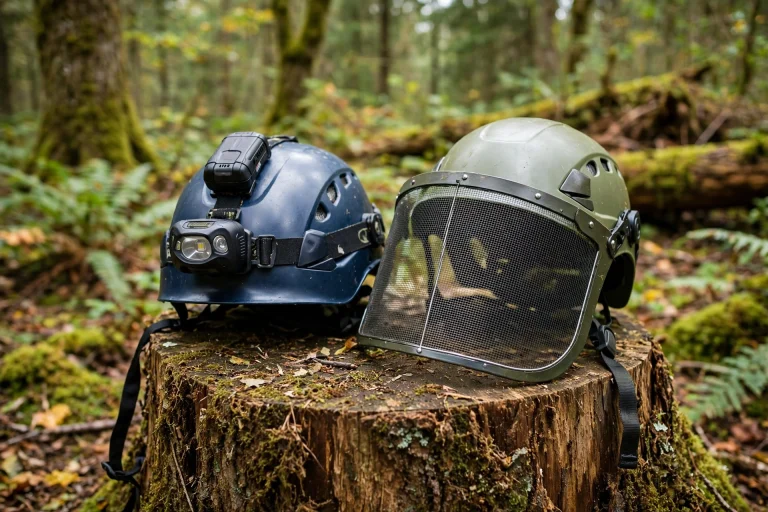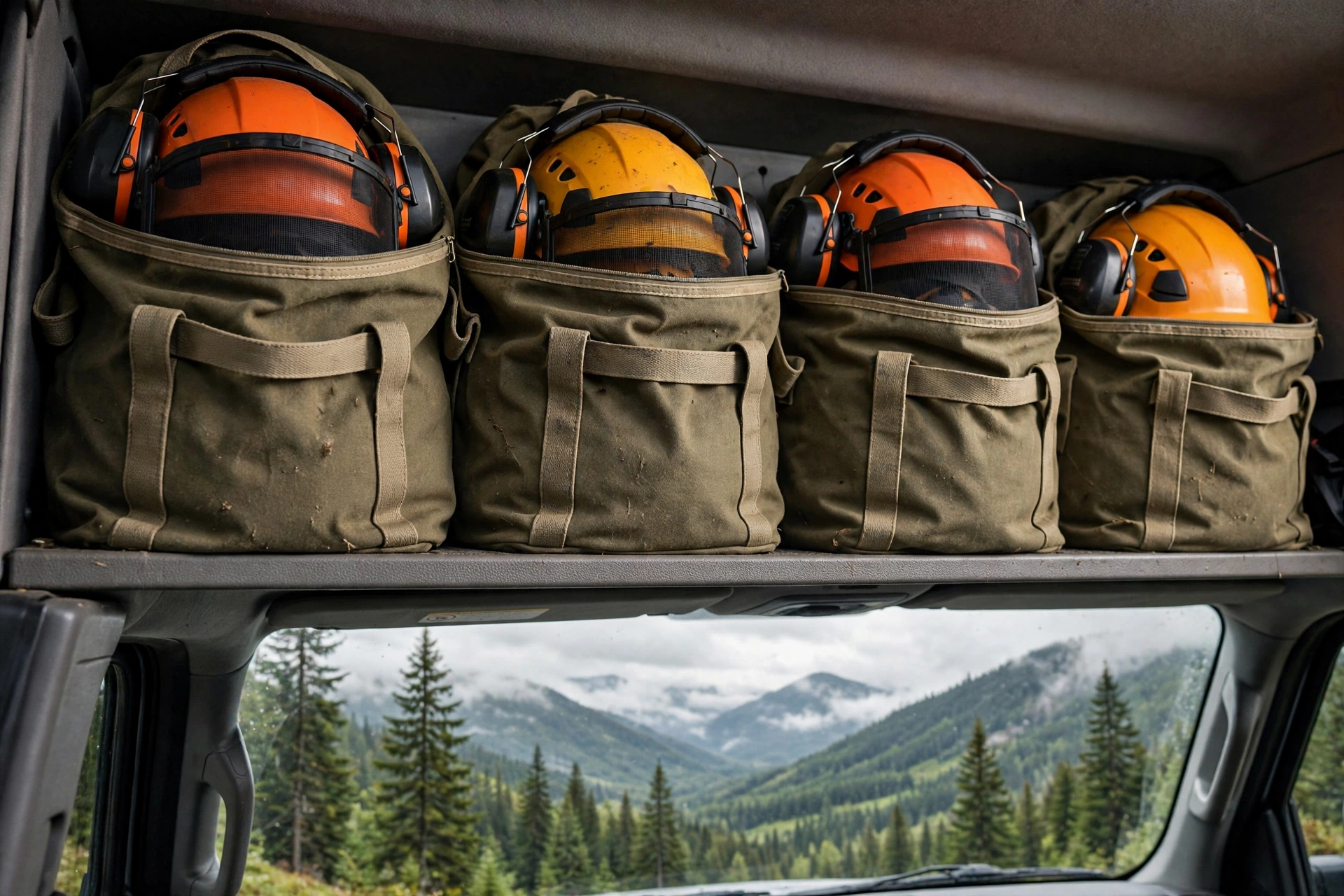
To store forestry helmets in a truck, keep each helmet in a dedicated spot where it cannot roll around, get crushed, or sit in heat and sunlight — a shelf, a cab rack, a helmet bag, or a sturdy box works well. In general terms, the back of a truck is a harsh place for a helmet: tools slide, loads shift, temperatures climb, and UV light ages the shell. A few simple storage habits protect the helmet’s shell, visor, and ear muffs, so the kit you grab at the next job is still in good working order.
Forestry crews often carry several helmets, along with saws, fuel, ropes, and tools, so storage needs to work in a crowded, moving vehicle. The advice below covers where to put helmets, what to avoid, and how to set up a truck so helmets survive the daily routine.
Where Is the Best Place for Helmets in a Truck?
The cab is usually the best place for helmets, since it is cooler, cleaner, and more stable than the bed. A hook, a rack behind the seats, or a shelf in a crew cab keeps helmets accessible and protected from tools and weather. If cab space is limited, keep at least the helmets in use that day in the cab and store spares in a protected box elsewhere.
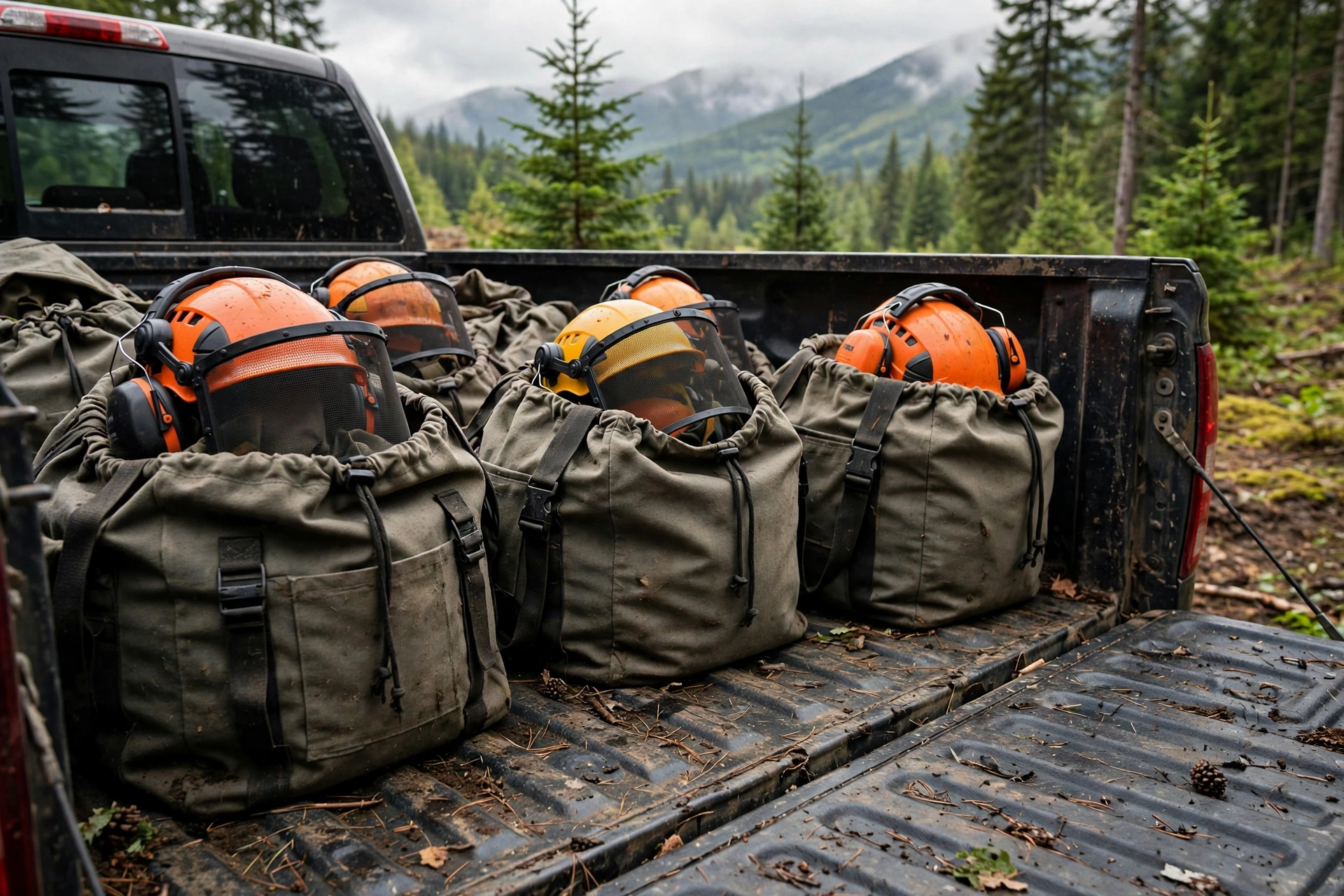
If helmets must ride in the bed, use a closed, sturdy box or a dedicated helmet bag, and secure it so it cannot slide. A loose helmet in a truck bed will bounce, roll, and collide with tools every time the truck turns or brakes, which can crack a visor or dent a shell. A box also keeps out dust, rain, and sap from other loads.
Whatever spot you choose, make it consistent. When every crew member knows where helmets live, they get put back properly instead of being tossed onto the nearest flat surface. Consistency also makes the morning check faster, since you can see at a glance whether every helmet is present and in shape. If helmets live in individual bags, labelling each bag with its owner’s name avoids mix-ups and means fit adjustments stay personal to each wearer.
What Should You Avoid When Storing Helmets in a Truck?
Avoid heat and direct sunlight. A closed truck cab or bed in summer can get very hot, and heat ages helmet shells and ear muff cushions faster. In general terms, do not leave helmets on the dashboard, where sun and heat are worst, or against a hot engine cover. If the truck will sit in the sun all day, move the helmets into shade or indoors when you can.
Avoid stacking heavy kit on top of helmets. A saw, a toolbox, or a fuel can pressing on a helmet can crack a visor, flatten ear cushions, or distort the suspension. Keep helmets on top of loads, never underneath, and never use a helmet as a seat or a step, even briefly.
Avoid hanging helmets by their chin straps for long periods, since this can stretch the strap and distort the suspension. It also lets the helmet swing and bang against the truck body on rough roads. A hook through a vent or a dedicated rack is a better option if you need to hang helmets in the cab.
How Do You Protect Visors and Ear Muffs in Transit?
Visors are the most easily damaged part of a forestry helmet in transit. A scratched or cracked visor blurs your view, so protect it by lowering it into its working position or covering it before the helmet goes into a bag or box. Do not stack helmets visor-to-visor without padding, since they will scratch each other on rough roads.
Ear muff cushions need protection too. Do not squash helmets together so tightly that the cushions flatten, and keep the muffs in their parked position rather than forced down against the shell. If cushions are already cracked or flattened, replace them before the next job, since a poor seal reduces hearing protection.
Keep helmets clean before storing them. Brush off sawdust and wipe off sap at the end of the day, so debris does not transfer between helmets or harden onto visors overnight. A clean helmet is also easier to inspect, and inspection is how you catch damage before it becomes a problem on site. Sap left to harden on a visor pivot can also stiffen the mechanism, making the visor awkward to flip when you need it most, and it can also dull the brush you use to clean the mesh, so clean pivots promptly after sappy work, and wipe the visor itself before it goes into the bag or storage box.
How Should a Crew Set Up Truck Storage?
For a crew, a simple system works best. Assign each person a spot or a labelled bag, and keep a shared box for spares and replacement parts such as visors and cushions. Label the box clearly so it does not get mistaken for general tool storage and buried under other kit.
Check the storage setup regularly. Racks loosen, boxes crack, and bags wear out, especially on rough forestry roads. A quick check when loading up in the morning catches problems before helmets start sliding around. Replace worn bags and broken boxes promptly, since a storage system that has fallen apart will not be used. It is also worth keeping a spare helmet in the truck for visitors or for a crew member whose helmet is damaged mid-job, so a broken helmet never forces someone to work unprotected while a replacement is fetched.
Finally, remember that storage is part of helmet care, not an afterthought. A helmet that is stored well lasts longer, fits better, and protects better. For background on the liner systems inside modern helmets, what MIPS for helmets means explains how liners manage rotational forces and why keeping them undamaged matters.
Frequently Asked Questions
Q: Can forestry helmets be left in a truck overnight?
A: In general terms, yes for short periods, if they are protected from heat, sun, and crushing loads. For longer storage, a cool, dry indoor spot is better.
Q: Is a helmet bag worth it for truck storage?
A: Yes. A bag protects the visor and cushions from scratches and dust, and it keeps the helmet from rolling around in the truck.
Q: Should helmets be stored with the visor up or down?
A: In general terms, store the visor in the position that protects it best, usually lowered or covered, so it cannot catch on other kit or get scratched in transit.

Olivia
Writer at Helmet Today, covering helmet reviews, fit and riding safety.