In general terms, junior karting helmet sizing starts with measuring your child’s head circumference just above the eyebrows and ears, then matching that measurement to the manufacturer’s size chart — and always confirming the fit by trying the helmet on, because head shape matters as much as the number. A helmet that is too loose will move in a crash, and one that is too tight will be miserable to wear, so getting the size right is the most important part of buying a junior karting helmet.
Parents often find karting helmet sizing confusing, because children grow fast, sizes vary between brands, and a helmet that fits in the shop can feel different after twenty minutes on track. This guide walks through measuring, trying on, and choosing a size that will last a reasonable time without being bought too big.
How Do You Measure a Child’s Head for a Karting Helmet?
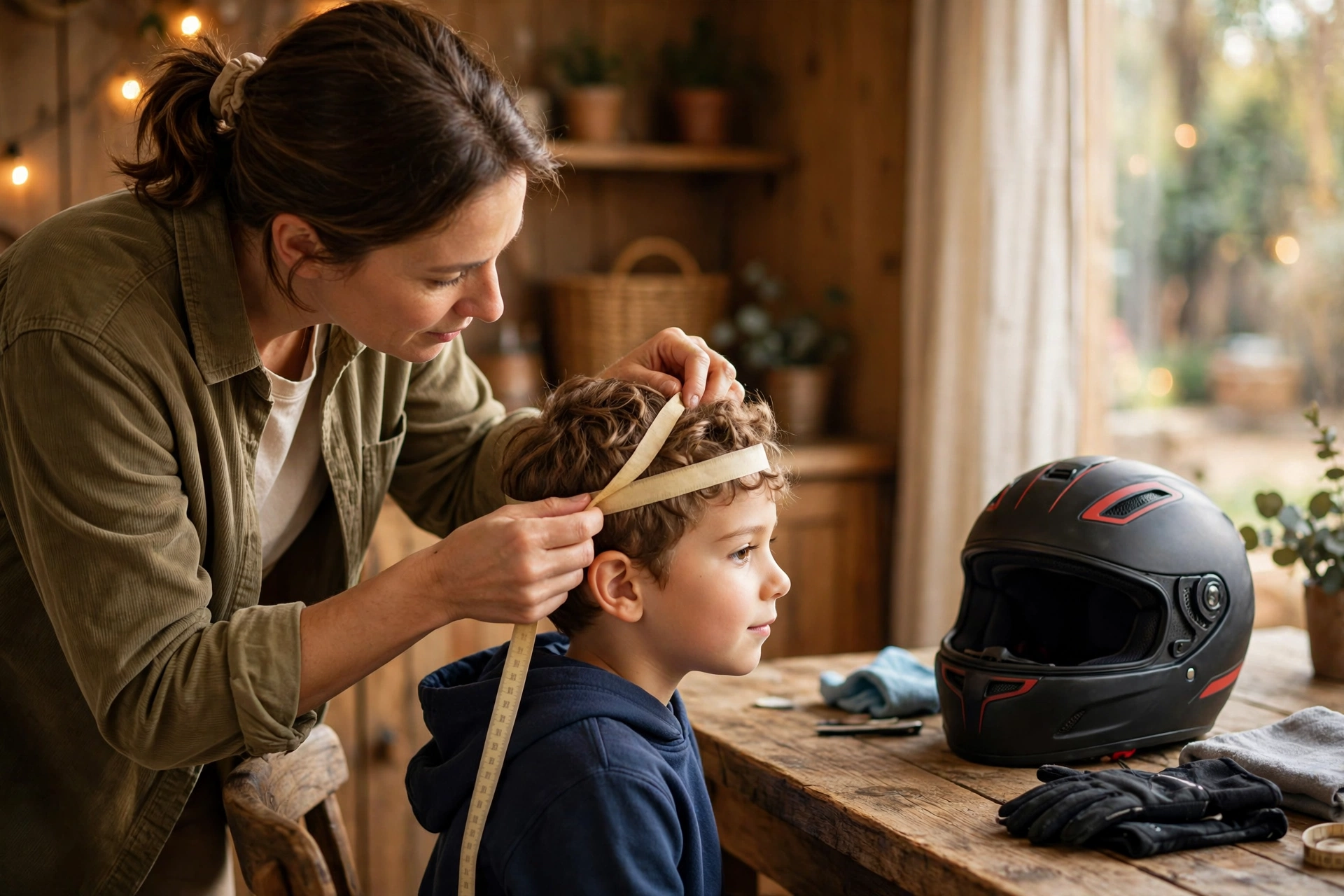
Use a soft tape measure and wrap it around the head at its widest point, roughly a finger’s width above the eyebrows and just above the ears. Keep the tape level all the way around, snug but not tight, and take the measurement twice to be sure. Write the number down in centimetres, since most helmet size charts use centimetres, and check it against the chart for the exact helmet you are considering.
Measure with hair in its normal state — a thick ponytail or a hat underneath will distort the result, and helmets are designed to be worn without a hat. If your child is between sizes, the usual advice is to try both and choose by fit, not by the chart alone.
Remember that the measurement is a starting point, not a guarantee. Two helmets in the same labelled size can fit differently because shell shapes differ, and a child with a rounder head may need a different brand from a child with a longer, narrower head, even at the same circumference. The tape gets you to the right size range; trying helmets on makes the final decision.
How Should a Junior Karting Helmet Fit?
A well-fitting junior helmet sits level on the head, covers the forehead down to just above the eyebrows, and stays put when your child shakes their head gently from side to side. The cheek pads should press firmly against the cheeks without squeezing painfully, and the chin strap should be snug enough that you can fit only one or two fingers between the strap and the chin.
Check the fit from every angle. The helmet should not slide forward over the eyes or rock backwards when your child looks up, and there should be no large gaps between the lining and the head. Press on the front, back, and sides: the helmet should move the skin of the forehead slightly with it, which shows the lining is in contact all around. If the helmet slides freely over the skin, it is too big.
Ask your child how it feels after a few minutes, not just a few seconds. A helmet that feels fine for thirty seconds can develop pressure points on the forehead or temples after ten minutes, and a child who is uncomfortable will fidget, adjust, and lose focus on track. Comfort and fit go together: a helmet your child is happy to keep on is a helmet that will protect them properly.
Should You Buy a Bigger Size So Your Child Grows Into It?
In general terms, no — buying a helmet too big so a child can grow into it is one of the most common sizing mistakes, and it undermines the helmet’s protection. A loose helmet moves around on the head, can shift over the eyes in a sudden stop, and does not hold the head securely in a crash. The right size is the one that fits now, not the one that might fit next year.
That said, there is a sensible middle ground. If your child is at the top of one size and close to the next, trying the larger size is reasonable — and if it fits snugly with no movement, it may be the better buy. What matters is the fit today, judged by the shake test and the cheek-pad contact, not the hope that a loose helmet will become snug later.
Children do outgrow helmets, and that is normal. Check the fit every few months, especially after a growth spurt, and re-measure before each season. A helmet that fitted perfectly last year may be tight now, and a tight helmet that squeezes the temples is not a helmet to persist with — it will be uncomfortable and may not sit correctly on the head.
What Is Different About Junior and Adult Karting Helmets?
Junior karting helmets are built on smaller shells with lighter weights and linings shaped for children’s heads, and they are generally more comfortable for young drivers than a small adult helmet. Weight matters a lot for children, whose neck muscles are still developing: a lighter helmet is less tiring over a race day and less likely to cause neck strain during a long session.
Junior helmets also tend to have simpler, more robust fittings — visors, straps, and buckles designed to be used by smaller hands and adjusted by parents. Some have removable, washable linings, which is a real bonus for a helmet that will be worn hard and sweated in regularly. Check whether the lining comes out before you buy, since it makes cleaning far easier.
One thing that does not differ is the need for a proper fit, and that fit is what makes any helmet’s protection work — including systems that address angled impacts, as explained in this guide to what MIPS means for helmets. A junior helmet that fits well protects a young driver far better than a larger, heavier helmet bought to last longer.
What If Your Child Is Between Sizes?
Being between sizes is common, and it is exactly why trying helmets on matters. Start with the smaller size: if it goes on without a struggle and feels snug without painful pressure, it is usually the right choice. If the smaller size is hard to get on, presses hard on the forehead, or leaves red marks after a few minutes, try the larger size.
Different brands solve the between-sizes problem differently. Some offer intermediate shell sizes, some offer cheek pads in different thicknesses, and some have adjustable fit systems. A thicker cheek pad can turn a slightly loose larger size into a snug fit, and swapping pads is far cheaper than buying a second helmet. Ask the retailer what pad options exist for the helmet you are considering.
Frequently Asked Questions
Q: How often should I re-check my child’s karting helmet size?
A: Check the fit every few months and re-measure before each season. Children grow quickly, and a helmet that fitted last year may be tight or loose now.
Q: Can my child wear a bike helmet for karting instead?
A: In general terms, no — karting helmets are built for motorsport use, with different coverage and construction. Use a helmet made for karting, in the right size, for karting sessions.
Q: What should I do if the helmet fits but my child says it hurts?
A: Find out where it hurts. Pressure on the forehead or temples usually means the shell shape is wrong for your child’s head, so try a different brand or size rather than expecting your child to get used to it.

Olivia
Writer at Helmet Today, covering helmet reviews, fit and riding safety.