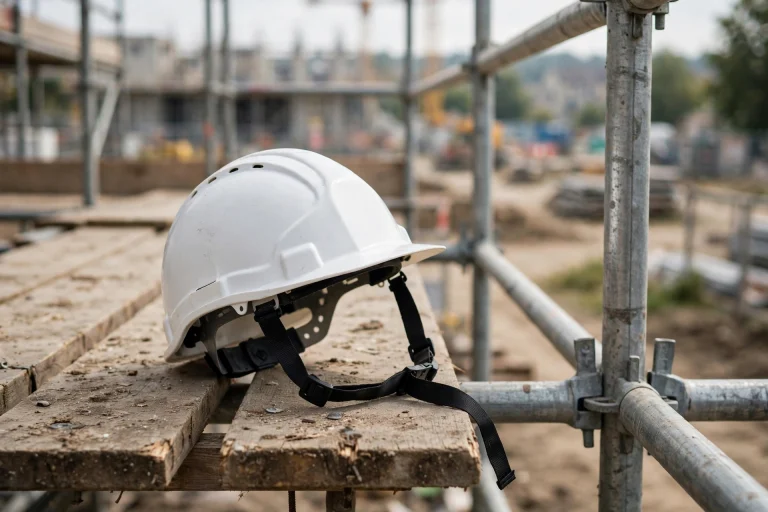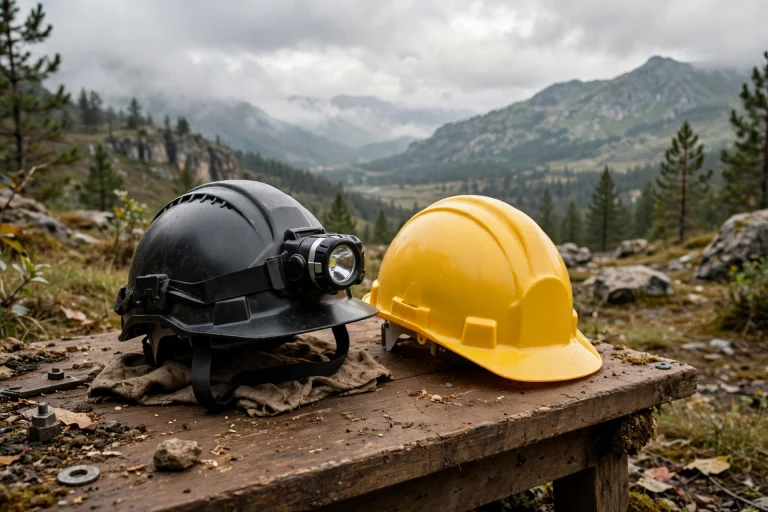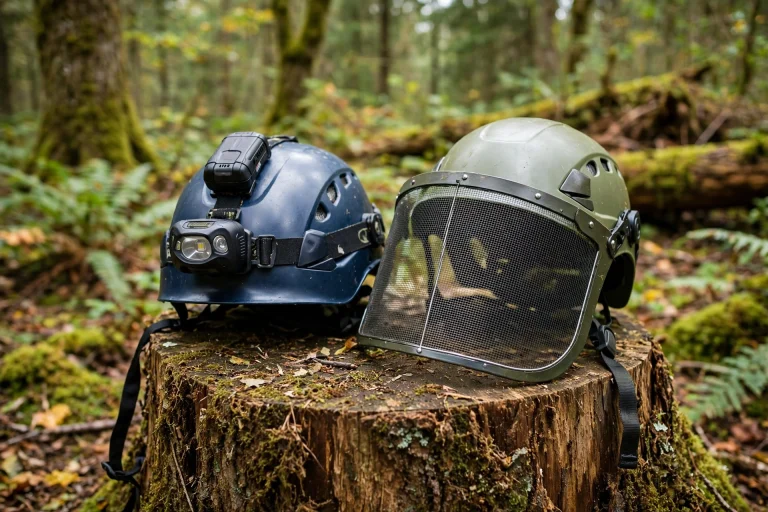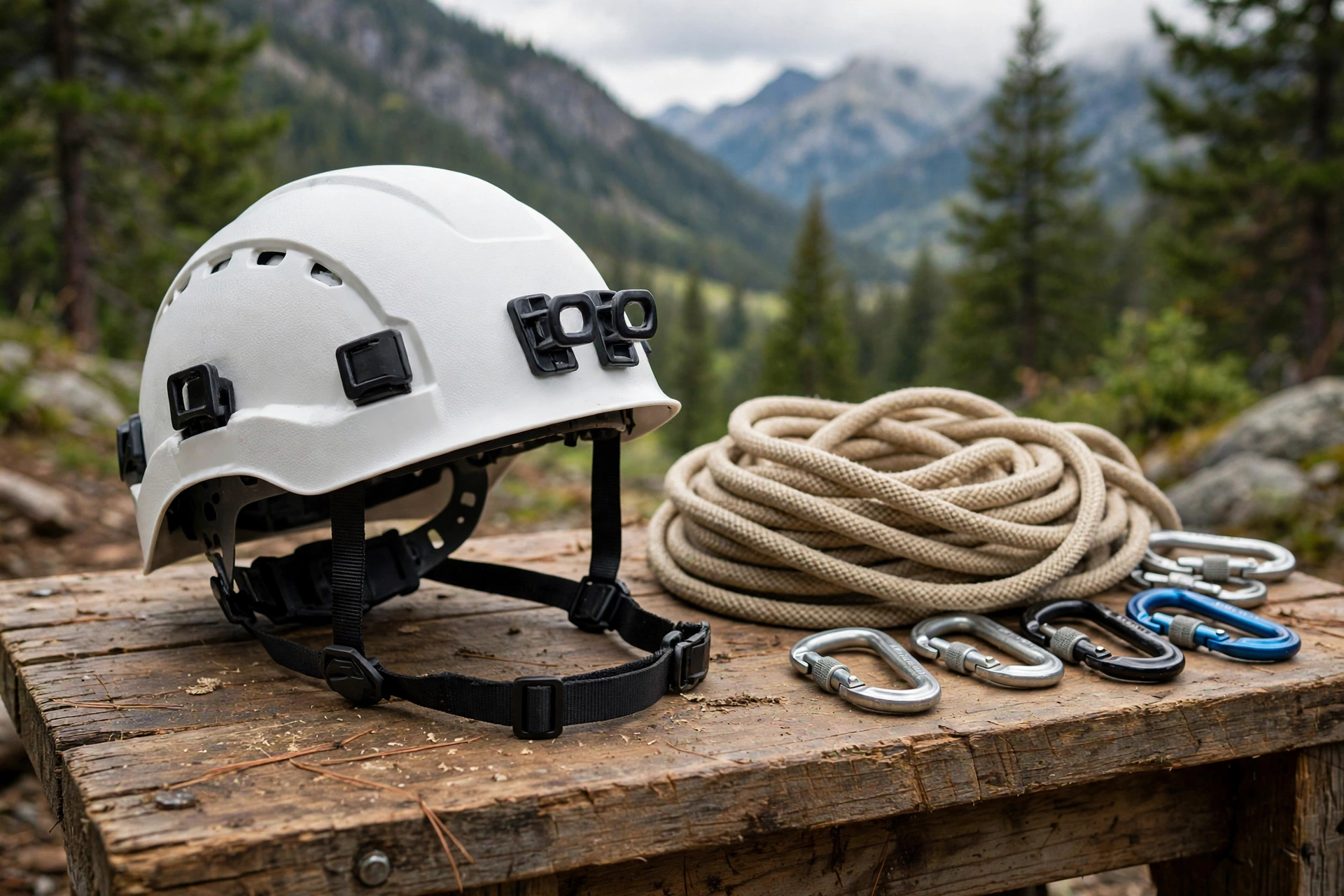
To choose a helmet for rope access work, look for a helmet designed for work at height with a secure chin strap, good side and rear coverage, and compatibility with the accessories your job needs, such as a headlamp, visor, and ear protection. In general terms, rope access helmets differ from standard site hard hats because they are built to stay on your head during a fall, to protect against impacts from the side as well as from above, and to work comfortably while you hang in a harness for long periods. Getting the right helmet means matching it to the tasks, the environment, and the other kit you wear.
Rope access covers a wide range of jobs, from building inspection and window cleaning to industrial maintenance and rescue. The helmet you need for a short inspection may differ from one for all-day industrial work, so start with your actual working conditions rather than with a brand or a price.
What Makes a Rope Access Helmet Different?
The most important difference is the chin strap. A rope access helmet uses a strong, fully fastened chin strap that keeps the helmet on during a fall or an inversion, when a standard hard hat chin strap might release. In general terms, the strap should fasten securely under the chin and hold the helmet in place even when you hang upside down or swing. Test this before you buy: fasten the strap, then tip your head forward and back and shake it gently. The helmet should stay put.
Coverage is the second difference. Rope access helmets usually cover more of the sides and back of the head than a basic hard hat, since impacts can come from swinging into structures, falling objects, or the rope system itself. Ventilation matters too, because you may wear the helmet for hours; vents keep you cooler, although some workers prefer a helmet with closable vents for wet or cold conditions.
Weight and balance matter more than people expect. A helmet that feels fine for ten minutes can become a neck ache after four hours in a harness. Lighter helmets reduce fatigue, but do not sacrifice fit or coverage for a small weight saving. Try the helmet on with your harness and other kit if you can, since the whole system works together.
How Do You Get the Fit Right?
Fit starts with size and head shape, just as with any helmet. Measure your head, try the helmet on, and adjust the headband until it sits level and snug. Then fasten the chin strap and check that it sits comfortably under your chin without pressing on your throat. The helmet should not rock or slide when you move your head through the positions you use at work: looking up at an anchor, looking down at your equipment, and turning to check your surroundings.
Check compatibility with your other gear. If you wear a headlamp, it should clip on securely without unbalancing the helmet. If you need a visor or ear muffs, check that they mount properly and do not clash with the chin strap or the harness straps. If you wear glasses, try the helmet with them on. Small clashes that seem minor in a shop become constant annoyances on a long job.
Consider the suspension and padding. A comfortable, adjustable suspension makes a long day far easier, and replaceable pads let you refresh the helmet over time. In general terms, a helmet that fits well and feels comfortable is one you will actually keep on, which is the whole point.

What Features Should You Look For?
Look for accessory mounts and clips that suit your work. Headlamp clips are useful for almost every rope access job, and visor and ear muff mounts matter if you cut, grind, or work near loud equipment. Some helmets include built-in attachment points for a headlamp at the front and rear, which is handy for night work or dark interiors.
Consider the shell material and vent design. A helmet with vents keeps you cooler in warm weather, while a non-vented shell may suit work where dust or water falls from above. Some helmets let you open or close the vents, giving you both options. In general terms, choose based on your most common conditions rather than rare ones, and keep a second option for unusual jobs if your work varies a lot, since one helmet rarely covers every condition perfectly, and a vented summer helmet plus a closed winter option is a common pairing.
Think about durability and maintenance too. A helmet with replaceable suspension, pads, and chin strap will last longer and cost less over time than one where everything is fixed. Check whether spare parts are easy to get, since a helmet you cannot repair may need replacing sooner than you expect.
How Do You Check a Helmet Before Use?
Inspect the shell for cracks, dents, and deep scratches, and check the suspension, chin strap, and buckles for wear or damage. Test the headband adjustment and the chin strap buckle, and confirm that any accessory clips are intact. If the helmet has taken a hard impact, retire it, since hidden damage can weaken the shell even when it looks fine.
Check the fit once more with all your gear on, including your harness, headlamp, and any visor or ear protection. A helmet that fits alone but shifts when the harness straps pull on it needs readjusting. This final check takes a minute and prevents problems once you are on the rope. Also confirm that the helmet’s vents are not blocked by a hood or liner, since blocked vents trap heat and make a long day in the harness far less comfortable.
It also helps to understand how helmet liners manage impact forces. A useful background read is what MIPS for helmets means, which explains one liner system designed to reduce rotational forces in an angled impact.
Frequently Asked Questions
Q: Can you use a normal construction hard hat for rope access?
A: In general terms, no. Rope access work needs a helmet with a secure chin strap and side coverage designed for work at height, which a basic hard hat may not provide.
Q: Should a rope access helmet have vents?
A: Vents improve comfort in warm conditions, but a non-vented shell may suit dusty or wet work. Some helmets offer closable vents for both situations.
Q: How often should you inspect a rope access helmet?
A: Check it before every use and inspect it in more detail regularly. Replace it after a serious impact or when the shell, suspension, or strap shows wear.

Olivia
Writer at Helmet Today, covering helmet reviews, fit and riding safety.