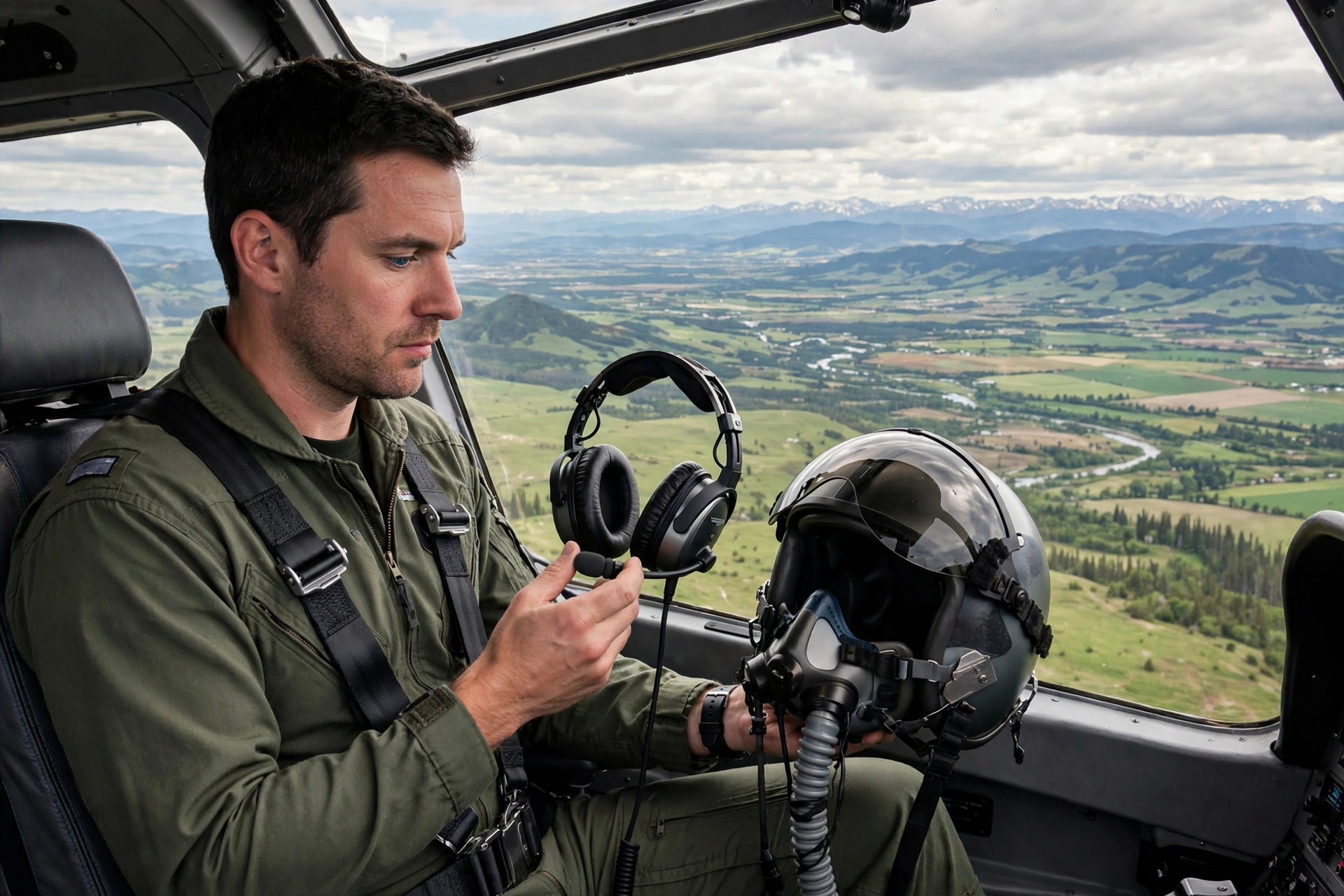
In general terms, most pilots of small aircraft fly with an aviation headset, while a helmet is the better choice when impact protection matters as much as hearing protection and communication — for example in low-level flying, open-cockpit aircraft, or rough-field operations. For routine cruising in a light aeroplane, a good headset is usually enough; for work close to the ground, a helmet adds a layer of protection a headset cannot provide.
The choice is not really about which product is better in the abstract. It is about matching the equipment to the flying you actually do. A headset is lighter, cooler, and cheaper, and it does its job well. A helmet is heavier and more expensive, but it protects the whole head. Understanding where each one wins makes the decision much easier.
What Does an Aviation Headset Do Well?
An aviation headset does two things: it protects hearing and it lets the pilot communicate. The ear cups reduce engine and wind noise, the microphone carries the pilot’s voice to the intercom and radios, and the whole unit is light enough to wear for hours without much fatigue. For a pilot flying a typical light aircraft at altitude, that is exactly what is needed.
Headsets are also simple to use and easy to share. They slip on in seconds, adjust with a headband, and work with the standard intercom connections found in most small aircraft. Many pilots own their own headset, keep it in a bag, and use it in any aircraft they fly. That flexibility is a real advantage for renters, students, and pilots who fly several different types.
Cost and comfort are further strengths. A good headset costs far less than a flight helmet, and it stays cooler in summer because it leaves most of the head uncovered. On a long cross-country flight in warm weather, that comfort difference is noticeable, and it is one reason headsets remain the default for most general aviation flying.
When Does a Helmet Make More Sense?
A helmet makes sense when the risk is not just noise but impact. Flying low over terrain, operating from rough strips, flying with doors off, or working in an open cockpit all increase the chance that the head could strike something — the airframe, a control, or debris thrown up during take-off and landing. In those situations, a headset offers no protection at all for the head itself.
Helmets also help in aircraft where the cockpit is exposed to wind and weather. An open-cockpit biplane, a gyroplane, or a light sport aircraft flown with the canopy open puts the pilot’s face and head in the airflow, and a helmet with a visor shields against wind, insects, and spray. The visor is not just a comfort item; it protects vision, which is essential for safe flying.
Some operations require helmets by policy even when the pilot might prefer a headset. Agricultural flying, survey work, and certain commercial operations set helmet requirements for their crews, and pilots flying those roles wear helmets as standard equipment. If you are moving into that kind of flying, expect the helmet to come with the job.

How Do Noise Protection and Communication Compare?
Both headsets and helmets protect hearing, and both carry intercom and radio communication, but they do it differently. A headset relies on ear cups held by a headband, while a helmet builds the ear cups into the shell, which can give a more consistent seal around the ears. In practice, a well-fitted example of either type protects hearing well, and the difference often comes down to fit rather than the category itself.
Noise-cancelling headsets are a strong point for the headset side. Active noise reduction cuts low-frequency engine drone, which makes long flights less tiring and radio calls easier to hear. Helmets can also include noise-reduction electronics, but the range of options is smaller, and the technology is often more expensive in helmet form.
Communication clarity depends on the microphone and the intercom, not just the headset or helmet. A clear microphone, a good connection, and a properly adjusted volume matter more than the label on the equipment. Whichever you choose, test it in the aircraft before a long flight, and check that other crew members can hear you clearly.
What About Comfort, Weight, and Cost?
Comfort is where headsets usually win for routine flying. A headset weighs less, lets heat escape, and can be adjusted quickly. A helmet covers the whole head, which adds warmth and weight, and on a long summer flight that can become tiring, especially if the fit is not quite right. Pilots who fly helmets regularly learn to manage this with ventilation, good fit, and breaks between flights, but the difference is real.
Cost is another clear difference. A quality headset is a significant purchase, but a flight helmet typically costs considerably more, and accessories such as visors, liners, and communication leads add to the total. For a student pilot or a pilot building hours on a budget, that cost gap alone often settles the question in favour of a headset.
Maintenance is similar for both, though helmets need a little more care. Ear seals wear out on both types and should be replaced when they harden or crack. Helmets also need their shell, liner, and visor checked for damage, and a helmet that has taken a hard knock should be inspected before further use. Neither type lasts forever, and both deserve a regular check before flight.
Which Should You Choose for Your Flying?
Start with the flying you do most. If you cruise at altitude in a closed-cockpit light aircraft, a good headset is the sensible, comfortable choice, and most pilots in that situation never feel the need for a helmet. If you fly low, operate from rough strips, fly open-cockpit, or work in a role where helmets are expected, a helmet is the better investment despite the extra weight and cost.
Try before you buy, if you can. Borrow a helmet for a flight, or try one at a flying event, and compare it honestly with your headset on the same kind of flight. Pay attention to weight, heat, vision, and how clearly you can hear and be heard. A helmet that feels fine for ten minutes on the ground can feel very different after an hour in the air.
Finally, remember that fit is what makes either choice work. A headset with poor ear seals protects hearing badly, and a helmet that rocks or pinches protects the head badly. That principle holds for every helmet type, including systems designed for angled impacts, as explained in this guide to what MIPS means for helmets. Choose the equipment that fits your flying, fits your head, and that you will actually wear on every flight.
Frequently Asked Questions
Q: Can I use a normal headset with a flight helmet?
A: In general terms, no — a flight helmet has its own built-in ear cups and microphone, so it replaces the headset. You connect the helmet to the aircraft intercom instead of wearing a separate headset.
Q: Is a helmet required for flying a small aircraft?
A: In general terms, no, not for routine general aviation flying in a closed-cockpit aircraft. Requirements usually come from the type of operation or the operator’s policy, not from general flying itself.
Q: Do helmets block radio communication?
A: No, when fitted and connected correctly. A flight helmet includes a microphone and ear cups wired to the intercom, so communication works the same way as with a headset, provided the leads match the aircraft system.

Olivia
Writer at Helmet Today, covering helmet reviews, fit and riding safety.