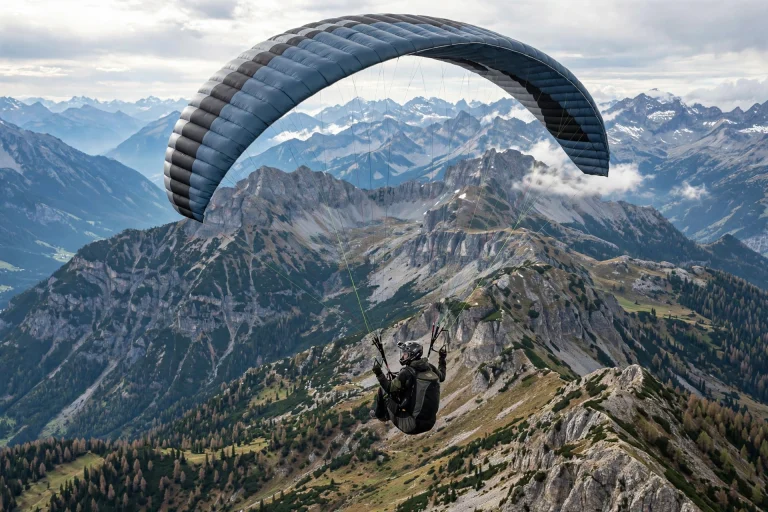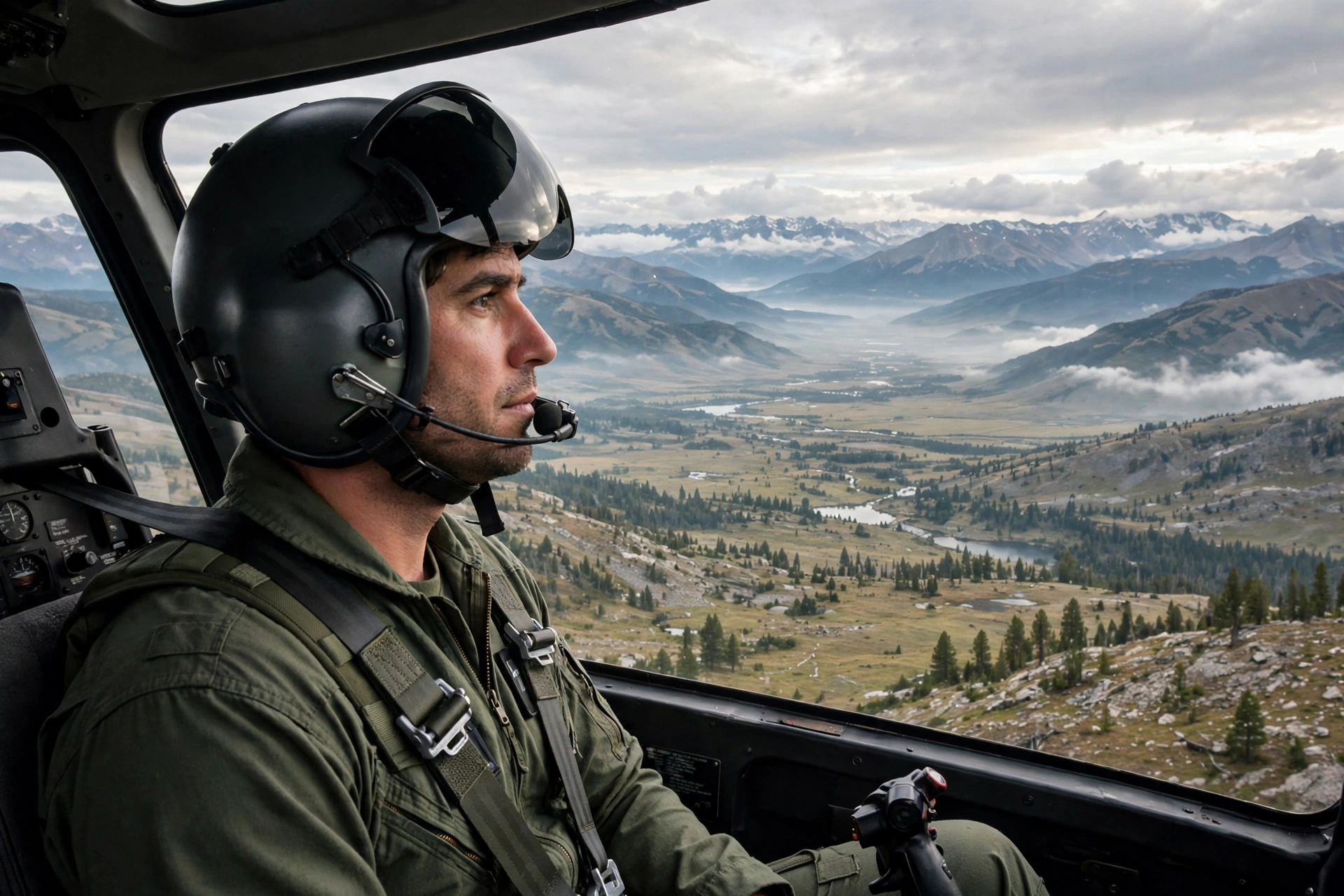
In general terms, yes — many helicopter pilots wear helmets, especially in commercial, military, emergency, and offshore flying, although the rules and habits vary with the type of operation, the aircraft, and the employer. A private pilot on a short pleasure flight may fly with a headset alone, while a pilot flying low-level work, over water, or in a busy commercial operation is far more likely to wear a purpose-built flight helmet.
The distinction matters because a flight helmet and a headset do different jobs. A headset is mainly for hearing protection and communication, while a helmet adds impact protection in a single unit that stays in place if things go wrong.
Why Do Helicopter Pilots Wear Helmets?
The main reason is head protection in a crash or a hard landing. Helicopters often fly low, land in unprepared places, and operate in conditions where a fixed-wing aircraft would stay well above the ground. If an aircraft rolls, strikes an obstacle, or comes down hard, the pilot’s head can hit the airframe, the controls, or loose objects in the cockpit. A helmet spreads that impact and helps protect against cuts and knocks that a headset alone cannot prevent.
Helmets also protect against smaller, everyday hazards. Rotor wash throws up dust, stones, and debris during take-off and landing, and a helmet with a visor shields the eyes and face. In some operations, pilots work with doors off or in open cockpits, where wind, spray, and flying objects are a constant presence. The visor, which can usually be lowered or raised as needed, is a practical part of the helmet rather than an optional extra.
Do All Helicopter Pilots Have to Wear One?
No, not in every case. In general terms, the requirement depends on the operation. Military pilots and many emergency medical, search-and-rescue, police, and offshore pilots work under rules or employer policies that require a helmet. Their flying involves low-level work, night operations, over-water legs, or landing in difficult places, and their organisations treat helmets as standard equipment.
Private and recreational pilots face a different picture. A pilot flying a light helicopter for personal travel may not be required by any rule to wear a helmet, and many fly with a good headset instead. That is a personal choice, and it is worth making deliberately rather than by habit. The risk profile of a low-level sightseeing flight over uneven ground is different from a high cruise over open country, and pilots often weigh that difference when deciding.
Commercial operators also set their own standards. Some companies require helmets for all flying, others only for certain roles or routes, and some leave it to the pilot. If you fly for an operator, check its operations manual and ask the chief pilot before assuming either way. Insurance and client requirements can also play a part, since some contracts expect crews to wear helmets on particular jobs.
How Is a Helicopter Helmet Different From a Headset?
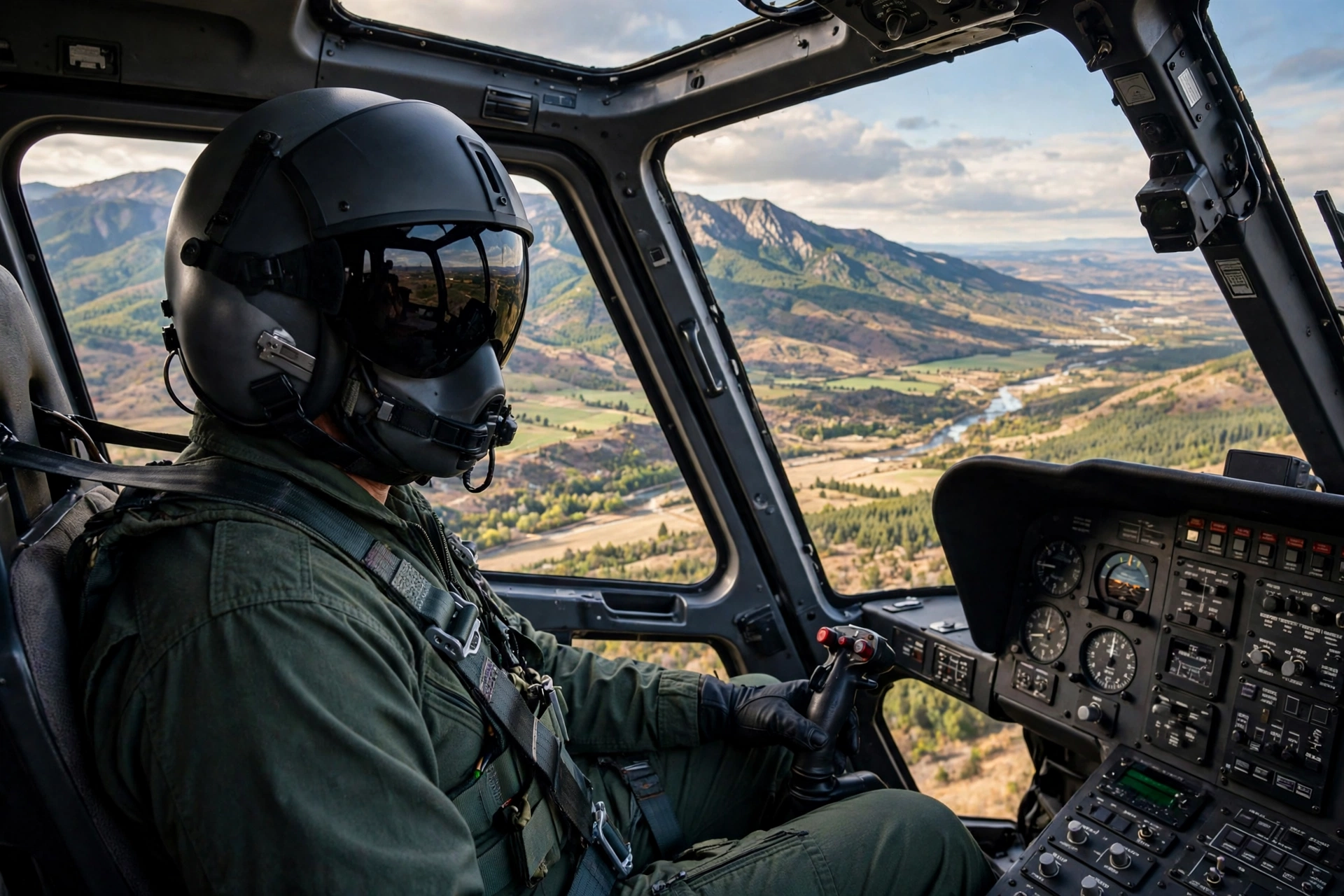
The obvious difference is the shell. A flight helmet covers the whole head with a hard outer shell and an energy-absorbing liner, while a headset only covers the ears and sits on a headband. That shell is what gives the helmet its impact protection, and it is also what makes it heavier and warmer than a headset.
The communication system is built into the helmet rather than strapped on. Microphone booms, ear cups, and wiring are integrated, and the helmet usually connects to the aircraft intercom in the same way a headset does. Many helmets also accept accessories such as night-vision mounts, visor options, and oxygen masks, depending on the role. A headset, by contrast, is simpler, lighter, and easier to put on and take off between flights.
Comfort is where the choice gets personal. A helmet can feel hot on a long summer day, and a poor fit becomes uncomfortable quickly, especially on a flight lasting several hours. A headset feels lighter and cooler, which is why some pilots prefer it for routine, higher-altitude flying. The trade-off is protection: the headset offers none for the head itself, so the decision is really about which risk matters more on that flight.
What Should a Pilot Look for in a Flight Helmet?
Fit comes first, as with any helmet. The helmet should sit level, stay put when you shake your head, and feel snug without pressure points. The ear cups should seal around the ears for noise protection, and the chin strap should hold the helmet securely. If the helmet rocks, pinches, or lets in a lot of noise, it is the wrong size or shape, and it will not protect as well as it should.
Weight and balance matter on long flights. A heavy helmet strains the neck, especially in turbulent or low-level flying where the head moves constantly. Lighter helmets reduce that fatigue, though they may cost more, so pilots often balance weight against budget and the features they need. Trying a helmet on for more than a few minutes, ideally in a cockpit, gives a better sense of its real weight than reading a specification alone.
Communication compatibility is another practical check. The helmet must match the aircraft’s intercom system, and the microphone must work clearly with the radios in use. Visor choice matters too: a clear visor for night flying, a tinted visor for bright daylight, and a visor that moves smoothly without sticking. These details sound small, but they affect every flight, and a helmet that fights its pilot soon gets left on the shelf.
Are Helicopter Helmets Uncomfortable on Long Flights?
They can be, but a good fit and a few habits make a real difference. Start with the fit check above, and adjust the liner and ear cups before a long day rather than during it. Keeping the helmet clean and the lining dry also helps, since a damp lining feels heavier and less comfortable over time, and it can develop an unpleasant smell if neglected.
Ventilation is worth checking when choosing a helmet, especially in hot climates. Taking the helmet off between flights, rather than wearing it through a long ground wait, also helps the head cool down.
Finally, remember that comfort and protection are linked. A helmet that fits well is one a pilot will actually wear, and a helmet left in the hangar protects no one. That is why fit, weight, and communication all deserve attention before purchase, and why many pilots try several helmets before settling on one. The same principle applies across helmet types: protection only works when the helmet fits, which is why systems that address angled impacts also depend on fit, as explained in this guide to what MIPS means for helmets.
Frequently Asked Questions
Q: Do private helicopter pilots wear helmets?
A: In general terms, some do and some do not. Private pilots are often not required to wear one, so the choice depends on the type of flying, personal preference, and the pilot’s own view of the risks involved.
Q: Can you wear a headset under a flight helmet?
A: No, not in the usual sense. A flight helmet has its own built-in ear cups and microphone, so it replaces the headset rather than going over it. It connects to the aircraft intercom in the same way.
Q: Is a flight helmet worth it for low-level flying?
A: In general terms, yes — low-level flying brings the aircraft closer to terrain, obstacles, and debris, which is exactly where head protection matters most. Many pilots who fly low-level work treat a helmet as essential equipment.

Olivia
Writer at Helmet Today, covering helmet reviews, fit and riding safety.