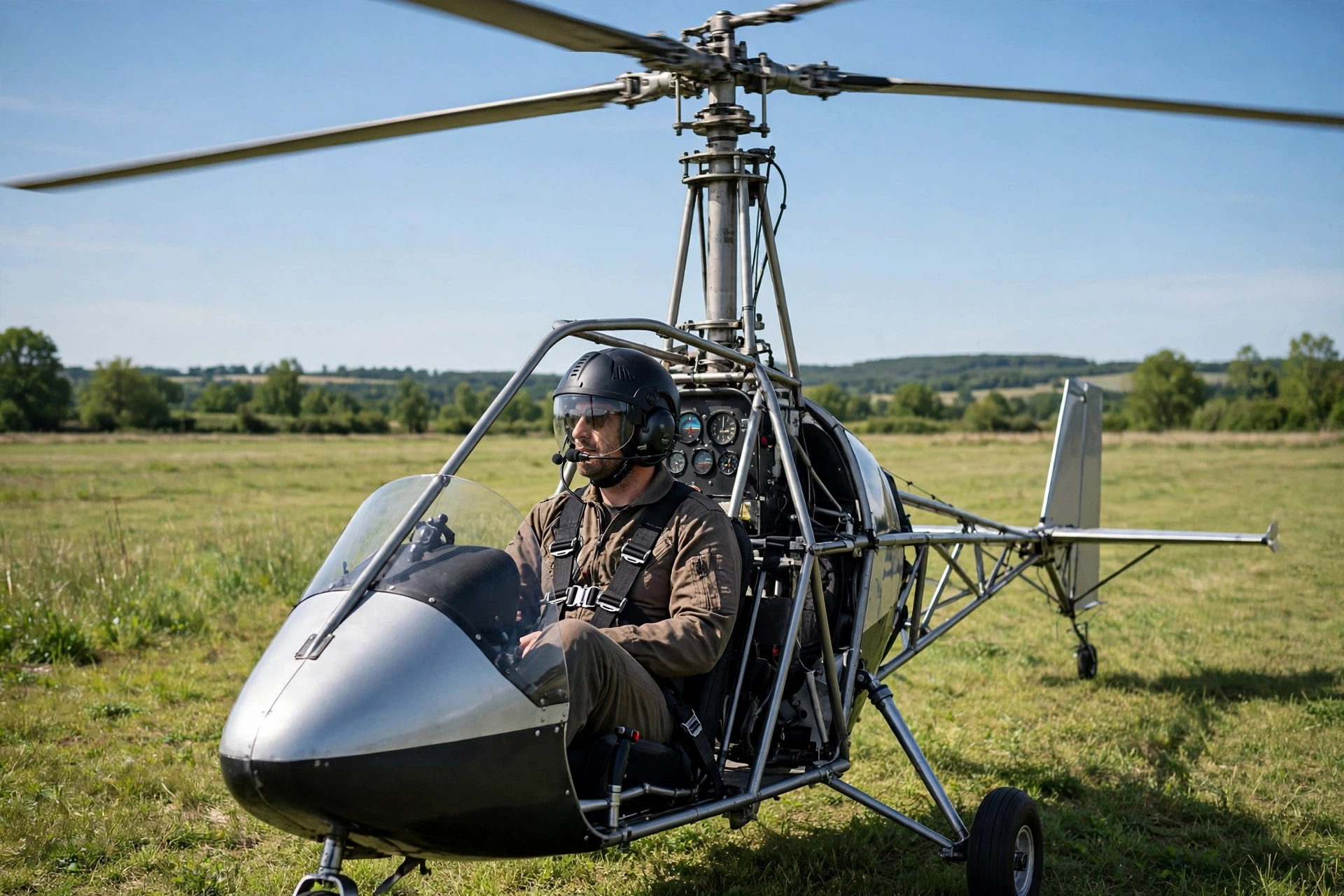
A helmet for gyrocopter pilots is a helmet worn in the open cockpit of a gyrocopter to protect the head from wind, noise, and hard knocks, and in general terms every gyrocopter pilot should wear one that fits well, works with a headset, and stays in place in flight. A gyrocopter is a small, light aircraft with a free-spinning rotor above an open cockpit, and the pilot sits out in the wind with very little around them. The helmet is one of the most important pieces of kit a gyrocopter pilot owns, because it protects the head and carries the headset that keeps the pilot in contact with the ground and with other aircraft.
Gyrocopter flying is open and exposed in a way that flying in a closed cabin is not. The pilot feels the full force of the wind, hears the engine and the rotor close by, and can be hit by dust, insects, or loose objects lifted by the rotor wash. A good helmet shields the head from all of that, and it also carries the headset and microphone needed for radio calls.
Why do gyrocopter pilots need a helmet?
Gyrocopter pilots need a helmet because of the open cockpit and the forces involved in flight. The wind at cruising speed is strong enough to sting the face and dry out the eyes, and a sudden gust or a bump in the air can throw the pilot’s head about. In general terms, a helmet gives the pilot a hard shell and a padded lining between their head and anything that might strike it, from a loose object in the cockpit to the airframe itself in rough air.
Noise is another reason. The engine and the rotor of a gyrocopter are close to the pilot’s ears, and the sound level in an open cockpit can be high. A helmet that works with a good headset cuts that noise down, which protects the pilot’s hearing and makes radio calls easier to hear. A pilot who cannot hear a radio call clearly may miss an instruction, so the helmet and headset together are a safety item, not just a comfort item.
What kind of helmet is used for gyrocopter flying?
The helmet used for gyrocopter flying is, in general terms, a light aviation helmet made for open-cockpit flying, with a hard outer shell, a comfortable lining, and fittings for a headset and a microphone. It is often similar to a helmet worn by microlight or paramotor pilots, because those pilots face the same wind, noise, and exposure. The helmet should be light enough to wear for a long flight without tiring the neck, and it should be comfortable over a long session in the air.
The helmet should also work well with the rest of the pilot’s kit. A visor or goggles should sit neatly against the helmet without leaving a gap that lets cold air in, and the headset should fit under or inside the helmet without pressing painfully on the ears. A helmet that is too tight over a headset will be uncomfortable, while one that is too loose will shift in the wind. Trying the helmet on with the headset in place is the best way to be sure that everything works together.
How should a helmet for gyrocopter pilots fit?
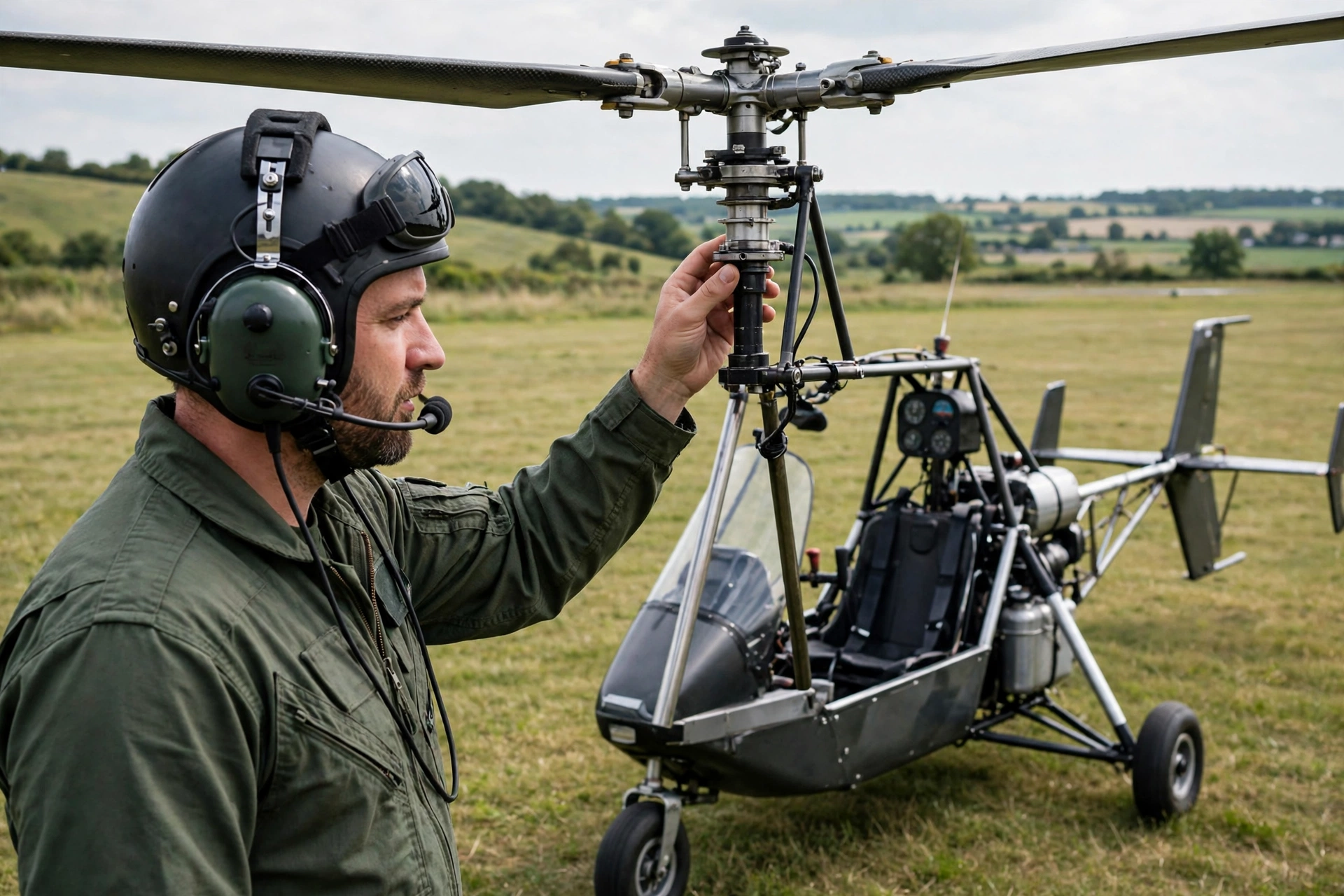
A helmet for gyrocopter pilots should fit snugly, sit level on the head, and stay in place when the pilot shakes their head or looks around. The helmet should cover the forehead and the top of the head, and the chin strap should be fastened securely every time the pilot is in the cockpit. A strap that is left loose lets the helmet lift in the slipstream or slide in turbulence, and a helmet that comes off in flight is no help at all.
The fit should be checked with the headset and any glasses or sunglasses the pilot will wear, because those can change how a helmet sits. The ear cups of the headset should sit flat over the ears, and the microphone should sit close to the mouth without pressing against the lips. The pilot should also check that the helmet does not block their view, because a gyrocopter pilot needs a clear view in every direction, including up towards the rotor and down towards the ground.
What should a pilot check before a flight?
Before a flight, a pilot should check the helmet for cracks, dents, or damage to the shell, and should look at the lining, the strap, the visor, and the headset fittings to make sure they are sound and working. A helmet that has been dropped onto a hard surface, or that has taken a knock in a rough landing, should be looked at with care, and in general terms a helmet that has taken a serious impact should be replaced rather than used again. The damage may not be easy to see, so the pilot should think honestly about what the helmet has been through.
The pilot should also test the headset and the radio before taking off, because a headset that cuts out in flight leaves the pilot without radio contact. A quick radio check on the ground, with the helmet and headset worn as they will be in flight, is a simple habit that can prevent a problem in the air. The helmet is only one part of staying safe in a gyrocopter, and it works best when the pilot also checks the aircraft, the weather, and the flight plan before setting off.
How should a gyrocopter helmet be looked after?
A gyrocopter helmet should be looked after with regular cleaning and sensible storage, in the same way as any aviation helmet. After a flight, the pilot should wipe the outside clean, let the lining air, and check the headset leads and plugs for wear. Strong heat, such as a hot car or direct sun on the dashboard, can harm the materials in a helmet over time, so a cool, dry place is a better choice for storage.
The helmet should be kept where it will not be knocked about or used as a shelf for other kit, because a hard knock can damage it even when no crack is visible. A helmet bag is a simple way to protect it between flights. Pilots who are choosing a new helmet may also want to learn about features that can help in a hard landing, including a system designed to reduce rotational forces, such as MIPS, which is found in some helmets made for open-cockpit and adventure flying. A well-kept helmet, worn on every flight, gives a gyrocopter pilot the best chance of a safe and enjoyable time in the air.
Do all gyrocopter pilots wear a helmet?
In general terms, most gyrocopter pilots wear a helmet, and many flying clubs and schools expect it. A pilot who is unsure should check the rules for the airfield or the school before flying.
Can a motorcycle helmet be used for gyrocopter flying?
In general terms, a motorcycle helmet is not a good choice, because it is not made to carry a headset and it may be too heavy or too closed for an open cockpit. A helmet made for open-cockpit flying is a better fit for the job.
When should a gyrocopter helmet be replaced?
A gyrocopter helmet should be replaced after a hard impact, or when it no longer fits well, shows damage, or has been worn for a long time. When in doubt, replace it rather than keep flying in it.

Olivia
Writer at Helmet Today, covering helmet reviews, fit and riding safety.