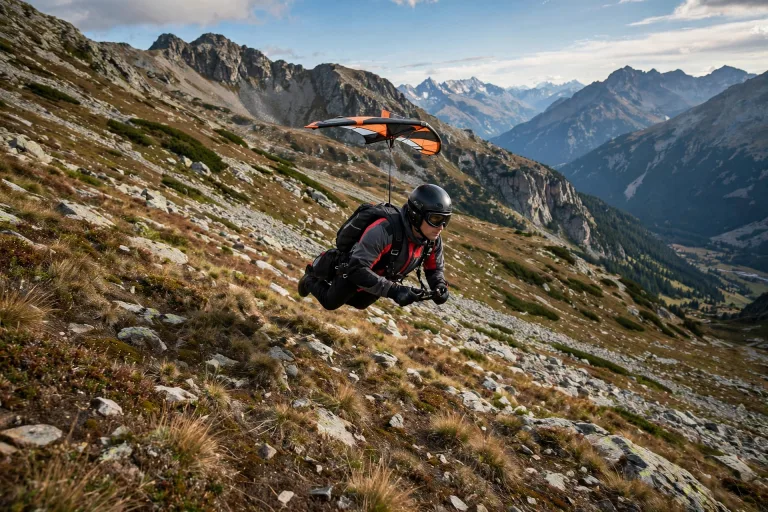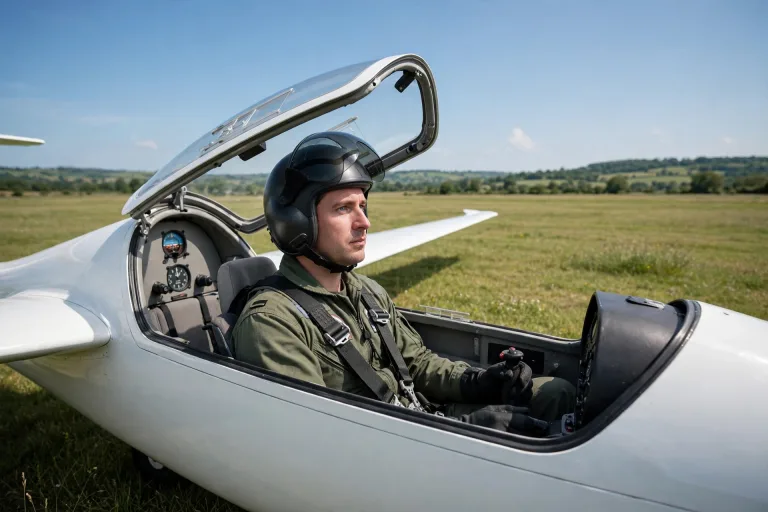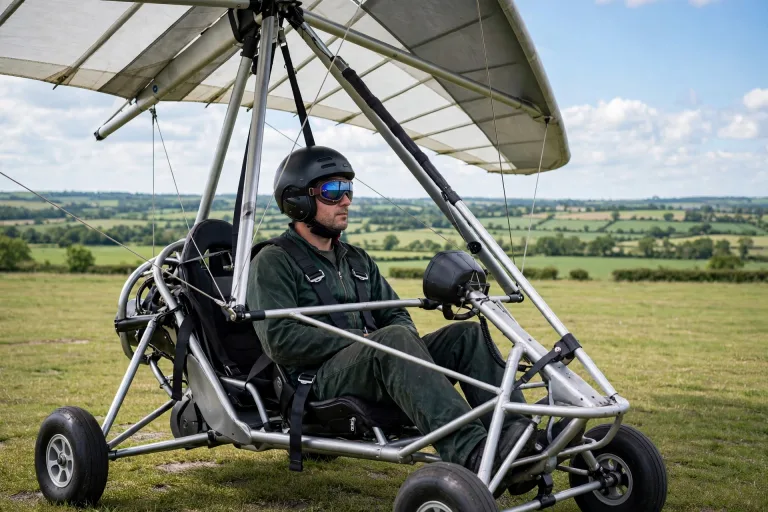
A helmet for BASE jumping is a light, snug-fitting protective helmet worn by a jumper to protect the head during the exit from a fixed object, the freefall, and the landing. In general terms, BASE jumping involves leaping from buildings, antennas, spans, and cliffs, and the head is exposed to hard surfaces at the exit point, to the parachute equipment during opening, and to the ground on landing. A helmet is a basic part of the kit, and experienced jumpers treat it as non-negotiable.
BASE jumping is a high-risk activity, and a helmet does not make it safe. What it does is reduce the harm from the smaller knocks that are part of the sport: a bump against the exit point, a strike from a riser or a line, or a hard landing on uneven ground. In general terms, a helmet that fits well and is made for jumping gives the wearer a better chance of walking away from those incidents. Choosing the right helmet, and wearing it correctly, is one of the few things a jumper can fully control.
Why do BASE jumpers wear helmets?
BASE jumpers wear helmets because the exit and the landing both put the head at risk. At the exit, a jumper pushes off a fixed object, and a mistimed push or a gust of wind can bring the head into contact with the wall, the edge, or the antenna structure. In general terms, even a light knock at that moment can cause a serious injury, because the jumper is already falling. A helmet spreads the force of that contact and protects the skull at a moment when the jumper cannot do much to defend themselves.
The landing brings its own risks. A jumper may land on rock, concrete, or uneven ground, and the landing may be faster or harder than planned if the wind shifts. In general terms, a helmet protects the head if the jumper tumbles or hits the ground awkwardly. It also guards against strikes from the parachute’s risers and lines during opening, which can whip across the head. The helmet is not a guarantee of safety, but it is a simple, proven way to reduce the harm from the knocks that happen most often in the sport.
What kind of helmet suits BASE jumping?
A helmet for BASE jumping should be light, low-profile, and snug, so it does not catch the wind or shift during freefall. In general terms, many jumpers choose a light skydiving helmet, which is designed to be worn at speed and to stay put in the air. Some choose a climbing or water-sports helmet for its hard shell and good coverage, while others prefer a full-face helmet for extra protection of the jaw and face. The choice depends on the jumper’s experience, the type of jump, and personal preference.
What matters most is that the helmet is not bulky or loose. A helmet with a large peak or loose parts can catch the wind and move on the head, which is distracting and dangerous in freefall. In general terms, a BASE jumping helmet should have a secure chin strap, a smooth outer shape, and no loose fittings that could snag a line. It should also be in good condition, with no cracks or worn padding. A helmet that has taken a hard impact should be replaced, because its protective lining may no longer work as it should.

How should a BASE jumping helmet fit?
A BASE jumping helmet should fit snugly all round, with no pressure points and no room for it to wobble. In general terms, the helmet should sit level on the head, low enough to cover the forehead, and the chin strap should be fastened tightly enough that the helmet does not shift when the wearer shakes their head or looks up. A helmet that moves in freefall is a serious problem, because it can block vision or come off at the worst moment.
The fit should be checked with all the other kit in place, including any goggles, camera mounts, or audible altimeter. In general terms, a helmet that fits well on its own may feel different once a camera is mounted or a hood is worn underneath, so the jumper should test the whole setup before jumping. The helmet should also be comfortable enough to wear through the walk to the exit point and the wait before the jump. A helmet that pinches or presses will distract the jumper, and in BASE jumping, distraction is a risk in itself.
What features matter in a BASE jumping helmet?
The features that matter most in a BASE jumping helmet are a secure fit, a smooth shell, and good coverage. In general terms, a smooth outer shell reduces the chance of snagging a line, and a low-profile shape reduces wind drag in freefall. Ventilation matters too, because a jumper may walk a long way to the exit point and wait in the sun, and a helmet that overheats is uncomfortable and distracting. Some helmets have a cut-out for the ears, which helps the jumper hear the audible altimeter and communicate with others.
Some jumpers also look for a helmet that can carry a camera mount securely, since many jumps are filmed. In general terms, a camera mount should be fitted carefully, so it does not create a snag point or change the balance of the helmet. Some helmets include a system designed to reduce rotational forces in a fall, such as MIPS, which is a feature worth knowing about when choosing a helmet for jumping. The best helmet is the one that fits well, stays put, and lets the jumper focus on the jump rather than on their kit.
How should a BASE jumping helmet be cared for?
A BASE jumping helmet should be inspected before every jump, checking the shell for cracks, the padding for wear, and the chin strap for fraying or a faulty buckle. In general terms, a helmet that has taken a hard knock should be replaced, even if it looks fine, because the lining may be damaged inside. The helmet should be stored in a cool, dry place, away from sunlight and chemicals, and it should not be left loose in a kit bag where heavy items can press on it.
Cleaning is simple: warm water and mild soap, with a soft cloth, is enough. Strong solvents should be avoided, because they can attack the shell material. In general terms, a jumper should also keep a note of how old the helmet is and how much use it has had, since the materials age over time even without an impact. A helmet is a piece of safety equipment, and in a sport where the margins are small, keeping it in good condition is part of taking the jump seriously.
Do all BASE jumpers wear helmets?
In general terms, yes, helmets are standard kit for BASE jumping, and experienced jumpers treat them as essential. A helmet protects the head at the exit, during opening, and on landing.
Can a skydiving helmet be used for BASE jumping?
Yes, in general terms many jumpers use a light skydiving helmet, because it is designed to stay put at speed and has a low, smooth profile. The key is a snug fit and a secure chin strap.
Should a BASE jumping helmet be replaced after a knock?
Yes, a helmet that has taken a hard impact should be replaced, even if it looks undamaged. In general terms, the protective lining can be weakened by a blow that leaves little visible mark.

Olivia
Writer at Helmet Today, covering helmet reviews, fit and riding safety.