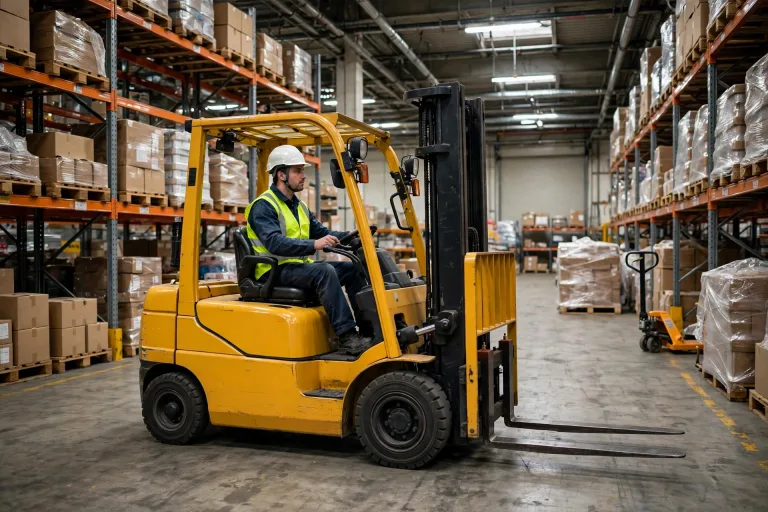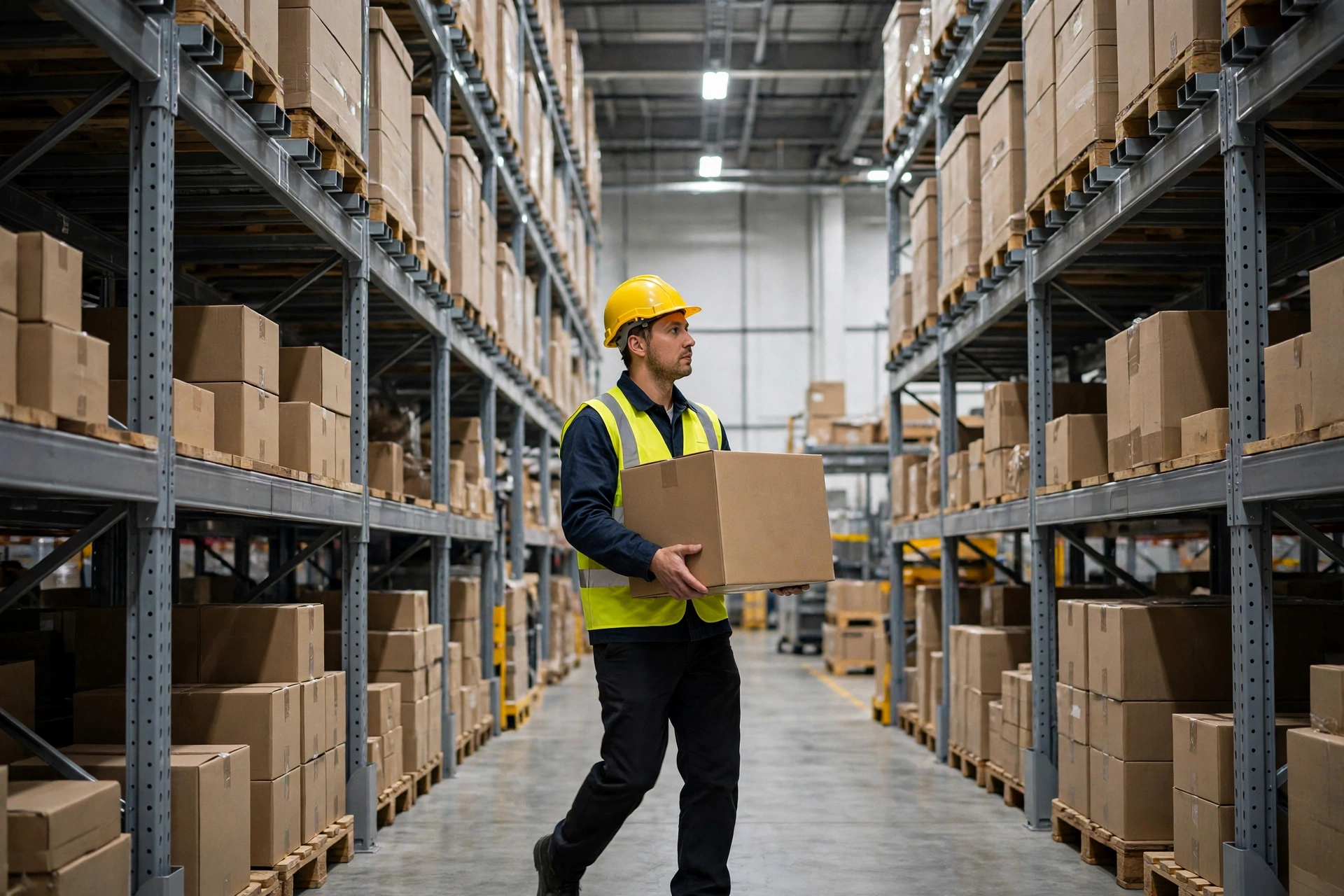
A helmet for warehouse workers is a light safety helmet, often called a hard hat, worn to protect the head from falling objects, bumps against racking and machinery, and knocks in busy storage areas. In general terms, a warehouse is full of things stored above head height, forklifts moving loads, and workers reaching into shelves, so the head is exposed to more risk than in an ordinary workplace. A well-fitting safety helmet is one of the simplest and most effective pieces of protection a warehouse worker can wear.
Warehouses vary a great deal, from small storage rooms to huge distribution centres, but the head hazards are similar in all of them. Boxes can slip from a high shelf, a pallet can shift, and a worker can stand up into a low beam or the corner of a rack. A helmet spreads the force of a blow and keeps a small knock from becoming a serious head injury.
What does a warehouse worker’s helmet protect against?
A warehouse worker’s helmet mainly protects against falling objects and bumps. In a warehouse, goods are stacked high, and even a small box falling from a shelf can cause a painful injury if it hits an unprotected head. In general terms, the helmet’s hard outer shell spreads the force of an impact, while the lining and suspension inside absorb some of it, so the blow that reaches the head is much gentler. The helmet also protects against standing up into low racking, door frames, and the edges of machinery.
The helmet also guards against less obvious hazards. A worker reaching into a shelf can catch their head on a metal edge, and someone working near a conveyor or a loading bay can be struck by a moving part. In general terms, these everyday knocks are more common than dramatic accidents, and a helmet turns many of them into minor incidents rather than injuries.
What kind of helmet should a warehouse worker wear?
In general terms, most warehouse workers wear a standard industrial safety helmet, often called a hard hat, made from a tough plastic shell with a suspension harness inside. These helmets are light, ventilated, and comfortable enough to wear for a full shift, and they are designed for exactly the kind of falling-object and bump hazards found in a warehouse. Some workers choose a helmet with a short peak or brim, which helps to keep rain and dust out of the eyes when working near open loading doors.
For some warehouse jobs, a different style suits the work better. Workers who climb racking or work at height may prefer a helmet with a chin strap, so it stays on if they bend over or look up. Workers in cold stores may need a helmet that fits over a warm hat or balaclava, while workers who also need hearing or eye protection may choose a helmet with slots for earmuffs or a visor. In general terms, the best helmet is the one that suits the actual hazards of the job, fits well, and is comfortable enough to be worn all day without being taken off.
How should a warehouse helmet fit?
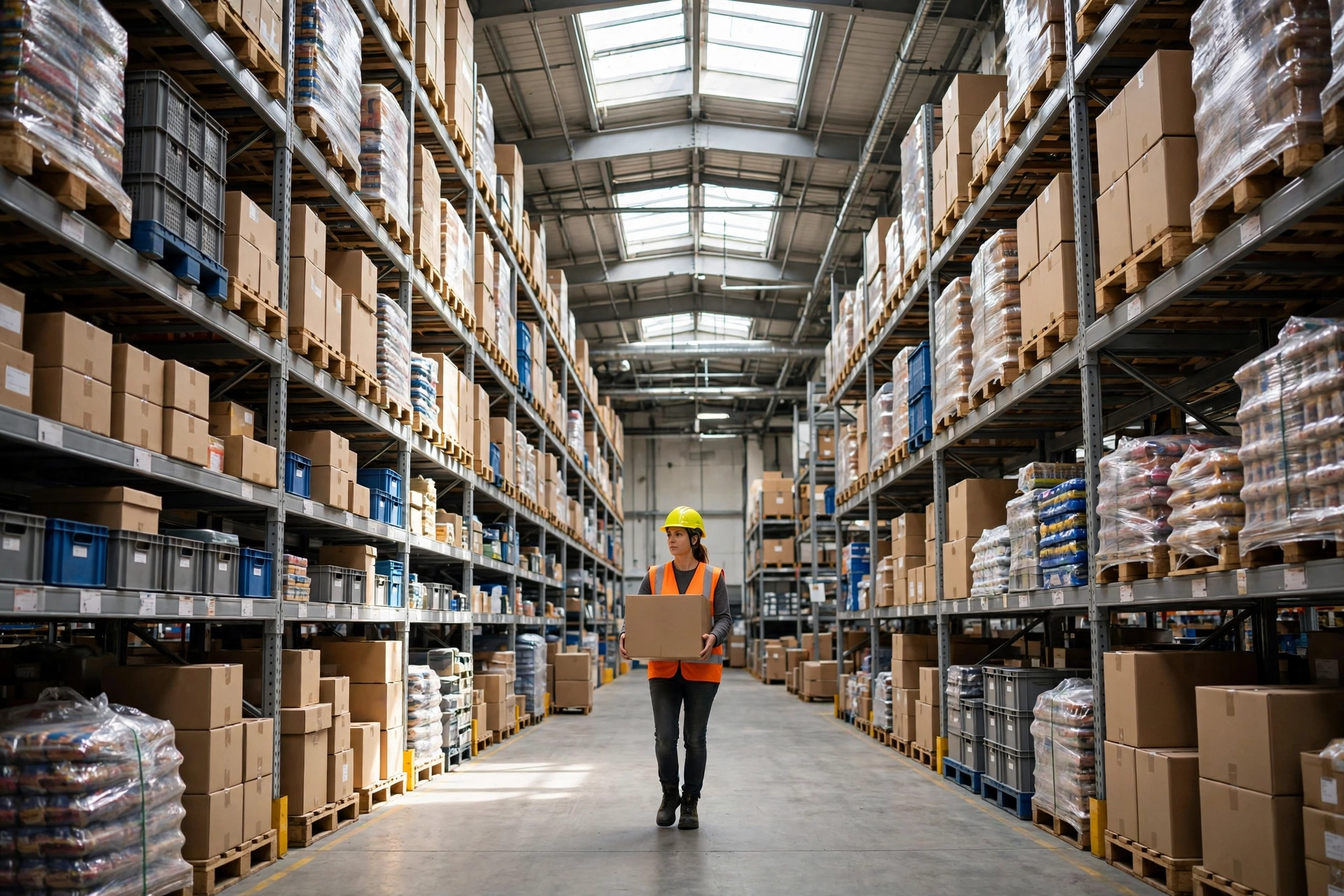
A warehouse helmet should sit level on the head, with the suspension harness adjusted so the shell sits a little above the head rather than resting directly on it. That gap matters: it is the space that lets the harness absorb an impact before the force reaches the skull. In general terms, the helmet should feel snug but not tight, and it should stay in place when the wearer bends forward or looks up. If it slides about or tips forward over the eyes, the harness needs adjusting.
The fit should be checked at the start of each shift, because a helmet that fitted last week may have loosened, and hair, hats, or a changed hairstyle can alter the fit. Chin straps, where fitted, should be fastened snugly enough to keep the helmet on during bending and reaching, but not so tight that they are uncomfortable. A comfortable helmet is also one a worker will keep on, which is the whole point.
When should a warehouse worker replace a helmet?
A warehouse helmet should be replaced after any hard impact, even if it looks undamaged. In general terms, the shell and lining can be weakened by a blow that leaves little visible mark, so a helmet that has taken a serious knock should not be trusted again. Helmets should also be replaced when the shell shows cracks, deep scratches, dents, or signs of the plastic becoming brittle, and when the suspension harness is frayed, stretched, or no longer holds its adjustment.
Age matters too, even for a helmet that has never been hit. Heat, sunlight, and chemicals in a warehouse can age the plastic over time, and a helmet stored near a heater or in direct sun will wear out faster. In general terms, many workplaces replace helmets after a few years of regular use, following the maker’s guidance, and they keep a record of the issue date. A quick daily check — a look at the shell, a tug on the harness, a check of the straps — takes seconds and catches problems early. Some modern safety helmets include a system designed to reduce rotational forces in a fall, such as MIPS, which is a feature worth knowing about when choosing a new helmet for warehouse work.
How should a warehouse helmet be stored and cared for?
A warehouse helmet lasts longest when it is stored in a cool, dry place away from direct sunlight, heat, and chemicals. In general terms, a helmet left on a sunny windowsill, on top of a heater, or in a chemical store will age faster than one kept on a hook in a locker room. It should not be stored with heavy items piled on top of it, and it should never be used as a seat, a step, or a container for tools, all of which can damage the shell or the harness.
Cleaning is simple: warm water and mild soap, with a soft cloth, is enough for most helmets. Strong solvents and abrasive cleaners should be avoided, because they can attack the plastic and weaken it. Stickers and paint should also be used with care, since some adhesives and paints can affect the shell material. In general terms, a clean, well-stored helmet is easier to inspect, more comfortable to wear, and more likely to be in good condition when it is needed. A helmet is a piece of safety equipment, and treating it like one keeps it ready for the job.
Do all warehouse workers need helmets?
In general terms, it depends on the warehouse and the work. Where goods are stored overhead or vehicles move loads nearby, helmets are commonly required, while in a small office-style store they may not be. Follow the site’s rules and the hazards of the job.
Can a warehouse worker wear a bike helmet instead of a hard hat?
No, a bike helmet is not a substitute for an industrial safety helmet. A hard hat is designed for falling objects and bumps in a workplace, while a bike helmet is designed for a different kind of fall, so use the helmet made for the job.
How often should a warehouse helmet be checked?
It should be given a quick look before each shift, checking the shell for cracks and the harness and straps for wear. In general terms, a helmet that has taken a hard knock should be replaced straight away, even if it looks fine.

Olivia
Writer at Helmet Today, covering helmet reviews, fit and riding safety.