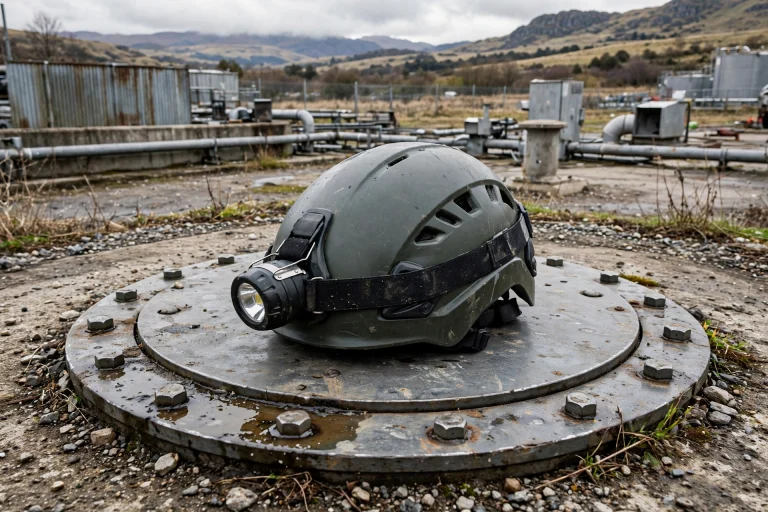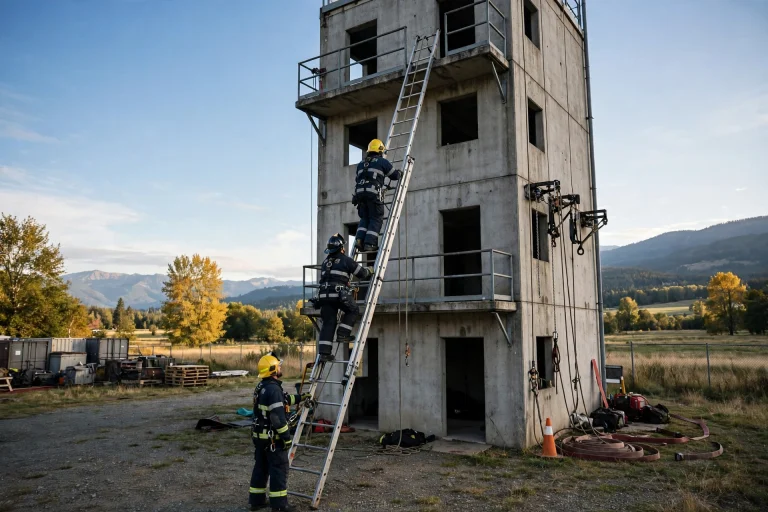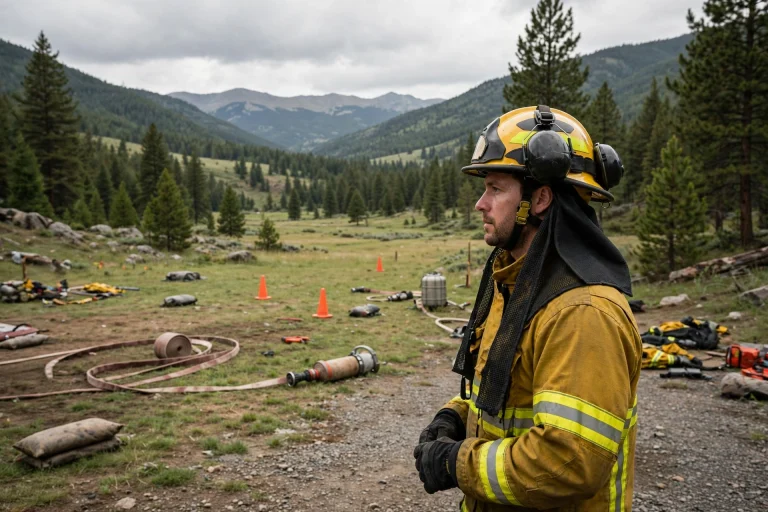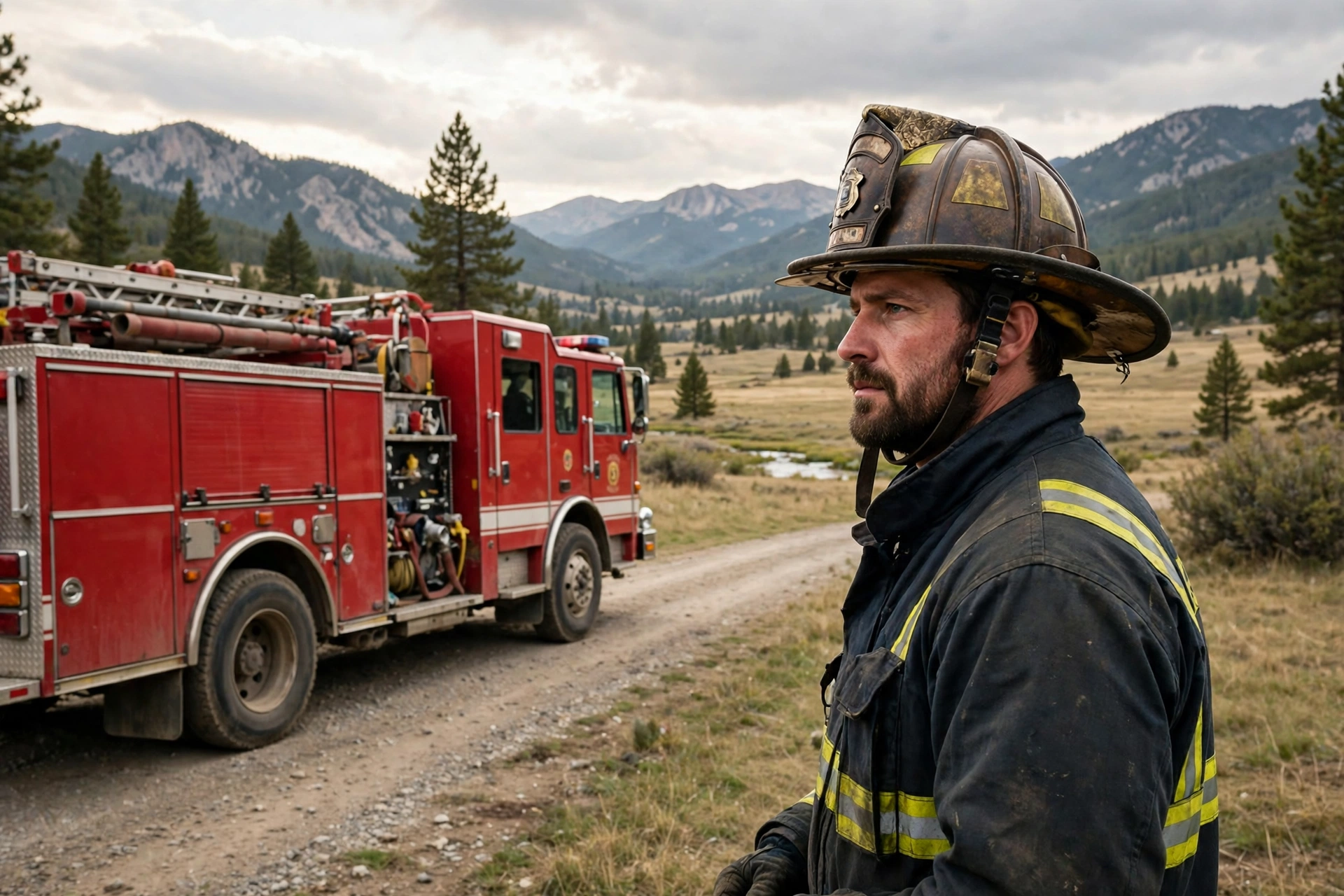
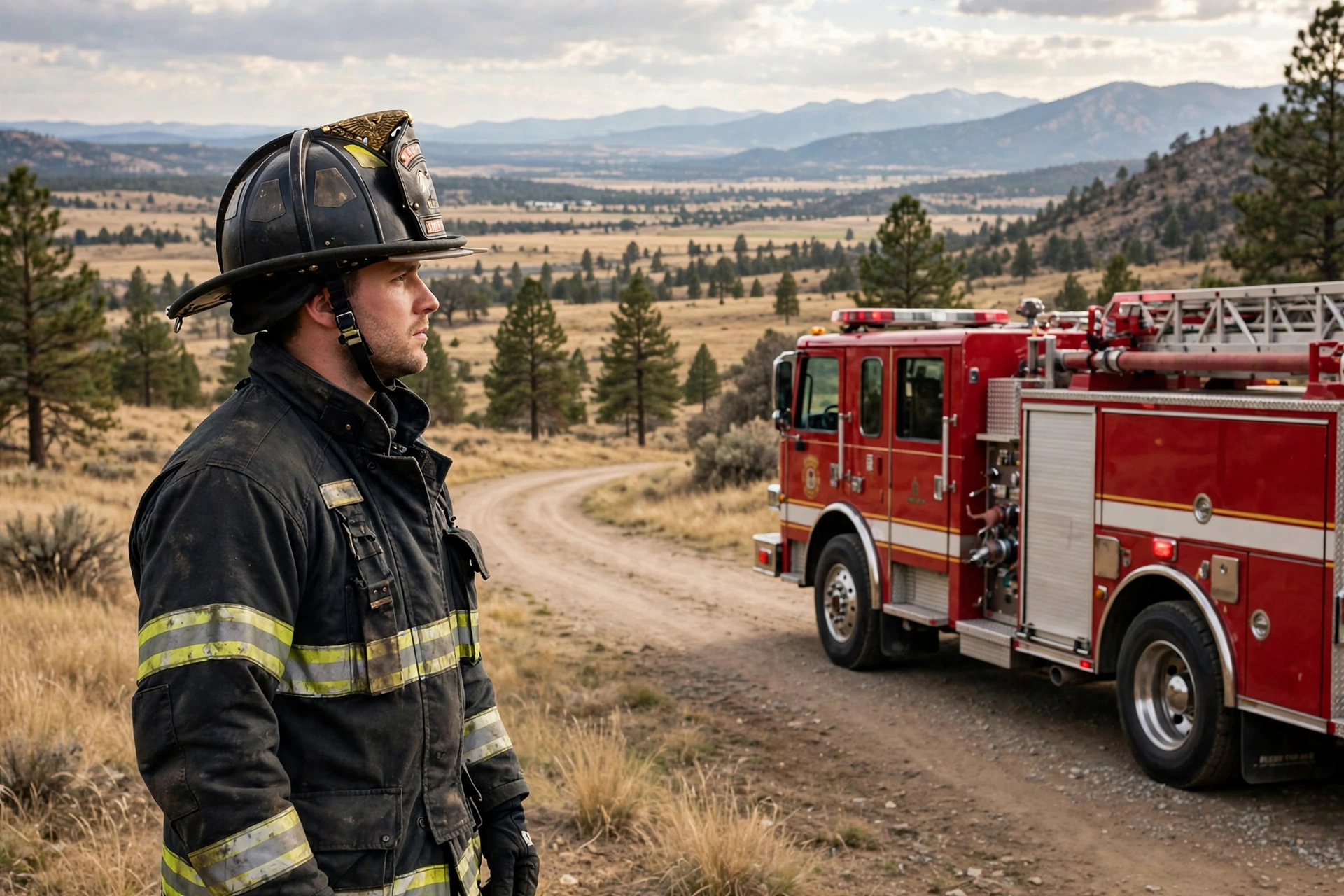
A helmet for firefighters is a specialist fire helmet, usually a traditional-style helmet with a wide brim and a long rear brim, worn to protect the head from falling debris, heat, water, and impacts during firefighting and rescue work. In general terms, a firefighter’s helmet is one of the most recognisable pieces of protective kit in any profession, and it is designed for a workplace where the hazards come from above, from the sides, and from the heat itself. The helmet shields the head, the ears, and the neck, and it is built to keep working in conditions that would destroy an ordinary helmet.
Firefighters wear their helmet on every call, whether they are entering a burning building, cutting a casualty out of a car, or working at a rescue scene. The helmet is part of a full set of protective clothing, along with a fire-resistant suit, gloves, and boots, and it is worn because the risks on a fireground are immediate and severe. A falling beam, a burst of steam, or a piece of debris can reach the head without warning, and the helmet is the firefighter’s main protection against all of them.
What makes a firefighter helmet different?
A firefighter helmet is different from other helmets mainly in its shape and its materials, which are chosen to cope with heat, flames, and falling objects. The helmet has a wide brim that shields the face and neck from water and debris, and a long rear brim that protects the back of the neck from heat and embers. In general terms, the shell is made from a heat-resistant material that can withstand high temperatures without melting or softening, and the inside has a suspension system and a liner that protect the head from impacts and from heat.
The helmet is also designed to work with the rest of the firefighter’s kit, including a breathing apparatus mask, a torch, and a radio. The front of the helmet often carries a holder for a torch or a camera, and the sides have clips for a mask or a communications set. In general terms, a firefighter helmet is a working tool as well as a piece of protection.
What protection does a firefighter helmet give?
A firefighter helmet gives the head protection from falling objects, impacts, heat, flames, and water, all at the same time. In general terms, the hard shell spreads the force of a falling object or a knock, and the suspension inside absorbs some of that energy, so less force reaches the head. The shell also resists heat and flames, so it does not melt or catch fire, and the wide brim shields the face and neck from water running down from above.
The helmet also protects the ears and the back of the neck, which are vulnerable to heat and to falling embers. The liner inside the helmet insulates the head from the heat of a fire, and the suspension holds the shell away from the head so hot air cannot pass directly to the skin. Some helmets include a system designed to reduce rotational forces in a fall, such as MIPS, although that feature is more common in sports helmets than in fire helmets, and a fire helmet’s protection comes mainly from its heat-resistant shell and its suspension system.
Do firefighters have to wear a helmet?
Yes, firefighters have to wear a helmet whenever they are on a call, and in general terms the helmet is a required part of their protective equipment. The fire service sets strict rules about protective kit, and a firefighter without a helmet will not be allowed to enter a fireground or a rescue scene. The helmet must be in good condition, it must fit properly, and it must be worn with the chin strap fastened.
The rule applies to every type of call, from a house fire to a road accident, because the risks to the head are present in all of them. A firefighter at a road accident can be struck by debris or by a vehicle, and a firefighter at a rescue scene can be hit by falling material. In general terms, the helmet is not optional kit, but a condition of doing the job, and it is worn from the moment the firefighter arrives until the scene is safe.
How should a firefighter helmet fit?
A firefighter helmet should fit snugly all around the head, with no gaps and no pressure points, and it should stay in place when the firefighter shakes their head or looks up. The helmet should sit level, covering the forehead and the ears, and the chin strap should be fastened firmly under the chin. In general terms, a helmet that moves when the firefighter moves is too loose, and a helmet that gives a headache after a few minutes is too tight.
The fit matters even more for a firefighter than for most helmet wearers, because the helmet is worn with a breathing apparatus mask, and the two must work together without gaps. The mask straps should sit neatly under the helmet, and the helmet should not press on the mask or push it out of place. Try the helmet on with the full kit, including the mask and the torch, and check that you can see clearly and hear instructions before you go to a call.
When should a firefighter helmet be replaced?
A firefighter helmet should be replaced if it has taken a heavy impact, if the shell is cracked, melted, or deformed, or if the suspension or the liner is worn or damaged. In general terms, a helmet that has been exposed to extreme heat or to a serious impact has done its job, and it should not be kept in use, even if the damage looks small. The shell can be weakened in ways that are hard to see, and a weakened shell may not protect the head in a second incident.
Helmets also wear out with time and use, so a helmet that has been in service for many years may need replacing even without a single incident. Check the helmet regularly for cracks, soft spots, and worn straps, and follow the maker’s guidance on how long the helmet should stay in service. If the helmet no longer fits well, or if the suspension has lost its spring, it is time for a new one. A helmet is cheap compared with the injury it prevents, and a firefighter’s helmet is no exception.
Is a firefighter helmet the same as a construction helmet?
No, a firefighter helmet is made from heat-resistant materials and has a wide brim to protect the face and neck from heat, water, and debris. In general terms, a construction helmet is made for falling objects on a building site, and it is not designed for the heat and flames a firefighter faces.
Why do firefighter helmets have a long back brim?
The long rear brim shields the back of the neck from heat, embers, and water running down from above. In general terms, it is one of the most distinctive features of a traditional fire helmet, and it protects a part of the head that other helmets leave exposed.
Can a firefighter wear a helmet with a visor?
Yes, many firefighter helmets have a visor or a face shield that can be pulled down to protect the eyes and the face from heat, debris, and water. In general terms, the visor is an optional part of the helmet, and it is used when the firefighter needs extra protection for the face.

Olivia
Writer at Helmet Today, covering helmet reviews, fit and riding safety.