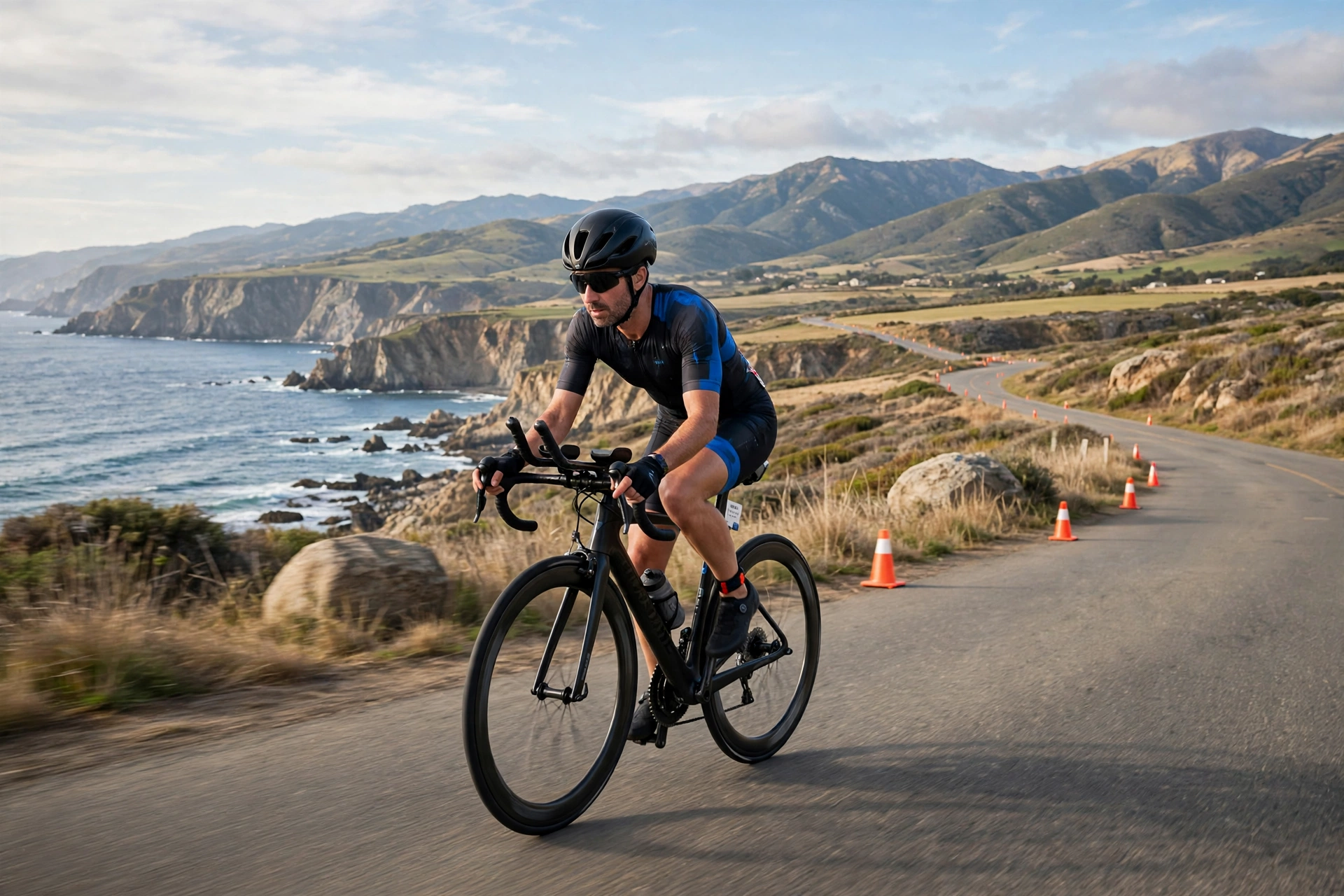
A helmet for triathletes is a bike helmet, usually an aerodynamic road or time-trial helmet, worn during the cycling leg of a triathlon to protect the head at race speeds. In general terms, a triathlon is a race in three parts, swim, cycle, and run, and the helmet is worn only for the cycling leg. The triathlete puts the helmet on in transition after the swim, rides the bike course, and takes the helmet off before the run. A helmet that is light, fast, and easy to put on quickly is one the triathlete will reach for on race day.
Triathletes ride at high speed, often in a tight group or alone against the clock, and a fall at race speed can cause a serious head injury. The helmet is therefore compulsory in almost every triathlon, and a triathlete without a helmet will not be allowed to start the cycling leg. The helmet is both a safety requirement and a piece of race equipment, and the choice of helmet can affect the triathlete’s time as well as their safety.
Do triathletes have to wear a helmet?
Yes, triathletes have to wear a helmet during the cycling leg of a triathlon, and in general terms the rule is enforced strictly at every level, from local races to world championships. The helmet must meet an approved safety standard, it must be fastened properly before the triathlete touches the bike, and it must stay on until the bike is racked again. A triathlete who rides without a helmet, or who unfastens the helmet before racking the bike, can be disqualified.
The rule is checked in transition, where officials watch the triathletes put their helmets on and take them off. In general terms, the helmet must be on and fastened before the triathlete takes the bike off the rack, and it must stay fastened until the bike is back on the rack. That check is there for the triathlete’s own safety, because the transition area is busy, the bike course is fast, and a fall can happen at any point on the ride.
What type of helmet is best for triathletes?
The best helmet for triathletes is usually a light, aerodynamic road helmet, or a time-trial helmet for longer, flatter races. In general terms, a road helmet is a good choice for most triathlons, because it is light, well ventilated, and comfortable over a long ride. A time-trial helmet has a longer, smoother shape that cuts through the air more cleanly, and it can save time on a flat course, but it is heavier, warmer, and harder to see out of.
Look for a helmet with a simple, one-handed fit system, because the triathlete puts the helmet on with wet hair and cold hands after the swim, and a fiddly adjustment is the last thing they need in transition. The helmet should also work with the sunglasses the triathlete wears, and the vents should be placed so they do not whistle at speed. In general terms, a helmet that is comfortable and easy to put on is worth more than a helmet that saves a few seconds but is a struggle in transition.
How should a triathlon helmet fit?
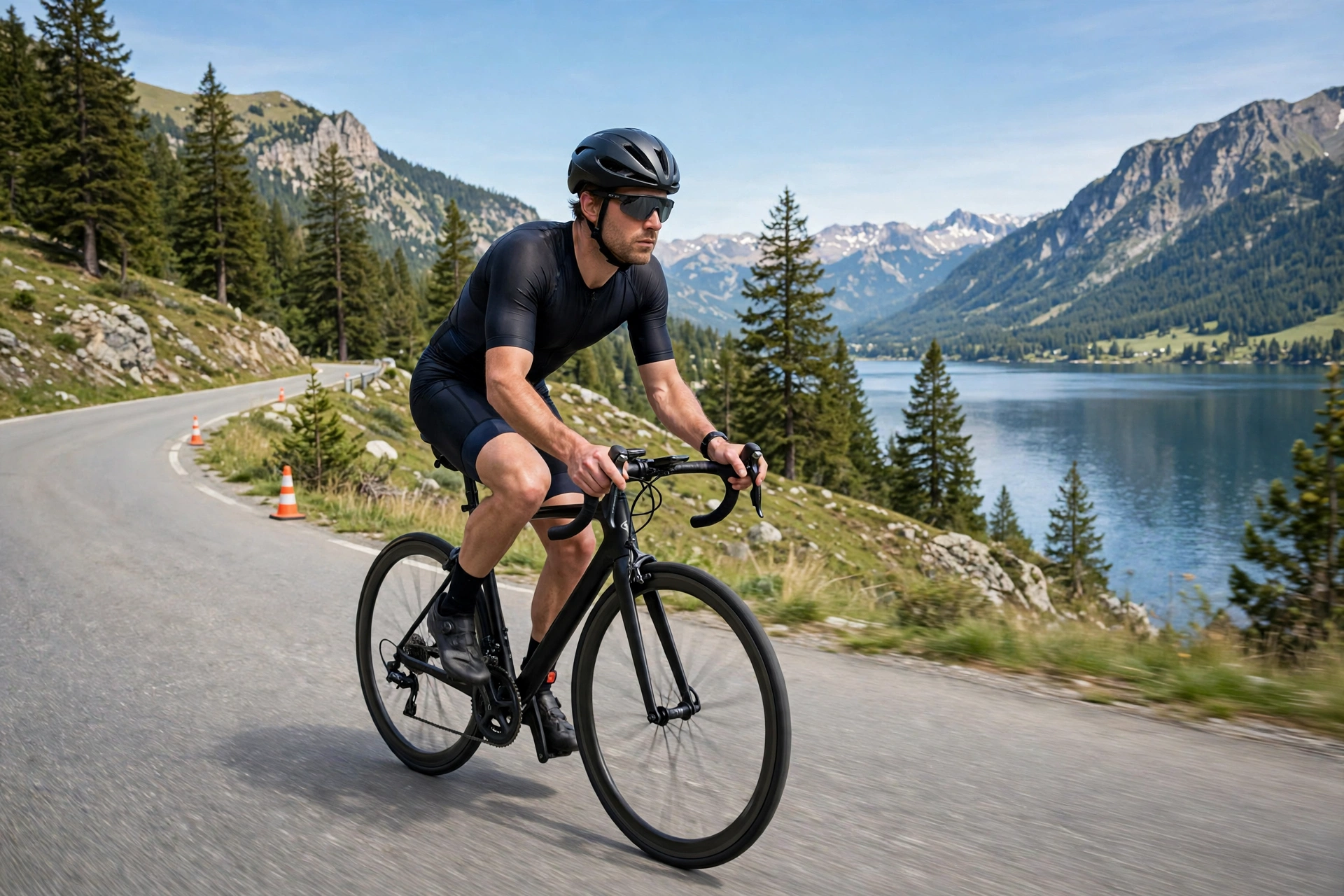
A triathlon helmet should fit snugly all around the head, with no gaps and no pressure points, and it should stay in place when the triathlete shakes their head or looks over their shoulder. The helmet should sit level, covering the forehead, and the straps should form a neat shape around the ears, with the buckle fastened firmly under the chin. In general terms, a helmet that rocks or slides is too loose, and a helmet that gives a headache within minutes is too tight.
The fit is especially important for a triathlete, because the helmet is put on in a hurry after the swim, with wet hair and a racing heart. Practise the transition at home, so putting the helmet on and fastening it becomes automatic, and check that the fit does not change when your hair is wet. Some helmets include a system designed to reduce rotational forces in a fall, such as MIPS, which is an extra feature worth considering for a rider who races at speed in a group.
Can I use a normal road helmet for a triathlon?
Yes, you can use a normal road helmet for a triathlon, and in general terms most triathletes do, especially if they are new to the sport or racing on a hilly course. A road helmet gives the same protection as a time-trial helmet, it is lighter and better ventilated, and it is more comfortable over a long ride. The time saved by a time-trial helmet is small, and for most triathletes the comfort and the ventilation of a road helmet are worth more than those few seconds.
A time-trial helmet is a specialist piece of kit for triathletes who race long, flat courses and want every possible advantage. If you race triathlons regularly and you want to go faster, a time-trial helmet is worth trying, but it is not a requirement. In general terms, a road helmet is the better choice for a first triathlon, and it is the helmet most triathletes reach for on race day.
How do I look after a triathlon helmet?
To look after a triathlon helmet, store it away from heat and direct sun, clean it with mild soap and water, and check it regularly for cracks, dents, and worn straps. A helmet that is used in races and training can pick up sweat, salt, and grit, so rinse it after a wet ride and let it dry naturally. In general terms, a helmet that has been in a crash should be replaced, even if the damage looks small, because the liner may have absorbed energy that you cannot see.
Keep the vents clear, and let the helmet dry fully before you store it, rather than putting a wet helmet in a bag. If the helmet starts to smell, remove the pads if they come out and wash them, or wipe them with a damp cloth. A helmet that is clean and comfortable is one you will wear on every ride, and that is the whole point of a triathlon helmet.
Is a helmet compulsory in a triathlon?
Yes, a helmet is compulsory during the cycling leg of a triathlon at every level. In general terms, the helmet must be on and fastened before the triathlete takes the bike off the rack, and it must stay fastened until the bike is racked again.
Can I wear a time-trial helmet in a triathlon?
Yes, time-trial helmets are allowed in most triathlons, as long as they meet an approved safety standard. In general terms, they suit long, flat courses, while a road helmet suits hilly courses and most first-time triathletes.
Do I need a helmet for the swim or the run?
No, the helmet is only worn for the cycling leg. In general terms, the triathlete wears a swim cap in the water and no head protection on the run, and the helmet is put on and taken off in transition.

Olivia
Writer at Helmet Today, covering helmet reviews, fit and riding safety.