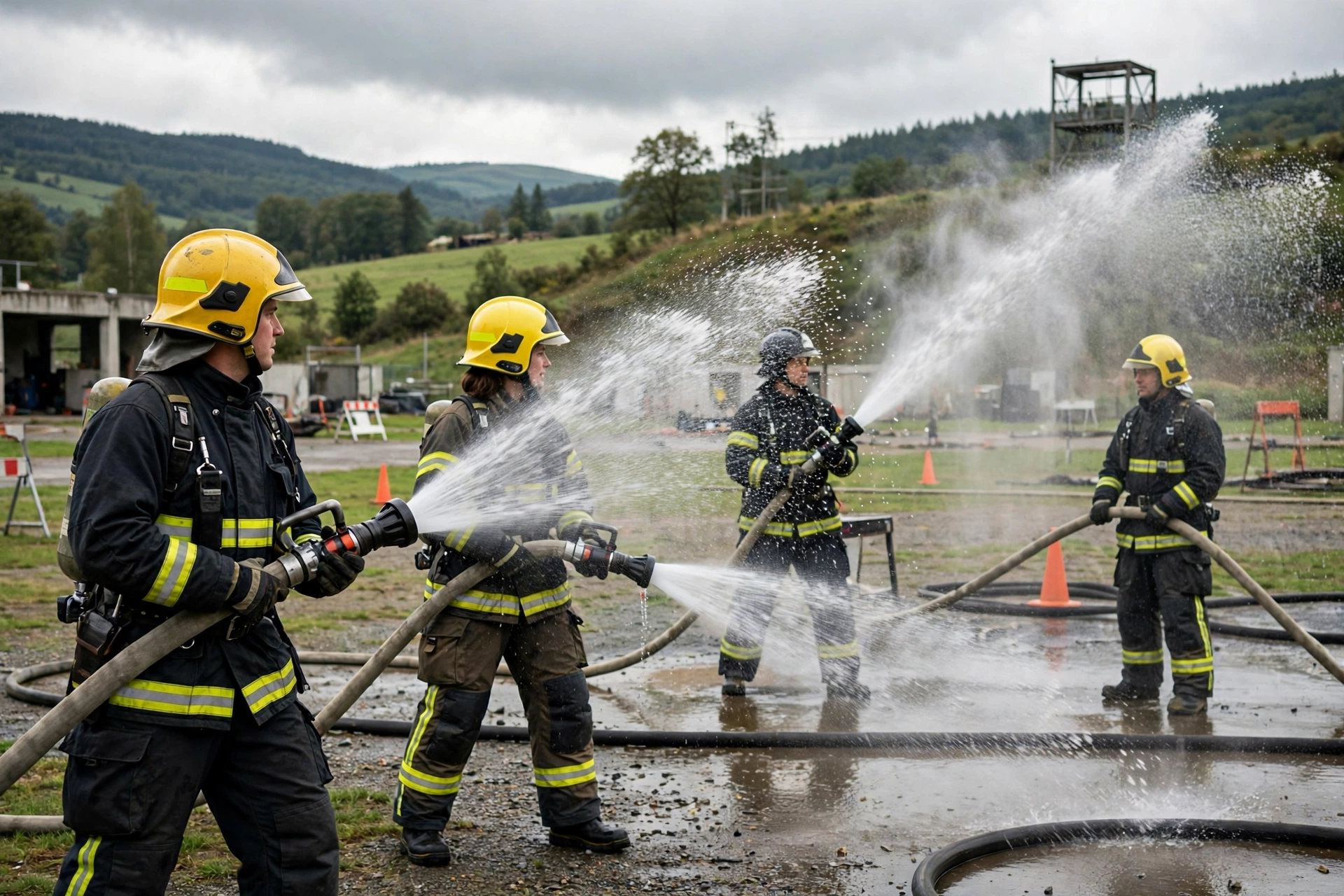
Yes, firefighters do wear helmets during training drills — whenever the drill reproduces a real hazard, such as live fire, search, ladder work, extrication, or anything overhead, the helmet is part of the kit, just as it would be on a real call. In general terms, the rule is simple: train as you would respond, and that includes the helmet.
There are exceptions for classroom sessions and tabletop exercises, where there is no physical hazard, but any drill involving heat, height, tools, or movement through a structure calls for a helmet. This guide explains when helmets are worn in training, why it matters, and how drills build good helmet habits.
Which Training Drills Require a Helmet?
Live-fire drills are the clearest case: any drill involving real flame, heat, or smoke requires full protective equipment, including the helmet, hood, and breathing apparatus where the drill calls for it. Search and rescue drills in a training building also require helmets, since crews move through dark, unfamiliar spaces with low ceilings, obstacles, and the risk of falling objects or head strikes.
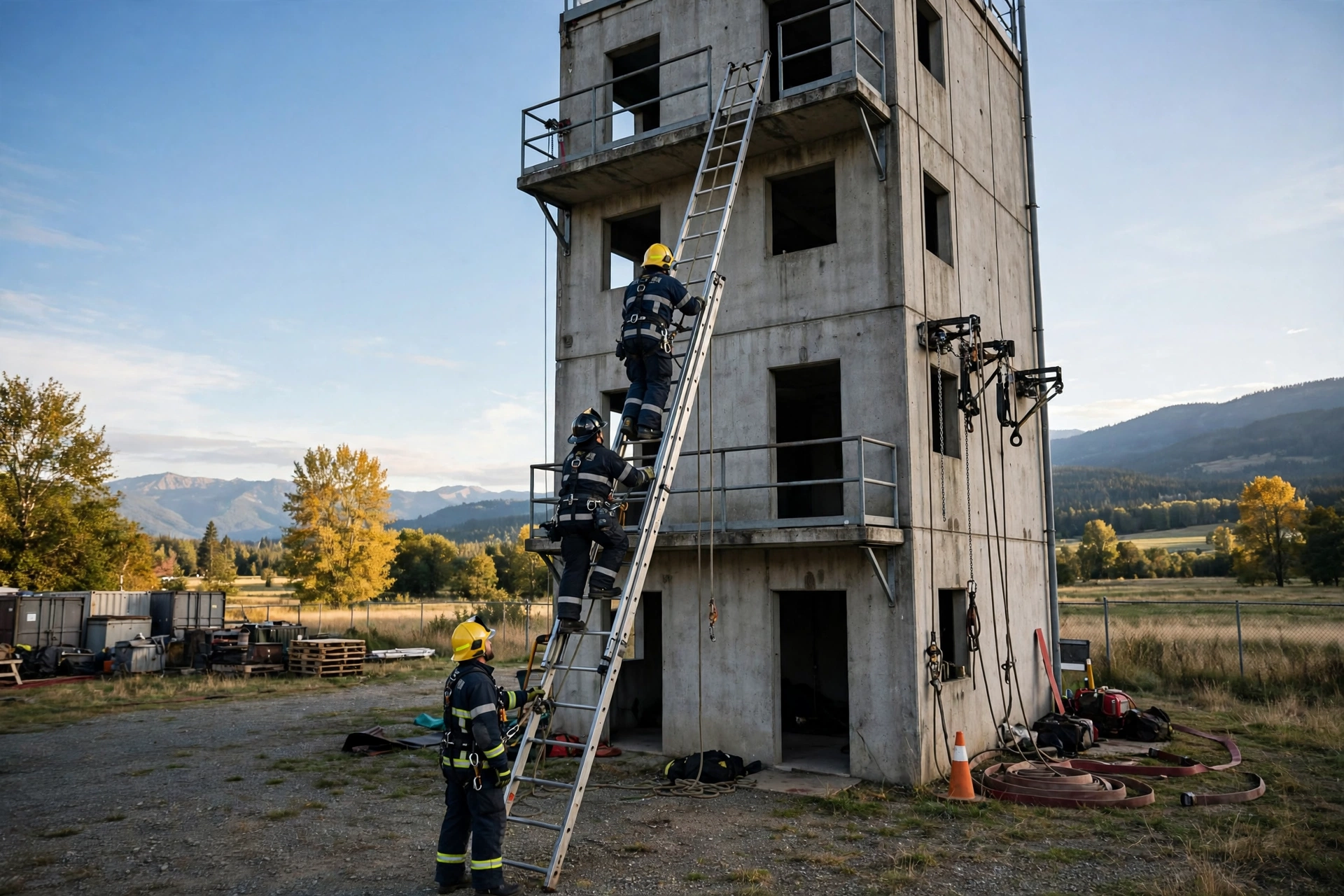
Ladder drills, rope drills, and any work at height require helmets for falling-object and fall protection. Vehicle extrication training requires helmets because cutting tools throw fragments and sparks, and crews work around unstable vehicles and sharp metal. Even low-risk drills can surprise you — a dropped tool or a slip on wet ground can happen anywhere, which is why training officers often set helmet requirements conservatively for every drill. Even hose-handling and pump drills can require helmets where crews work near apparatus or overhead equipment. The deciding factor is always the hazard, not the fact that it is “only training.”
Why Does Wearing a Helmet in Training Matter?
Training exists to build habits that hold up under stress, and helmet habits are no exception. A firefighter who always trains in a helmet will reach for it automatically on a real call, will be used to its weight and its effect on vision and hearing, and will know how it feels with a breathing apparatus mask and hood. A firefighter who trains without a helmet has to adjust to all of that for the first time on a real incident, which is the worst possible moment to learn.
Training in a helmet also reveals fit and equipment problems safely. A helmet that slips during a ladder drill, a visor that fogs during a search drill, or ear covers that interfere with a radio earpiece are all problems better found on the training ground than on a call. Drills give crews the chance to fix these issues, adjust fittings, and report worn equipment before it matters.
Are There Drills Where Helmets Are Not Needed?
Yes. Classroom sessions, lectures, map exercises, and tabletop simulations involve no physical hazard, so helmets are not required. Some theory sessions on equipment may involve handling helmets without wearing them, which is fine: the point is learning, not exposure. Fitness training and medical refresher sessions also do not normally require helmets, unless they are combined with a practical drill that does.
The line is drawn by risk assessment. Training officers assess each drill for hazards — heat, height, falling objects, tools, vehicles — and set the protective equipment requirement accordingly. If a drill’s hazards change partway through, for example when a classroom session moves to the drill yard, the equipment requirement changes with it. Crews should follow the brief for each drill rather than assuming one rule covers the whole day.
Do Trainees and New Recruits Wear Helmets in Training?
Yes, and arguably they need them most. Recruits are still learning to move in full kit, still building awareness of overhead hazards, and still getting used to the weight and bulk of protective equipment. Helmets are issued early in recruit training and worn for every practical drill, so that wearing one becomes second nature long before a recruit’s first real call.
Recruit training also uses helmet drills to teach the basics: how to fit and adjust a helmet, how to check it before use, and how to wear it with other kit. Instructors watch for common beginner mistakes — helmets worn too far back, chin straps left loose, visors left down when they should be up — and correct them on the spot. These small corrections in training prevent bigger problems later.
How Do Drills Build Good Helmet Habits?
Good helmet habits are built by repetition. Putting the helmet on at the start of every practical drill, checking the fit, fastening the chin strap, and checking the helmet after the drill creates a routine that carries over to real calls. Drills that include a kit-check step — where crews inspect each other’s equipment before starting — reinforce the habit of checking, not just wearing.
Post-drill routines matter too. After a drill, helmets should be cleaned, checked for damage, and stored properly, just as after a real call. Crews that practise this after every drill will do it automatically after a call, when tiredness makes shortcuts tempting. Instructors also use drills to check that every firefighter’s helmet still fits after changes in kit — a new hood, a different radio earpiece, or a replacement suspension can all change the fit, and a drill is the right place to discover that. In the end, the helmet habits learned in training are the habits that protect firefighters on the job, which is why training officers treat helmet discipline as seriously as any other part of the drill. If you are learning about helmet technology, reading about what MIPS is for helmets can help you understand one of the features you may see listed on modern helmets.
Frequently Asked Questions
Q: Do firefighters wear helmets for classroom training?
A: In general terms, no. Classroom and tabletop sessions have no physical hazard, so helmets are not required. Practical drills with real hazards are a different matter.
Q: Is full protective equipment required for every drill?
A: No — the equipment matches the drill’s hazards. A live-fire drill requires full kit, while a map exercise does not. Training officers set the requirement based on a risk assessment of each drill.
Q: Should I wear my own helmet or a training helmet for drills?
A: Either is fine as long as it fits and is in good condition. Some departments keep training helmets for drills to spare front-line helmets wear, while others have crews train in their own kit so the fit is familiar.

Olivia
Writer at Helmet Today, covering helmet reviews, fit and riding safety.