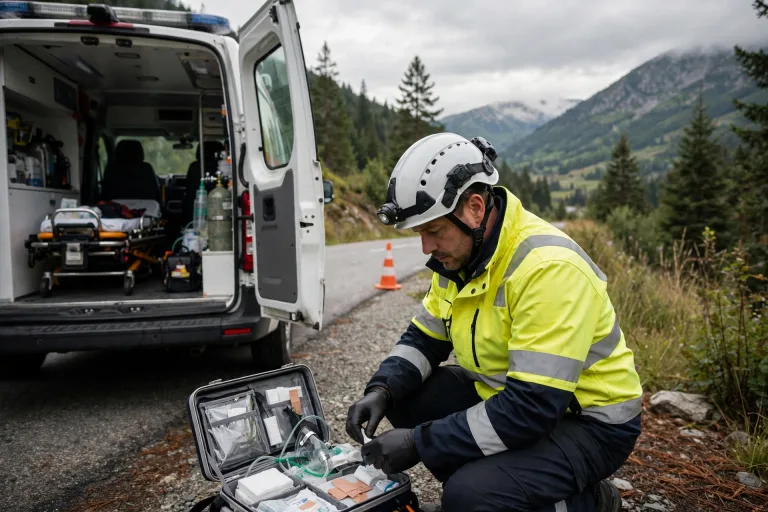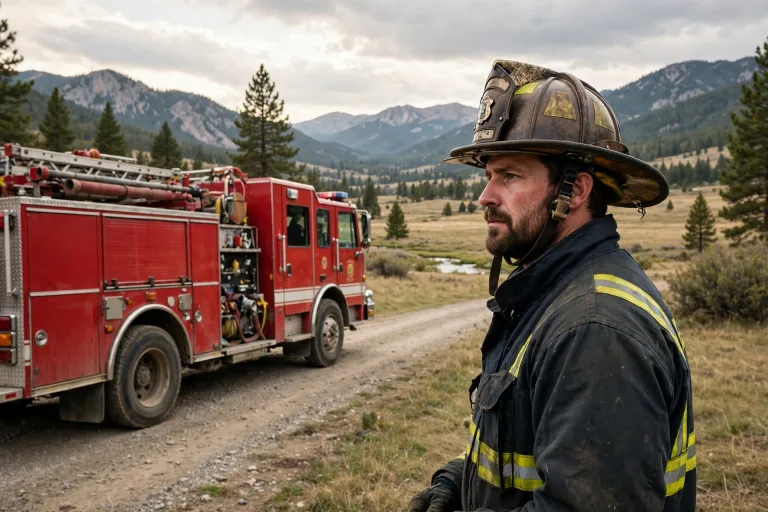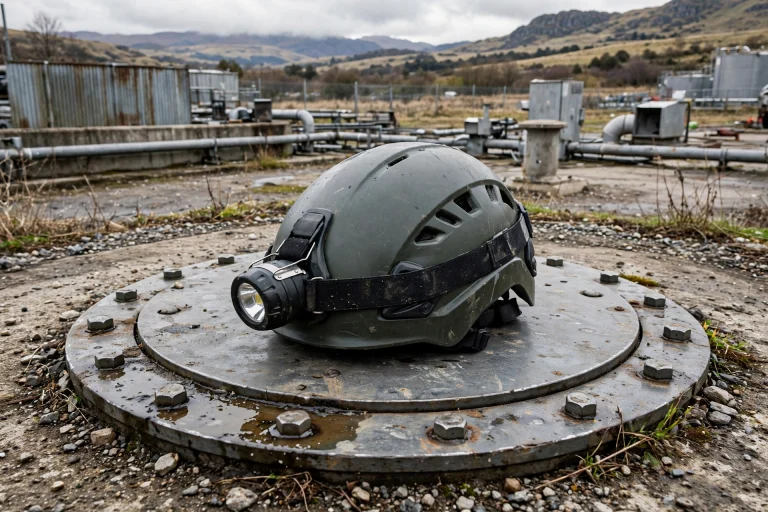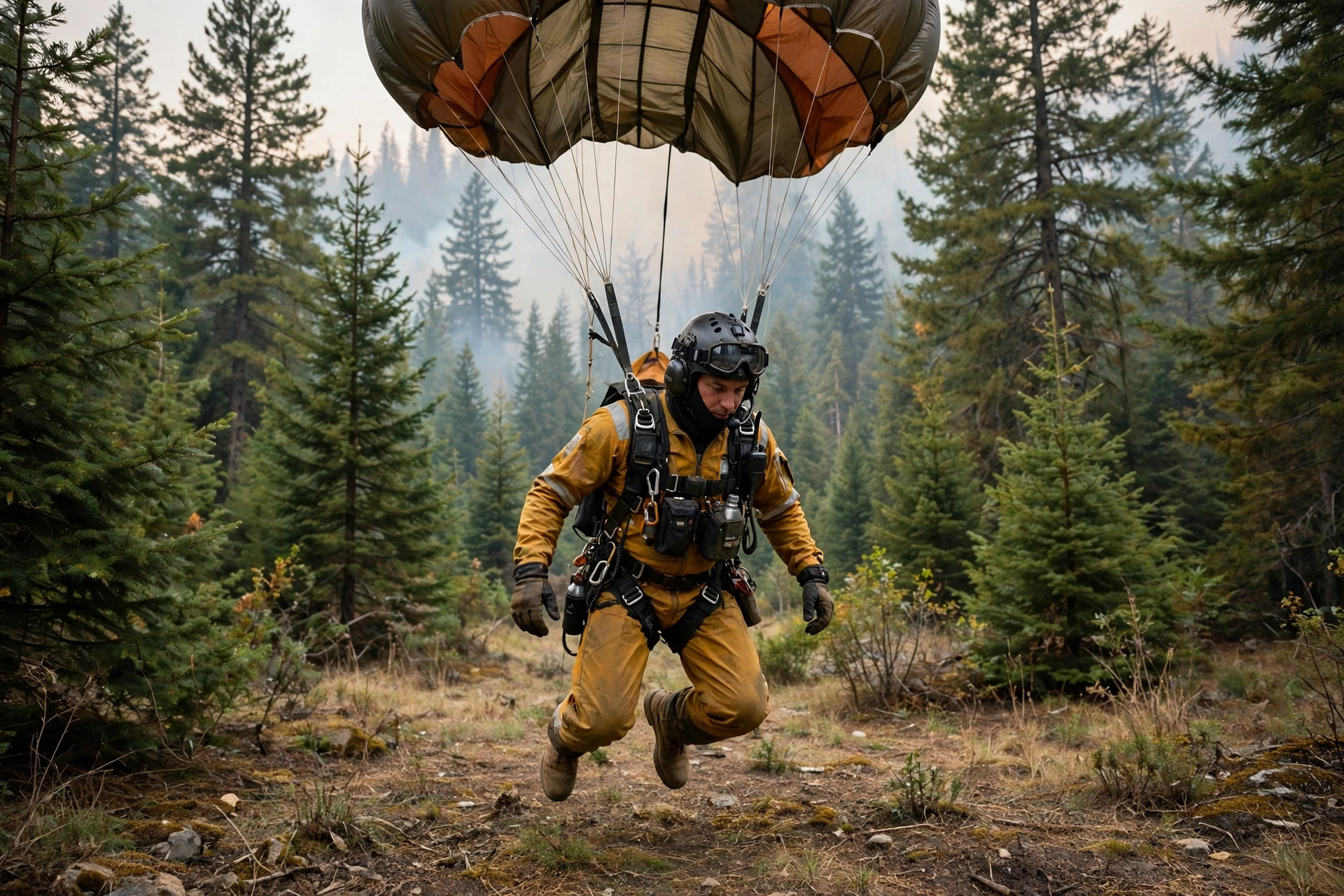
A helmet for smokejumpers is a tough, snug-fitting helmet worn by wildland firefighters who parachute into remote areas to fight wildfires. In general terms, it protects the jumper’s head during the parachute landing and during the hard physical work of cutting fire lines in rough, smoky country. It has to do two jobs at once: survive the jump, and then keep working as a safety helmet on the ground.
Smokejumpers work far from roads, in places where help is a long way off, so their kit has to be light, strong, and reliable. The helmet is part of that kit, along with the parachute, the protective clothing, and the tools they carry to the fire. It is worn from the moment the jumper leaves the aircraft until the job on the ground is done, and it is built for the rough treatment that life in the backcountry gives it.
What is a helmet for smokejumpers?
A helmet for smokejumpers is a hard-shell helmet made for wildland firefighting and parachute work. It looks more like a sturdy work helmet than a motorcycle helmet, with a solid shell, a brim that shields the face and neck, and a secure chin strap. In general terms, it is designed to take knocks from branches, falling debris, and hard landings, and to stay firmly on the head through all of them.
The helmet is also part of a system. Smokejumpers wear it with goggles, a face covering, and fire-resistant clothing, and the helmet has to work with all of those things without getting in the way. It needs to fit over a head covering, stay put when the jumper is running or digging, and let the jumper hear and see clearly enough to work as part of a crew. It is a working helmet, not a piece of dress uniform, and its shape follows its job.
Why do smokejumpers need a special helmet?
Smokejumpers need a special helmet because their work is different from the work of other firefighters. A firefighter in a town works near roads and water supplies, while a smokejumper lands by parachute in remote forest, then works for days with hand tools in steep, smoky ground. The helmet has to survive the landing, which can be rough if the ground is uneven or the wind changes, and then protect the head from falling branches and rolling debris on the fire line.
The helmet also has to cope with heat and smoke for long hours. It must not soften or fail in the heat of a fire, and it must be comfortable enough to wear all day while the jumper is digging, sawing, and carrying heavy loads. A helmet made for another job might do one of these things well, but the smokejumper’s helmet is made to do all of them together, and that is what makes it special.
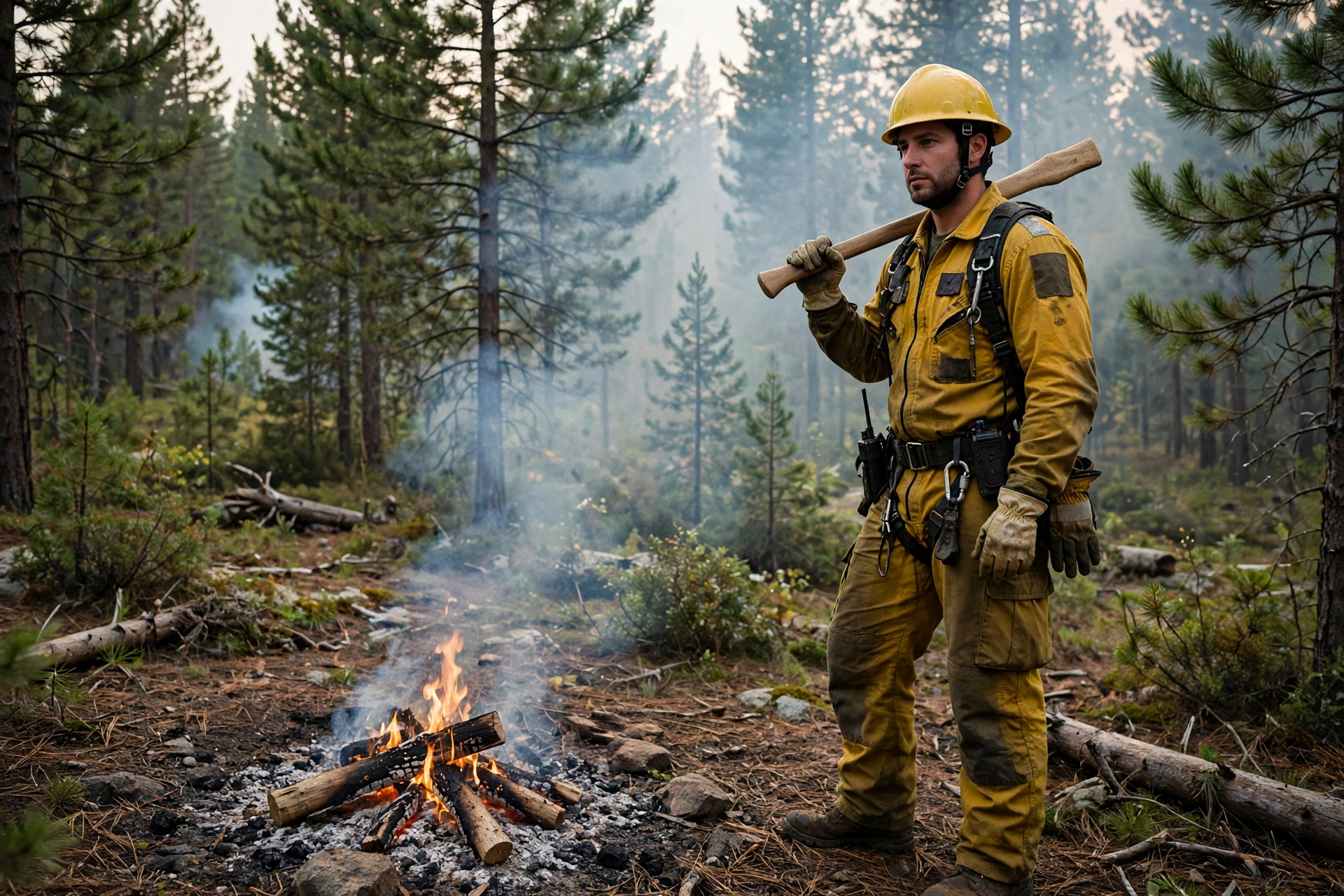
What are smokejumper helmets made from?
Smokejumper helmets are made from hard, heat-resistant materials that can take a knock and keep their shape. In general terms, the shell is a tough plastic or composite that resists cracking and heat, while the inside has a suspension or padding system that holds the helmet off the head and absorbs the force of an impact. The brim is part of the shell, and it helps to shield the face and neck from sun, rain, and falling embers.
The fittings matter as much as the shell. The chin strap is strong and adjustable, the suspension can be set to fit the wearer’s head, and the helmet is made to work with goggles and ear protection. Some helmets have vents or slots for accessories, and the whole helmet is built to be cleaned and checked after each fire. It is simple, rugged gear, and that simplicity is part of its strength.
How does a smokejumper helmet stay on during a jump?
A smokejumper helmet stays on during a jump because it fits snugly and is held by a secure chin strap that is fastened before the jumper leaves the aircraft. The harness spreads the load around the head, and the helmet is checked as part of the pre-jump routine, in the same way as the parachute. In general terms, a helmet that fits well and is strapped properly will stay in place through the opening shock of the canopy and the landing that follows.
Fit is checked on the ground first. The jumper adjusts the suspension and the strap until the helmet sits level and does not rock, and the crew checks each other’s kit before the jump. Some modern helmets also include a system designed to reduce rotational forces in a fall, such as MIPS, which is one more layer of protection for the hard landings this work can bring. A helmet that is loose or badly strapped is a hazard in the air, so the fit check is taken seriously.
How do smokejumpers look after their helmets?
Smokejumpers look after their helmets by checking them after every jump and every fire, cleaning off soot and dirt, and looking for cracks, worn straps, or a suspension that has lost its shape. A helmet that has taken a hard knock is inspected closely, and in general terms a helmet that has been in a serious impact should be retired, even if the damage is hard to see.
Storage matters too. The helmet is kept out of strong sun and away from chemicals that could weaken the shell, and it is stored where it will not be crushed under heavy gear. The jumper also checks the fit from time to time, because a suspension that has stretched or a strap that has worn will not hold the helmet as it should. Good care keeps the helmet ready for the next call, and in this line of work, ready means safe.
Do smokejumpers wear the same helmet as other firefighters?
No, in general terms their helmet is made for parachute jumps and wildland work, while firefighters in towns wear helmets made for building fires. The jobs are different, so the helmets are different too.
Can a smokejumper helmet be used for other work?
Yes, it can be used for other wildland fire work, because it is built for rough ground, heat, and falling debris. It is less suited to jobs that need a different kind of protection, such as working at height or on a motorcycle.
How often are smokejumper helmets replaced?
After a hard impact, or when the shell, strap, or suspension is worn out. The maker’s guidance gives a useful limit, and a helmet that no longer fits snugly should be replaced.

Olivia
Writer at Helmet Today, covering helmet reviews, fit and riding safety.