Do helmets restrict your vision? In general terms, a well-fitting helmet should not restrict your normal forward vision, though it can narrow what you see at the edges. You should still be able to see the road ahead, check your mirrors, and notice movement to the sides without turning your whole head more than usual. If a helmet blocks a large part of your view, the problem is usually the fit, the shape, or the visor, not helmets in general.
The worry is an understandable one. A helmet sits close to the eyes, and the shell and the visor frame everything you see, so it is natural to wonder whether you are missing something. In practice, most riders and cyclists adjust to a helmet very quickly, and the view through a good helmet feels normal within a few rides. This article explains where the feeling comes from, which helmets give the widest view, and how to check a helmet before you buy it.
Do helmets restrict your vision?
Helmets do not restrict your vision in the way many people fear. A helmet that fits well leaves your forward view clear, and your eyes can move freely inside the opening to scan the road. In general terms, the shell sits above and to the sides of the eyes, and the opening is wide enough for normal riding, including looking ahead, checking mirrors, and glancing at junctions.
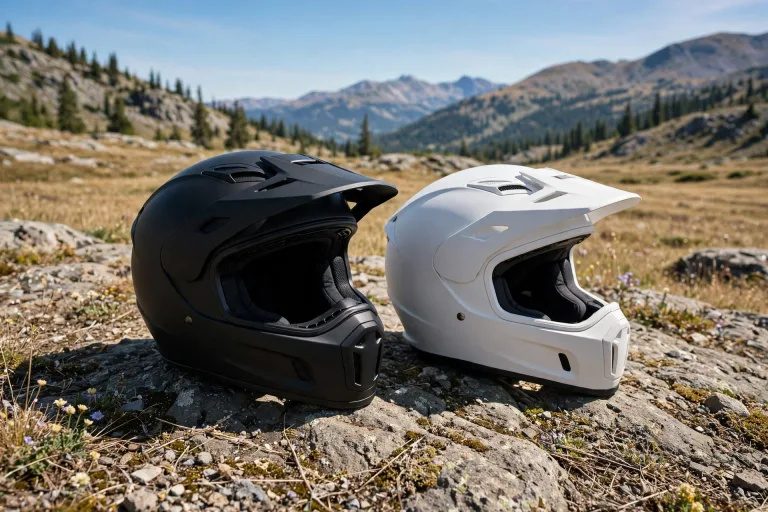
What a helmet can do is narrow your peripheral vision a little, especially at the far edges, where the shell is closest to the eye. This is most noticeable with a full-face helmet, which covers more of the head than an open-face helmet. The effect is usually small, and most riders compensate by turning their head slightly more when they check a blind spot. If the narrowing feels large, the helmet may be the wrong size or shape for you.
Why does it feel like a helmet narrows your view?
It feels like a helmet narrows your view because the shell and the padding create a frame around your eyes, and your brain notices the frame at first. When you first wear a helmet, you are aware of the edges of the opening, and the world can seem smaller. In general terms, this feeling fades as you get used to the helmet, in the same way that you stop noticing the frame of a pair of glasses.
Fit plays a large part in the feeling. A helmet that sits too low on the forehead will cut into the top of your view, while a helmet that is too large can shift and sit crooked, so the opening is no longer centred on your eyes. A visor that is scratched, tinted too dark, or fogged up will also make the view feel smaller, because you are looking through a poor surface. In each case, the fix is in the fit or the visor, not in giving up the helmet.
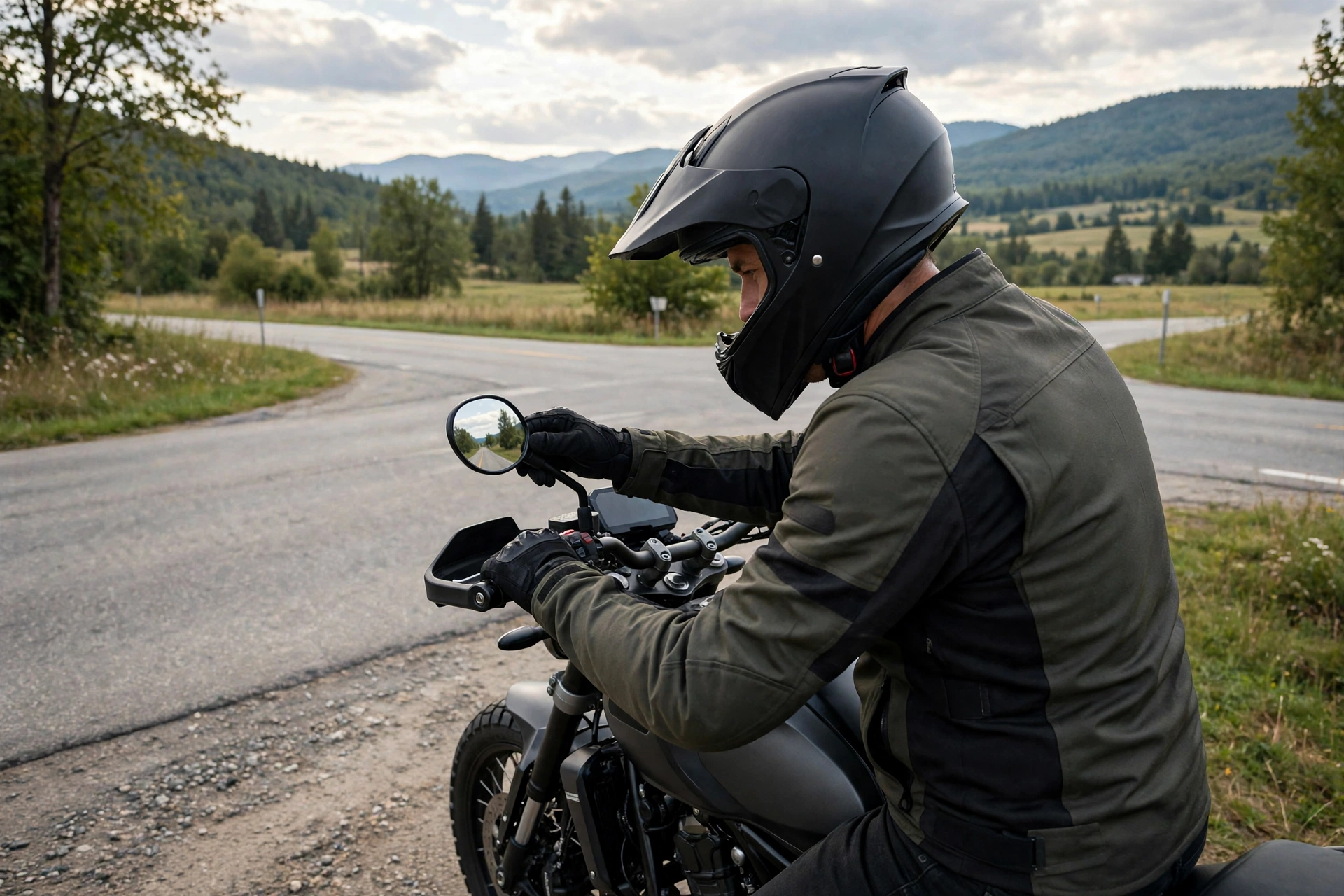
Which helmets give you the widest field of view?
Open-face helmets give the widest field of view, because they leave the face open and there is no chin bar or lower shell in the way. They are a good choice where the rules and the riding allow them, and many riders prefer them for slow town riding. In general terms, though, they give less protection to the face and jaw than a full-face helmet, so the wider view comes with a trade-off.
Among full-face helmets, the widest view comes from models with a large eye port and a clear, well-fitting visor. Some helmets are made with a wider opening for riders who want the most view possible, and some include a system designed to reduce rotational forces in a fall, such as MIPS, which does not change the field of view but is worth knowing about when you compare models. A helmet with a wide opening, a clear visor, and a fit that centres the opening on your eyes will give you the best view a full-face helmet can offer.
How can you check a helmet’s field of view before buying?
To check a helmet’s field of view before buying, put it on, fasten the strap, and look straight ahead at a fixed point. Then, without moving your head, notice how far you can see to the left and right, and how much you can see above and below. In general terms, the view should feel open, not tunnel-like, and you should be able to see your mirrors and the road ahead without straining.
Next, turn your head as you would to check a blind spot, and make sure the helmet turns with your head and does not catch on your shoulders or collar. Try the helmet with the visor down and up, and check that the visor is clear, free of scratches, and easy to open and close. If the shop allows it, sit on your bike or in your usual riding position while you check, because the view changes when you lean forward, and a helmet that feels fine standing up may feel different on the bike.
What should you do if your helmet blocks your view?
If your helmet blocks your view, first check the fit. Loosen the strap, take the helmet off, and put it on again, making sure it sits level and centred. A helmet that has slipped down over the forehead will block the top of your view, and a helmet that is twisted will block one side. In general terms, a small adjustment to the fit or the strap can make a large difference to what you can see.
If the fit is right and the view is still blocked, the helmet may be the wrong shape or size for your head, or the visor may be the problem. Clean the visor, check it for scratches, and try a clear visor if yours is tinted. If none of that helps, try a different model with a wider eye port, and do not keep riding in a helmet you cannot see out of properly. A helmet that blocks your view is a safety problem, and replacing it is the right call, even if the helmet itself is still in good condition.
Can a helmet block your peripheral vision?
Yes, a little, especially a full-face helmet, which can narrow what you see at the far edges. In general terms the effect is small, and most riders make up for it by turning their head slightly more when they check a blind spot.
Is it safe to ride with a helmet that limits your view?
No, not if the limit is large. A helmet should leave your forward view clear and let you see mirrors and junctions easily. If it does not, check the fit and the visor, or try a different model.
Do open-face helmets give better vision than full-face helmets?
Yes, they usually give a wider field of view, because there is no chin bar in the way. The trade-off is less protection for the face and jaw, so the choice depends on the riding you do and the protection you want.

Olivia
Writer at Helmet Today, covering helmet reviews, fit and riding safety.