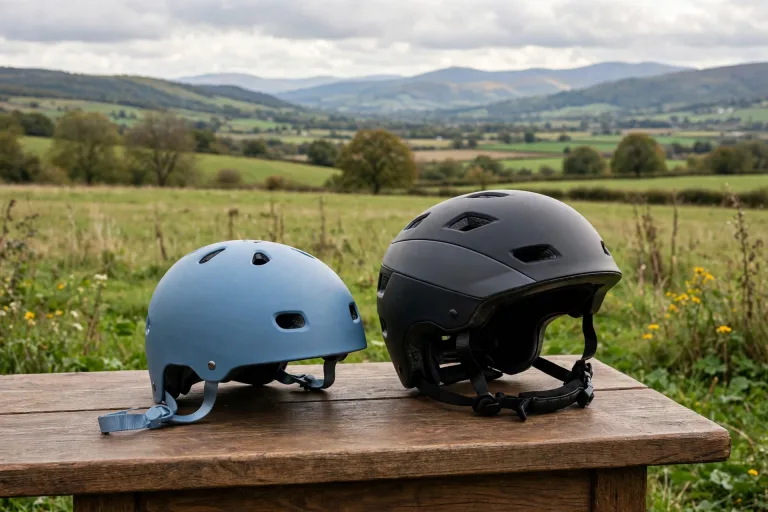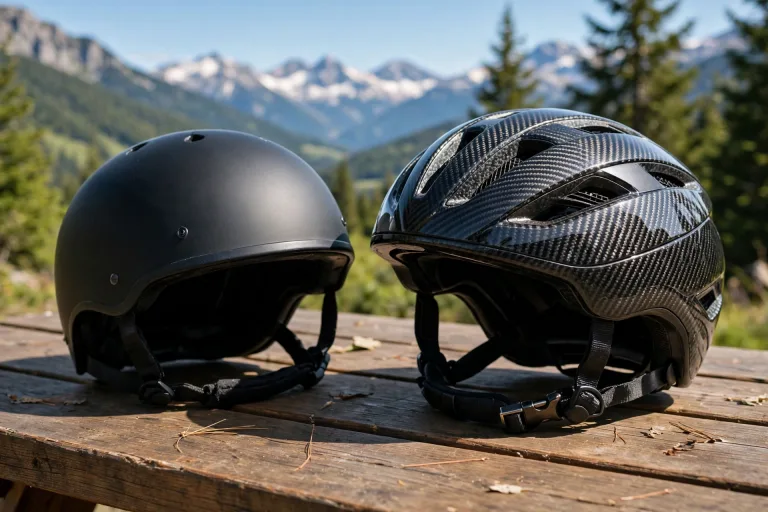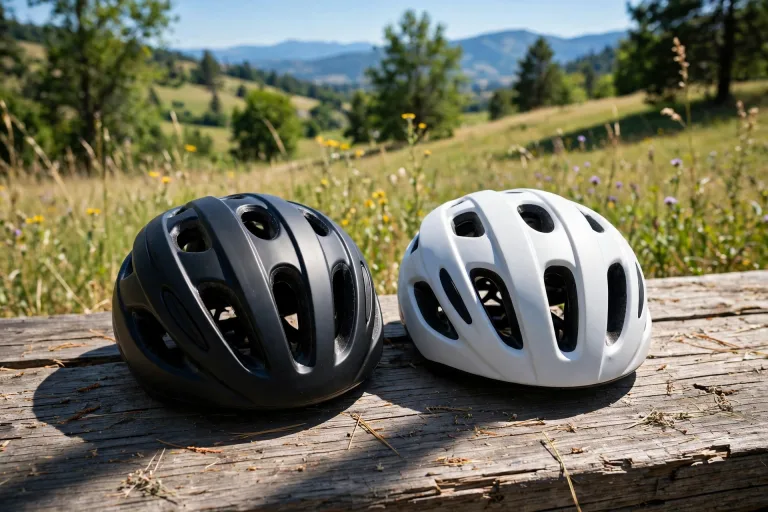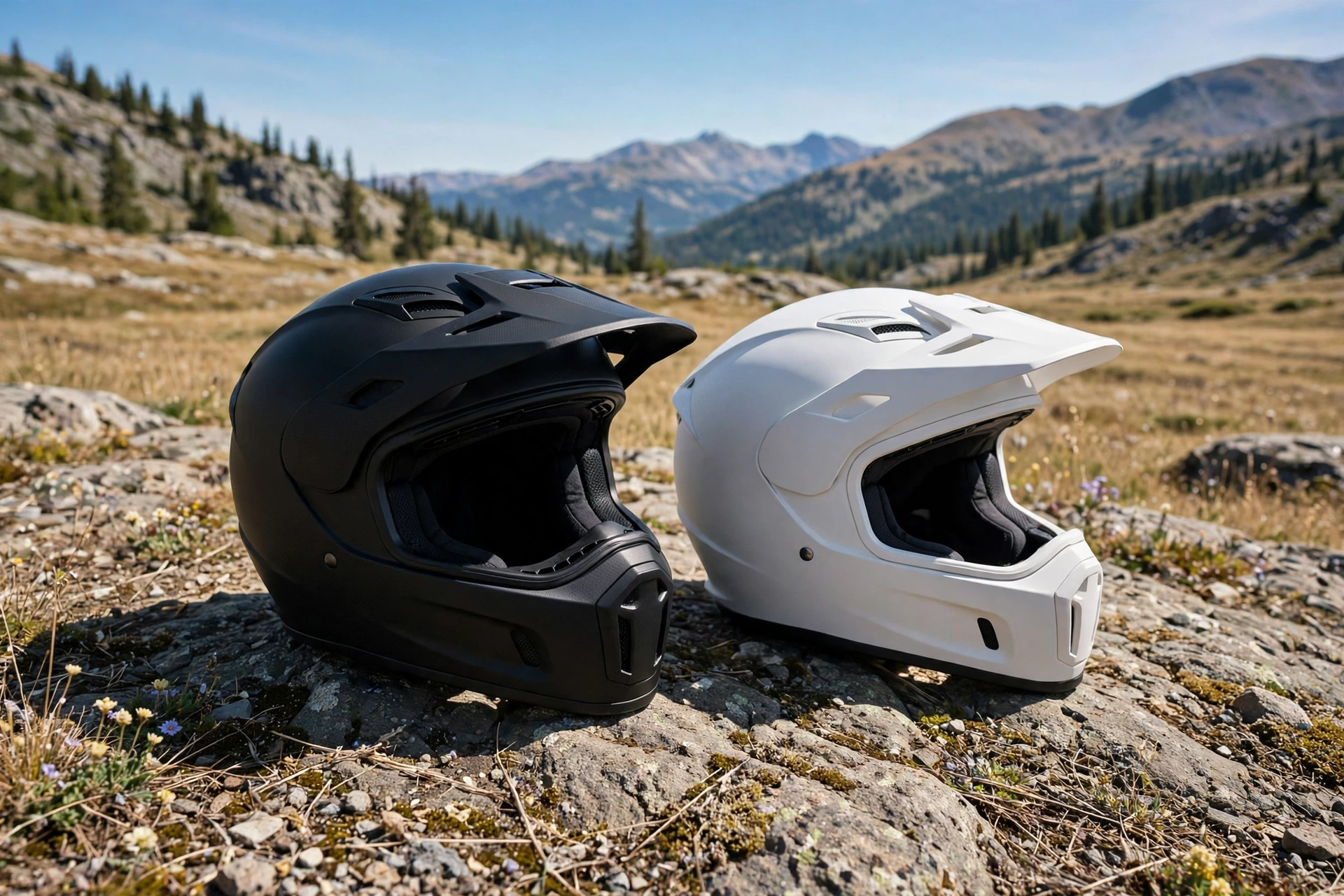
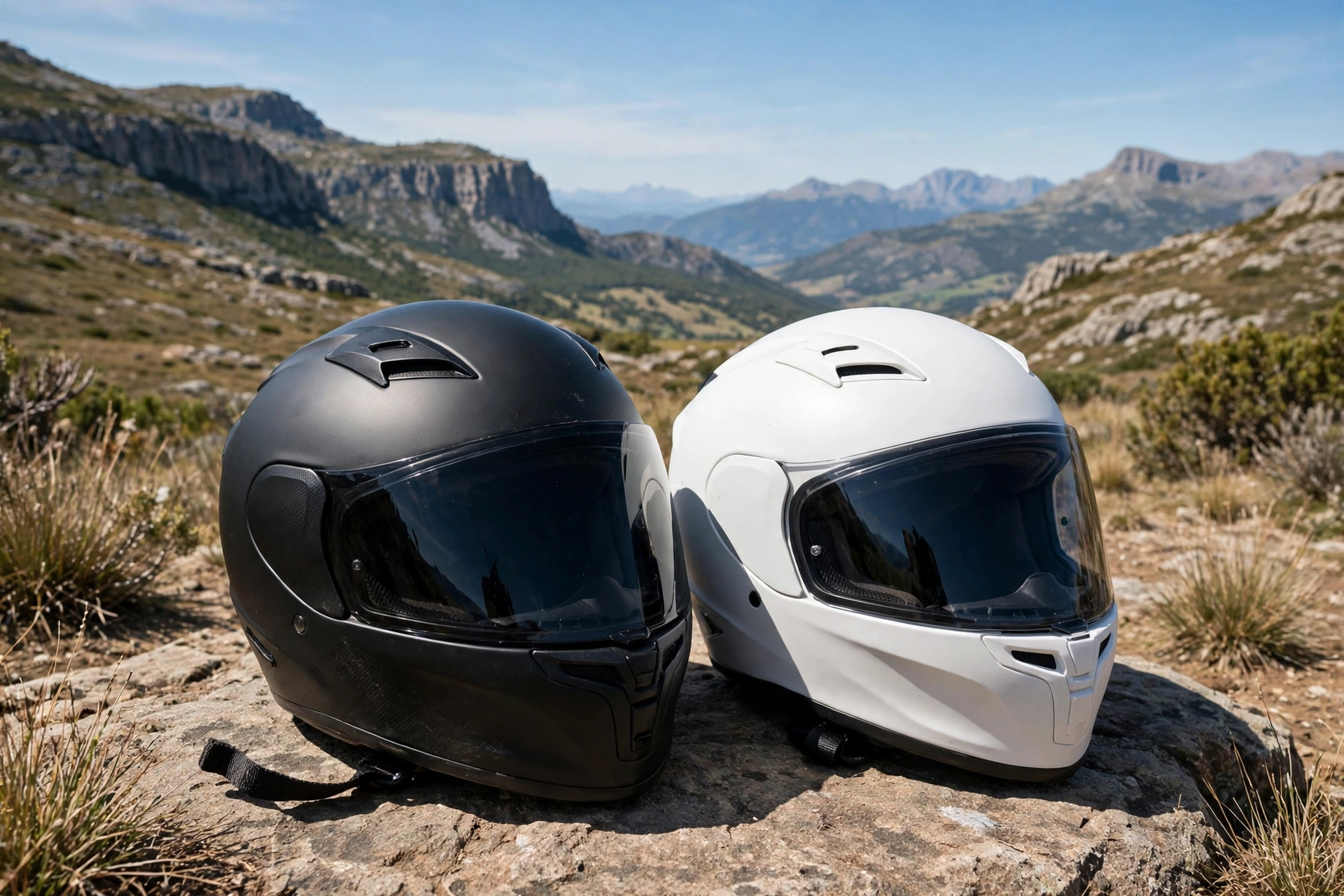
Yes, in general terms dark helmets do get hotter in the sun than light-coloured helmets, because a dark surface absorbs more sunlight and turns more of it into heat. A black helmet left in bright sun will feel warmer to the touch than a white helmet in the same sun, and that extra heat can make the inside of the helmet feel warmer too. The difference is real, but it is usually modest while you are riding, because the airflow through the helmet carries much of the heat away.
The colour of a helmet is only one of the things that affects how hot it feels. Ventilation, the fit, the lining, and the weather all play a part, and a well-ventilated dark helmet can feel cooler than a poorly ventilated light one. Still, if you ride in a hot, sunny climate and you often leave your helmet sitting in the sun, the colour is worth thinking about when you choose your next helmet.
Why do dark helmets absorb more heat?
Dark helmets absorb more heat because a dark surface reflects less sunlight and absorbs more of it, while a light surface reflects more of the sun’s energy away. In general terms, a black surface absorbs most of the light that hits it, and that absorbed light becomes heat in the shell of the helmet. A white surface reflects much of that light, so less of it turns into heat, and the shell stays cooler.
The heat builds up in the outer shell first, and some of it passes through to the liner and the inside of the helmet. On a hot day, a dark helmet left in direct sun can become too hot to touch, while a light helmet in the same spot will feel warm but not uncomfortable. The effect is strongest when the helmet is sitting still in the sun, and weaker when the helmet is moving through the air, because the airflow cools the shell as you ride.
Does the colour make a difference while you are riding?
While you are riding, the colour of your helmet makes less difference than it does when the helmet is sitting in the sun, because the airflow through the vents carries heat away from the shell and the liner. In general terms, a well-ventilated helmet in a dark colour can feel just as cool as a light-coloured helmet with poor ventilation, as long as air is moving through it. The difference is most noticeable at low speed, in traffic, or when you stop, because the airflow drops and the heat builds up again.
Your head also produces its own heat, and the helmet’s job is to let that heat escape through the vents. A helmet with good airflow will feel cooler whatever its colour, while a helmet with blocked or poorly placed vents will feel hot in any colour. If you ride in a hot climate, look for a helmet with large, well-placed vents and a light-coloured lining, and keep the vents open on warm days. Some helmets include a system designed to reduce rotational forces in a fall, such as MIPS, and that feature does not change how hot the helmet feels, so it should not affect your choice of colour.
How much hotter does a dark helmet get?
How much hotter a dark helmet gets depends on the sun, the temperature, and how long the helmet sits in direct light, and in general terms the difference can be felt easily by hand. A black helmet left on a motorcycle seat in strong sun can become noticeably hotter than a white helmet beside it, and the inside of the dark helmet can feel warm when you first put it on. The difference usually fades once you start riding and air flows through the helmet.
It is hard to give a single number for the difference, because it changes with the conditions, and the feeling of heat also depends on the rider. A rider with a dark helmet in a hot climate will notice the heat more than a rider in a mild climate, and a rider who parks in the shade will notice it less than a rider who parks in full sun. In general terms, the colour matters most for comfort when the helmet is parked, and least for comfort when the helmet is moving.
Should I choose a light-coloured helmet for hot weather?
If you ride in hot, sunny weather, a light-coloured helmet is a sensible choice, because it will absorb less heat when it sits in the sun and it will feel cooler when you first put it on. White, silver, and pale colours reflect the most sunlight, and they are a good choice for riders in warm climates. In general terms, a light helmet is also easier to see on the road, which is a bonus for safety, since a bright helmet stands out to other road users.
That said, colour should not be the only thing you consider. A dark helmet with excellent ventilation and a good fit is a better choice than a light helmet that fits poorly or has weak airflow. If you love the look of a dark helmet, you can manage the heat by parking in the shade, covering the helmet when it is parked, or choosing a dark helmet with strong ventilation. The best helmet for hot weather is one that fits well, ventilates well, and is a colour you are happy to wear every day.
How can I keep a dark helmet cool in the sun?
To keep a dark helmet cool in the sun, park it in the shade whenever you can, and avoid leaving it on the seat or the mirror in direct sunlight. A helmet left in the sun will heat up quickly, so tuck it under the seat, hang it on a hook in the shade, or carry it with you when you stop. In general terms, a few minutes in the shade is enough to keep the helmet comfortable to put on.
You can also use a light-coloured helmet cover when the helmet is parked, which reflects the sun and keeps the shell cooler. Make sure the vents are clean and open before you ride, and let the air flow through the helmet for a few moments before you set off. If the helmet feels hot when you put it on, ride slowly for the first minute or two so the airflow can cool it down, rather than setting off at speed straight away.
Do black helmets get hotter than white helmets?
Yes, in general terms a black helmet absorbs more sunlight and gets hotter than a white helmet in the same sun. The difference is most noticeable when the helmet is parked in direct sun, and less noticeable while you are riding with air flowing through the vents.
Does helmet colour affect safety?
In general terms, a light or bright helmet is easier for other road users to see, which can help with visibility. The colour does not change how the helmet protects the head in a crash, so safety depends on the fit and the standard, not the colour.
Can I paint a dark helmet a lighter colour?
No, you should not paint a helmet, because paint and solvents can weaken the shell. If you want a lighter helmet, buy one in a light colour rather than repainting the one you have.

Olivia
Writer at Helmet Today, covering helmet reviews, fit and riding safety.