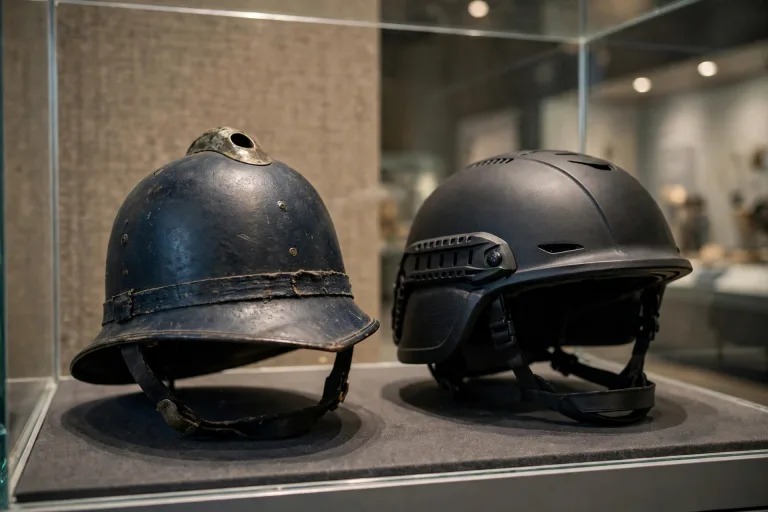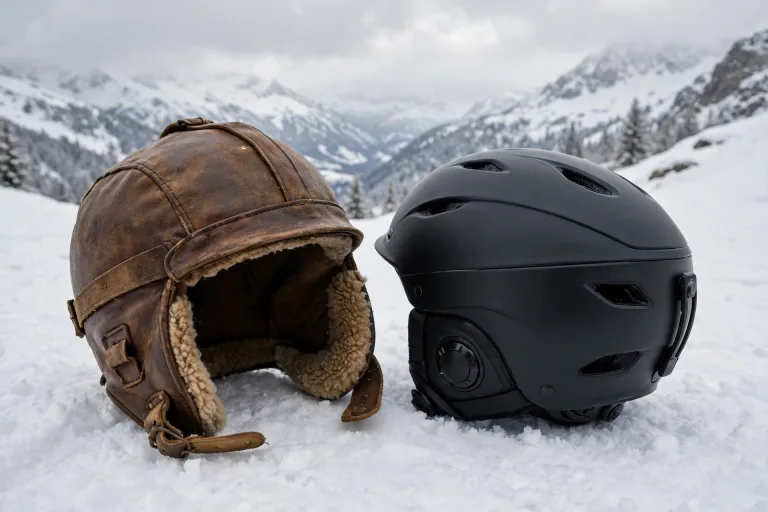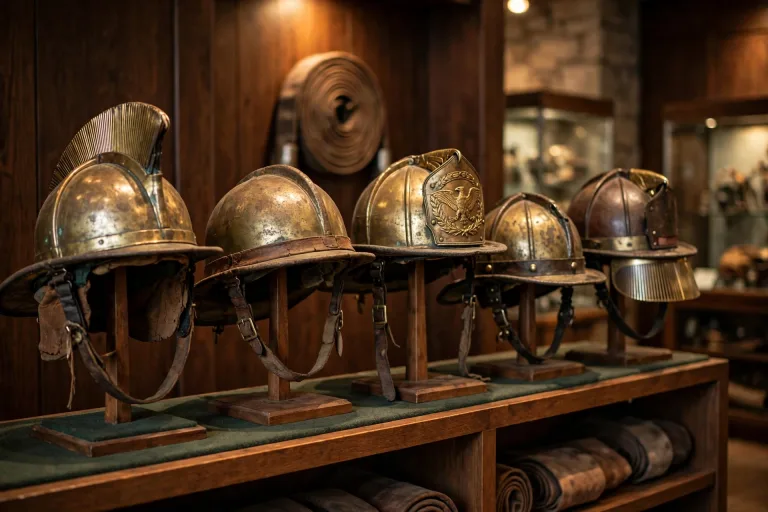
The history of the equestrian helmet is the story of how a hard hunting cap worn for smartness slowly became a tested piece of safety equipment. In general terms, riders once wore hats that offered little protection, and the modern helmet only took shape when safety standards, hard shells, and better linings arrived. The change took a long time, and it followed the same path as the riding itself, from the hunting field to the show ring.
Riding has always carried a risk of falling, and for most of its history riders accepted that risk with very little protection for the head. The hat a rider wore was part of the dress of the sport, chosen for how it looked rather than for how it protected. Today the helmet is a normal part of riding kit, and its history shows how slowly a tradition can change, even when safety is at stake.
Where did the equestrian helmet come from?
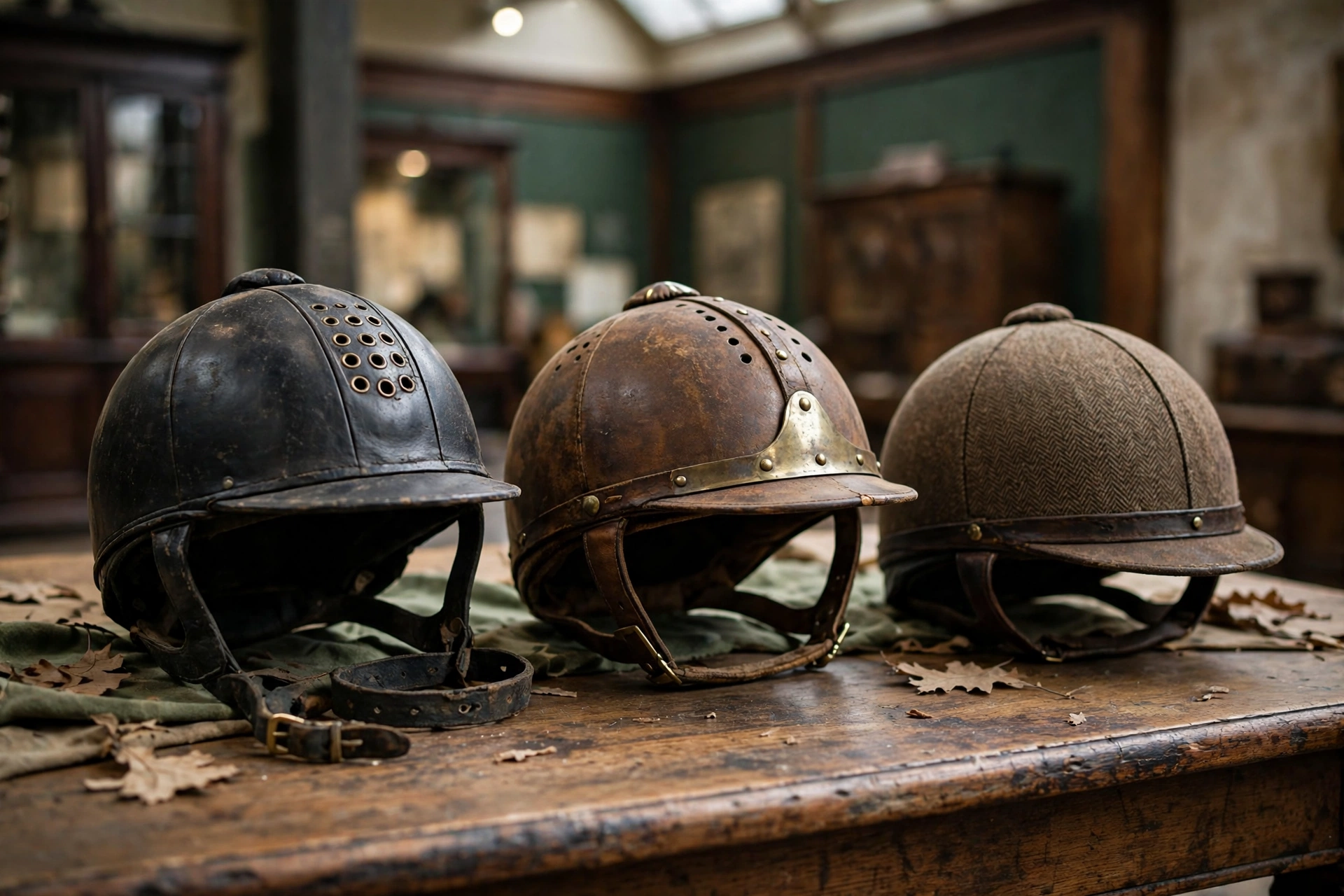
The equestrian helmet came from the hard hats worn by riders in the hunting field, where a neat, dark cap was part of the correct dress for the day. These early caps had a hard shell made from stiffened felt or a similar material, with a small brim and a simple lining inside. They looked smart and they gave the rider’s head some cover, but in general terms they were made for appearance, not for protection in a fall.
As riding became more organised, with shows and competitions as well as hunting, the cap became the accepted headwear for riders in many disciplines. Different countries and different branches of riding had their own styles, from the tall top hat of formal dressage to the low velvet cap of the hunting field. The shape varied, but the idea was the same: the rider’s hat was part of the uniform of the sport, and changing it was not a small matter.
How did the equestrian helmet change over time?
The equestrian helmet changed as materials improved and as riders began to ask for real protection. Stiffened felt gave way to harder plastics and composite shells, which could be made lighter and stronger, and the lining inside became a shock-absorbing layer instead of a simple pad. In general terms, the helmet moved from being a smart hat towards being a piece of safety equipment, and its shape became smoother and lower in profile.
The change was slow, because riders were attached to the traditional look. For many years the new helmets were made to look like the old caps, with a velvet cover and a small brim, so that the change in protection did not mean a change in appearance. Over time, though, the modern shape won out: a smooth, rounded shell, good ventilation, and a harness that kept the helmet in place. The velvet cover remains on some helmets today, as a link to the past.

Why did riding helmets become safer?
Riding helmets became safer because riders, doctors, and riding organisations began to take head injuries more seriously, and because testing made it possible to say which helmets actually protected the head. Falls from horses can cause serious head injuries, and as more was understood about those injuries, the case for a properly tested helmet became hard to ignore. In general terms, the push for safety came from the riding world itself, from people who had seen the harm a fall could do.
Safety standards were the turning point. Once helmets were tested for the kind of impact a fall can cause, makers had a clear target to meet, and riders had a clear way to tell a safe helmet from a smart hat. Competitions began to expect helmets, and then to require them, and the old untested caps faded from the arena. The helmet’s job had changed, and the rules changed with it.
What does a modern equestrian helmet look like?
A modern equestrian helmet is a smooth, low-profile shell with a small brim, a shock-absorbing liner, and a harness with a chin strap that keeps it in place. It is usually black or dark navy, though brighter colours and subtle decoration are common in training. Ventilation is built in, so air flows through the helmet and keeps the rider cooler, and the lining can often be removed and washed.
Some modern helmets also include a system designed to reduce rotational forces in a fall, such as MIPS, which is one of the newer ideas in helmet design. The fit is just as important as the features: a modern helmet should sit level, feel snug all round, and stay in place when the rider shakes their head. In general terms, the modern helmet looks simple, but a great deal of thought has gone into its shape, its materials, and its fit.
Why does the history of the equestrian helmet still matter?
The history of the equestrian helmet still matters because it explains why riders wear what they wear, and why the helmet took so long to become standard. The old caps were part of the identity of riding, and the move to a tested helmet was a change in the culture of the sport as much as a change in its kit. Understanding that history helps riders see the helmet not as a new rule, but as the end of a long process.
It also matters as a reminder that safety equipment keeps improving. The helmet of today is safer than the cap of the past, and the helmet of tomorrow may be safer still, as materials and testing improve. Museums and collections keep examples of old riding hats for that reason, and they show how far the sport has come. The helmet’s history is, in the end, a story about riders deciding that looking the part was not enough, and that protection had to come first.
When was the first equestrian helmet worn?
In general terms, hard riding caps were worn in the hunting field long before modern helmets existed, and they developed from the smart hats that were part of riding dress. The tested safety helmet came much later, as materials and standards improved.
What were early riding helmets made from?
Early riding caps were often made from stiffened felt, with a hard shell and a simple lining. Later helmets used harder plastics and composite materials, which could be made lighter and stronger.
Do modern equestrian helmets look like the old ones?
Some do, because makers kept the low profile, the small brim, and sometimes a velvet cover from the old caps. Underneath that familiar look, though, the shell, the liner, and the harness are entirely modern.

Olivia
Writer at Helmet Today, covering helmet reviews, fit and riding safety.