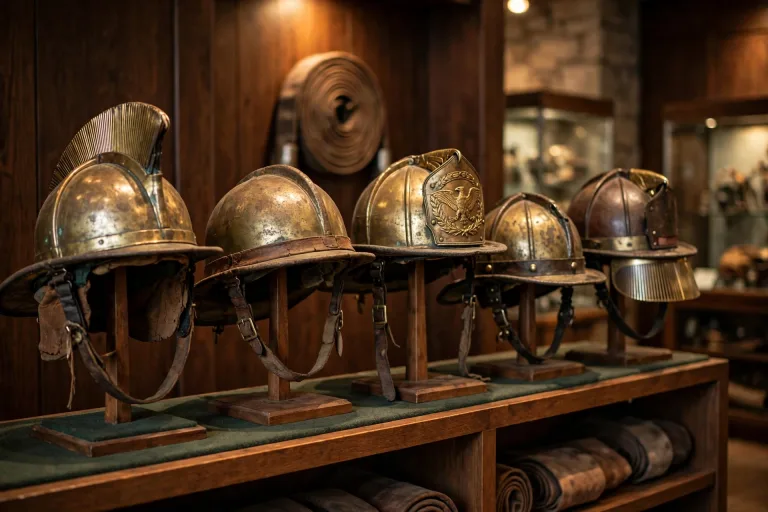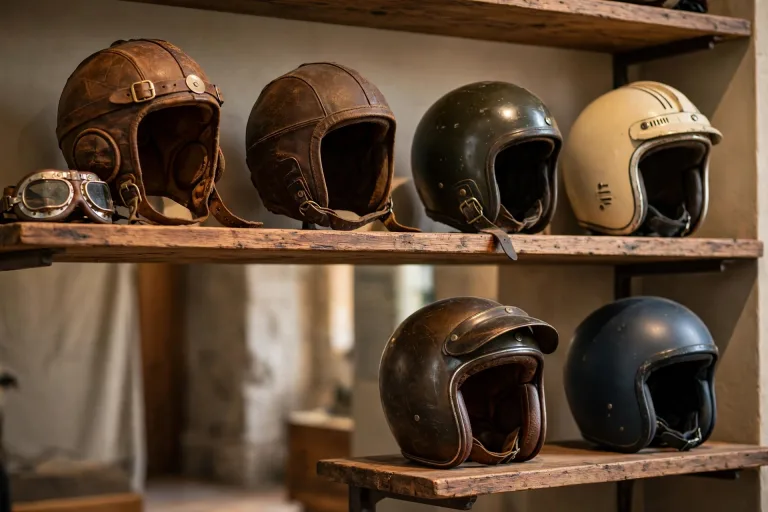
The history of the ski helmet runs from simple leather caps worn by early skiers to the hard-shell helmets used on the slopes today, and in general terms the change took most of the twentieth century. Early skiers wore little more than a warm woollen hat, and it was only as skiing became faster, busier, and more competitive that helmets began to appear, first among racers and then among ordinary skiers on holiday.
Today a ski helmet is a common sight on any ski slope, worn by beginners and experts alike. That was not always the case. For much of skiing’s history, a helmet was seen as something only racers needed, and many skiers went without one for decades. The story of how the ski helmet went from a racer’s accessory to everyday equipment is a story of changing attitudes as much as changing technology.
What did the first ski helmets look like?
The first ski helmets were little more than padded leather caps. Early skiers who wanted some head protection wore a thick leather cap, sometimes with extra padding sewn in, that covered the top and sides of the head and fastened under the chin. These caps were soft, flexible, and warm, but they offered only limited protection against a hard knock on ice or a collision with a tree.
Some early designs borrowed from other sports. Leather helmets of the kind worn by American football players and by early aviators were sometimes adapted for skiing, and a few skiers wore cork or padded cloth caps. In general terms, these early helmets were better than a woollen hat, but they were a long way from the hard protective shell that skiers wear today, and most skiers of the time did not wear one at all.
When did hard-shell ski helmets appear?
Hard-shell ski helmets began to appear as new materials became available and as ski racing grew more serious. Racers were the first to adopt them, because they skied at higher speeds and faced harder falls than recreational skiers. Early hard shells were made from moulded plastics and fibreglass, materials that could spread the force of an impact over a wider area than a soft leather cap ever could.
These early hard-shell helmets were heavy and often uncomfortable by modern standards, with simple padding and little ventilation. They were also expensive, which kept them out of reach for many ordinary skiers. Over time, though, the materials improved, the helmets became lighter and better fitting, and the price came down. In general terms, the hard shell was the turning point in ski helmet history, because it changed the helmet from a padded hat into a piece of protective equipment.
How did ski helmet design change over time?
Ski helmet design changed in stages, with each new material and each new idea making helmets lighter, more comfortable, and easier to wear. The soft leather cap gave way to the hard outer shell with a foam lining inside, and the foam lining itself improved, becoming better at absorbing the force of an impact. Later designs added adjustable ventilation, so skiers could open vents on a warm day and close them when it was cold.
Fit systems improved too. Early helmets came in fixed sizes with little adjustment, while later ones added dials, adjustable padding, and ear pads that could be removed or swapped. Goggle compatibility became part of the design, with helmets shaped to sit neatly with goggles and clips to hold the goggle strap in place. In general terms, each change made the helmet less of a burden to wear, which encouraged more skiers to put one on.
When did ski helmets become common on the slopes?
Ski helmets became common on the slopes gradually, rather than all at once. For a long time they were mostly worn by racers and by children, whose parents insisted on them, while many adult recreational skiers went without. Attitudes began to shift as resorts, ski schools, and rental shops started to recommend helmets, and as helmets themselves became lighter and more comfortable.
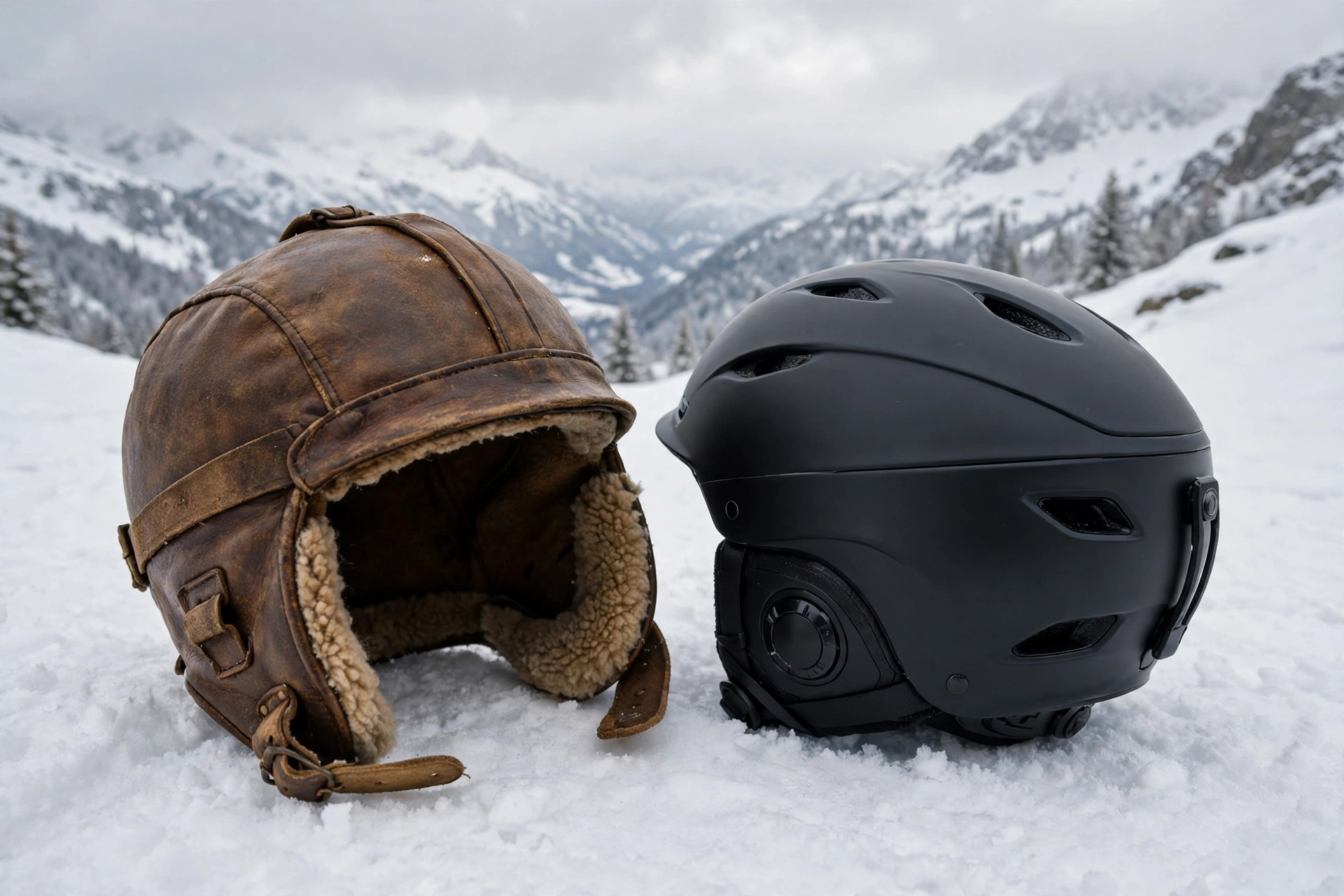
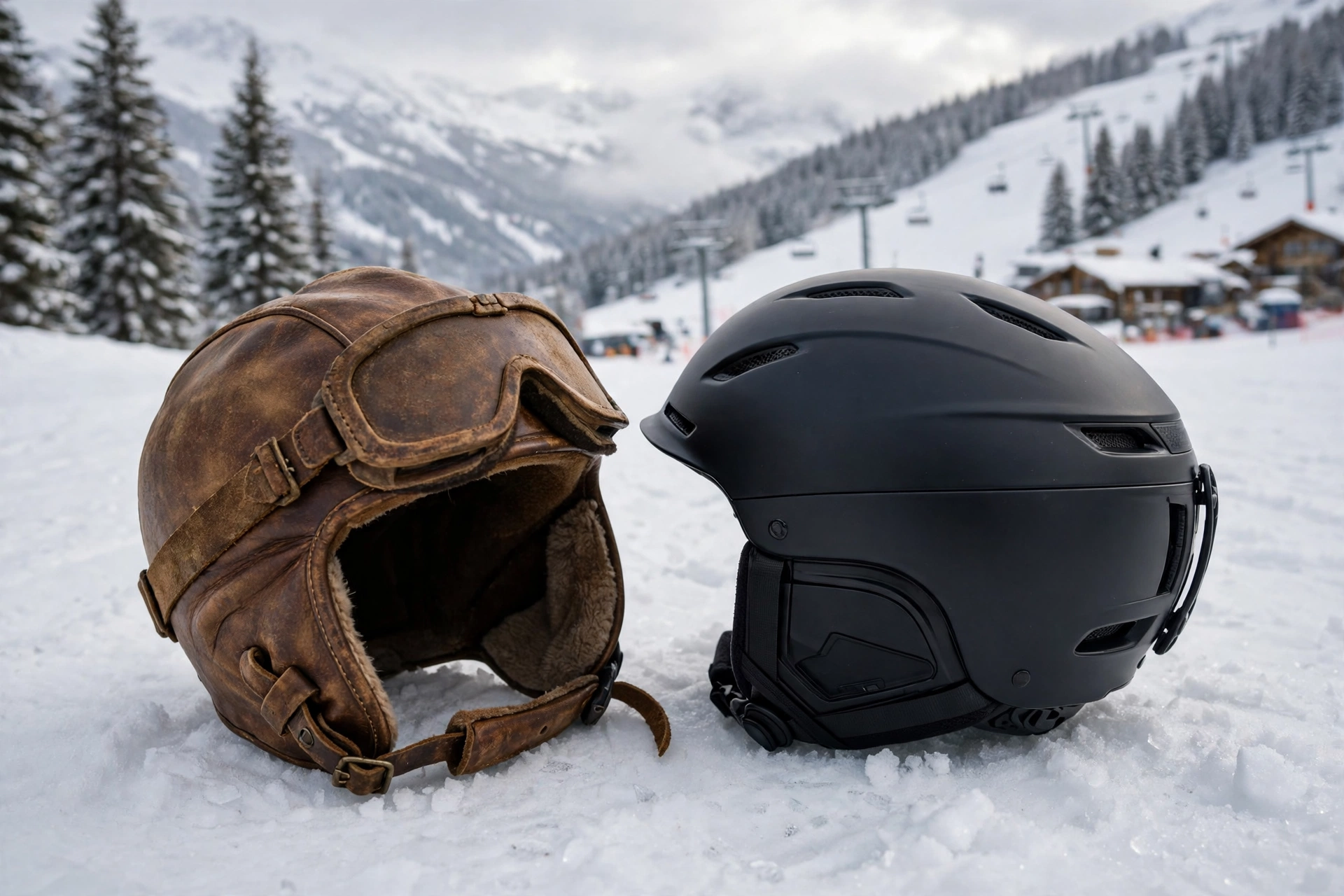
High-profile accidents involving well-known skiers also made many people think again about head protection, and helmet use rose steadily in the years that followed. Ski schools began to require helmets for children in lessons, and rental shops started to offer helmets alongside skis and boots. In general terms, the change was driven by a mix of better design, wider availability, and a growing sense that a helmet was simply part of the kit, like gloves or goggles. Museums and old photographs still show those early leather caps, and comparing them with a helmet from a modern ski shop shows just how far the design has come.
What does a modern ski helmet look like?
A modern ski helmet has a hard outer shell, usually made from a tough plastic, with a shock-absorbing foam lining inside. It covers the top, back, and sides of the head, sits low on the forehead, and fastens with a chin strap. Vents in the shell let air through to keep the wearer cool, and many helmets have an adjustable vent system that can be opened or closed with a gloved hand.
Modern helmets also include features that early skiers could not have imagined. Some have a slip-plane liner such as MIPS, designed to reduce rotational forces in certain impacts, and many are built to work with audio ear pads or a goggle clip. They come in a wide range of colours and styles, from plain and understated to bright and bold. In general terms, the modern ski helmet is the result of a century of slow improvement, from a padded leather cap to a light, comfortable piece of equipment that most skiers now wear without a second thought.
When were ski helmets invented?
There is no single date, but the first ski helmets were padded leather caps worn by early skiers and racers, and hard-shell helmets followed later as new materials and faster racing made better protection necessary.
Did early skiers wear helmets?
Mostly not. Early skiers usually wore a warm woollen hat, and helmets were rare outside racing. It took many decades before helmets became a common sight on the slopes.
Why did ski helmets become popular?
They became popular as helmets grew lighter and more comfortable, as ski schools and rental shops began to recommend them, and as more skiers came to see a helmet as a normal part of the kit.

Olivia
Writer at Helmet Today, covering helmet reviews, fit and riding safety.