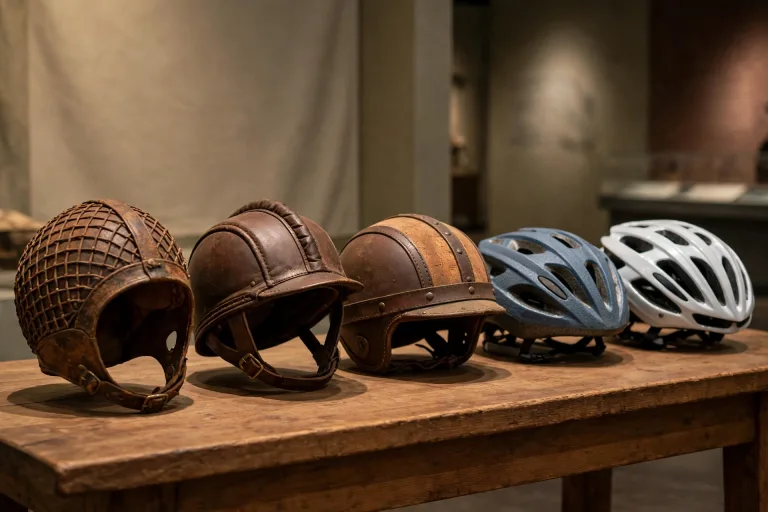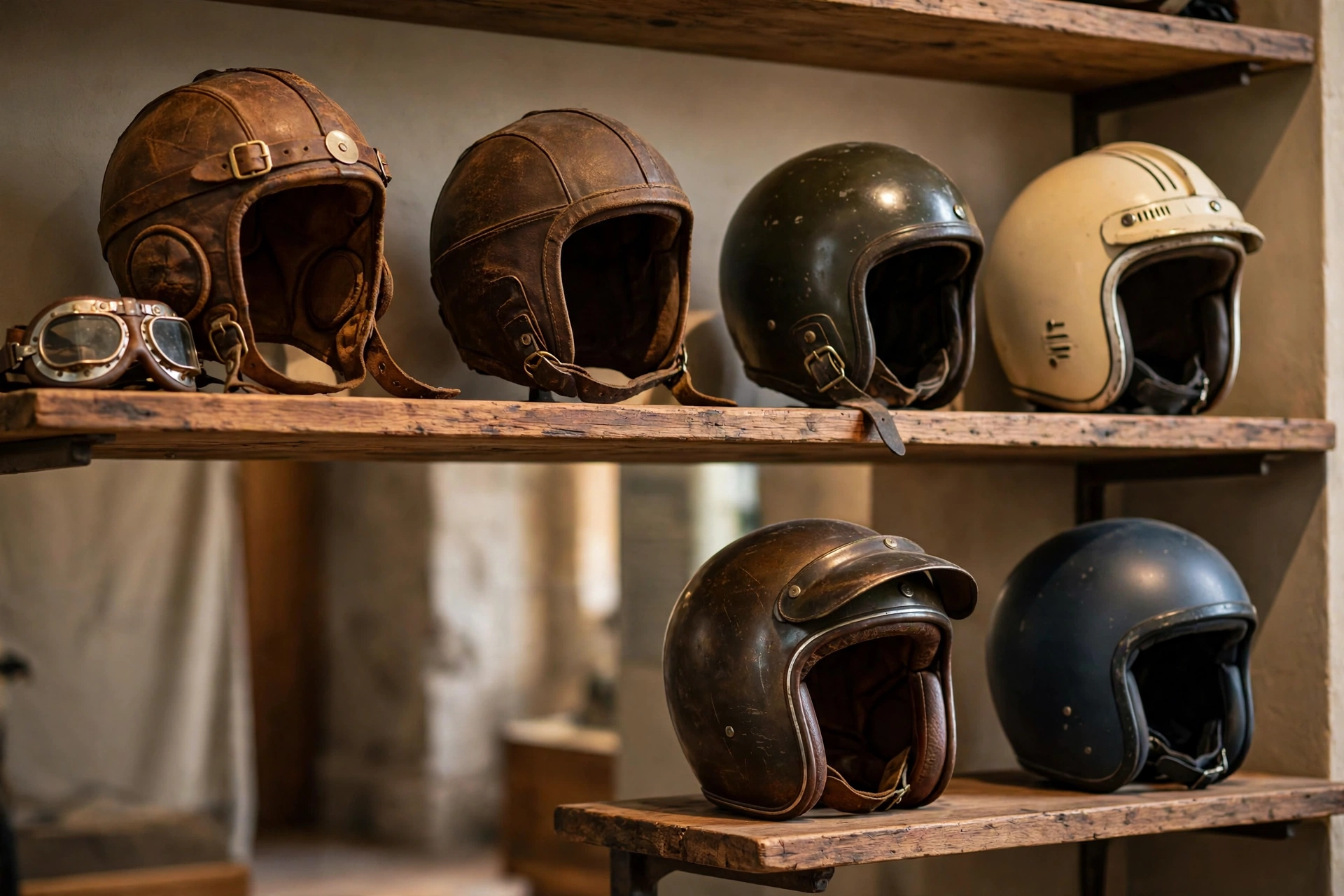
The history of the motorcycle helmet begins in the early 1900s, and in general terms the modern helmet grew out of simple leather caps, through hard shells in the mid-1900s, into the certified full-face helmets riders wear today. The motorcycle itself was still new when the first riders began to worry about head injuries, and the helmet has been catching up with the speed of the machine ever since.
Early motorcyclists rode without any head protection at all, and it took decades of crashes, racing accidents, and medical research before the helmet became normal, then expected, then required by law in many countries. This guide traces that story from the first leather caps to the smart helmets of today.
When were motorcycle helmets first worn?
Motorcycle helmets first appeared in the early 1900s, when riders began wearing leather caps similar to those used by early aviators. These caps were soft, offered little real protection, and were worn mainly to keep out the wind and the cold rather than to survive a crash. Most riders still wore nothing on their heads at all.
In the 1930s, a British neurosurgeon named Hugh Cairns began studying head injuries among soldiers who rode motorcycles, and his work showed how often a head injury was the cause of death. Cairns argued that a proper helmet could save lives, and his research is often credited with starting the serious development of the motorcycle helmet. By the 1940s, helmets with a hard outer shell and a padded lining began to appear.
How did the motorcycle helmet change in the mid-1900s?
The 1950s and 1960s brought the first helmets that look familiar to modern riders. Hard shells made from fibreglass appeared, with a padded lining inside to absorb energy, and a chin strap to keep the helmet in place. These were a big step up from leather caps, and they began to be used in racing as well as on the road. Riders soon noticed the difference: a hard shell spread the force of a knock across a wider area, while the lining slowed the head down more gently than a bare skull ever could.
In 1953, a professor at the University of Southern California developed a helmet with a hard outer shell and a crushable inner liner, a design that became the basis for most helmets that followed. Racing organisations began to require helmets, and manufacturers began to test their products more seriously. The open-face helmet, which covers the top and sides of the head but leaves the face exposed, became the common style of the era.
When did the full-face helmet appear?
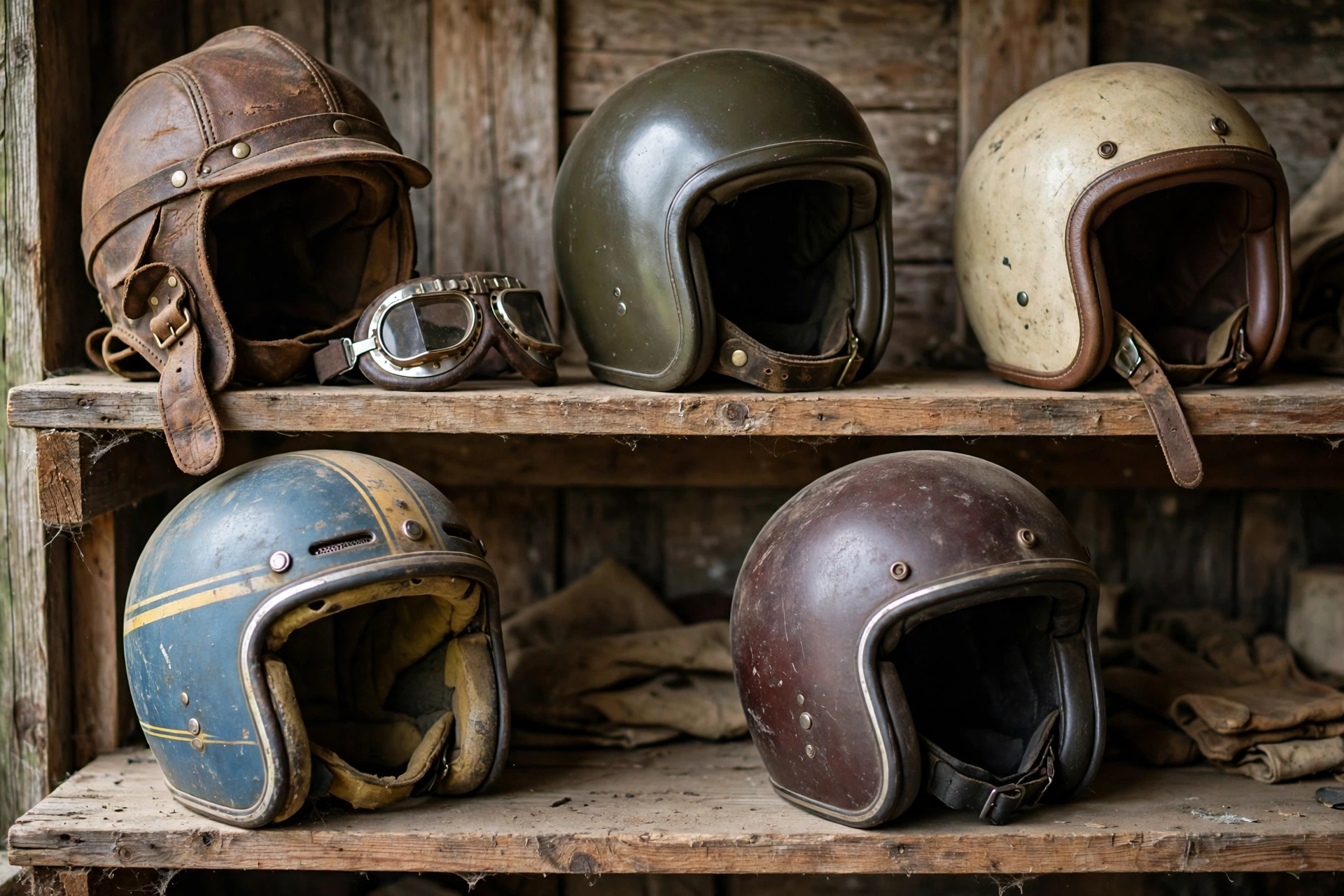
The full-face helmet appeared in the late 1960s, and it changed motorcycle safety in a major way. By covering the chin and jaw as well as the top of the head, it protected the part of the face most often injured in a forward fall. Racing riders adopted it quickly, and road riders followed over the following decades.
The 1970s brought the first safety standards for motorcycle helmets, which gave buyers a way to tell a tested helmet from an untested one. Standards set minimum requirements for impact protection, the strength of the strap, and the size of the field of vision. From this point on, a helmet was not just a piece of clothing but a tested piece of safety equipment.
What changed in motorcycle helmets in the late 1900s?
In the 1980s and 1990s, helmet makers began to use new materials such as polycarbonate and composite fibres, which made shells lighter and stronger. Ventilation improved, visors became clearer and easier to change, and linings became more comfortable and removable for washing. Helmets also became more aerodynamic, with shapes designed to cut wind noise at speed.
During the same period, more countries introduced laws requiring helmets, and the full-face helmet became the most common style for road riding. Flip-up helmets, which combine a full-face design with a chin bar that lifts, also appeared for riders who wanted the protection of a full face with the convenience of an open face at a stop.
How have motorcycle helmets changed in recent years?
In recent years, helmets have gained features that early riders could not have imagined. Built-in Bluetooth systems let riders hear navigation and take calls, and some helmets now include cameras, heads-up displays, or sensors that can detect a crash and call for help. Materials have continued to improve, and liners designed to reduce rotational forces in a fall, such as MIPS, are now common in many models.
At the same time, the basics have not changed. A good helmet still needs a hard shell, an energy-absorbing liner, a secure strap, and a fit that is snug and level on the head. Technology adds comfort and convenience, but the job of the helmet is the same as it was a century ago: to protect the rider’s head in a fall.
Why does the history of the helmet matter today?
The history matters because it explains why helmets are built the way they are. Every feature, from the hard shell to the chin strap to the certification mark, came from a real crash or a real study that showed what was needed. Knowing that history helps riders take the helmet seriously, rather than treating it as an accessory.
It also matters when you choose a helmet. Look for a recognised safety certification, check the fit, and replace a helmet that has taken a hard knock, even if it looks fine on the outside, because the liner inside may have been compressed. In general terms, the helmet you buy today is the result of more than a century of learning, and wearing it properly is the simplest way to benefit from all of it.
When was the first motorcycle helmet made?
Early leather riding caps appeared in the 1900s, and the first helmets with a hard shell and padded lining began to appear in the 1940s, following research into motorcycle head injuries.
When did the full-face helmet appear?
The full-face helmet appeared in the late 1960s, and it quickly became popular in racing before spreading to road riders, because it also protects the chin and jaw.
What is the most important thing to look for in a modern helmet?
A recognised safety certification and a good fit matter most: the helmet should sit level on your head, feel snug all round, and fasten securely under the chin.

Olivia
Writer at Helmet Today, covering helmet reviews, fit and riding safety.