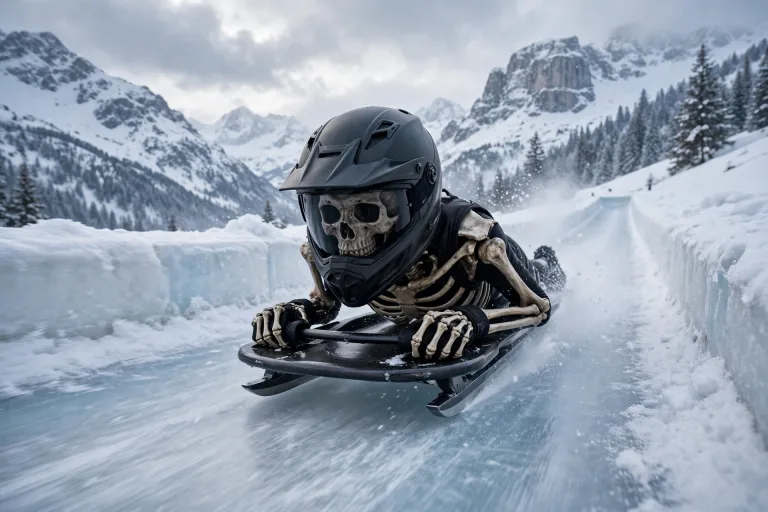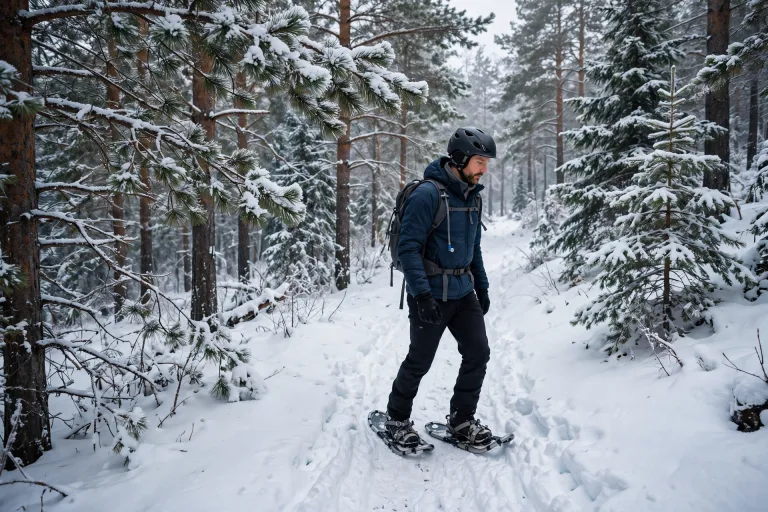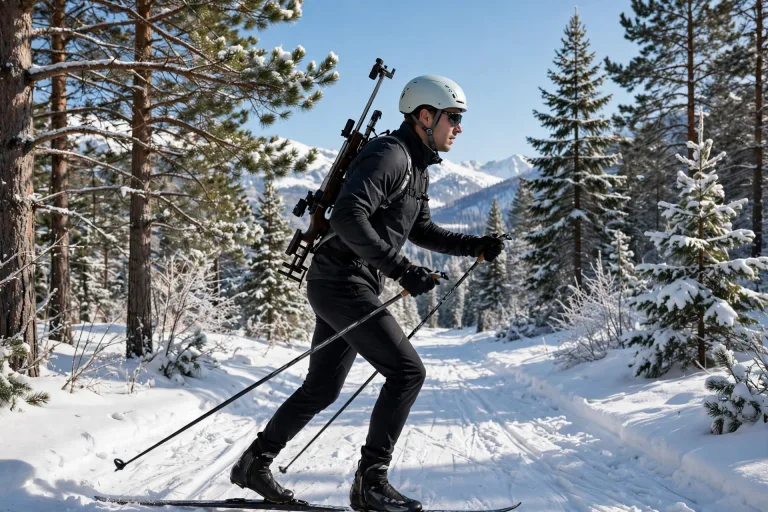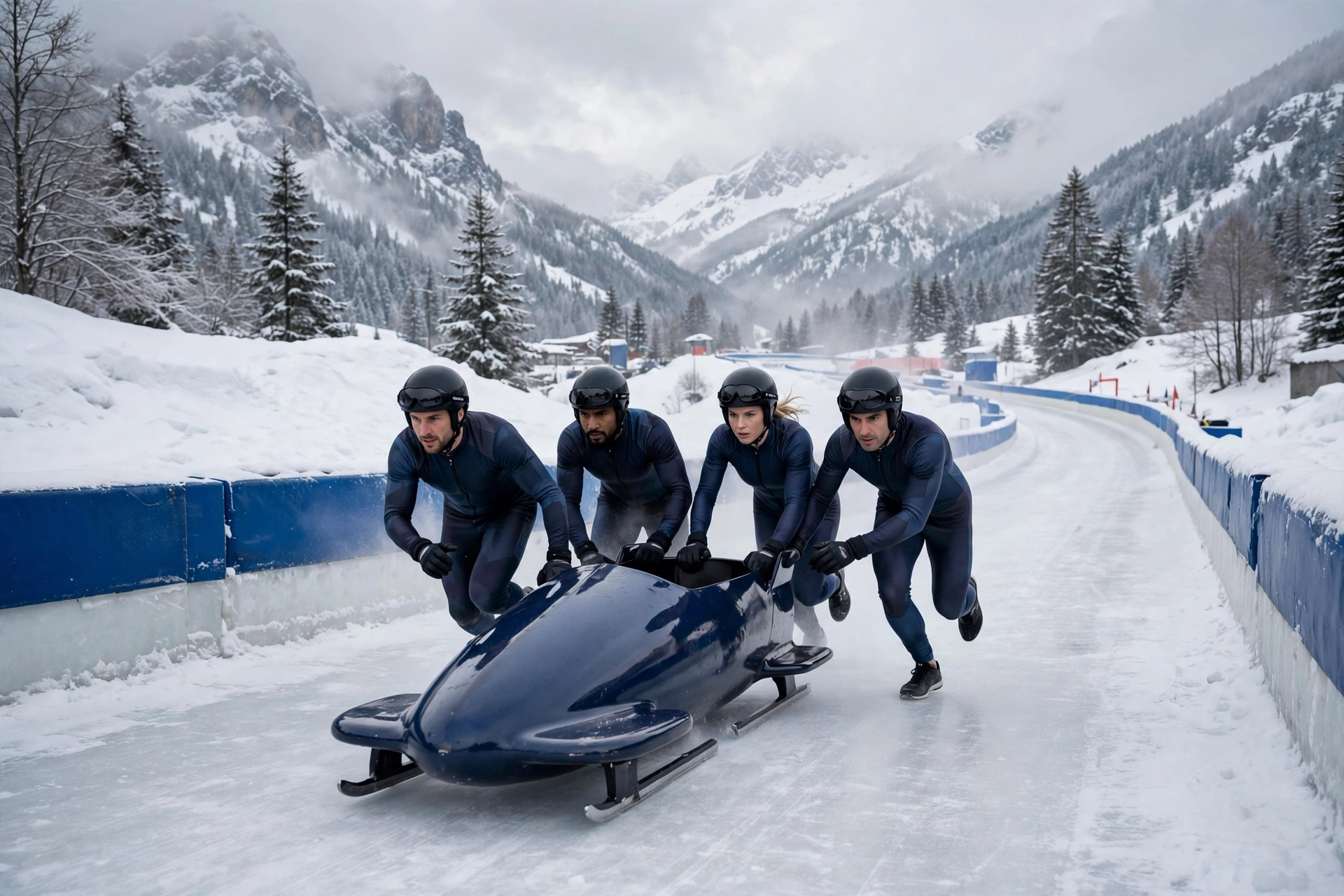
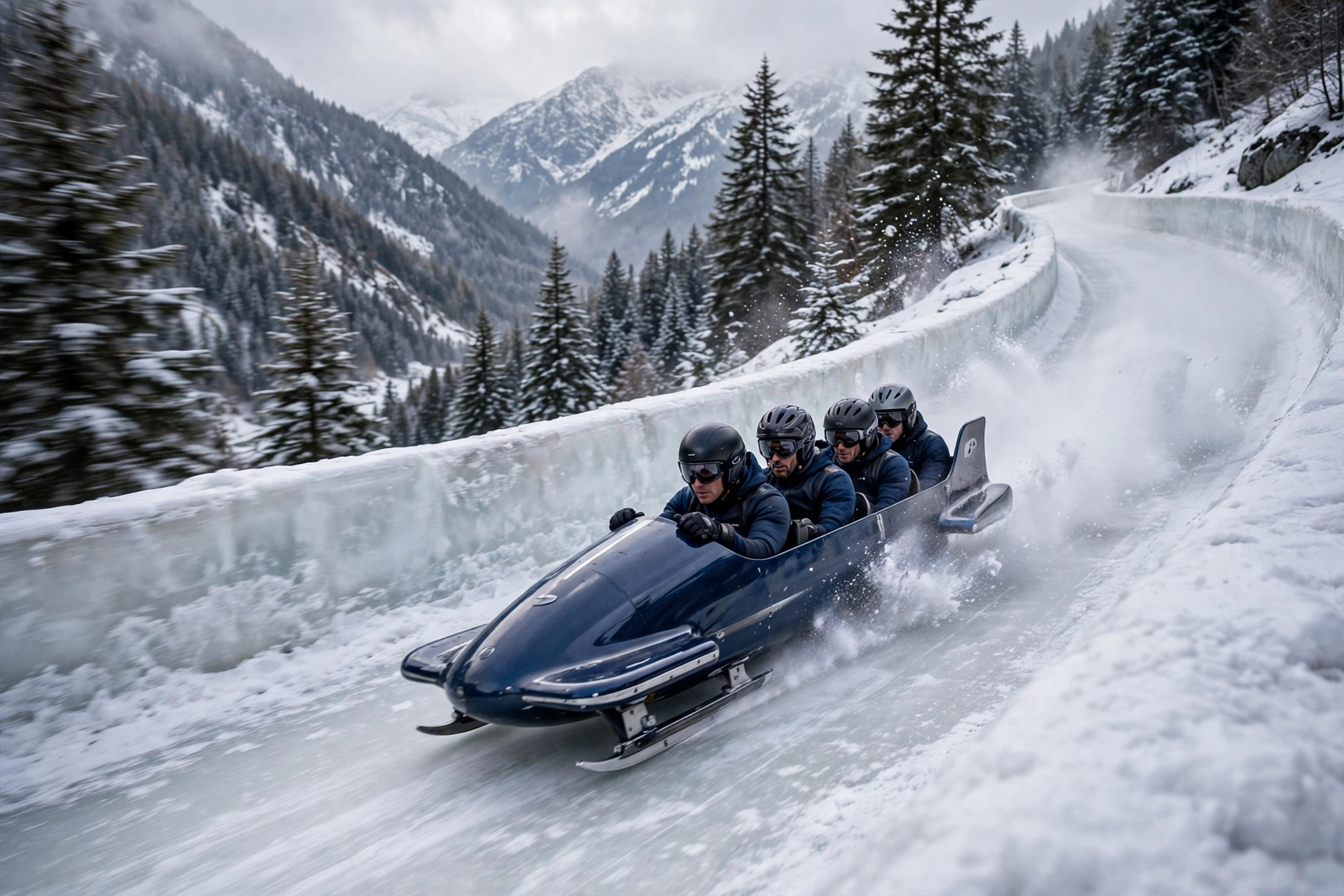
A helmet for bobsleigh riders is a close-fitting, hard-shell helmet worn by every member of the crew to protect the head from bumps, vibration, and the cold air rushing past on the ice track. In general terms, it looks a lot like a ski or motorsport helmet, but it is chosen for the sliding sport: a smooth outer shell, a snug fit that stays put at speed, and a shape that works with the tight seating position inside the sled. Every rider in the sled wears one, from the driver at the front to the brakeman at the back, because nobody in the crew is safe from a knock when the sled is moving.
Bobsleigh is one of the fastest sliding sports in the world, and the ride is far rougher than it looks from the outside. The sled runs down a narrow ice track with steep banked corners, and the riders are shaken and pressed from side to side as it picks up speed. Their heads can knock against the sled frame, against the ice wall of the track, or against each other, and the helmet is there to soften those knocks.
What kind of helmet do bobsleigh riders wear?
In general terms, bobsleigh riders wear a full-coverage helmet with a hard outer shell and a shock-absorbing liner inside, much like the helmets used in skiing and motorsport. The shell is smooth and rounded, with no sharp edges or loose parts that could catch the wind or snag on the sled. Some riders choose a helmet with a built-in visor to keep the wind and ice spray out of their eyes, while others wear a helmet without a visor and use goggles instead. Both styles are common, and the choice often comes down to what the rider finds most comfortable.
The helmet usually covers the ears and sits low on the back of the head, because the rider spends the run tucked down low in the sled. A helmet that sticks up too high would catch the wind and push the rider’s head around, which is tiring and distracting at speed. The chin strap is just as important as the shell: it must hold the helmet firmly in place through every corner, so riders fasten it snugly before the push-off and check it again before the sled drops onto the track.
Why do bobsleigh riders need a helmet?
The main reason is protection from knocks. A bobsleigh can hit the walls of the track, and the riders inside are thrown about by the forces in the corners, so heads can strike the sled frame, the sides of the sled, or another rider. A helmet spreads the force of those knocks over a wider area and gives the head a layer of padding that a bare head does not have. In general terms, it does not make the ride safe on its own, but it lowers the risk of a head injury from the bumps that are part of the sport.
The helmet also protects against the cold and the wind. At the speeds a bobsleigh reaches, the wind chill is fierce, and an unprotected head would lose heat quickly and leave the rider cold, stiff, and distracted. A helmet keeps the head warm, keeps ice chips thrown up by the runners out of the rider’s face, and helps the rider stay focused on the run.
How should a bobsleigh helmet fit?
A bobsleigh helmet should fit snugly all round the head, with no loose spots and no pressure points that ache after a few minutes. When the rider shakes their head from side to side, the helmet should move with the head rather than sliding about on its own. In general terms, a helmet that is too loose will shift in the corners, while a helmet that is too tight will give the rider a headache before the run is even over.
To get the fit right, measure around the head just above the eyebrows and compare the number with the maker’s size chart, then try the helmet on with the same thin balaclava or skull cap that will be worn underneath it on the track. The chin strap should be snug enough that only one or two fingers fit between the strap and the chin, and the helmet should not press on the ears or pinch at the temples. A good check is to wear the helmet indoors for ten minutes: if it feels comfortable and stays put, the fit is probably right.
What is the difference between a bobsleigh helmet and a ski helmet?
At a glance, a bobsleigh helmet and a ski helmet look very similar, and some riders do use a ski helmet for bobsleigh, especially when they are starting out. In general terms, the main differences are in the details. A bobsleigh helmet tends to be smoother and lower in profile, with fewer vents, because the rider is tucked down in the sled and does not need the airflow that a skier needs on an open slope. A ski helmet often has more ventilation and a shape made for an upright stance with goggles, which suits skiing but can catch more wind in a sled.
There are also differences inside the helmet. Some modern helmets, including some used for sliding sports, include a system designed to reduce rotational forces in a fall, such as MIPS, and riders who want that feature can look for it when choosing a helmet. The safest approach is to check the rules of the event or the club before buying, because some competitions set out what kind of helmet riders must wear, and a helmet that is fine for a ski slope may not meet the rules for a bobsleigh track.
How do you look after a bobsleigh helmet?
A bobsleigh helmet needs a quick check after every run. Look over the shell for cracks, dents, or deep scratches, check that the liner is still firmly in place, and make sure the chin strap and its buckle still hold tight. In general terms, a helmet that has taken a hard knock should be checked carefully, and if the shell is cracked or the liner is crushed, the helmet should be replaced rather than used again, because hidden damage can weaken it.
Between runs, keep the helmet dry and store it somewhere cool, away from direct heat and strong sunlight, which can wear the materials down over time. Wipe the shell clean with a soft cloth and mild soap, and let the liner air out rather than packing the helmet away while it is still damp. With steady care, a helmet will last for many seasons of sliding.
Do bobsleigh riders have to wear a helmet?
In general terms, yes. Helmets are part of the standard kit for bobsleigh, and events and clubs expect every rider in the sled to wear one for every run, including practice.
Can you use a ski helmet for bobsleigh?
Often yes, especially for beginners, because the two helmets are similar in shape and protection. Check the rules of the event or club first, since some competitions set out what kind of helmet riders must wear.
How often should a bobsleigh helmet be replaced?
Replace it after a hard impact, if the shell is cracked, or if the liner and straps are worn out. In general terms, a helmet that no longer fits snugly or shows signs of damage should not be trusted on the track.

Olivia
Writer at Helmet Today, covering helmet reviews, fit and riding safety.