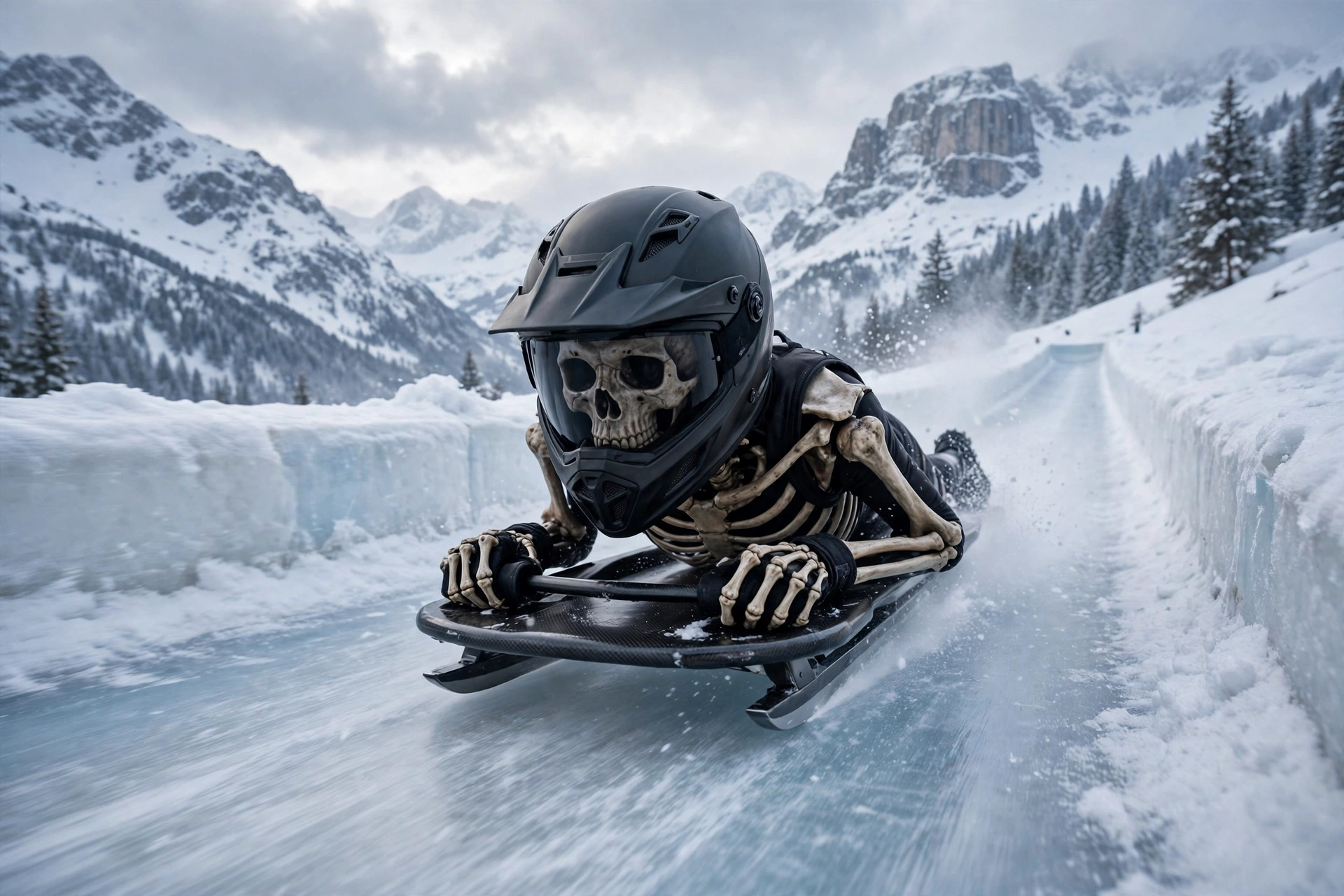
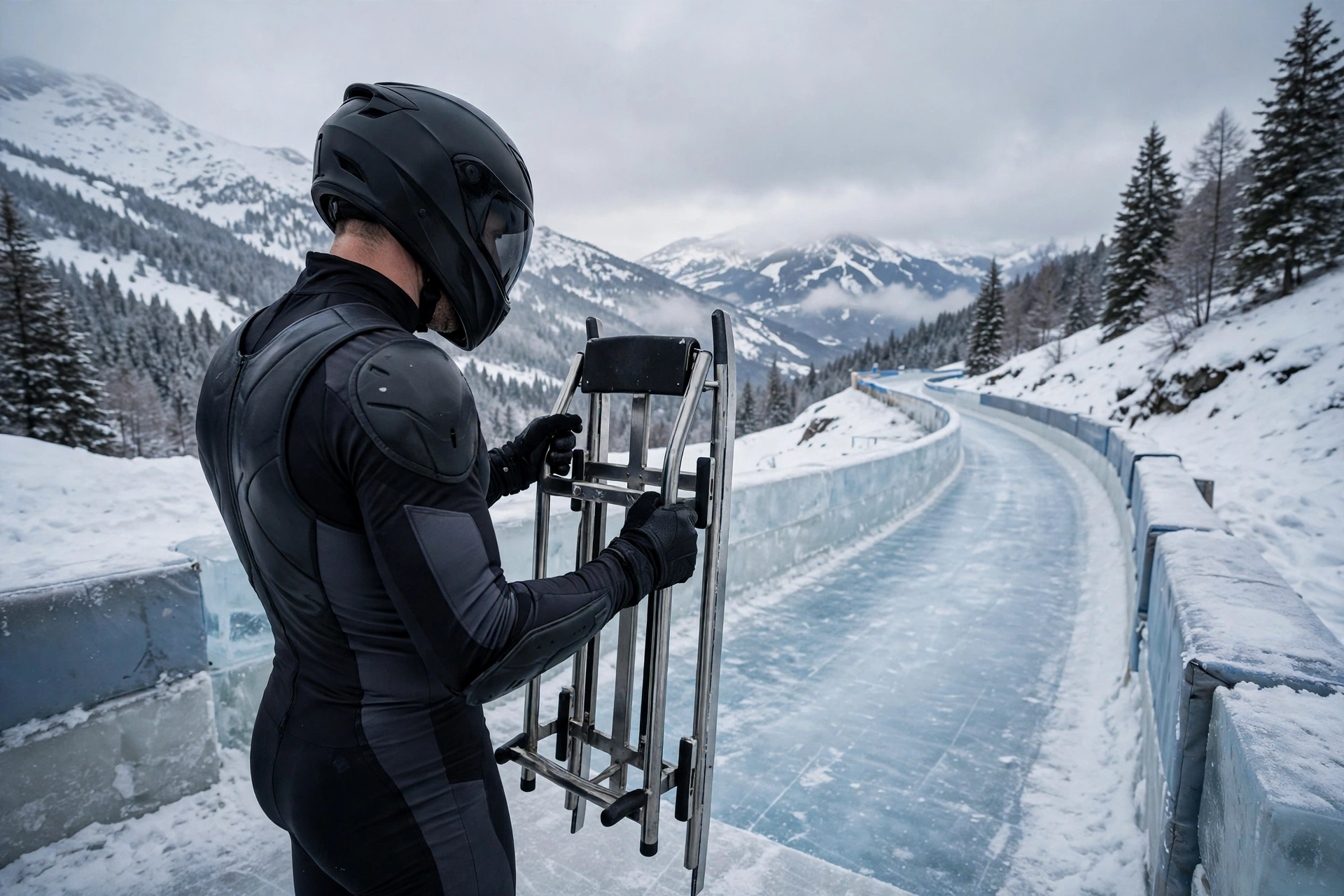
A helmet for skeleton riders is a full-face sliding helmet worn to protect the head at high speed while racing head-first down an ice track on a small sled. In general terms, skeleton is one of the fastest sliding sports, and the rider’s head is inches from the ice, so the helmet is a vital piece of equipment. It guards against knocks from the ice, the track walls, and the sled, and it is shaped to cut through the air at speed.
Skeleton looks simple from the stands: a rider runs, dives onto a sled, and slides head-first down a winding ice track. But the speeds are high, the track is hard ice, and the rider steers with small movements of the head and shoulders. A knock to the head at that speed can be serious, and the helmet is the main protection the rider has. It will not make the sport safe on its own, and it does not replace training, track knowledge, or a well-built sled, but it is essential kit for anyone who slides.
What is a skeleton helmet?
A skeleton helmet is a full-face helmet with a hard outer shell, a padded lining, and a chin bar that protects the face and jaw. In general terms, it covers the whole head, sits low on the forehead, and is held in place by a chin strap that keeps it firm at speed. Many skeleton helmets have a visor or a small opening for the eyes, and some have a chin guard shaped to deflect the wind and to protect the face from ice spray.
The helmet is shaped to be smooth and aerodynamic, because at skeleton speeds, the shape of the helmet affects how the rider moves through the air. It is usually made from a tough composite material, with a lining that absorbs impact and stays comfortable in the cold. Some helmets are made for skeleton alone, while others are shared with bobsleigh, since the two sports use similar tracks and speeds. The helmet is always worn with goggles or a visor, to protect the eyes from wind and ice.
Why do skeleton riders need a special helmet?
Skeleton riders need a special helmet because their head is the leading part of the body, sliding inches from the ice at high speed. In general terms, no other sliding position puts the head so close to the track, and the risks are different from those of a sport where the rider sits upright. A knock against the ice or the track wall happens at speed, and the helmet must handle that impact while staying firmly in place.
The full-face design matters because the face and jaw are exposed in a head-first slide. A rider who brushes the wall or catches a bump can strike their chin or cheek, and a chin bar protects against that. The helmet’s aerodynamic shape matters too, because a helmet that catches the wind can lift or shift at speed, which affects both safety and steering. A skeleton helmet is therefore made for the exact position and speed of the sport, not borrowed from another activity.
What should a skeleton helmet protect against?
A skeleton helmet should protect against impacts with the ice, the track walls, and the sled, as well as against wind and ice spray at speed. In general terms, the shell should be tough enough to deflect a glancing blow, the lining should spread the force of a harder impact, and the chin bar should protect the face and jaw. The helmet should also keep the rider’s vision clear, since steering depends on seeing the track ahead.
Cold is part of the challenge too. A skeleton helmet is worn in freezing conditions, so the lining should stay comfortable and the visor or goggles should not fog up. Some helmets include a system designed to reduce rotational forces in a fall, such as MIPS, which is a feature worth considering, although a good fit, a full-face shell made for sliding, and clear vision matter most on the ice track.
How should a skeleton helmet fit?
A skeleton helmet should fit snugly all round, without pressing hard on one spot or sliding around when the head moves. In general terms, it should sit level on the head, cover the forehead and the jaw, and stay put when shaken gently from side to side. The chin strap should be tight enough that the helmet does not lift at speed, and the visor or goggles should sit comfortably without pressing on the nose or the temples.
Fit should be checked with the balaclava or head covering the rider will actually wear, since that changes the fit in cold weather. The rider should also check that they can turn their head and look ahead without the helmet blocking vision, since steering a skeleton sled depends on small head movements. A helmet that fits well becomes easy to forget on the track, which is exactly what a rider needs when every fraction of a second counts.
How do skeleton riders look after their helmets?
A skeleton helmet should be kept clean, dry, and out of strong sunlight when it is not being used. In general terms, the shell can be wiped with a damp cloth, and the lining can be cleaned or aired where the maker allows it, so that sweat does not build up. The helmet should be stored in a bag or a cool, dry place, away from chemicals, solvents, and sharp objects that could damage the shell or the visor.
The helmet should be checked regularly for cracks in the shell, damage to the chin bar, a scratched visor, and straps that have frayed or stretched. A helmet that has taken a hard hit should be looked at closely, and if there is any doubt about its condition, it should be replaced rather than kept in use. Because skeleton is a high-speed sport, a helmet in poor condition is a serious risk, and riders should replace a damaged helmet without delay.
Can you use a bobsleigh helmet for skeleton?
In general terms, yes, bobsleigh and skeleton helmets are often similar, since both sports use the same tracks and speeds. But the helmet should still be a full-face sliding helmet that fits well, and a rider should check that it suits the head-first position of skeleton before using it.
Does a skeleton helmet have a visor?
Many skeleton helmets have a visor or are worn with goggles, to protect the eyes from wind and ice spray at speed. The choice often comes down to personal preference, but clear vision is essential either way.
When should a skeleton helmet be replaced?
A skeleton helmet should be replaced after a hard impact, if the shell or chin bar is cracked, if the visor is badly scratched, or when the fit and straps no longer hold it securely. In a high-speed sport, a helmet in doubt should be replaced, not kept in use.

Olivia
Writer at Helmet Today, covering helmet reviews, fit and riding safety.