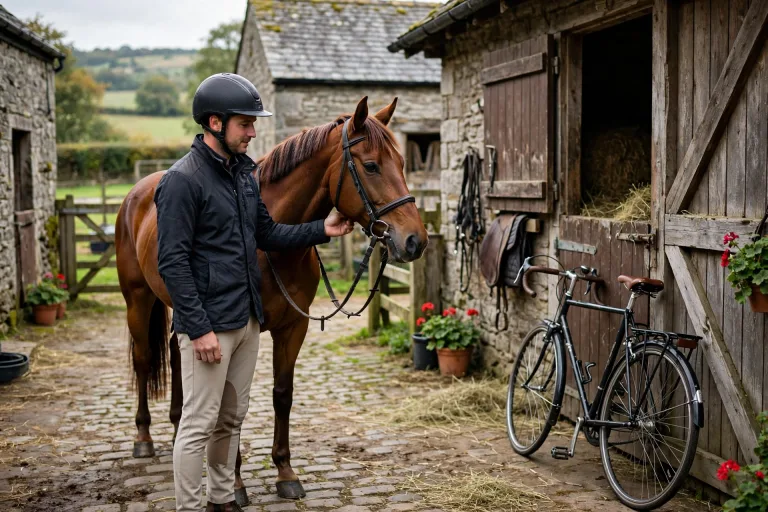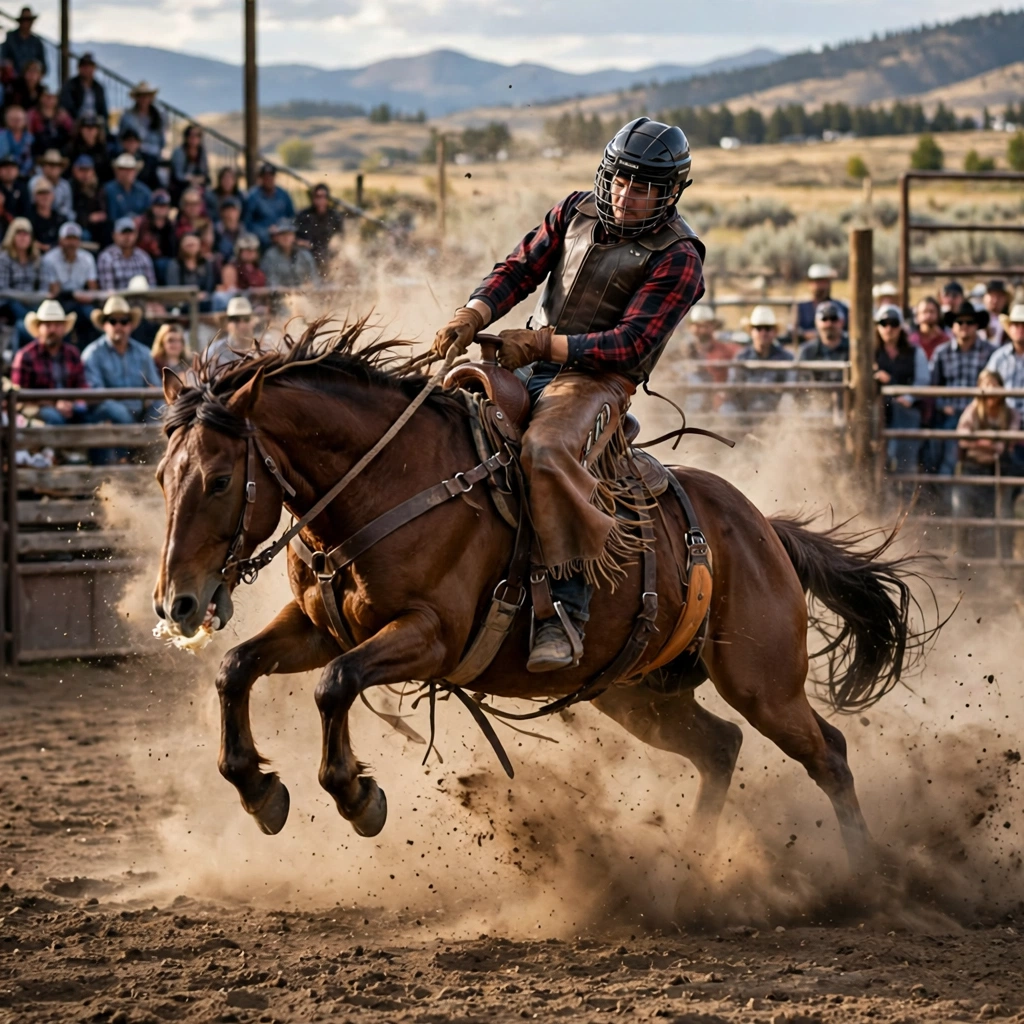
A helmet for rodeo bronc riding is a fitted protective helmet worn to shield the rider’s head from falls, kicks, and impacts with the horse, the fence, or the ground. In general terms, bronc riding is one of the roughest events in rodeo, and a helmet has become a common sight in the arena, where riders once wore only a cowboy hat. A good bronc riding helmet fits snugly, stays in place during a wild ride, and gives the rider a better chance of walking away from a fall.
Bronc riding asks a rider to stay on a bucking horse for a set time, holding on with one hand while the horse twists, kicks, and spins. The rider can be thrown at any moment, and the landing is often hard and unpredictable. The horse’s hooves, the arena fence, and the hard ground are all close by, and a head injury can happen in a fraction of a second. That is why more and more riders, at every level of the sport, are choosing a helmet over a hat.
Why do bronc riders wear helmets?
Bronc riders wear helmets because the risk of a head injury in the event is high. A rider who is thrown can land on their head or be struck by a hoof, and the ground in a rodeo arena is hard-packed dirt, not soft turf. In general terms, a helmet spreads the force of an impact and protects the skull, which can turn a serious injury into a minor one.
Helmets have also become more accepted in rodeo culture over time. In the past, some riders felt that a helmet did not look right in the arena, and that a cowboy hat was part of the tradition. Today, many top riders wear helmets, and younger riders often grow up wearing them from their first ride. The change has been driven by experience: riders who have seen a fellow rider hurt, or who have been hurt themselves, often choose the helmet.
What kind of helmet is used for bronc riding?
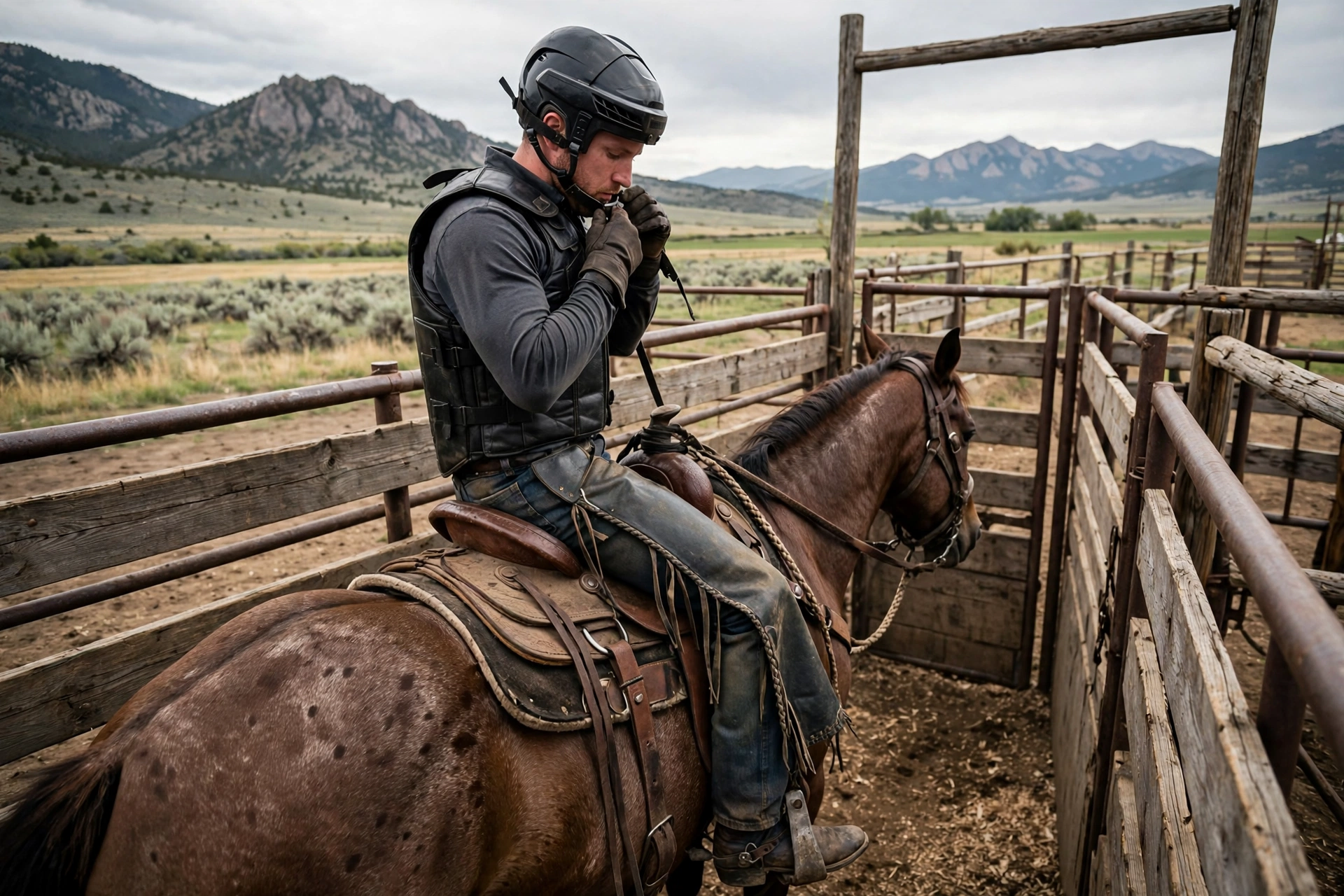
Bronc riding helmets are usually based on equestrian or rodeo helmet designs, with a hard outer shell, a shock-absorbing liner, and a secure chin strap. They are shaped to cover the head well, including the back and sides, and they are built to stay on during violent movement. Some models have a face guard or a face cage, which adds protection for the face and jaw, although not every rider chooses one.
The helmet should be made for riding, not borrowed from another sport. A bike helmet or a motorcycle helmet is not a substitute, because it is designed for different kinds of impacts and it may not fit properly under the conditions of a bronc ride. A proper rodeo or equestrian helmet is tested for the kinds of falls a rider is likely to take, and it should be chosen with the help of someone who knows the sport.
How should a bronc riding helmet fit?
A bronc riding helmet should fit snugly all round, with no gaps and no pressure points, and it should sit level on the head, low on the forehead. The chin strap should be fastened firmly, so that the helmet does not shift when the rider shakes their head or is jolted. In general terms, if you can move the helmet easily with your hands, it is too loose, and it may come off or twist out of place during a ride.
Fit matters more in bronc riding than in almost any other helmet sport, because the forces are so violent. A helmet that is too big can slide over the rider’s eyes at the worst moment, and a helmet that is too small will be painful and distracting. Try the helmet on with your hair as you wear it for riding, and check the fit by moving your head sharply in every direction before you get on the horse.
Do bronc riders still wear cowboy hats?
Some do, and the cowboy hat remains a powerful symbol of rodeo. A hat offers shade from the sun and it is part of the traditional look, but it offers no protection in a fall. Some riders wear a helmet for the ride itself and a hat at other times, for example when walking around the arena or accepting a prize. Others wear a helmet throughout, and see it as part of the modern rider’s kit.
The choice is personal, and it is shaped by the rules of the event, the rider’s experience, and the culture of the rodeo. In general terms, younger riders and riders at organised events are more likely to wear helmets, while some older riders still prefer a hat. What matters is that the rider understands the risk and makes an informed choice, rather than following habit alone.
How do you choose and care for a bronc riding helmet?
Choosing a bronc riding helmet starts with fit and with a design made for rodeo or equestrian use. Look for a helmet that meets a recognised safety standard for horse riding, and try on several sizes to find the one that fits snugly without pressing. A face guard is worth considering if you want extra protection for the face, and a helmet with good ventilation will be more comfortable in a hot arena. Some helmets also include a system designed to reduce rotational forces in a fall, such as MIPS, which is worth looking at when you compare models.
Care for the helmet by storing it out of the sun, cleaning the lining after use, and checking the shell and strap for damage before every ride. Replace the helmet after any hard impact, even if it looks fine from the outside, since the liner inside can be damaged in ways you cannot see. In general terms, a helmet that is well chosen, well fitted, and well looked after is a rider’s best protection in the arena.
Is a helmet required for rodeo bronc riding?
It depends on the event and the organisation running it. Some events and youth competitions require helmets, while others leave the choice to the rider, so check the rules of the event you are entering.
Can I wear a cowboy hat over a bronc riding helmet?
In general terms, no. A hat worn over a helmet can make the helmet fit badly and come loose, so riders who want a helmet should wear the helmet on its own for the ride.
How often should I replace a bronc riding helmet?
Replace it after any crash in which your head hits the ground or a hoof, and consider replacing it after several years of regular use, since the materials wear down over time.

Olivia
Writer at Helmet Today, covering helmet reviews, fit and riding safety.