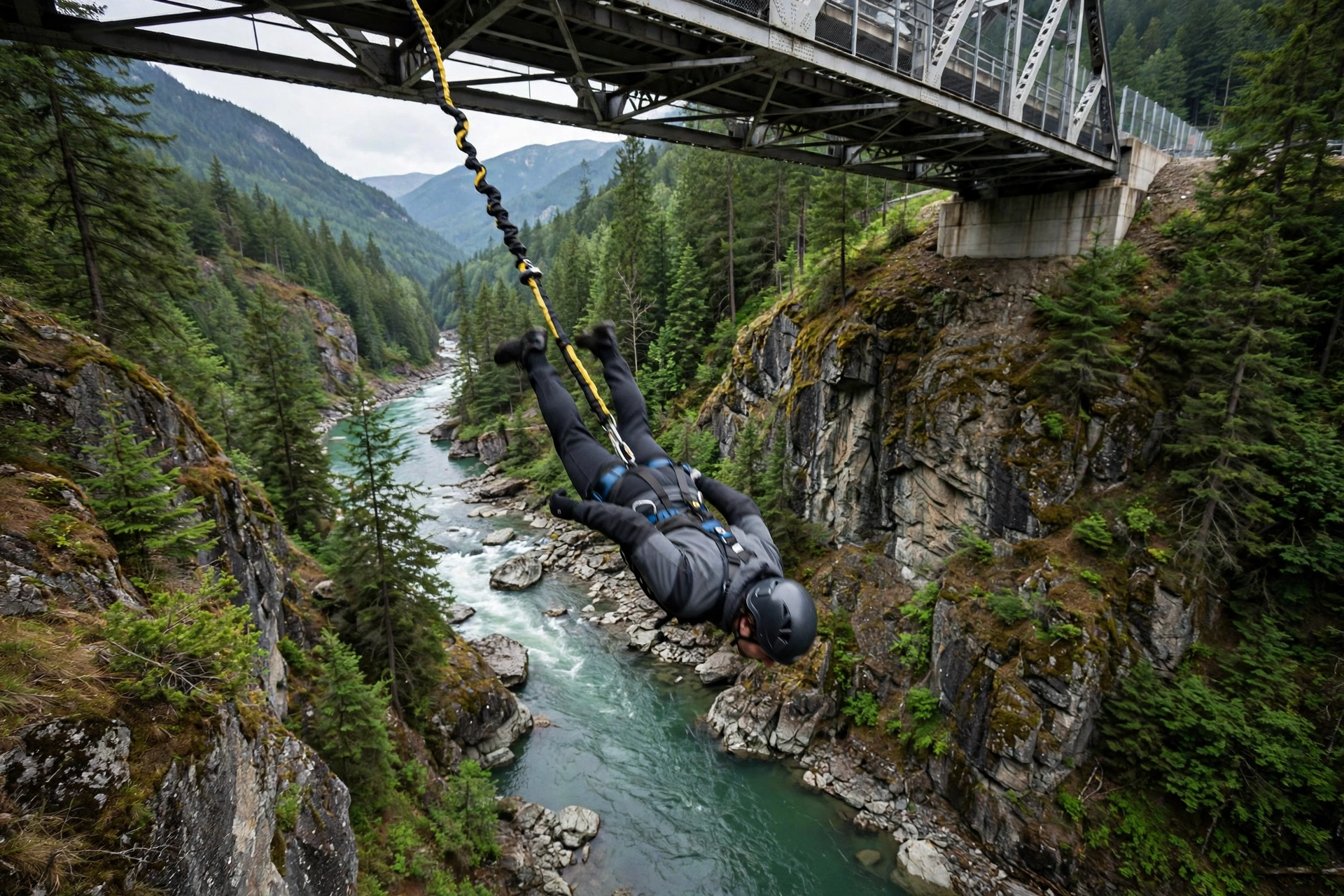
A helmet for bungee jumping is a light, secure-fitting helmet worn to protect the jumper’s head from knocks during the jump, the rebound, and the landing. In general terms, it is not always required, and whether you wear one depends on the operator and the jump site, but it is a sensible piece of safety gear for a jump that involves high speed, a sudden stop, and a swing back up towards the platform. If the operator provides a helmet, you should wear it.
Bungee jumping looks simple from the ground: you step off a platform, fall, and bounce. But the fall is fast, the cord stretches and pulls you back, and you can swing from side to side as you slow down. At some sites, the platform, the bridge structure, or the ground below are close enough that a stray swing could bring your head into contact with something hard. A helmet is there for those moments, not for the fall itself.
Do you have to wear a helmet for bungee jumping?
There is no single rule that covers every bungee jump, and different operators have different policies. Some operators provide helmets for every jumper, some offer them as an option, and some do not use them at all. In general terms, the operator knows the site, the platform, and the swing pattern of the jump, and their policy reflects the risks of that particular place.
If a helmet is offered, it is wise to take it. A helmet adds very little weight and it does not change the feeling of the jump in any meaningful way, but it does protect your head if you swing into the platform or the bridge on the way back up. If you are jumping at a site where a helmet is not provided, you can ask the operator whether one is available, or whether the jump is set up so that contact with the structure is unlikely.
What kind of helmet is used for bungee jumping?
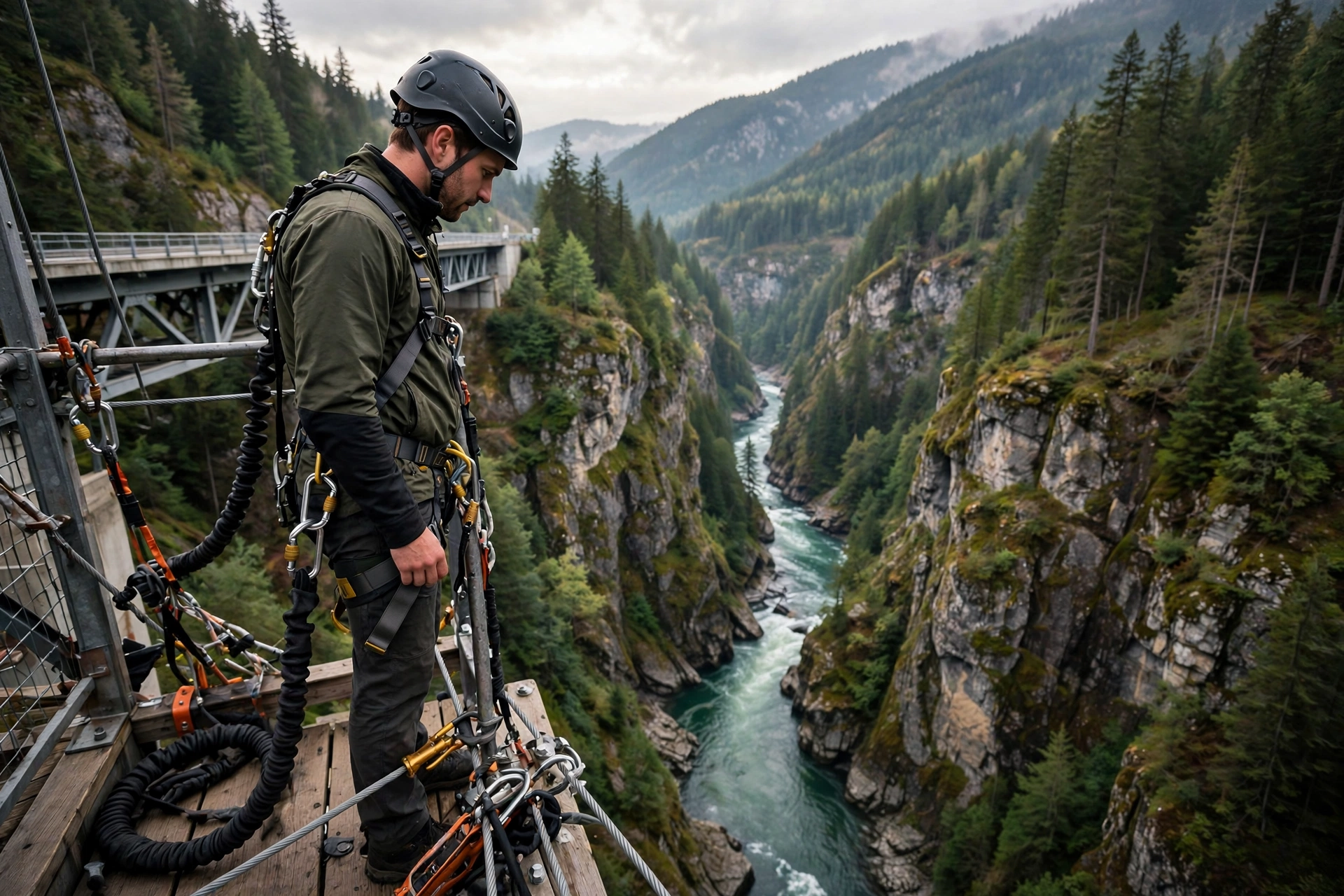
The helmets used for bungee jumping are usually light, hard-shell helmets similar to those used for climbing or adventure sports. They have a snug fit, a chin strap that holds them firmly in place, and a smooth outer shell. The key feature is that the helmet stays put: a helmet that slips or comes off during a fast fall is of no use at all, so the fit and the strap matter more than the brand or the style.
Some operators use helmets with a small amount of padding inside and vents for comfort, since jumpers may wait in the sun on a platform before their turn. The helmet should sit level on the head and feel secure when you shake your head from side to side. If the helmet feels loose, tell the operator, and they should be able to adjust the fit or find another size.
What does a bungee jumping helmet protect you from?
A bungee helmet mainly protects you from knocks and bumps, not from the fall itself. The cord and the harness take care of the fall, and they are designed to slow you down smoothly. The helmet is there for the moments when things do not go exactly to plan: a swing that brings you close to the platform, a bump against the bridge structure, or a knock while you are being lowered or pulled back up.
It can also protect you on the platform itself. Jump platforms are often narrow, with railings, ropes, and equipment close by, and a jumper who is nervous may stumble or bump their head while getting into position. In general terms, the helmet is a simple safeguard for a short, intense activity where a small knock could otherwise cause a real injury.
How should the helmet fit before you jump?
The helmet should fit snugly and sit level, with the chin strap fastened and adjusted so that you can fit no more than two fingers between the strap and your chin. It should not wobble when you shake your head, and it should not press painfully on your forehead. If you wear glasses, check that they sit comfortably under the helmet, and ask the operator if you are unsure whether to keep them on for the jump.
Take a moment on the platform to check the fit before you step to the edge. The operator will usually check your harness and your helmet as part of the pre-jump routine, and you should speak up if anything feels loose or uncomfortable. A helmet that is checked and fitted properly before the jump is one less thing to think about once you are standing at the edge.
Is a helmet enough to make bungee jumping safe?
A helmet is only one part of bungee jumping safety, and it is not the most important part. The cord, the harness, the platform, and the operator’s checks matter far more. A good operator inspects the equipment, weighs the jumper, checks the cord, and follows a clear routine for every jump. The helmet is a useful extra layer, but it cannot make up for poor equipment or a rushed procedure.
Choose an operator with a good record and clear safety routines, and follow their instructions exactly. If they provide a helmet, wear it; if they do not, ask why, and listen to their answer. Helmets for adventure sports are tested for their own use, and some include a system designed to reduce rotational forces in a fall, such as MIPS, although the most important thing at a bungee site is that the helmet fits well and stays on. In general terms, a helmet, a good operator, and a careful routine together make for a safer jump.
Do I need a helmet for bungee jumping?
It depends on the operator and the site. Some operators provide helmets for every jumper, and if one is offered, you should wear it. If no helmet is provided, ask the operator whether the jump set-up makes one unnecessary.
Can I bring my own helmet for bungee jumping?
In general terms, yes, as long as it fits well and the operator is happy with it, but most jumpers simply use the helmet the operator provides, since it is chosen to suit that site.
Does a helmet change how bungee jumping feels?
Very little. A light, well-fitting helmet is easy to forget once you are standing at the edge, and it does not affect the fall, the bounce, or the view.

Olivia
Writer at Helmet Today, covering helmet reviews, fit and riding safety.