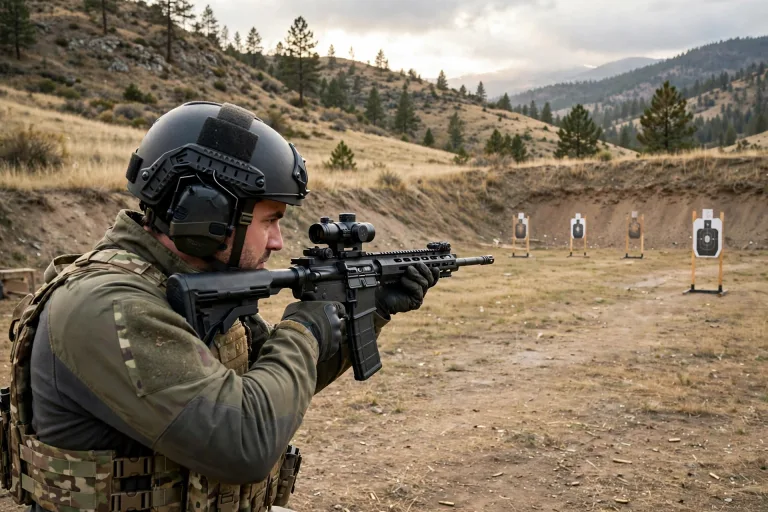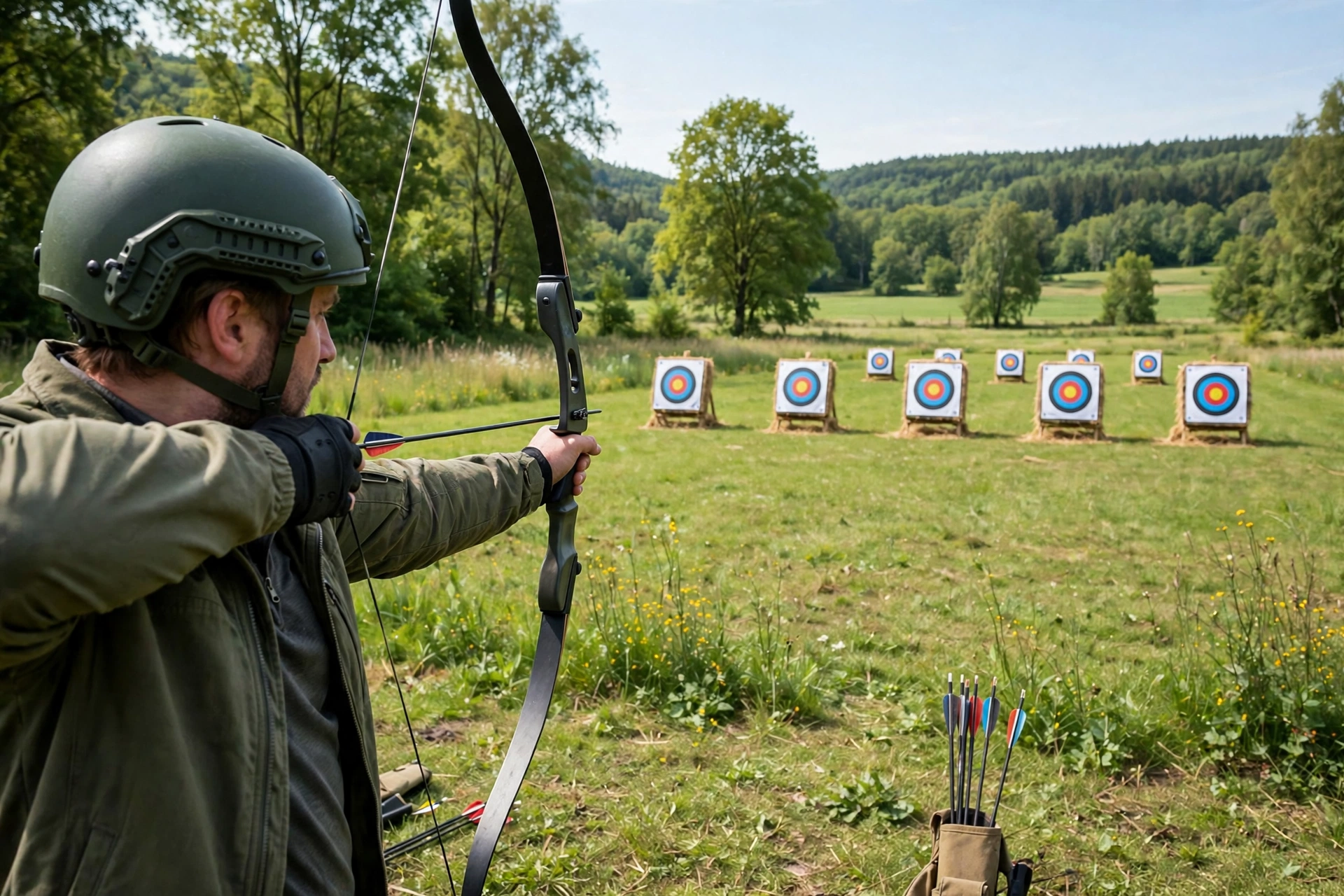
A helmet for archery is head protection that, in general terms, most archers do not wear, because archery is a still, controlled sport where the head is not usually at risk of a blow. An archer stands in one place, draws a bow, and releases an arrow down a clear range, with no opponent, no ball, and no fast-moving equipment near the head. A mask, a hat, and eye protection are the usual kit, and a helmet is not part of the standard dress for target archery.
That said, there are some archery settings where head protection is worth thinking about. Field archery in woodland, archery on horseback, and moving-target events all bring the archer into closer contact with branches, uneven ground, and moving equipment. In general terms, a light helmet can be a sensible extra in those settings, even though it is unusual. Understanding when a helmet helps, and when it only gets in the way, is the key to deciding whether to wear one.
Why do most archers not wear helmets?
Most archers do not wear helmets because the sport does not usually involve impacts to the head. In general terms, an archer stands still on a flat range, with a clear shooting line and a safe zone behind the targets, and nothing moves fast near the head. A helmet would add weight and warmth without adding much protection, and it could interfere with the anchor point — the spot on the face where the archer rests the string before releasing — which is central to accurate shooting.
Comfort and concentration are also reasons. Archery depends on a steady stance, a relaxed neck, and a clear view of the target, and a helmet that presses on the head or restricts movement can disturb all three. In general terms, archers prefer to keep their kit light and simple, and a helmet feels like an unnecessary extra on a target range. The sport’s safety rules focus on range discipline, safe arrow handling, and clear shooting lines, rather than on head protection, because those are the risks that actually matter in archery.
When might an archer want a helmet?
An archer might want a helmet for field archery in woodland, where the course winds between trees and the archer walks over uneven ground. In general terms, a low branch or a slip on a slope can bring the head into contact with something hard, and a light helmet can soften that contact. The same applies to horseback archery, where the rider is moving at speed and a fall from the horse is a real risk, and to some moving-target events where the archer moves quickly between shooting positions.
Children and beginners are another case. In general terms, a young archer who is still learning to move safely around a range may benefit from a light helmet, especially on an outdoor course with uneven ground. A helmet is also worth considering for archery in a shared outdoor space, where other activities may be taking place nearby. If a coach or an event organiser recommends a helmet for a particular course or event, it is wise to wear one. The helmet does not need to be heavy or specialist — a light sports helmet that fits well is usually enough.
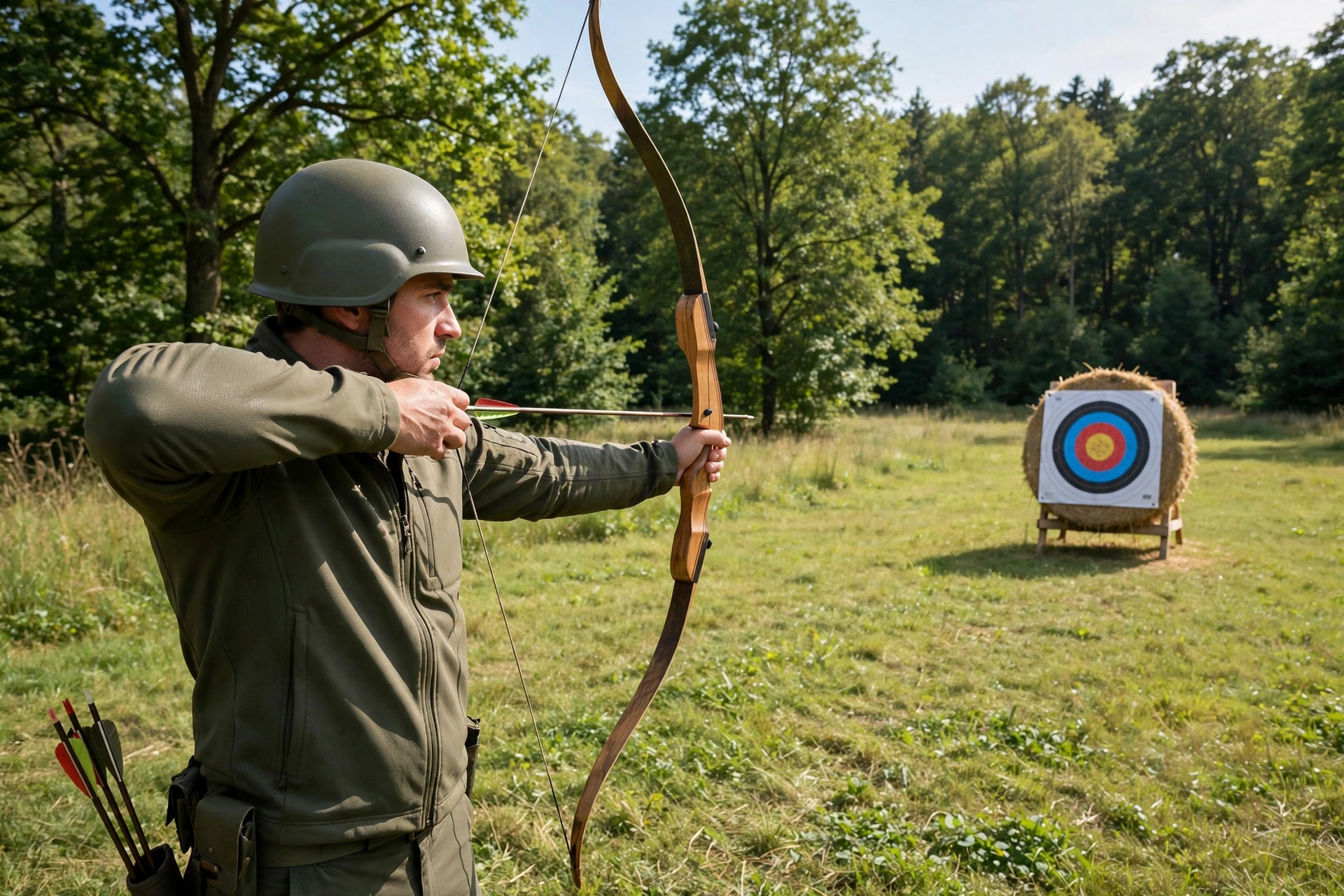
What kind of helmet suits an archer?
A helmet for archery should be light, low-profile, and comfortable, so it does not disturb the archer’s stance or the anchor point. In general terms, a light cycling or skate-style helmet is a practical choice, because it is ventilated, easy to wear, and does not cover the ears or the face. A bulky helmet, or one with a large peak, could interfere with the bow string or block the view of the target, so a slim shape is better.
Fit matters more than the type. In general terms, the helmet should sit level on the head, low enough to cover the forehead, and snug enough that it does not wobble when the archer moves. The archer should test the helmet with the bow, drawing and releasing a few times, to check that the string clears the helmet and that the anchor point feels natural. If the helmet changes the feel of the shot, it is the wrong helmet for archery. Some helmets include a system designed to reduce rotational forces in a fall, such as MIPS, which is a feature worth knowing about when choosing a helmet for any outdoor sport.
What are the downsides of wearing a helmet for archery?
The main downside of a helmet for archery is that it can disturb the shot. In general terms, a helmet that presses on the forehead or sits too low can change the anchor point, and even a small change in the anchor point can affect accuracy. A helmet can also trap heat on a warm day, and it can make it harder to hear the range commands or a coach’s instructions. For target archery on a flat range, these drawbacks outweigh the small amount of protection a helmet adds.
There is also a practical point about the bow string. In general terms, a helmet with a wide shape or loose straps could catch the string on release, which would spoil the shot and could be unsafe. An archer who wears a helmet should choose the slimmest one that does the job, and should test it thoroughly before a competition. If the helmet makes shooting awkward or uncomfortable, it may be better to choose a different course or to rely on the range’s safety rules rather than struggling with kit that does not suit the sport.
How can an archer stay safe without a helmet?
An archer can stay safe without a helmet by following the range rules carefully. In general terms, that means standing behind the shooting line, waiting for the signal before collecting arrows, and never pointing a bow at a person. A hat and sunscreen protect against the sun, and good footwear protects against slips on uneven ground. These habits, plus a well-kept range with clear signs and safe zones, are the real safety measures in archery.
Good habits on the course help too. In general terms, an archer walking a field course should watch for low branches, keep the bow pointed safely, and stay aware of other archers. A beginner should learn the range rules before shooting, and a coach should be nearby. For most archery, these simple rules are enough. A helmet is a useful extra for woodland courses, horseback archery, or moving-target events, but it is not needed for every archer on every range.
Do archers normally wear helmets?
No, in general terms most archers do not wear helmets. Target archery is a still, controlled sport, and a helmet is not part of the standard kit, although it can help in woodland or horseback archery.
Can a helmet affect an archer’s aim?
Yes, in general terms a helmet that presses on the forehead or changes the anchor point can affect accuracy. An archer should test a helmet with the bow before using it in a competition.
What helmet should an archer wear?
A light, low-profile sports helmet that fits snugly and does not interfere with the bow string is the best choice. It should be tested with the bow to make sure the shot feels natural.

Olivia
Writer at Helmet Today, covering helmet reviews, fit and riding safety.