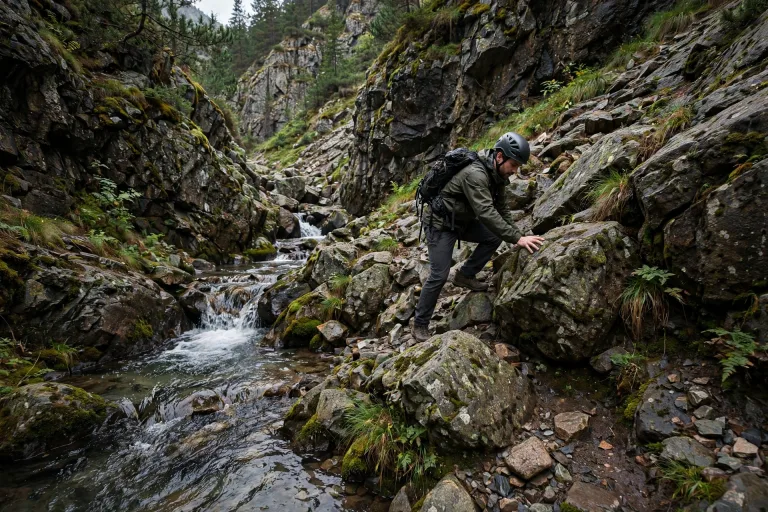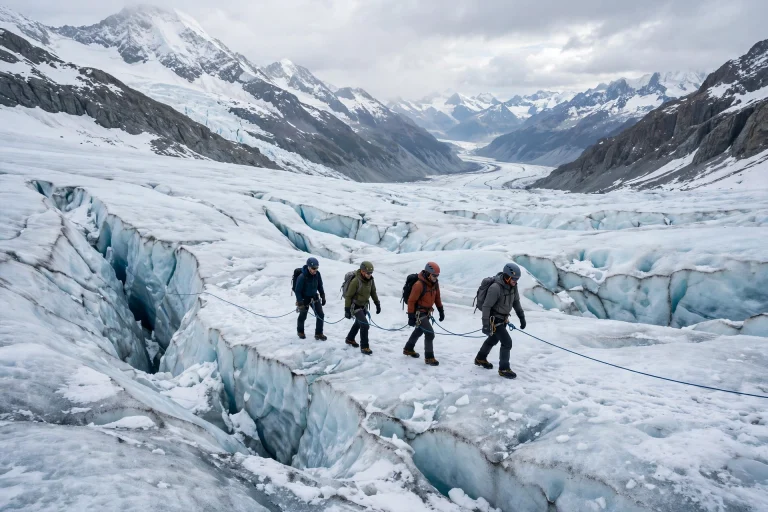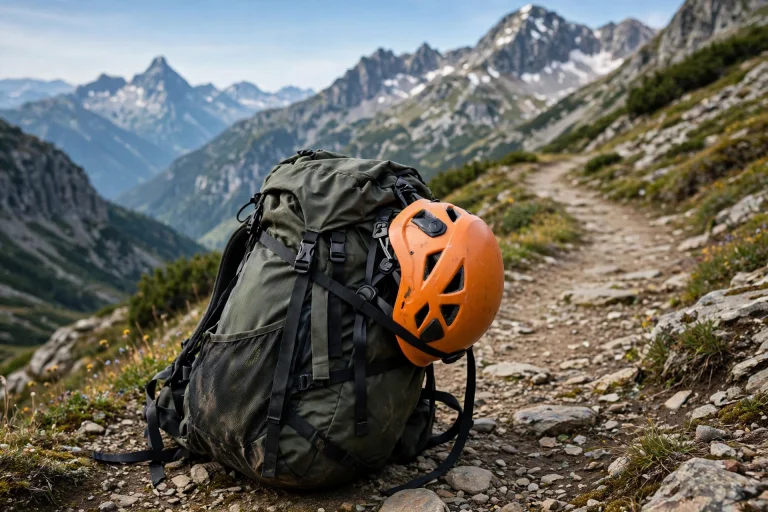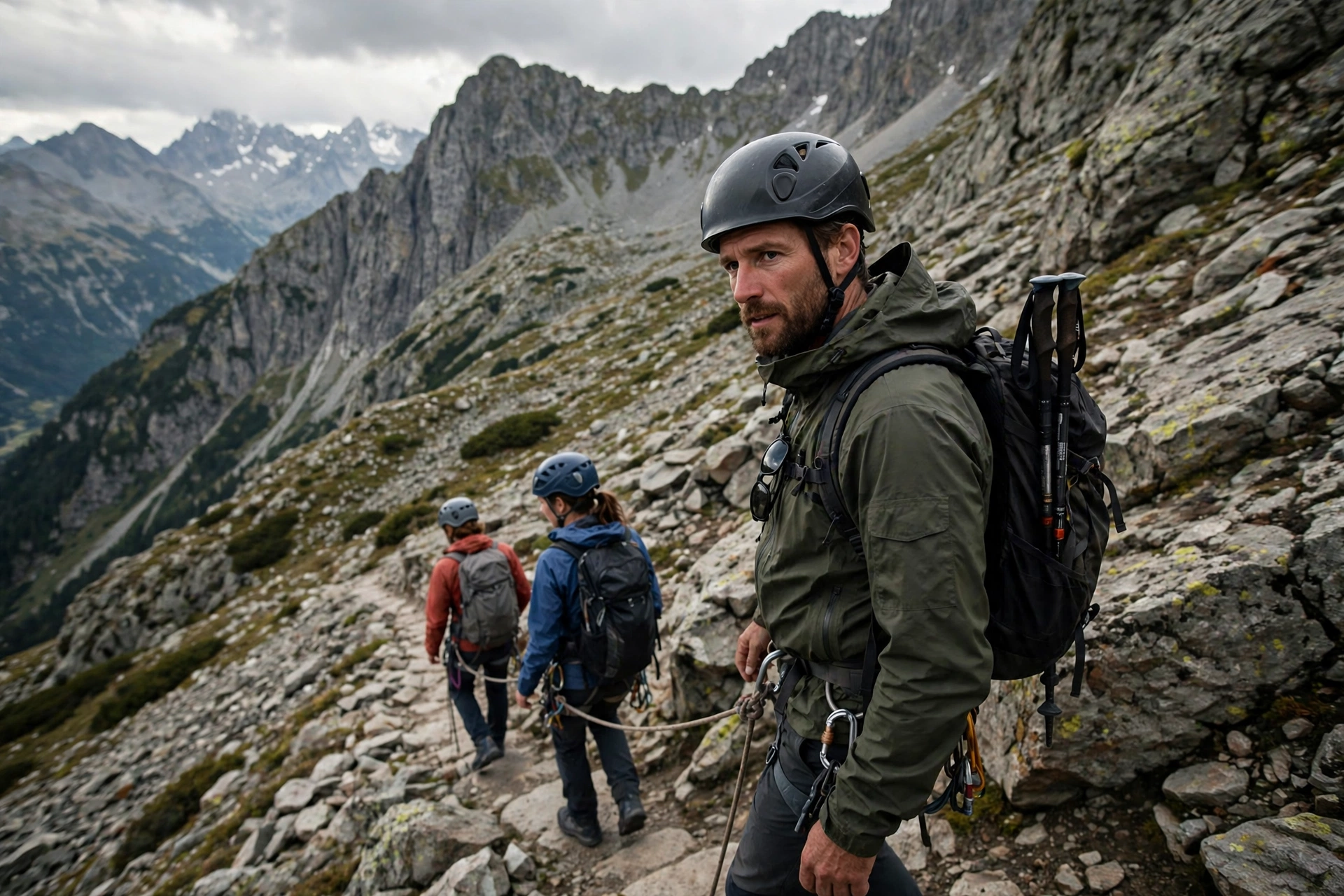
A helmet for mountain guides is, in general terms, a light climbing helmet worn to protect the guide’s head from falling rock and ice, and from knocks against the rock, during long days leading clients on mountain routes. Guides spend more time in exposed mountain terrain than almost anyone else, often moving below loose rock, crossing steep snow, and working in places where a stone dislodged by a climber above can fall without warning. A good guide’s helmet is light enough to wear all day, tough enough to take a hit, and comfortable enough to forget about while working.
Mountain guiding is a job, not a single outing, so the helmet a guide chooses has to work day after day, in sun, wind, rain, and snow. It has to fit with a warm hat underneath in cold weather and with sunglasses on a bright glacier, and it has to stay put when the guide is looking up at a client, bending to check an anchor, or moving quickly across rough ground. The best guide helmets are simple, durable, and easy to adjust with gloves on.
Why do mountain guides wear helmets?
Mountain guides wear helmets because falling rock and ice are among the most common hazards in the mountains, and a helmet is the simplest protection against them. In general terms, a stone the size of a marble can cause a serious injury if it falls from height, and guides often work in gullies and below cliffs where loose rock is part of the terrain. A helmet will not protect against every falling object, but it greatly improves the guide’s chances of walking away from a strike that would otherwise hit the bare head.
Guides also wear helmets to set an example for their clients. When a guide puts a helmet on at the start of a route, clients are far more likely to wear theirs too, and that shared habit makes the whole rope team safer. The helmet also protects the guide from knocks against the rock while climbing, from bumping the head in a narrow chimney, or from a slip on icy ground. Over a season of guiding, those small knocks add up, and a helmet turns many of them into nothing more than a dull tap.
What makes a good helmet for mountain guides?
A good guide’s helmet is light, because a heavy helmet becomes a burden over a ten-hour day in the mountains. Many modern climbing helmets weigh only a few hundred grams, and guides usually choose one of the lighter models, provided it still meets the standards for climbing use. The helmet should have good ventilation, since a hot head on a sunny approach is tiring, and it should have a secure adjustment system that can be tightened or loosened with cold hands or gloves.
Durability matters too, because a guide’s helmet is knocked about in packs, thrown into huts, and used in all weathers. A hard outer shell resists scratches and dents better than a very light foam-only design, and it is worth choosing a helmet that can take rough handling. The helmet should also have clips or a place to mount a headlamp, since guides often start before dawn or finish after dark. A good fit is essential: the helmet should sit level, cover the forehead and the back of the head, and stay in place when the guide looks up or down.
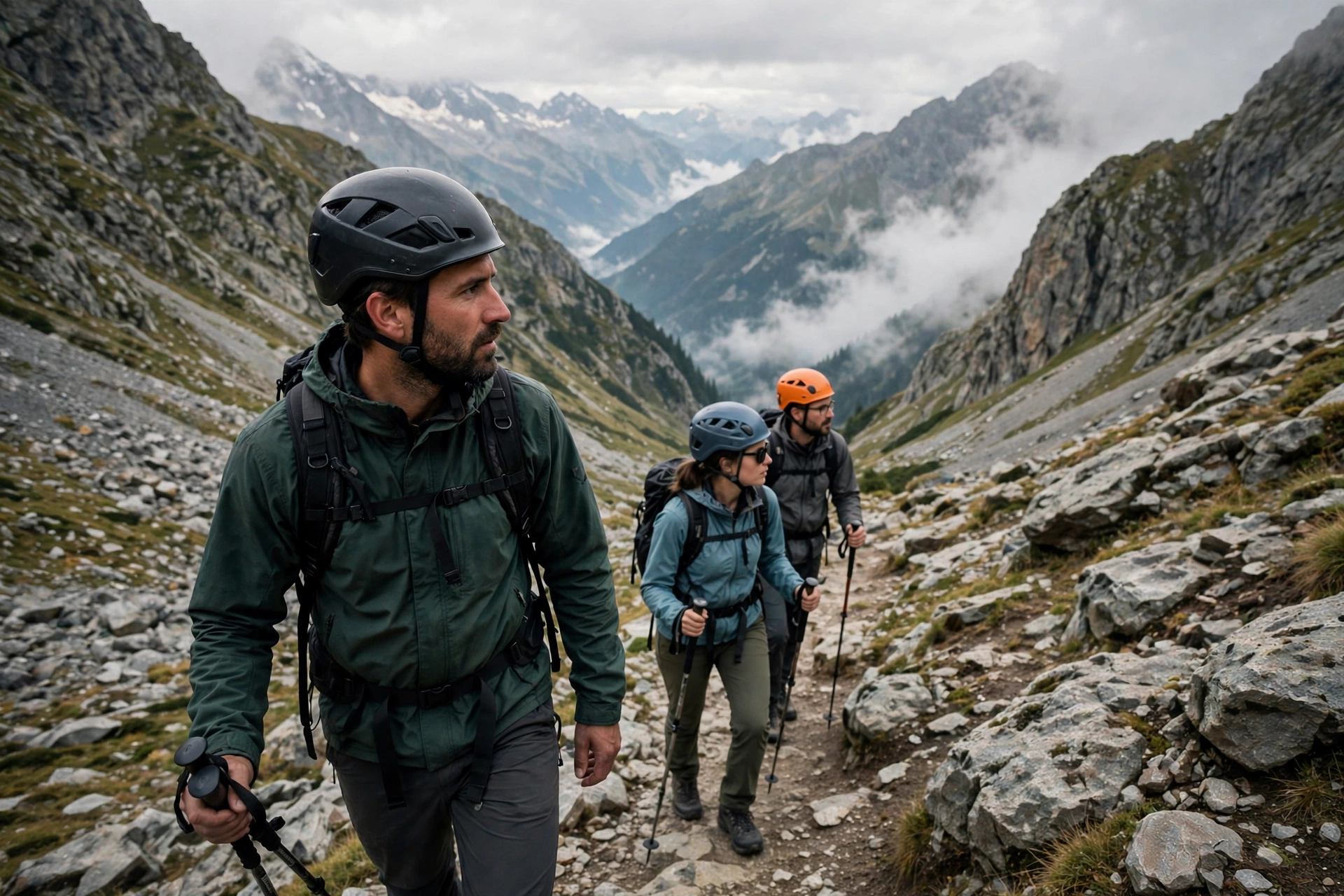
How does a guide’s helmet differ from a regular climbing helmet?
In general terms, a guide’s helmet is the same kind of helmet as a regular climbing helmet, but the guide chooses it with different priorities. A weekend climber might pick the lightest helmet available for a single hard route, while a guide picks a helmet that balances light weight with toughness, because it will be used almost every day. Comfort over long hours matters more to a guide than saving a few grams, and a helmet that can be worn with a warm hat or a buff underneath is more useful than one that only fits a bare head.
Whatever the choice, the helmet should meet the recognised standard for climbing helmets, and the guide should check that it fits well with the other kit they wear, including sunglasses, a headlamp, and a warm hat.
When should a mountain guide wear a helmet?
A mountain guide should wear a helmet whenever the route involves rock, ice, or steep ground where something could fall or where a slip could end in a knock to the head. In general terms, that covers most guided climbing, scrambling, and glacier travel, and many guides put the helmet on as soon as they leave the valley floor. On a gentle walk on a clear path with no rock above, a helmet may not be needed, but the guide’s judgement, the conditions, and the company’s rules all play a part.
Guides also wear helmets while working at the base of a crag, while belaying, and while moving around huts and bivouac sites on loose ground. The habit of wearing the helmet whenever the terrain calls for it, rather than only on the hardest pitches, is what keeps guides safe over a long career. Some helmets include a system designed to reduce rotational forces in a fall, such as MIPS, and guides choosing a new helmet should check what the maker says the helmet is designed to protect against, and whether it suits both rock and ice work.
How should a mountain guide care for a helmet?
A guide’s helmet should be checked regularly for cracks, dents, and wear, because a helmet that is used daily takes more punishment than one used at weekends. The shell should be inspected after any hard knock, and the inner padding and straps should be checked for wear and washed when they become dirty. In general terms, a helmet that has taken a serious impact should be retired, even if the damage is hard to see, because the shell and foam may no longer absorb energy as they should.
Storage matters as well. The helmet should be kept out of direct sunlight and away from strong chemicals, and it should not be left loose in a pack where it can be crushed by heavy kit. Many guides keep the helmet in a stuff sack or clipped to the outside of the pack. Guides should also keep a note of the helmet’s age, since makers give a recommended working life. A well-cared-for helmet is a reliable tool of the trade.
Do mountain guides wear helmets on every trip?
Guides wear helmets on most guided climbing, scrambling, and glacier trips, and whenever the terrain has loose rock, ice, or steep ground. On a gentle valley walk with no rock above, a helmet may not be needed, and the guide decides based on the route and conditions.
What is the most important feature of a guide’s helmet?
Light weight and all-day comfort matter most, because a guide wears the helmet for hours at a time. A secure fit, good ventilation, and a headlamp clip are also important for long days in the mountains.
How long does a mountain guide’s helmet last?
In general terms, a helmet should be replaced after a serious impact, if the shell is cracked, or when it reaches the end of the working life given by the maker. A guide who climbs most days may need a new helmet sooner than a casual climber.

Olivia
Writer at Helmet Today, covering helmet reviews, fit and riding safety.