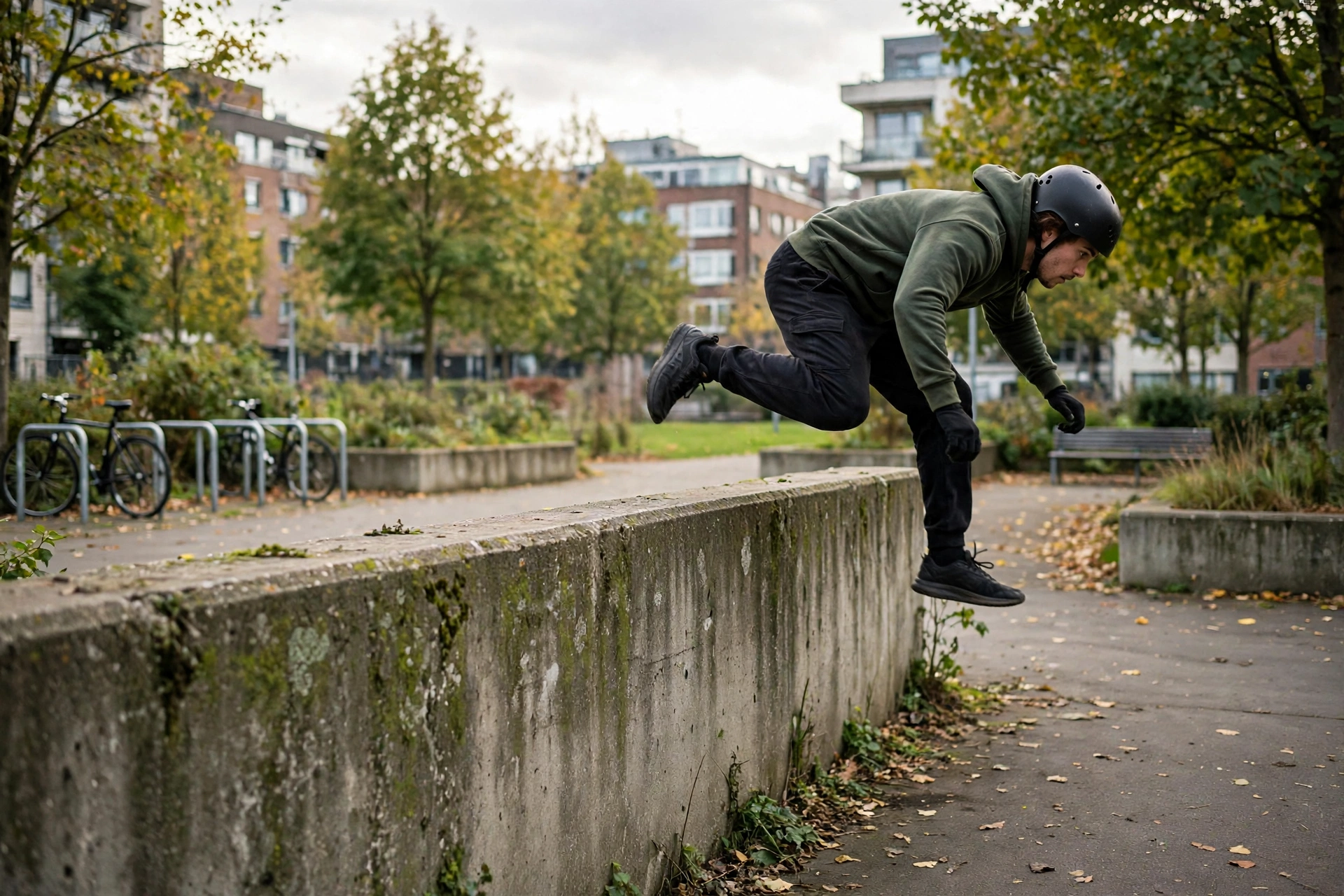
A helmet for parkour is, in general terms, a light, close-fitting helmet worn to protect the head from falls and knocks while training jumps, vaults, and landings in urban and outdoor settings. Parkour involves moving quickly over walls, rails, and rooftops, and even skilled practitioners can misjudge a jump or slip on a wet surface. A helmet will not make a bad landing safe, but it gives the head a layer of protection against the concrete, metal, and stone that parkour training is done on.
Parkour has a strong culture of training without much equipment, and many practitioners train in just trainers and comfortable clothes. Helmets are not part of the traditional image of the sport, and some traceurs choose not to wear one. But as parkour has grown, and as more people train on hard urban surfaces, helmets have become a more common sight, especially among beginners, younger practitioners, and those learning new and difficult movements.
Do you need a helmet for parkour?
In general terms, a helmet is not required for parkour, and there is no single rule that says practitioners must wear one. The decision is usually left to the individual, their coach, or the rules of the gym or training group they belong to. Beginners are the most likely to benefit, because they are still learning how to land, roll, and fall safely, and a helmet gives them a margin for error while those skills develop. Experienced practitioners who train high, fast movements may also choose one.
The case for a helmet is strongest when training involves height, hard surfaces, or new movements. A fall from a wall onto concrete leaves no room for error, and a helmet can turn a head strike into a survivable knock. Practitioners who train indoors on mats may feel a helmet is less necessary, but even there a misjudged vault can send the head into a rail or a wall. The helmet is a personal choice, and the sensible approach is to weigh the risk of the session against the small cost of wearing one.
What kind of helmet works best for parkour?
The best helmet for parkour is light, low-profile, and close-fitting, so that it stays in place during jumps and rolls without blocking vision or hearing. In general terms, a skate-style helmet or a light climbing helmet suits parkour better than a bulky motorcycle or full-face helmet, because the practitioner needs a full range of movement and a clear view in every direction. The helmet should sit level on the head and cover the forehead and the back of the head, and it should not shift when the wearer runs, jumps, or rolls.
Ventilation matters, because parkour is hard exercise and a hot, sweaty helmet is distracting. A helmet with good airflow and a washable lining is easier to wear for a long session. The adjustment system should be simple and secure, so the helmet can be tightened quickly and will not loosen during training. Some practitioners prefer a helmet with a hard outer shell that can take scrapes against concrete, while others choose a softer, lighter design. Either way, the helmet should meet a recognised safety standard for its type.
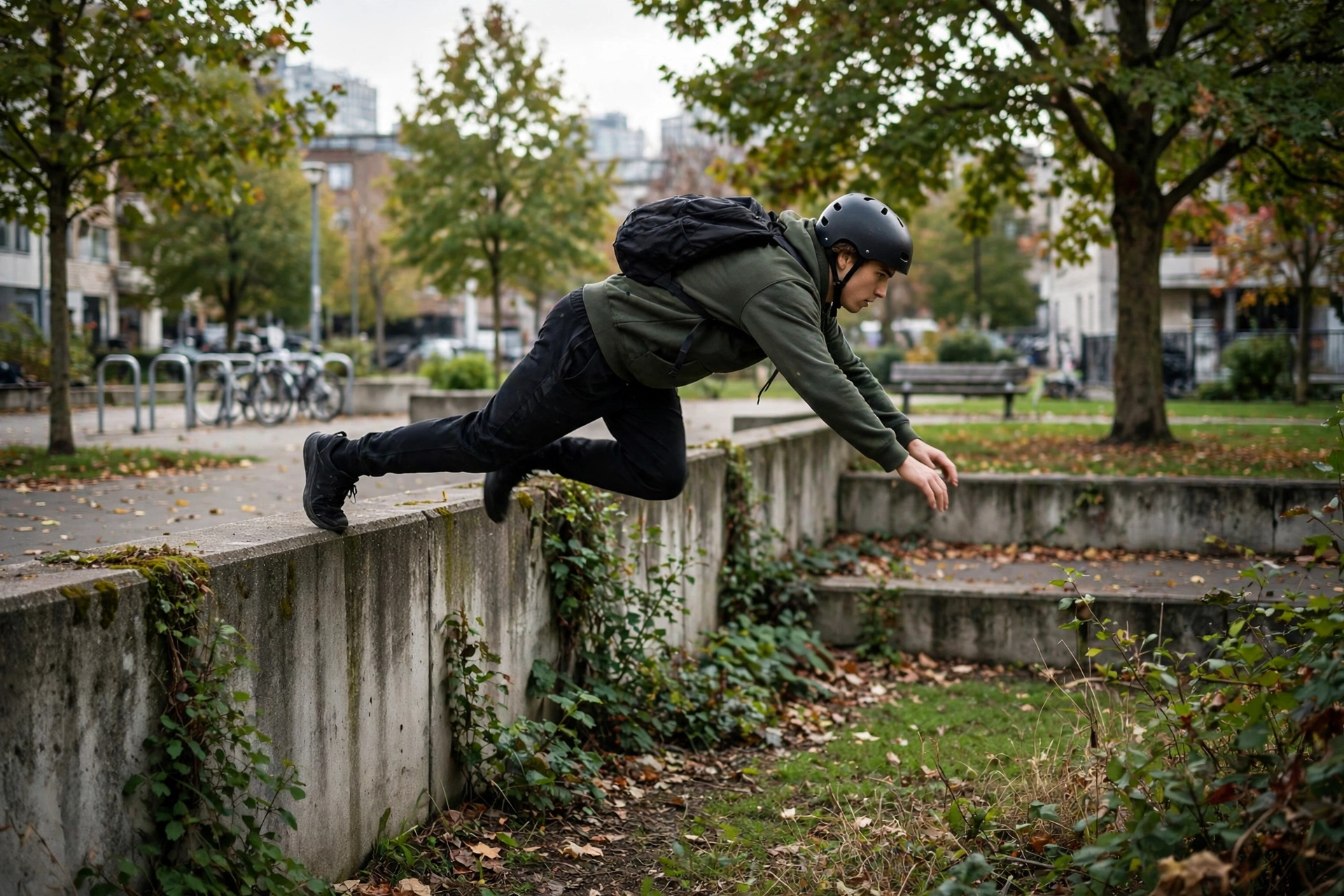
How should a parkour helmet fit?
A parkour helmet should fit snugly without pressing, and it should stay put when the wearer shakes their head, jumps, or rolls. The front edge should sit just above the eyebrows, and the straps should be adjusted so the helmet does not slide forward over the eyes or back off the forehead. In general terms, the test is simple: if the helmet moves when the wearer runs or vaults, it is either the wrong size or it is not adjusted correctly, and it should be refitted before training.
It is worth trying the helmet on with the clothes and hair the practitioner normally trains in, since a thick headband or tied-back hair can change the fit. The helmet should feel comfortable after ten minutes of movement, not just when standing still. If it presses on the temples or the forehead, it may be the wrong shape for that head, and a different model may fit better. A helmet that is comfortable is a helmet that gets worn, and a helmet left in a bag protects no one.
Does wearing a helmet change how you train parkour?
Wearing a helmet can change how a practitioner trains, and in general terms the change is usually for the better. A helmet can give a beginner the confidence to commit to a jump they might otherwise avoid, and that confidence helps them learn faster. It can also encourage safer training, because the practitioner is thinking about protection and risk before they start moving. Coaches often find that beginners who wear helmets are more willing to practise falls and rolls, which are essential skills in parkour.
There is a small risk that a helmet can make a practitioner feel safer than they really are, and that feeling can lead to taking risks that are beyond their skill. Good coaching addresses this by teaching that the helmet is a backup, not a licence to attempt movements the practitioner is not ready for. The basics of parkour safety, such as warming up, checking surfaces, starting low, and progressing gradually, matter far more than any piece of equipment. Some helmets include a system designed to reduce rotational forces in a fall, such as MIPS, and practitioners choosing a new helmet should check what the maker says it is designed for.
How do you care for a parkour helmet?
A parkour helmet should be checked before each session for cracks, dents, and worn straps, and it should be cleaned with mild soap and water after training. In general terms, a helmet that has taken a hard impact should be retired, even if the damage is hard to see, because the shell and foam may no longer absorb energy as they should. The helmet should be stored away from direct sunlight and heat, and it should not be left at the bottom of a bag under heavy kit.
The padding inside the helmet should be washed or replaced when it becomes dirty or worn, since clean padding fits better and is more comfortable. Straps and buckles should be checked regularly, because a strap that slips during a jump leaves the helmet loose at the worst moment. If the helmet has been dropped from height or struck hard against concrete, it is worth inspecting it carefully and replacing it if there is any doubt. A well-cared-for helmet is a reliable part of the kit.
Is a helmet required for parkour?
No, in general terms there is no single rule requiring a helmet for parkour. The choice is usually left to the individual, their coach, or their training group, and beginners and those learning new movements benefit most from wearing one.
What is the best type of helmet for parkour?
A light, low-profile skate-style or climbing helmet usually works best, because it stays in place during jumps and rolls without blocking vision or hearing. It should fit snugly and meet a recognised safety standard for its type.
Does a helmet make parkour safe?
No, a helmet gives the head a layer of protection, but it does not make a bad landing safe. Warming up, checking surfaces, starting low, and progressing gradually matter far more than any piece of equipment.

Olivia
Writer at Helmet Today, covering helmet reviews, fit and riding safety.