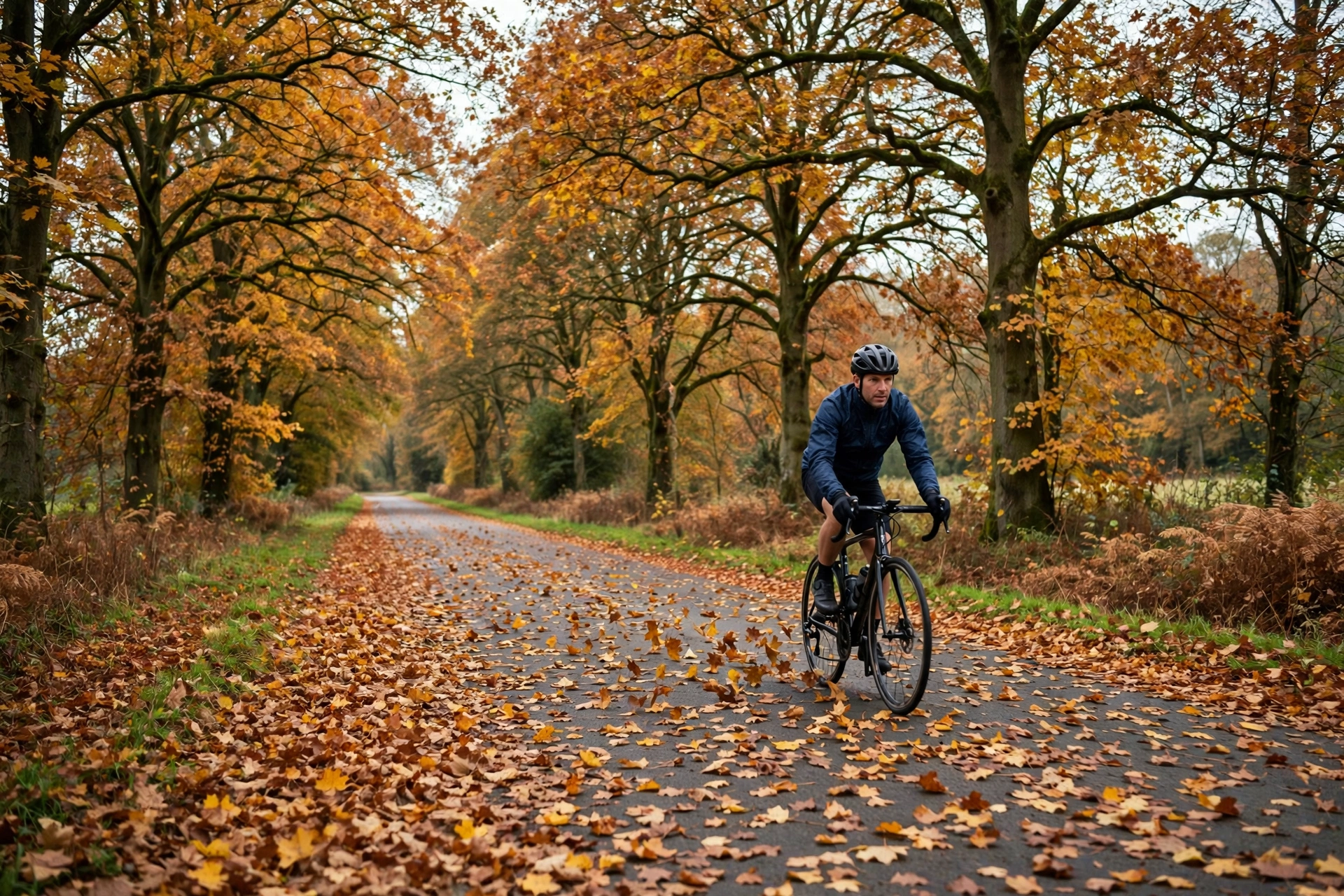
A helmet for riding in autumn is, in general terms, a well-ventilated cycling helmet with a visor or peak, chosen to keep the rider comfortable, dry, and visible on wet, leafy roads during the autumn months. Autumn riding brings its own conditions: shorter days, low sun, rain, fallen leaves, and cold mornings that warm up by the afternoon. A helmet that suits summer may still work in autumn, but a few small features, such as a visor, a light, and room for a thin cap underneath, make the autumn ride safer and more comfortable.
Many cyclists ride through autumn without changing their kit, and that is fine for short rides in settled weather. But as the season goes on, the roads get wetter, the leaves pile up, and the light fades earlier, and those changes all affect safety. A helmet is the one piece of kit that is worn on every ride, so choosing one that suits autumn conditions is a simple way to deal with the season’s challenges.
What changes about riding in autumn?
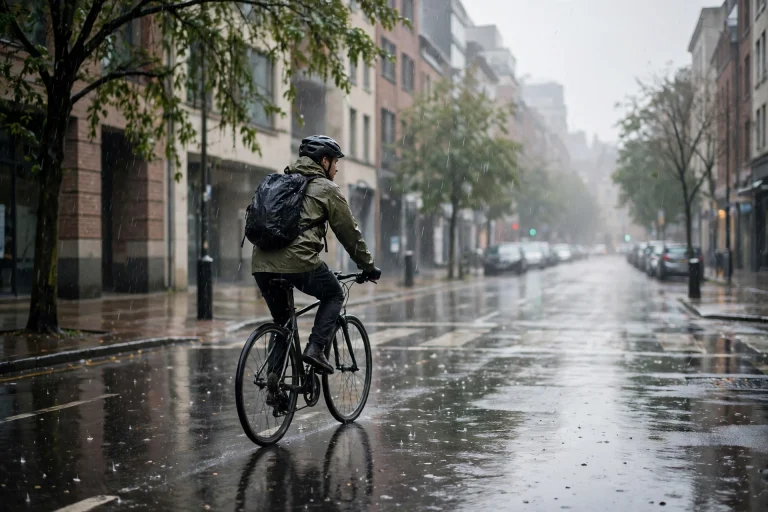
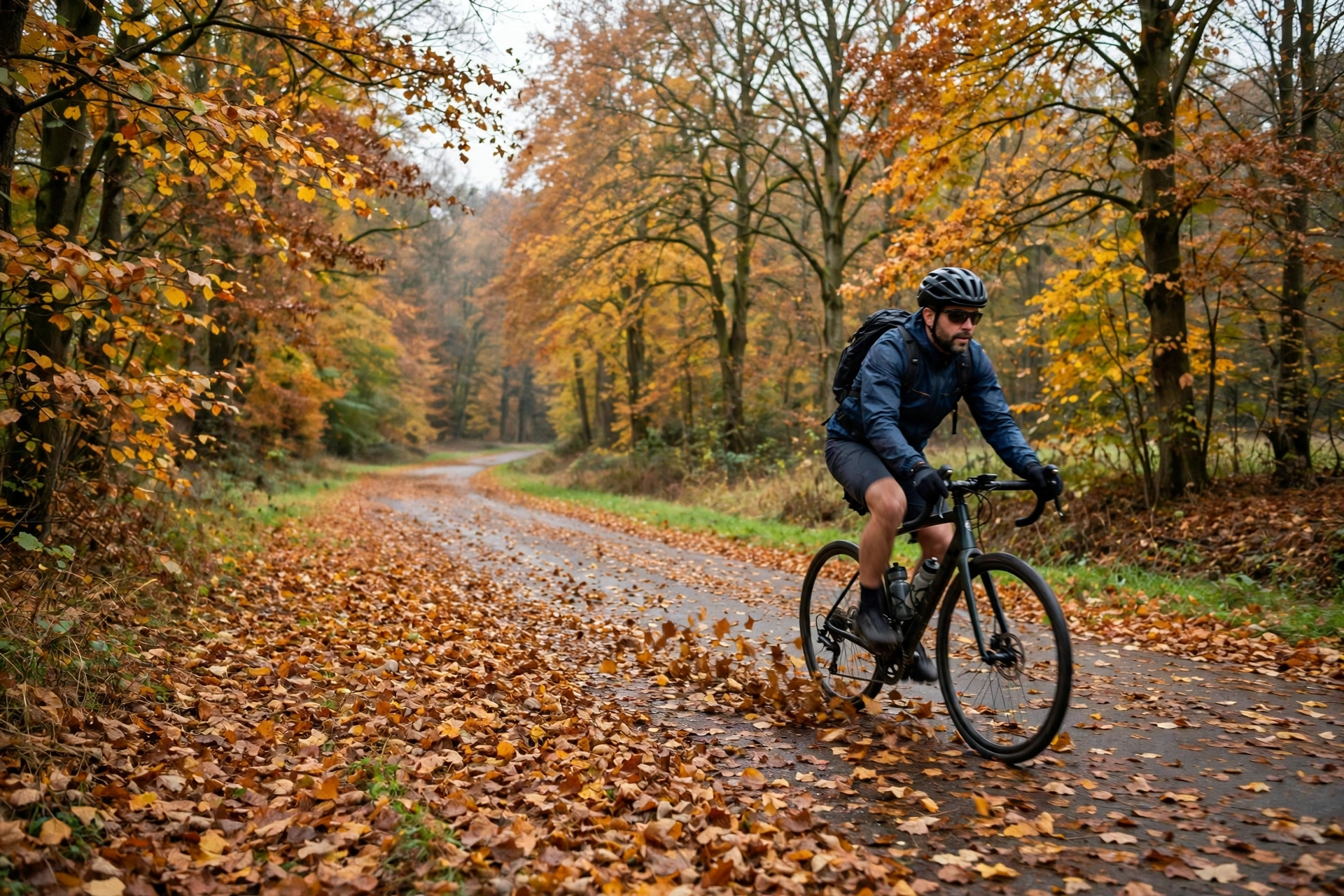
Autumn changes the road surface first. Fallen leaves can hide potholes, drain covers, and painted lines, and wet leaves are slippery, especially on corners and braking zones. In general terms, a rider who is used to dry summer roads needs to slow down, brake earlier, and leave more room for stopping in autumn. Rain also brings grit and spray onto the bike, and the rider’s hands and feet get cold faster than in summer, which can make the bike harder to control.
The light changes too. The sun sits lower in the sky in autumn, and it can shine straight into a rider’s eyes on a morning or evening ride. Days get shorter, so a ride that starts in daylight can end in dusk, and drivers may find it harder to spot a cyclist in low light or rain. A helmet with a light colour, reflective details, and a mount for a rear or front light helps the rider stay visible. A visor or peak helps keep rain and low sun out of the eyes, which makes it easier to see the road ahead.
What should an autumn riding helmet offer?
An autumn riding helmet should offer good ventilation that can be adjusted, because autumn mornings are cold and afternoons can be mild. Vents that can be closed keep the head warm on a chilly start, while vents that open let heat escape when the rider warms up. In general terms, a helmet with a removable vent cover or an adjustable vent system is more useful than one with fixed open vents. The helmet should also have room for a thin skull cap or headband underneath, for cold mornings.
A visor or peak is useful in autumn for keeping rain off the face and for shading the eyes from low sun. Some road helmets have a small clip-on visor, while mountain bike helmets often have a larger peak that can be adjusted. The helmet should also have a place to mount a light, or at least a light colour and reflective markings so the rider is easier to see. A snug, stable fit matters in autumn too, because a helmet that shifts in wind or rain is a distraction on a wet road.
How do you keep a helmet comfortable in autumn?
Keeping a helmet comfortable in autumn is mostly about managing warmth and wetness. A thin skull cap or headband under the helmet keeps the head warm on cold mornings without changing the fit too much, and it can be removed if the day warms up. In general terms, the cap should be thin enough that the helmet still sits level and the straps still adjust properly. A helmet with a washable lining is useful in autumn, because the lining picks up sweat and rain, and a fresh lining is more comfortable on the next ride.
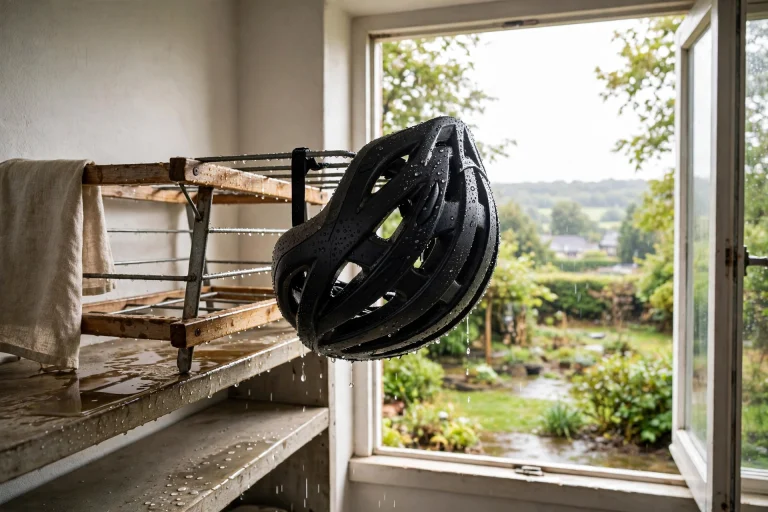
After a wet ride, the helmet should be left to dry in a warm, ventilated place, and the pads should be removed and dried separately if they are damp. A helmet that is put away wet can develop an unpleasant smell, and damp pads can irritate the skin. It is also worth checking the straps and buckles regularly in autumn, since mud and grit can work their way into the mechanism. A quick wipe with a damp cloth after a wet ride keeps the helmet clean and the straps working smoothly.
How do you stay visible when riding in autumn?
Staying visible in autumn means thinking about light and colour. A helmet in a bright colour, such as white, yellow, or orange, is easier for drivers to spot than a dark one, and reflective stickers or strips on the helmet catch headlights at dusk. In general terms, a helmet-mounted or bike-mounted light is the most effective way to be seen, and many autumn riders use a flashing rear light even in daylight, as well as a steady front light when the light fades. The light should be charged before each ride, and a spare should be carried on longer rides.
Clothing matters too. A bright or reflective jacket works with the helmet to make the rider stand out, and gloves with reflective details help drivers see hand signals. Riders should also choose their route with visibility in mind, favouring well-lit roads and avoiding unlit lanes at dusk. Some helmets include a system designed to reduce rotational forces in a fall, such as MIPS, and riders choosing a new helmet for autumn should check what the maker says the helmet is designed to protect against.
How should you care for a helmet after autumn rides?
Autumn rides leave a helmet muddy and wet, so a little care after each ride goes a long way. The shell should be wiped clean with mild soap and water, and the vents should be cleared of leaves and mud. In general terms, a helmet should not be cleaned with harsh chemicals or a pressure washer, since these can damage the shell and the foam inside. The pads should be removed and washed or dried, and the helmet should be stored in a dry place away from direct heat.
It is also worth checking the helmet for damage at the end of the season, since autumn riding involves more wet roads, more grit, and more chances of a slip on leaves. A helmet that has taken a knock should be inspected carefully and replaced if there is any doubt. Keeping a note of the helmet’s age helps too, since makers give a recommended working life, and a helmet that has been used through several autumns may be due for replacement even if it still looks fine.
Do you need a special helmet for riding in autumn?
No, a normal cycling helmet works in autumn, but a helmet with adjustable vents, a visor, and room for a thin cap underneath is more comfortable. A bright colour and a light mount also help with visibility on dark autumn roads.
How do you keep warm under a helmet in autumn?
A thin skull cap or headband under the helmet keeps the head warm on cold mornings, and vents that can be closed help too. The cap should be thin enough that the helmet still sits level and the straps adjust properly.
Are wet leaves dangerous for cyclists?
Yes, wet leaves are slippery and can hide potholes, drain covers, and painted lines. Riders should slow down, brake earlier, and leave more room for stopping on leaf-covered roads in autumn.

Olivia
Writer at Helmet Today, covering helmet reviews, fit and riding safety.